HIIT workouts at home are short bursts of hard effort (sprints, jump squats, burpees) alternated with brief rest or low-intensity movement, done entirely with your bodyweight in a space the size of a yoga mat. A typical structure looks like 30 seconds of all-out work followed by 30 seconds of rest, repeated for 15 to 20 minutes. No dumbbells, no gym membership, no commute. The format works because it forces your heart rate up fast and keeps it there in waves, which is why a 20-minute session can leave you as wrecked as an hour on the treadmill. It’s one of the most efficient ways to train when your calendar is the real obstacle, not your motivation.
What Is a HIIT Workout, Exactly?
HIIT stands for High Intensity Interval Training. Strip away the acronym and it’s really just a work-to-rest ratio applied to hard exercise. You push close to your max effort for a set time, drop into a rest or active-recovery period, then repeat. A classic ratio is 30 seconds on and 30 seconds off, but you’ll also see 20/10, 40/20, and 45/15 depending on the goal and the person’s conditioning.
What makes it “high intensity” isn’t the exercise itself, it’s how hard you’re working during the “on” window. Jumping jacks done at a lazy pace aren’t HIIT. The same jumping jacks done as fast as you can manage for 30 seconds, followed by real rest, are. If you want a deeper breakdown of intensity zones and how they compare to steady-state cardio, our guide on high intensity workouts covers that in more detail.
Why Are HIIT Workouts at Home So Time-Efficient?
Because you’re not wasting minutes on rest periods that are longer than they need to be. In a standard strength session you might rest 90 seconds to 3 minutes between sets to let your muscles recover fully. HIIT flips that. Short, hard efforts followed by short rest keep your heart rate elevated for the entire session instead of letting it drop and climb back up over and over.
That’s the whole point of the format: pack a bigger cardiovascular and metabolic stimulus into a smaller window. Twenty focused minutes of intervals will tax your system more than twenty minutes of a comfortable jog. For people juggling work, commuting, and family, that trade-off matters more than any other feature of the workout.
There’s a ceiling to this, though. Intensity is what makes the interval count, and you can only hold true high intensity for so long before form breaks down and the “work” stops being work. That’s why most effective HIIT sessions stay in the 15 to 25 minute range. Longer than that and you’re usually not doing HIIT anymore, you’re doing a long, tiring circuit at moderate effort, which is a different tool with a different purpose.
How Do You Do HIIT Workouts at Home Without Equipment?
You need three things: a clear 6×6 foot space, a timer (your phone works fine), and a willingness to actually push during the work intervals. Bodyweight moves like burpees, mountain climbers, jump squats, and high knees hit your legs, core, and lungs without a single piece of equipment. The intensity comes from your own effort, not from added weight, so the honesty check is simple: if you could hold a conversation during the work interval, you’re not working hard enough.
Here’s a full no-equipment circuit you can run in 15 to 20 minutes, warm-up and cooldown included.
| Segment | Exercise | Work | Rest | Rounds |
|---|---|---|---|---|
| Warm-up | Jumping jacks + arm circles + bodyweight squats | 3 minutes, easy pace | ||
| Main circuit (repeat full circuit 3 times) |
Jump squats | 30 sec | 15 sec | x3 |
| Mountain climbers | 30 sec | 15 sec | x3 | |
| Burpees | 30 sec | 15 sec | x3 | |
| High knees | 30 sec | 15 sec | x3 | |
| Push-ups (knee push-ups if needed) | 30 sec | 15 sec | x3 | |
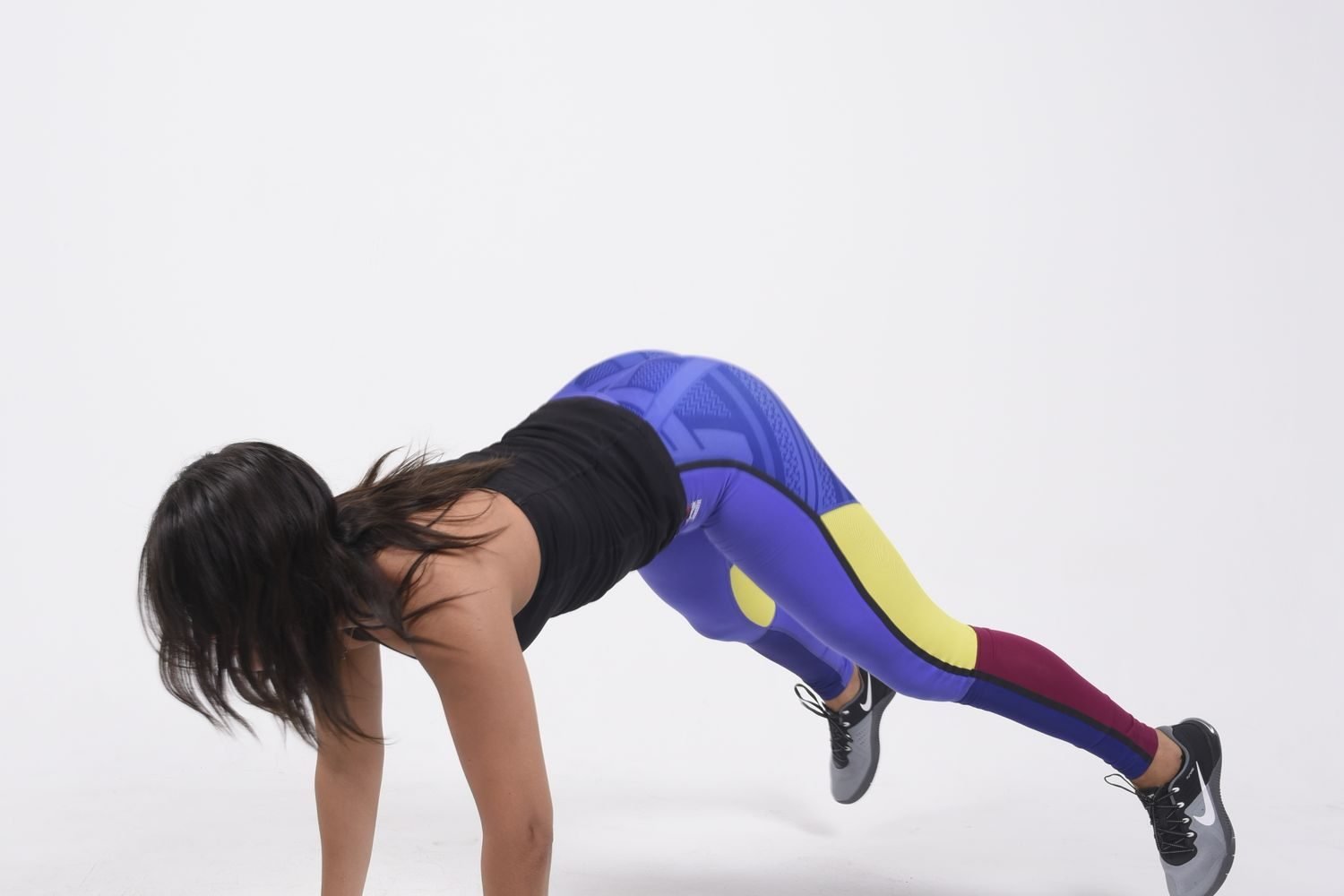
| Plank shoulder taps | 30 sec | 15 sec | x3 | |
| Between rounds | Full rest before starting the circuit again | 60 sec, x2 (after round 1 and round 2) | ||
| Cooldown | Walking + hamstring and quad stretches | 2 to 3 minutes | ||
Three rounds of that circuit run about 15 minutes on their own, and with warm-up, round rests, and cooldown you land right around 20 minutes total. If you’re newer to intervals, drop to 2 rounds and stretch the rest to 20 seconds until your conditioning catches up. For a slightly different structure with fewer moves and longer rest, check our HIIT workout routine guide, and if you’re just starting out, our HIIT for beginners at home post walks through an easier entry point.
What Are the Benefits of HIIT Workouts at Home?
HIIT earns its place in a training week for a few clear reasons:
- Time efficiency: you get a real cardio and conditioning stimulus in a fraction of the time a moderate-intensity session would take.
- Better oxygen efficiency: HIIT improves your body’s ability to use oxygen, which makes everyday exertion feel easier over time.
- Higher work capacity: repeated hard intervals build the engine that lets you push harder for longer, in training and in daily life.
- Extended calorie burn: thanks to elevated post-exercise oxygen consumption, you keep burning a meaningful number of calories in the hours after the session ends.
- No logistics excuse: no gym, no equipment, no travel time, which is a big part of why it works for people who’d otherwise skip training on a busy day.
We see this constantly with clients who “don’t have time to train.” Once we swap two of their weekly sessions for 20-minute HIIT circuits instead of hour-long gym trips, adherence goes up almost immediately. The barrier was never the workout. It was the 45 minutes of driving, changing, and waiting for equipment on either side of it.
Who Should (and Shouldn’t) Rely on HIIT Alone?
HIIT is excellent for conditioning, fat loss support, and general cardiovascular health. If your goal is to get fitter, sweat hard, and train efficiently, it belongs in your week. It’s also genuinely fun once you’re past the first few sessions, which helps consistency more than people give it credit for.
But it is not a substitute for structured strength training if building muscle or getting meaningfully stronger is the goal. Bodyweight jump squats and burpees create fatigue and improve conditioning, but they don’t provide the progressive resistance your muscles need to grow. If you want more muscle, more strength, or a body composition change that goes beyond “leaner,” you need resistance training with increasing load over time, whether that’s dumbbells, resistance bands, or a proper gym program.
The smartest approach for most people is a mix. Two or three HIIT sessions for conditioning, two or three strength sessions for muscle and long-term joint health. Treating HIIT as your entire fitness plan usually leads to a plateau within a few months, especially for anyone who actually wants to look and feel stronger, not just tired at the end of it.
If you’d rather not guess at the split between conditioning and strength work, a coach can build that balance around your actual goals and schedule. That’s exactly what our 1-on-1 personal training programs at FitStrot are built for, real programming from a trainer who adjusts the plan as you progress, not a generic PDF.
Frequently Asked Questions
What are HIIT workouts at home?
HIIT workouts at home are bodyweight interval sessions done in your living room or any small space, alternating short bursts of high-effort exercise with brief rest periods. They typically run 15 to 20 minutes and use moves like burpees, jump squats, and mountain climbers instead of gym equipment.
What is a HIIT workout?
A HIIT workout is High Intensity Interval Training, a format that pairs near-maximal effort intervals with short rest or low-intensity recovery. A common structure is 30 seconds of hard work followed by 30 seconds of rest, repeated for several rounds, which keeps your heart rate elevated throughout the session.
How do you do HIIT workouts at home?
Pick 5 to 6 bodyweight exercises, set a timer for 30 seconds work and 15 to 30 seconds rest, and cycle through them for 3 rounds with a longer rest between rounds. Start with a short warm-up and end with a cooldown. Beginners should start with fewer rounds and longer rest until conditioning improves.
What are the benefits of HIIT workouts at home?
The main benefits are time efficiency, improved cardiovascular fitness, better work capacity, and calorie burn that continues after the session ends. HIIT also removes gym-related barriers like commuting and equipment access, which makes it easier to stay consistent, especially on busy weeks.
Can beginners do HIIT workouts at home safely?
Yes, as long as they scale intensity and rest to their current fitness level. Beginners should use longer rest periods, fewer rounds, and lower-impact variations (like stepping instead of jumping) before progressing to standard timing. Proper warm-up and form matter more than speed when you’re just starting out.
Want a training plan that actually fits your schedule and goals, not a copy-paste routine? FitStrot’s 1-on-1 personal training pairs you with a dedicated coach who builds your HIIT and strength split around your life, not the other way around.