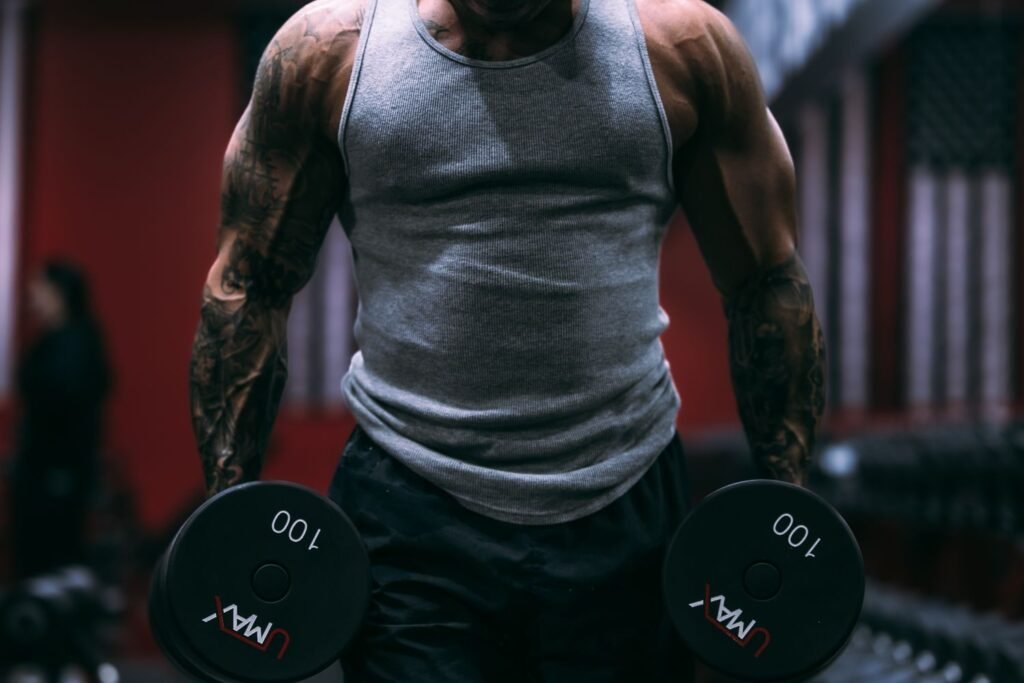
A good biceps workout at the gym combines heavy compound curls for overall mass, isolation moves for peak and shape, and enough volume to actually stress the muscle without wrecking your elbows. We build most of our clients’ sessions around four to five exercises, roughly 12 to 16 total sets, hitting the biceps from a stretched position, a mid-range position, and a peak-contraction position. Skip that variety and you’ll plateau fast, no matter how heavy you curl.
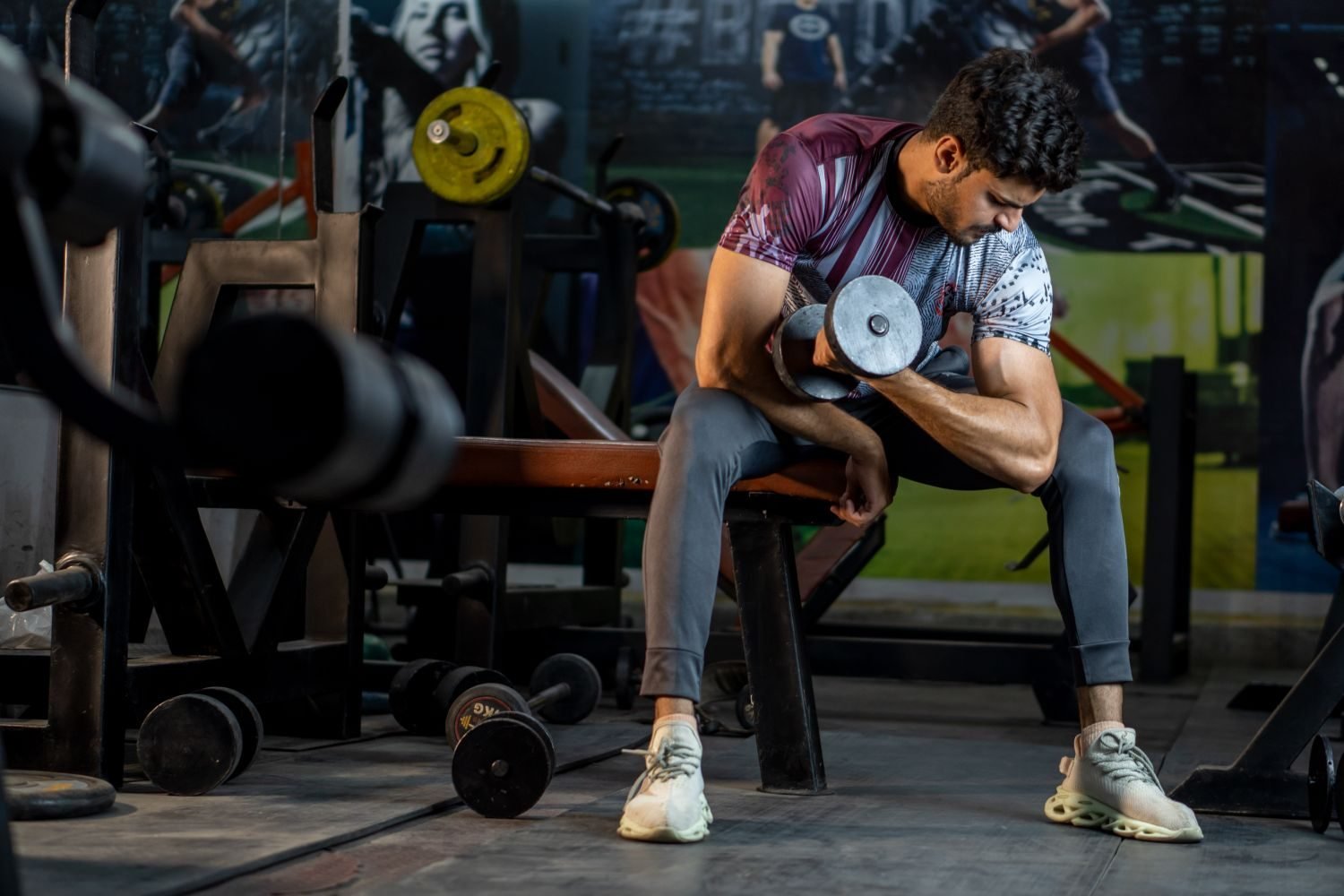
What Makes a Good Biceps Workout at the Gym?
A solid biceps workout gym session isn’t just about picking five random curl variations off a machine. It’s about targeting the muscle through different joint angles and rep ranges so every fiber gets worked. We coach clients to think in three buckets: a heavy compound curl (barbell or dumbbell) for load, a stretch-focused move like an incline curl for the long head, and a squeeze-focused move like a cable or concentration curl for peak contraction.
Rep ranges matter too. Straight sets of 6 to 8 reps build strength, sets of 10 to 15 build size, and drop sets or slow negatives at the end of a session finish the muscle off. A well-built biceps workout at gym sessions use rotates through these ranges instead of doing the same 3×10 every week. If you’re new to lifting altogether, start with our guide to a biceps workout for beginners before jumping into heavier compound work.
What Muscles Are You Actually Training?
The biceps brachii has two heads, the long head and the short head, plus a third muscle underneath called the brachialis that does more work than most lifters realize.
- Long head: Runs along the outer part of the arm and creates that visible “peak” when you flex. It responds best to exercises where your arm is behind your torso, like incline dumbbell curls, because that position stretches it fully.
- Short head: Sits on the inner side and contributes more to overall width. Preacher curls and concentration curls, where your arm stays in front of your body, bias this head.
- Brachialis: Lies underneath the biceps and pushes it upward, adding thickness even though it’s technically a separate muscle. Hammer curls and reverse curls, where your grip is neutral or pronated, hit it hard.
If you only ever do standard barbell curls, you’re training the short head and neglecting the other two. That’s the single biggest reason arms stop growing even when the numbers on the bar keep going up.
What Are the Best Biceps Exercises at the Gym?
There are dozens of biceps workout names floating around fitness apps, but most gyms only really need five reliable movements. Here’s what we program most often and why each one earns its spot.
Barbell Curl
The classic mass-builder. It lets you load the most weight, which makes it the best choice for pure strength and overall thickness. Keep your elbows pinned to your sides and avoid leaning back to move the bar.
Dumbbell Curl
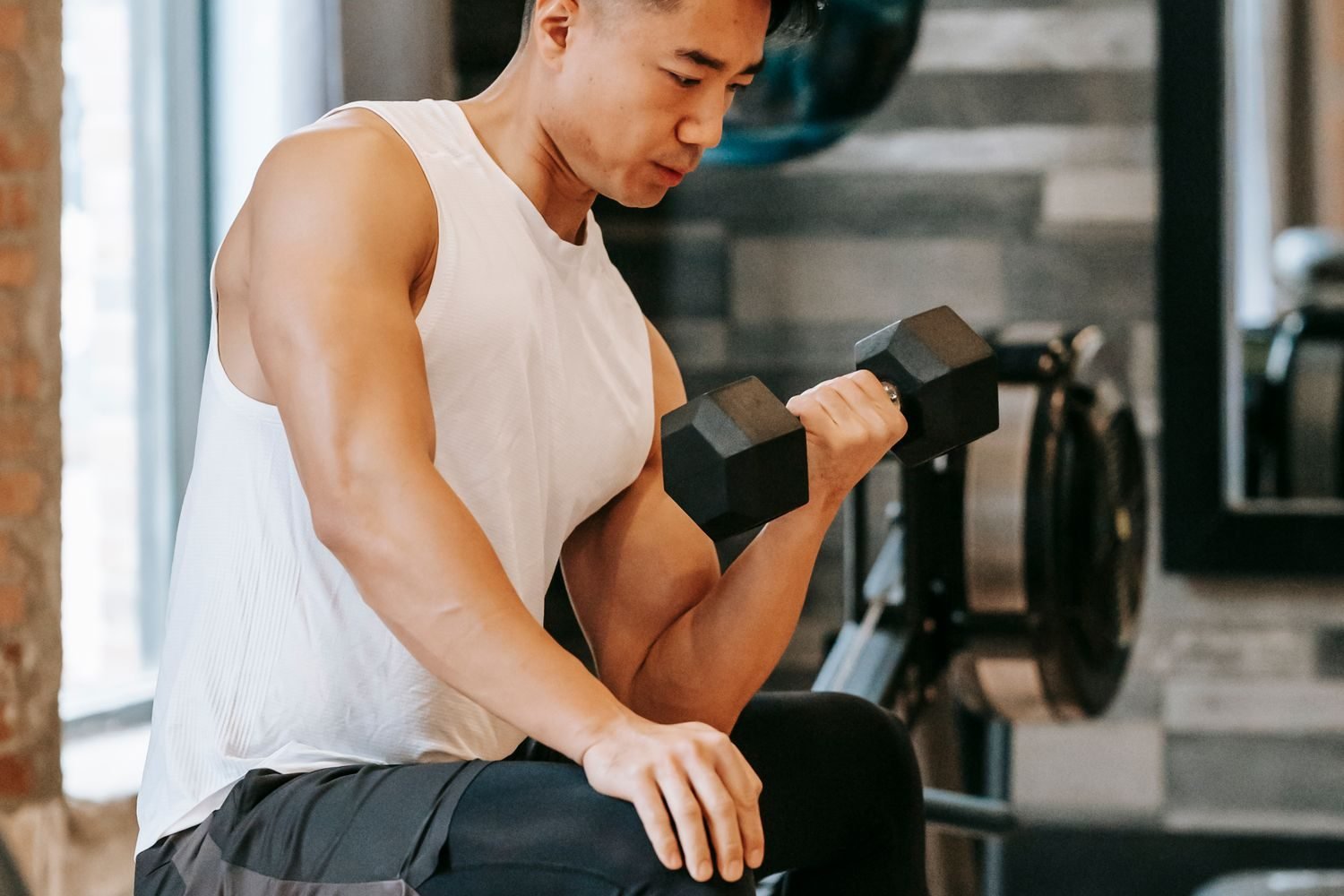
Dumbbells let each arm work independently, which fixes strength imbalances a barbell hides. A biceps workout with dumbbells also gives you more freedom to rotate your wrist through the movement, adding a small peak contraction at the top.
Hammer Curl
Done with a neutral grip, palms facing each other. A hammer biceps workout shifts a lot of the load onto the brachialis and forearms, which is exactly what you want if your arms look flat from the side despite a decent front-on flex.
Preacher Curl
The angled pad removes any chance of swinging the weight and forces strict form. It’s brutal on the short head and great for building a peak. We wrote a full breakdown of setup and common errors in our preacher curl workout guide if you want to get the form exactly right.
Cable Curl
Cables keep tension on the biceps through the entire range of motion, unlike free weights where tension drops off near the top or bottom depending on the angle. This makes cable curls an excellent finisher exercise after your heavier compound work.
For a deeper library of variations beyond these five, our roundup of bicep workouts covers grip changes, tempo tricks, and equipment swaps you can rotate in every few weeks.
What Does a Sample Biceps Workout Chart Look Like?
Here’s a biceps workout chart we actually hand to intermediate clients. It takes about 35 to 40 minutes and hits all three parts of the muscle described above.
| Exercise | Sets | Reps | Rest |
|---|---|---|---|
| Barbell Curl | 4 | 8-10 | 60 seconds |
| Incline Dumbbell Curl | 3 | 10-12 | 45 seconds |
| Hammer Curl | 3 | 12 | 45 seconds |
| Preacher Curl | 3 | 10-12 | 45 seconds |
| Cable Curl (drop set on final set) | 3 | 12-15 | 30 seconds |
Beginners can cut this down to three exercises and three sets each. Advanced lifters can add a sixth movement, like concentration curls, or push the drop set on cable curls further. This structure works whether you’re following it as a standalone best biceps workout at gym session or slotting it into a broader arm day.
Should You Train Biceps and Triceps Together?
Yes, and honestly it’s one of the more efficient ways to structure an arm day. A biceps and triceps workout pairs two smaller muscle groups that don’t compete much for recovery resources, so you can hit both hard in one session without either suffering. Antagonist supersets, where you do a curl and then immediately move to a triceps pushdown, also let you keep intensity high while cutting your total gym time.
A typical biceps and triceps workout at gym split looks like four biceps exercises and four triceps exercises, alternating between them or grouping biceps first and triceps second depending on which arm you want to prioritize that week. We see clients make faster progress once they stop doing biceps on Monday and triceps on Thursday and instead pair them in the same session, simply because arm volume stacks better when it’s not spread thin across the week.
What Mistakes Wreck Your Biceps Workout?
Momentum is the number one killer of biceps gains. Swinging the weight up using your back and shoulders takes tension off the biceps and puts it somewhere else entirely, usually your lower back. If you can’t curl a weight without rocking your torso, the weight is too heavy. Drop it and control the rep.
Other mistakes we see constantly:
- Half reps. Not extending the arm fully at the bottom means you skip the stretched position where a lot of growth happens.
- Curling too fast. A one-second squeeze at the top and a slow, controlled lowering phase does more for the muscle than rushing through reps to hit a number.
- Ignoring grip variety. Sticking to one grip angle for months trains the same fibers over and over and leaves the rest of the muscle underdeveloped.
- Skipping warm-up sets. The biceps tendon at the elbow is a common injury site. Two light warm-up sets before your working weight protect it.
How Often Should You Train Biceps for Growth?
Twice a week is the sweet spot for most people. That gives you roughly 48 to 72 hours of recovery between sessions, enough time for the muscle to repair without so much rest that you lose training momentum. If your program already includes back day, remember that pulling movements like rows and pull-ups also recruit the biceps, so factor that into your weekly volume instead of treating direct arm work as the only stimulus.
Training biceps three or even four times a week can work too, but only if you drop the volume per session so total weekly sets stay in a reasonable range, somewhere around 14 to 20 sets for most intermediate lifters. Beginners need less, advanced lifters sometimes need more. There’s no single number that fits everyone, and anyone who tells you otherwise probably hasn’t coached many different body types.
If you’d rather not guess your way through sets, reps, and recovery windows on your own, working with a coach who can adjust your program week to week makes the process a lot less trial-and-error. FitStrot’s 1-on-1 personal training service pairs you with a dedicated coach who builds your arm training, and everything else, around your actual recovery and goals rather than a generic template.
Frequently Asked Questions
What is a good biceps workout at the gym?
A good biceps workout gym session includes four to five exercises covering different grip angles, such as a barbell curl, an incline dumbbell curl, a hammer curl, and a preacher curl. Aim for 12 to 16 total sets across rep ranges of 8 to 15, with strict form and no swinging.
How do you do a biceps workout at the gym?
Start with a compound movement like the barbell curl while you’re fresh, then move to isolation exercises such as preacher or cable curls. Warm up with light sets first, keep your elbows still, control the lowering phase, and rest 30 to 60 seconds between sets depending on the exercise.
What are the benefits of a biceps workout?
Beyond bigger arms, biceps training improves grip strength, supports pulling movements like rows and pull-ups, and strengthens the elbow joint against injury. It also balances your upper body development so your arms don’t lag behind your chest and back visually or functionally.
How many biceps exercises should I do per workout?
Four to five exercises is plenty for most people. Going beyond that usually just adds junk volume without extra growth, especially once your back and shoulder days are already recruiting the biceps indirectly through pulling movements.
Can I do a biceps workout with dumbbells only?
Yes. Standard curls, hammer curls, incline curls, and concentration curls all use only dumbbells and can build a complete arm on their own. You’ll miss the heavy loading of a barbell curl, but dumbbells let you move through a fuller range of motion and fix any left-right imbalance.