An effective bicep workout does more than pile on curls. It needs variation in curl angle so you hit the muscle from different lengths, direct work for both the long and short heads of the biceps brachii, and enough total volume across the week, usually 12 to 20 hard sets, to actually drive growth. Miss any one of these and your arms plateau no matter how heavy you go.
Most people training biceps stick to one grip, one angle, and one rep range for months. The arm grows for a while, then stalls. If you want the kind of arm development that actually shows up in a t-shirt sleeve, you need a plan that respects the anatomy of the muscle, not just a random set of curls copied from someone’s Instagram reel.
What Muscles Are You Actually Training When You Curl?
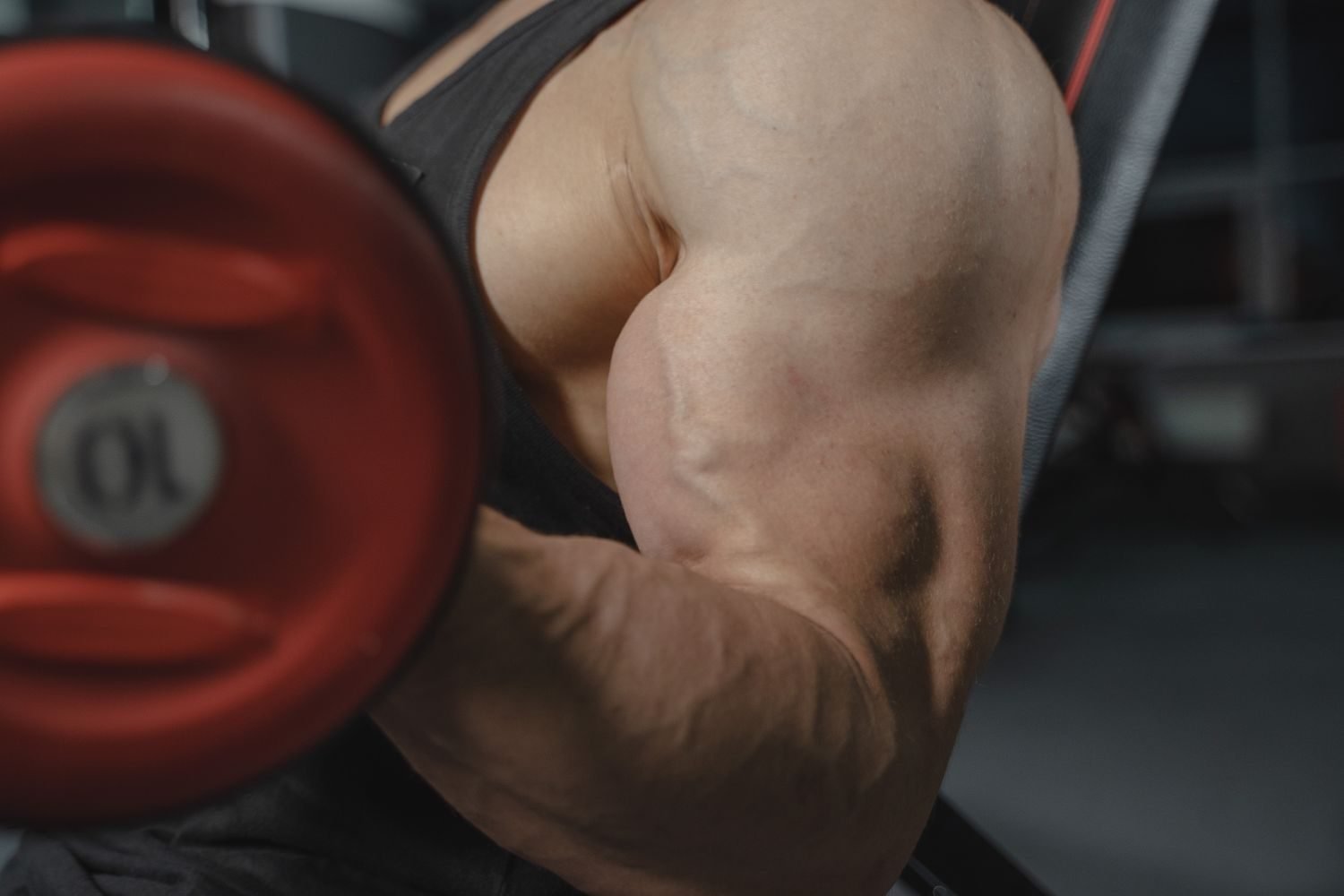
The biceps brachii has two heads, the long head and the short head. The long head runs along the outer part of the upper arm and contributes more to the peak you see when you flex. The short head sits on the inner side and adds width when the arm hangs at your side. Underneath both sits the brachialis, a muscle that doesn’t get much credit but pushes the biceps upward and adds real thickness to the arm when it’s developed.
Here’s the practical part. Your arm position changes which head does more of the work:
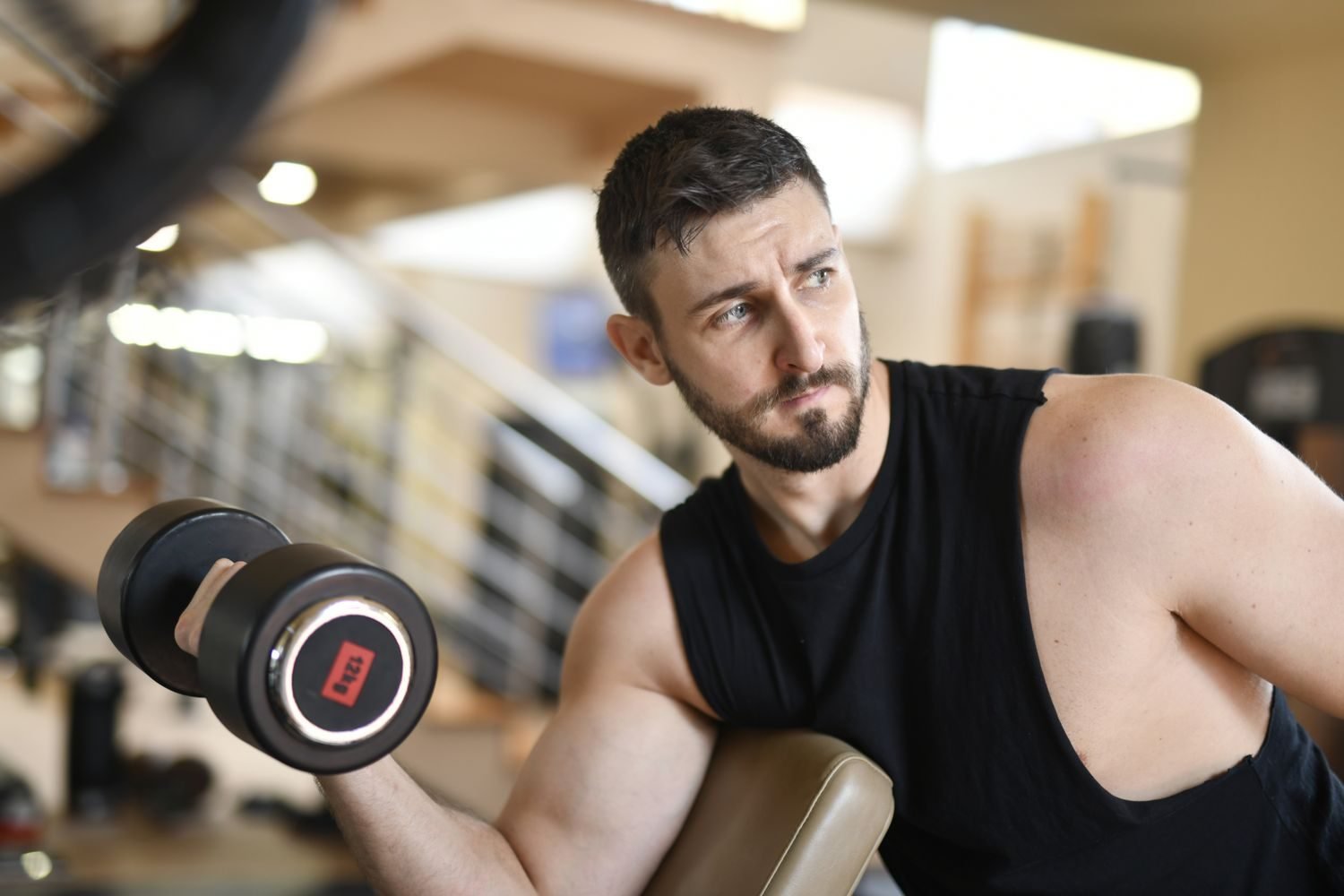
- Arm behind your body (incline dumbbell curl) — stretches and emphasizes the long head.
- Arm in front of your body (preacher curl) — shifts more of the load to the short head.
- Neutral grip (hammer curl) — brings the brachialis into play.
That’s why one curl variation is never enough. You need a small mix to train the whole muscle group properly.
How Should You Structure a Bicep Workout for Growth?
A well-built session covers a compound curl for overall load, an angle variation for the long head, a neutral-grip movement for the brachialis, and an isolation exercise that removes momentum entirely. Here’s a sample bicep workout we’d program for someone training arms directly, whether as a standalone session or tacked onto a back or pull day.
| Exercise | Sets | Reps | Rest |
|---|---|---|---|
| Barbell Curl | 4 | 8-10 | 75 seconds |
| Incline Dumbbell Curl | 3 | 10-12 | 60 seconds |
| Hammer Curl | 3 | 10-12 | 60 seconds |
| Preacher Curl or Concentration Curl | 3 | 12-15 | 45 seconds |
That’s 13 working sets, which sits comfortably inside the 12 to 20 weekly range most lifters need for arm growth, especially once you account for the indirect bicep work happening on back day. If you’re new to structured arm training or want a broader menu of options, our gym-based bicep workout guide breaks down more variations you can rotate in.
How Often Should You Train Biceps Each Week?
Two to three direct sessions a week works for most people, as long as you leave at least 48 hours between them. Biceps are a smaller muscle group and recover faster than something like quads or back, but they’re also getting hit indirectly every time you row, pull-up, or deadlift. If your back day is heavy on pulling volume, you might only need one dedicated arm session to round things out. If your split is more push-focused, two or three sessions gives the muscle enough stimulus without waiting on other lifts to do the job.
How Long Should a Bicep Workout Take?
A focused bicep session, run on its own, usually takes 25 to 35 minutes once you count warm-up sets and rest periods. That’s short enough to slot in after a longer back or shoulder day without wrecking your total training time, and long enough to hit real volume if you’re resting properly between sets rather than rushing through the workout. If you’re short on time, dropping to three exercises instead of four still works, as long as you keep the angle variety intact.
What’s the Biggest Mistake People Make During Bicep Workouts?
Momentum. We see this constantly with clients who come in wanting bigger arms but end up training their lower back and hip flexors instead. They load up a curl bar, then swing the weight up using their hips and shoulders instead of isolating the elbow joint. The bar moves, the ego gets fed, but the biceps barely do any work compared to a strict, controlled rep. Dropping the weight and slowing the eccentric down almost always produces a better pump and better long-term results than chasing a heavier number with sloppy form.
A simple fix is to keep your elbows pinned to your sides for standing curls, or use a preacher bench or incline position that physically removes the ability to swing. If you can’t control the weight through a full range of motion without your torso moving, it’s too heavy for that set.
Should You Train Biceps With Barbells, Dumbbells, or Both?
Both have a place. A straight or EZ-bar curl lets you load more total weight, which is useful for building baseline strength. Dumbbells let each arm work independently, which helps even out strength imbalances between your left and right side, and they let you rotate the wrist through the movement for a stronger squeeze at the top. Most of the exercises in the sample table above, aside from the barbell curl, use dumbbells for exactly this reason. If you want a deeper look at building an entire session around them, our dumbbell bicep workout breakdown is worth a read, and our general dumbbell workouts guide covers how to structure dumbbell training across other muscle groups too.
How Do Bicep Workouts Fit Into a Bigger Arm Training Plan?
Biceps rarely grow in isolation from the rest of the arm. Triceps make up roughly two-thirds of upper arm mass, so a plan that only chases curls while ignoring pressdowns and extensions leaves visible size on the table. Forearm work matters too, since a stronger grip lets you curl heavier without your hands giving out first. Think of bicep training as one piece of a full arm and pulling routine rather than a workout you do in a vacuum.
Programming this correctly, balancing volume across biceps, triceps, and back without overreaching on recovery, is exactly the kind of detail that’s hard to get right from a blog post alone. It depends on your current split, your recovery capacity, and how your arms have responded to training in the past. That’s the gap a dedicated coach fills. If you’d rather have someone build this into a full program around your goals and track your progress week to week, FitStrot’s 1-on-1 personal training is built for exactly that.
How Do You Know a Bicep Workout Is Working?
Track two things: the weight or reps you’re using on your main lift, and how your arms measure or look over four to six weeks. If you’re adding a rep or a small amount of weight to the barbell curl every couple of weeks, you’re progressing. If the number on the bar hasn’t moved in a month and your sets aren’t getting harder, something in your recovery, food intake, or exercise selection needs adjusting. Arm size responds slowly, so don’t expect visible change week to week. Give a program at least six to eight weeks before you decide whether it’s working.
Frequently Asked Questions
What are bicep workouts?
Bicep workouts are training sessions built around exercises like curls that target the biceps brachii and brachialis. An effective one varies the angle of each curl, hits both the long and short heads of the muscle, and includes enough total sets across the week to actually trigger growth, not just fatigue.
How do you do bicep workouts properly?
Start with a compound movement like the barbell or dumbbell curl, then add an incline curl for the long head, a hammer curl for the brachialis, and a preacher or concentration curl to finish. Keep reps controlled, avoid swinging the weight, and rest 45 to 75 seconds between sets for most of the workout.
What are the benefits of bicep workouts?
Bicep workouts build visible arm size, improve grip and pulling strength for exercises like rows and pull-ups, and support everyday tasks like carrying bags or lifting kids. Stronger biceps also protect the elbow joint when done with proper form and a full range of motion.
How often should you do bicep workouts each week?
Most lifters see solid growth training biceps directly two to three times a week, with at least 48 hours of rest between sessions. Since biceps also get worked during back and pulling exercises like rows or pull-ups, total weekly volume across all sessions matters more than any single workout on its own.
Are barbell or dumbbell bicep workouts better?
Both work well and belong in a good plan. Barbells let you load more total weight for straightforward strength, while dumbbells let each arm move independently and rotate at the wrist for a stronger peak contraction, which many lifters find fills out the muscle more evenly over time.