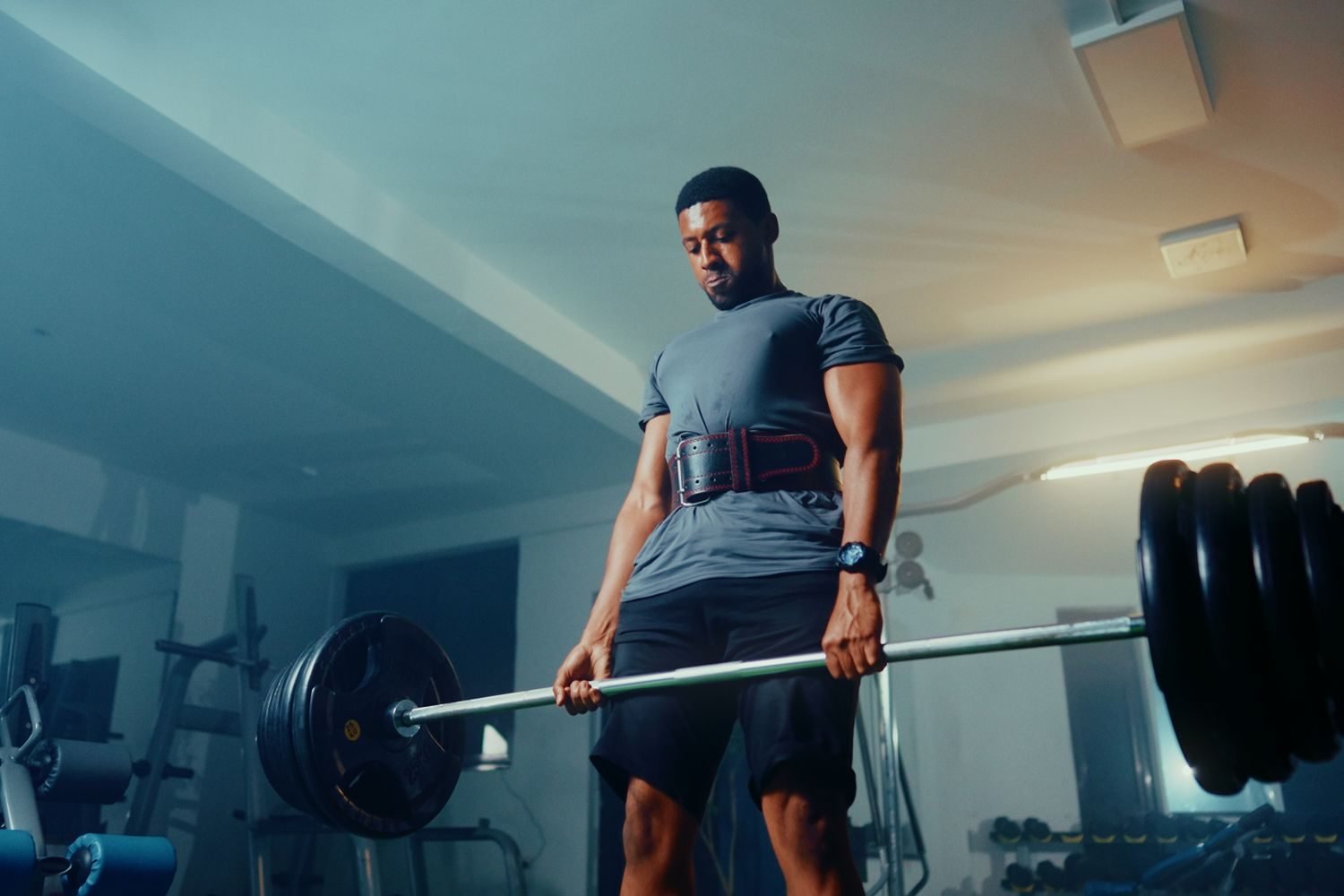
A leg day workout for men should build strength and size across the quads, hamstrings, glutes, and calves while also carrying over to real-world athletic output like sprinting, jumping, and change of direction. At FitStrot, we program leg day as a structured session built around a heavy compound lift, a hinge pattern, a unilateral movement, and direct calf work, done with enough volume and load to actually drive adaptation. This isn’t a token 20-minute add-on after upper body. It’s a full session that deserves the same respect men give to bench day.
Why Do So Many Men Skip Leg Day?
Ask any coach and they’ll tell you the same thing: leg day gets skipped more than any other session in the week. Part of it is vanity. Upper body gains show up in a t-shirt and legs mostly don’t, so the incentive to push through squats feels lower than the incentive to push through bench press. Part of it is genuinely how hard leg training is. Heavy squats and deadlifts spike your heart rate, tax your nervous system, and leave you sore in a way that chest day rarely does.
We also think gym culture plays a role. The “never skip leg day” joke exists because it’s rooted in something real, and once a pattern of avoidance sets in, it’s easy to keep finding excuses. We program around this by making leg day non-negotiable in the weekly split we build for clients, the same way we would never let someone skip their main lift on any other day.
What Makes a Leg Day Workout Different for Men?
Men typically carry more total muscle mass and higher testosterone levels than women, which generally means a greater capacity to recover from heavy loading and higher absolute strength ceilings on compound lifts. That doesn’t mean the exercises are different. Squats, deadlifts, and lunges work for everyone. What we adjust is the emphasis: more absolute load on the big lifts, more attention to hamstring and posterior chain development for athletic power, and programming that supports goals like sprint speed, vertical jump, or simply building a stronger, more capable lower body.
If your goal is different, say fat loss, toning, or training around a specific hormonal or postural consideration, our leg workout for women covers that angle in more depth. This article is written specifically for men training for strength, size, and athletic performance.
What Does a Good Leg Day Workout for Men Look Like?
A solid leg day for men hits the quads and hamstrings with roughly equal priority, includes a heavy compound lift as the anchor, and finishes with accessory work that targets weak points. We usually structure it in this order: primary compound lift, secondary hinge or unilateral movement, then isolation and calf work. Here’s a sample session we’d program for an intermediate male client focused on strength and muscle building.

| Exercise | Sets | Reps | Rest |
|---|---|---|---|
| Barbell Back Squat | 4 | 5-6 | 2-3 min |
| Romanian Deadlift | 3 | 8-10 | 2 min |
| Walking Lunges (dumbbell) | 3 | 10-12 per leg | 90 sec |
| Leg Press | 3 | 10-12 | 90 sec |
| Lying Leg Curl | 3 | 12-15 | 60 sec |
| Standing Calf Raise | 4 | 12-15 | 60 sec |
The squat sets the tone for the whole session, so it comes first when you’re fresh. The Romanian deadlift builds the hamstrings and glutes, which most men under-train relative to their quads. Walking lunges and leg press add volume without hammering your lower back further, and finishing with leg curls and calf raises makes sure nothing gets left behind. If you want to combine lower body training with core work in the same session, our legs and abs workout shows how we structure that pairing for clients short on training days.
How Often Should Men Train Legs?
Most men do well training legs twice a week, with one heavier strength-focused session and one lighter session geared toward volume or accessory work. Training legs just once a week is enough to maintain a base level of strength if you’re pressed for time, but it’s not ideal if muscle growth or athletic performance is the goal. Twice weekly gives you enough frequency to accumulate volume without excessive muscle damage from any single session.
We rarely recommend training legs three times a week for men outside of dedicated hypertrophy or athletic blocks, since recovery demands from heavy squatting and hinging are high and other lifts in your split need attention too. If you want to see how leg day fits into a full week of training rather than as a standalone session, check out our workout plan for men, which lays out how we sequence push, pull, and leg days across a typical week.
Do Men Need Higher Volume for Leg Training Than Upper Body?
Generally, yes. The legs contain some of the largest muscle groups in the body, and they respond well to higher total volume compared to smaller upper body muscles like biceps or triceps. We typically program 12-16 working sets per week for quads and a similar range for hamstrings in clients training for size or strength, compared to 8-12 sets for smaller upper body muscle groups. This isn’t a hard rule for everyone, but it reflects how much work larger muscle groups can absorb and still recover from within a week.
We see clients make the mistake of loading up their squat and deadlift and then skipping everything else, thinking the two big lifts are enough. They’re a great foundation, but without accessory volume for the hamstrings, glutes, and calves, you end up with imbalances that show up later as nagging knee or hip issues.
How Do You Progress a Leg Day Workout Over Time?
Progression on leg day comes from three levers: adding weight, adding reps, or adding sets, in that order of priority for most men. We start clients on a linear progression where they add small amounts of load to the squat and Romanian deadlift each week as long as form holds. Once weekly load increases stall, we shift to adding reps within the working set range, and only after that do we add an extra set to a lift.
Tracking matters here more than most men realize. If you’re not writing down what you lifted last week, you’re guessing at whether you’re actually progressing or just repeating the same session. We ask every client to log their sets, reps, and weight for every leg session, because that log is what tells us when to push and when to pull back.
What Mistakes Should Men Avoid on Leg Day?
These are the three mistakes we see most often on leg day:
- Skipping the warm-up. Jumping straight into heavy squats cold skips the mobility work and progressively loaded warm-up sets your hips, ankles, and knees need before you touch your working weight.
- Ego lifting on squats and deadlifts. Cutting depth short or rounding the lower back to move more weight than your form can handle doesn’t build real strength, and it raises your injury risk without giving you anything back.
- Treating leg day as just squats. A complete session trains the quads, hamstrings, glutes, and calves, not just whichever muscle group responds fastest to your favorite lift.
If you want a program that accounts for your specific weak points, training history, and goals rather than a generic template, that’s exactly what our 1-on-1 personal training is built for. We assess how you move, build your leg day around what you actually need, and adjust the plan as you progress.
Frequently Asked Questions
Why do so many men skip leg day?
Leg day is physically demanding, spikes heart rate more than most upper body sessions, and doesn’t show visible results as quickly in a t-shirt. Combined with gym culture jokes about skipping it, this creates a pattern of avoidance. We counter this by building leg day into the weekly split as a fixed, non-negotiable session for every client.
What is a good leg day workout for men?
A good leg day workout for men includes a heavy compound lift like the back squat, a hinge movement like the Romanian deadlift, a unilateral exercise like walking lunges, and direct calf work. It should train quads, hamstrings, glutes, and calves in one session, typically across five to six exercises with progressive loading.
How often should men train legs?
Most men see the best results training legs twice a week, splitting the work between one heavier strength session and one higher-volume accessory session. This frequency allows enough recovery between sessions while still accumulating the weekly volume needed for strength and muscle growth in the lower body.
Do men need higher volume for leg training than upper body?
Yes, generally. Larger muscle groups like the quads and hamstrings can handle and often need more weekly working sets than smaller upper body muscles. We typically program 12-16 sets per week for quads and hamstrings, compared to 8-12 sets for smaller muscle groups like biceps or triceps.
Can beginners follow this leg day workout?
Yes, with adjusted loading. Beginners should use lighter weights, focus on learning proper squat and hinge mechanics first, and build up training volume gradually over several weeks. The exercise selection stays similar, but the sets, reps, and intensity should scale down until movement quality is solid.