A pull day workout trains every muscle you use to pull weight toward your body: back, biceps, rear delts, and grip. It’s one third of the push pull legs workout split, and it exists because pulling muscles recover and grow best when they’re trained together in one focused session rather than scattered across a generic “upper body” day. We build pull days for our clients around one simple rule: work the biggest pulling muscle first, then move toward smaller, more isolated ones.

What Exactly Happens On A Pull Day?
On pull day, every exercise involves pulling a weight toward your torso instead of pushing it away. That covers rows, pull-ups, pulldowns, deadlift variations, face pulls, and curls. The muscles doing the work are your lats, traps, rhomboids, rear delts, biceps, and forearms. This is the counterpart to push day, which handles chest, shoulders, and triceps, and it’s the reason the PPL workout structure works so well for people who train four to six days a week. You separate movement patterns, not just body parts, and that separation is what lets you go heavier without one muscle group constantly interfering with the recovery of another.
A lot of people confuse pull day with “back day,” and while they overlap heavily, they aren’t identical. We’ll get into that distinction later, but the short version is that pull day is built around a movement pattern while back day is built around a muscle group, and biceps almost always get folded into pull day because they’re the secondary mover in nearly every back exercise anyway.
Why Train Pull Muscles Together Instead Of Splitting Them Up?
Your biceps get hit hard during rows and pulldowns whether you plan for it or not. If you train back on Monday and biceps on Thursday, you’re asking your biceps to recover from indirect fatigue on Monday and then do direct work three days later, which usually isn’t enough time. Grouping everything that pulls into one session means your biceps get one big stimulus and one real recovery window instead of two half-hearted ones. It also means your grip, which fatigues fast under heavy rows and deadlifts, only has to hold up for one session instead of being taxed across multiple days.
There’s a postural argument too. Most people who sit at desks all day are already push-dominant: their chest and front delts are tight and overworked from hunching forward, while their back muscles are underused and weak. A dedicated pull day forces balance back into the picture. We see clients walk in with rounded shoulders and a weak upper back, and a well-programmed pull day is often the single fastest way to fix that posture, faster than any amount of stretching alone.
How Do You Choose And Order Exercises For Pull Day?
Order matters more on pull day than people expect. The rule we follow is simple: compound movements first, isolation work last, and vertical pulls and horizontal pulls both represented in the session.
- Start with the heaviest compound lift. Deadlifts, weighted pull-ups, or barbell rows go first while your energy and grip strength are freshest. These lifts recruit the most muscle mass and need the most stability, so they deserve your best effort of the day.
- Move to a vertical pulling pattern. Pull-ups, lat pulldowns, or assisted pull-up machine work target lat width and finish what the deadlift or row started.
- Add a horizontal pulling pattern. Seated cable rows, chest-supported rows, or single-arm dumbbell rows build thickness through the mid-back.
- Bring in rear delts and traps. Face pulls, rear delt flyes, or shrugs clean up the smaller stabilizer muscles that get neglected if you only chase big lifts.
- Finish with biceps and forearms. Curls and hammer curls come last because your arms are already fatigued from all the pulling before them, and there’s no reason to pre-exhaust them before the compound work.
If you want a deeper breakdown of exercise selection specifically for the back and biceps pairing, we’ve written a full back and biceps workout guide that goes into more detail on that pairing alone.
What Does A Full Sample Pull Day Workout Look Like?
This is a pull day we regularly program for intermediate clients who train four to five days a week using the push/pull/legs split. Adjust load based on your own strength level, but keep the order.
| Exercise | Sets | Reps | Rest |
|---|---|---|---|
| Deadlift | 4 | 5-6 | 2-3 min |
| Weighted Pull-Up | 4 | 6-8 | 2 min |
| Chest-Supported Row | 3 | 8-10 | 90 sec |
| Lat Pulldown | 3 | 10-12 | 75 sec |
| Single-Arm Dumbbell Row | 3 | 10-12 per side | 75 sec |
| Face Pull | 3 | 12-15 | 60 sec |
| Barbell Curl | 3 | 10-12 | 60 sec |
| Hammer Curl | 2 | 12-15 | 45 sec |
Notice that grip-intensive lifts sit at the top of the session and rep ranges climb as you move down the list. That’s deliberate. Heavy, low-rep work early builds strength through the whole posterior chain, and higher-rep isolation work later floods the smaller muscles with volume once your central nervous system is already warmed up from the compound lifts.
Should You Use Cables, Free Weights, Or Both On Pull Day?
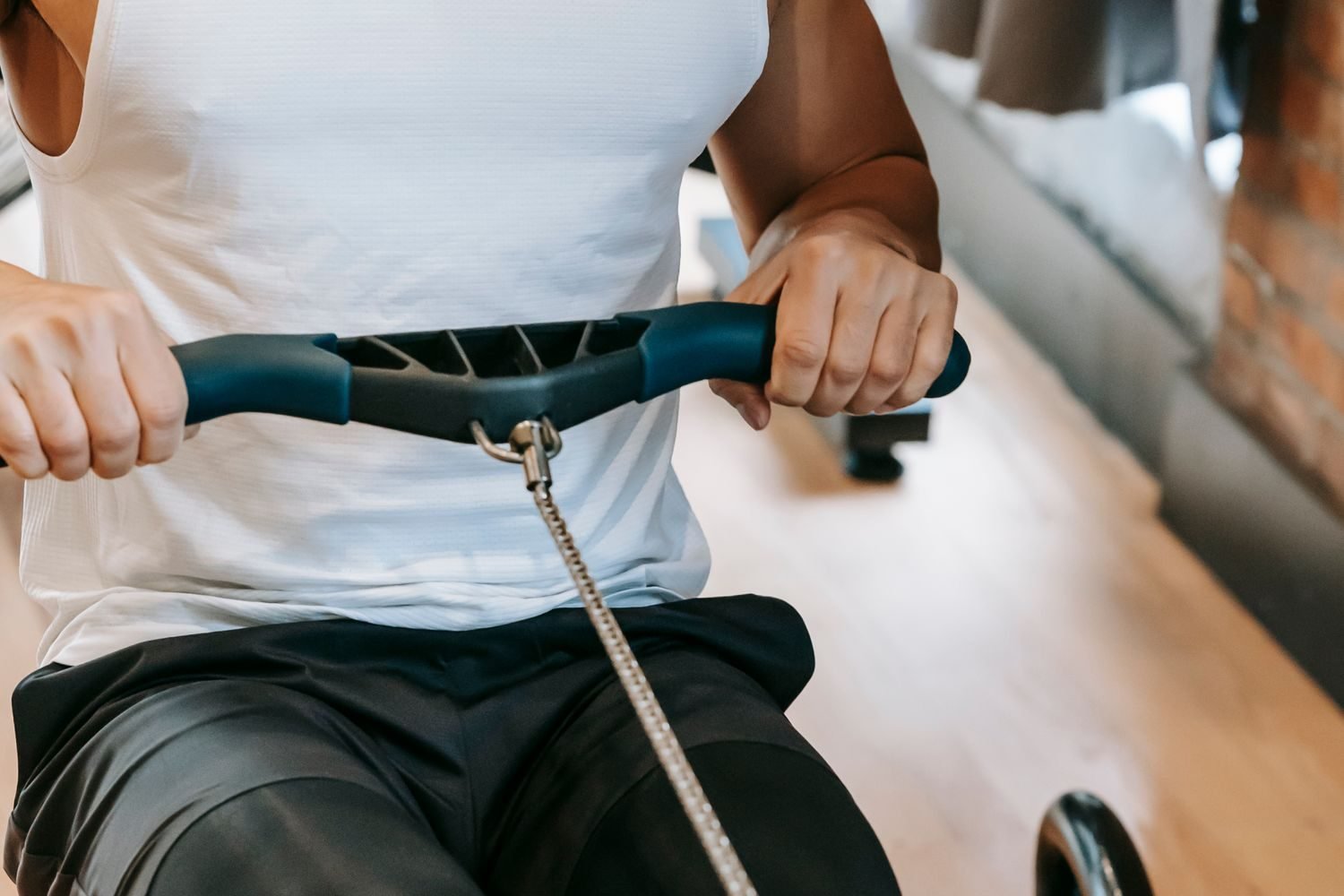
Both, and for different reasons. Free weights like barbells and dumbbells build raw strength and force your stabilizer muscles to work harder, which is why the deadlift and single-arm row sit early in the session above. Cables keep tension on the muscle through the entire range of motion, which is harder to replicate with free weights, especially for lat width and rear delt work. If you train in a commercial gym or have a home cable setup, we strongly recommend rotating in cable-based rows and pulldowns rather than relying only on barbells. We’ve broken this down further in our guide to cable back workouts, which pairs well with the free-weight-heavy session above if you want to alternate week to week.
How Often Should You Train Pull Day?
Most people training a push/pull/legs split hit pull day either once or twice a week. If you’re training three days a week, you’ll do one push, one pull, one legs, and repeat the cycle the following week. If you’re training six days a week, you run through push/pull/legs twice, which gives you two pull sessions weekly with roughly 72 hours between them. That gap is enough for the lats, biceps, and rear delts to fully recover as long as you’re eating and sleeping properly. Training pull muscles more than twice a week generally doesn’t add extra growth and just increases the risk of elbow and shoulder irritation from cumulative fatigue.
Do You Need A Coach To Get Pull Day Right?
You don’t need one to do a pull day workout, but most people underload their back and overload their biceps because biceps are easier to feel working. Rows and pulldowns require technique cues that are hard to self-correct in a mirror, and grip fatigue often masks poor lat engagement long before you notice anything’s off. This is exactly the kind of detail we correct in 1-on-1 personal training sessions at FitStrot, where Yash Pathak and our coaching team build your push/pull/legs programming around your actual strength levels, equipment access, and recovery capacity rather than a generic template pulled off the internet.
Frequently Asked Questions
What is a pull day workout?
A pull day workout is a training session built entirely around pulling movements, meaning every exercise brings weight toward your body rather than pushing it away. It’s one of the three sessions in a push/pull/legs split and typically includes deadlifts, rows, pull-ups, pulldowns, and curls.
What muscles are trained on pull day?
Pull day trains your lats, traps, rhomboids, rear deltoids, biceps, and forearms. The lats and traps do most of the heavy lifting during rows and pulldowns, while the biceps and forearms act as secondary movers and get direct isolation work at the end of the session.
How many exercises should a pull day have?
Six to eight exercises is the sweet spot for most people. That’s usually one heavy compound lift, two or three rowing or pulldown variations covering both vertical and horizontal patterns, one rear delt or trap movement, and one or two biceps exercises to close out the session.
What’s the difference between pull day and back day?
Back day is organized around a single muscle group and usually leaves biceps for a separate arm session. Pull day is organized around a movement pattern, so it automatically includes biceps and rear delts alongside the back because those muscles are always working together during pulling exercises anyway. Most modern splits favor pull day over an isolated back day because it matches how your body actually recruits muscle during training.
Can beginners do a full pull day workout?
Yes, though beginners should start with machine-assisted or bodyweight-regressed versions of the compound lifts, like an assisted pull-up machine instead of a weighted pull-up, until their grip strength and shoulder stability catch up. The exercise order and muscle groups stay the same, only the load and equipment change.