Yes, you can build strong, well-rounded shoulders at home, and you don’t need a rack of dumbbells to do it. What you need is a way to load your front, side, and rear delts through a full range of motion, two or three times a week, with enough resistance to challenge the muscle. A pair of adjustable dumbbells, a resistance band, or even just your bodyweight and a wall can get you there. At FitStrot we build home shoulder programs for clients across India who train in spare bedrooms and balconies, and the results hold up fine against gym-based training when the exercise selection and effort are right.
Can You Actually Build Shoulders Effectively at Home?
We get this question constantly from new clients who assume shoulders need a cable machine and a lateral raise station. They don’t. The deltoid is a small muscle group compared to your legs or back, and it responds well to moderate loads handled with control. A shoulder press, a raise, and a pulling movement for the rear delts cover almost everything the joint needs. You can do all three with equipment that fits in a gym bag.
What actually limits home shoulder training isn’t the equipment, it’s the load ceiling. Dumbbells that go up to 12-15kg per hand will train most beginners and intermediates for a long stretch, but eventually you’ll need to add resistance bands, slow the tempo down, or increase reps to keep pushing the muscle. That’s a programming problem, not a reason to give up on home training.
What Equipment Do You Need for a Shoulder Workout at Home?
The honest answer is: not much. Here’s what actually moves the needle.
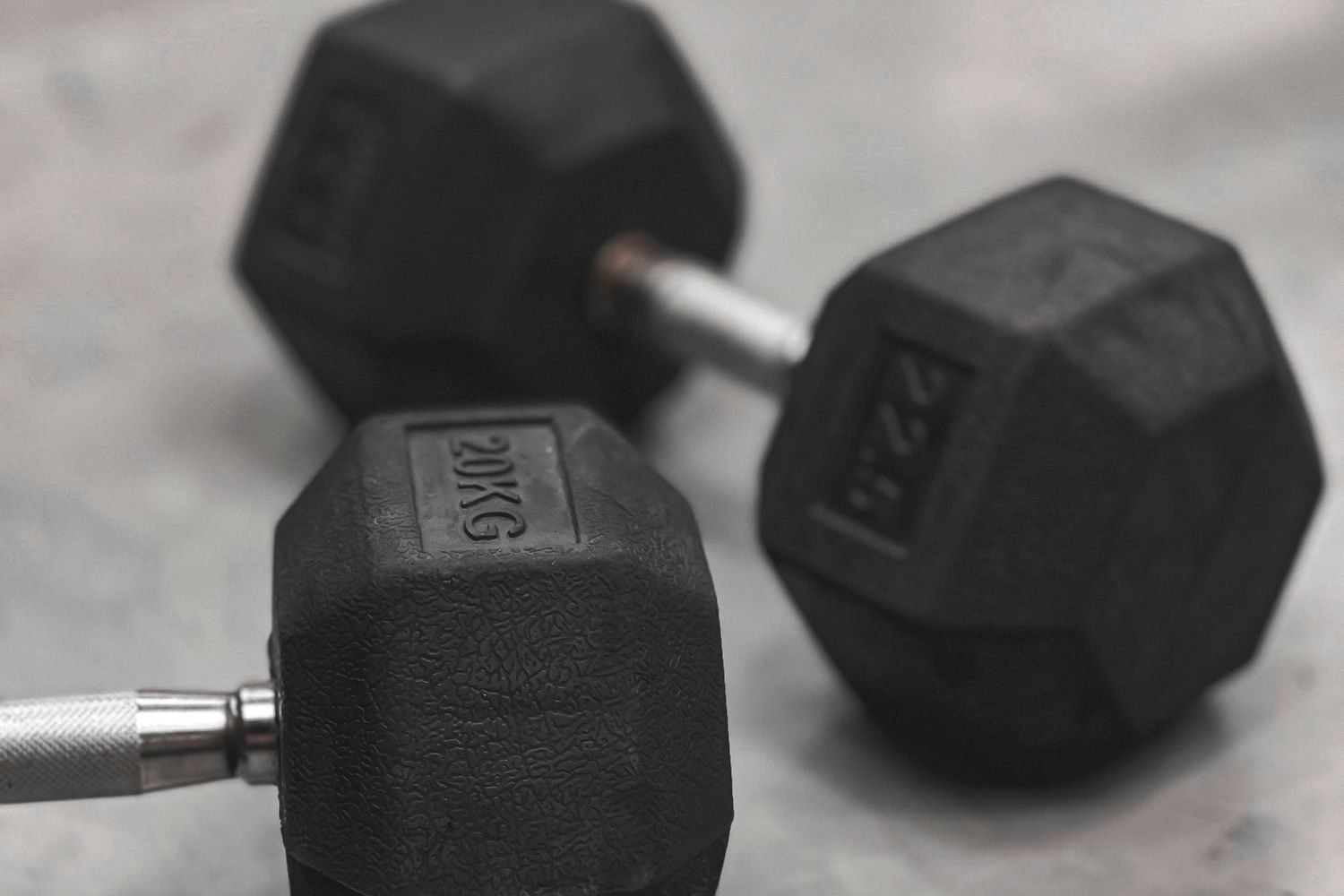
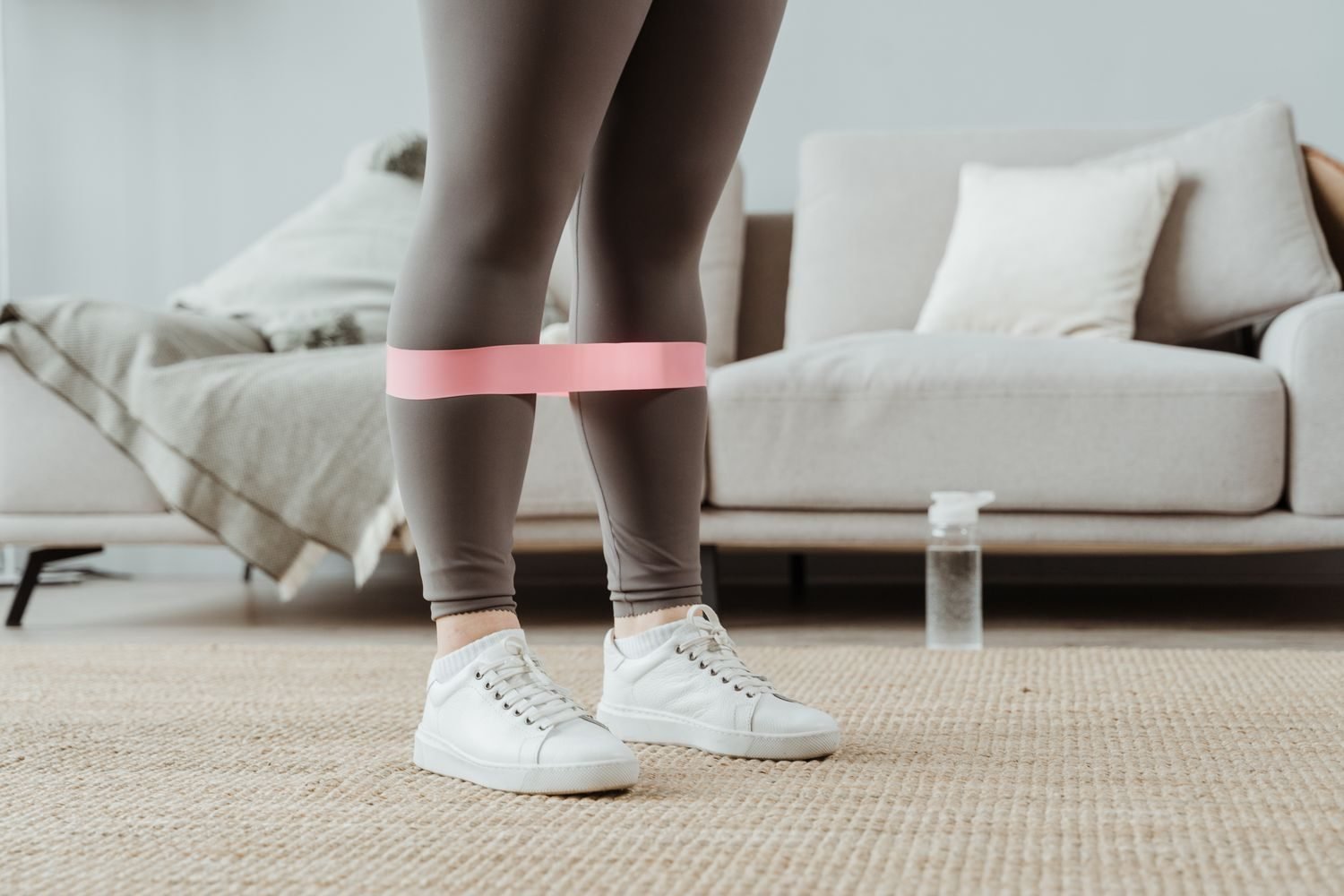
A pair of adjustable dumbbells is the single best investment. They let you press overhead, raise to the side, raise to the front, and row for rear delts, which covers the entire muscle group. If dumbbells aren’t available or you’re traveling, a resistance band with handles does almost the same job, and it actually keeps constant tension on the muscle in a way free weights can’t. A doorway anchor turns the band into a proper rowing and pull-apart tool for rear delts, which is usually the weakest and most neglected part of the shoulder.
Beyond that, a sturdy chair or low table is useful for pike push-ups, and that’s genuinely it. You don’t need a bench, you don’t need a squat rack, and you don’t need a machine. We’d rather a client own one good pair of adjustable dumbbells than a shelf of fixed-weight ones they outgrow in six weeks.
How Do You Train All Three Deltoid Heads Without a Gym?
The shoulder isn’t one muscle, it’s three heads working together, and home training only works if you hit all of them on purpose. If you want the full anatomy and exercise breakdown, our deltoid workouts guide goes deeper into how each head functions. Here’s the short version for home training.
The front delt gets worked by any pressing motion, overhead press, pike push-up, or a front raise, and it’s usually the head that needs the least direct attention because pushing exercises for chest already hit it. The side delt, which gives shoulders their width, needs lateral raises done with a controlled tempo since it’s easy to cheat this movement with momentum. The rear delt is the one almost everyone under-trains at home. Band pull-aparts, reverse flyes bent over at the hips, and face pulls through a doorway anchor are what actually build it. Skip rear delt work and your shoulders will look narrow and rounded forward no matter how much you press.
What Is a Good Bodyweight Shoulder Exercise If You Have No Equipment at All?
Pike push-ups are the best bodyweight option for shoulders. Set your hips high in a downward-dog position with hands and feet on the floor, then bend your elbows to lower your head toward the ground and press back up. This puts your shoulders under a vertical pressing angle close to an overhead press, which most bodyweight moves can’t replicate. Elevating your feet on a chair increases the load further.
For side and rear delts without equipment, you’re more limited, but wall walks, plank-to-downward-dog transitions, and slow arm circles held under tension can still create a training effect, especially for beginners. They won’t replace loaded raises long term, though. If you’re serious about shoulder size and shape, plan to add a resistance band within your first month of training, because bodyweight-only work plateaus quickly for this muscle group.
What Does a Full Home Shoulder Workout Look Like?
This is a session we actually program for clients who train with a pair of dumbbells and a band, no gym required. It takes about 35-40 minutes including warm-up.
| Exercise | Sets | Reps | Rest |
|---|---|---|---|
| Standing dumbbell shoulder press | 4 | 8-10 | 75 sec |
| Dumbbell lateral raise | 4 | 12-15 | 60 sec |
| Bent-over dumbbell reverse flye | 3 | 12-15 | 60 sec |
| Band face pull (doorway anchor) | 3 | 15-20 | 45 sec |
| Dumbbell front raise | 3 | 10-12 | 45 sec |
| Pike push-up | 3 | Max effort | 60 sec |
| Band pull-apart | 2 | 20 | 30 sec |
Start with the press because it’s the most demanding movement and you want fresh energy for it. The raises and pull movements come after, when a bit of fatigue actually helps you feel the target muscle instead of relying on momentum. If you only have a band and no dumbbells, swap the press for an overhead band press and the raises for banded versions anchored under your feet.
This pairs well as a standalone home session, but if you also train at a gym some weeks, our shoulder workout routine article covers the gym-equipment version with cables and machines for comparison.
How Do You Keep Progressing With Light Dumbbells or Bands?
This is where most home lifters get stuck. They buy one set of dumbbells, use the same weight for a year, and wonder why their shoulders stopped changing. Progression at home comes from a few levers besides just adding weight:
- Slow the eccentric (lowering) phase to three or four seconds, which increases time under tension without needing heavier resistance.
- Add a pause at the top of a lateral raise to take momentum out of the movement.
- Increase reps toward 20 or 25 before adding load.
- Change the resistance profile entirely by moving from dumbbells to a band, since bands get harder at the top of the movement rather than the bottom, training the muscle differently.
One pressing variation worth learning here is the Arnold press, which rotates the dumbbell through the movement and recruits the side delt more than a standard press does. It’s a good way to add variety to a home program once the basic press feels too easy.
What Mistakes Ruin Home Shoulder Training?
The biggest one is skipping rear delts entirely because they’re harder to feel and harder to see in a mirror. We see clients who’ve been pressing and raising for months with front delts that are overdeveloped and rear delts that never got trained, and their shoulders end up rounded forward instead of balanced. Fix this by treating pull-aparts and reverse flyes as non-negotiable, not an afterthought at the end of the session.
The second mistake is using momentum on lateral raises, swinging the dumbbells up with the hips instead of lifting with the shoulder. If you can’t control the weight on the way down, it’s too heavy. Drop the load and slow down. The third is training shoulders only once every couple of weeks because motivation dips without a gym environment around you. Consistency matters more than any single exercise choice.
How Often Should You Train Shoulders at Home?
Two to three sessions a week works well for most people, spaced with at least one rest day between them since the deltoids also get worked indirectly during chest and back training. Beginners can start with two sessions and add a third once they’ve built the habit and their joints feel ready for more volume. Training shoulders every single day isn’t a shortcut, it just accumulates fatigue without letting the muscle recover and grow.
If you want this dialed in around your specific schedule, equipment, and goals rather than following a generic template, that’s exactly what our coaches build with you inside 1-on-1 personal training at FitStrot. You get a program built for your home setup, form checks on video, and adjustments as you progress, instead of guessing whether you’re doing it right.
Can you build shoulders effectively at home?
Yes. The deltoid responds well to moderate loads and doesn’t require machines. A press, a raise, and a rear delt pulling movement done consistently with dumbbells or bands will build strength and size over time.
What equipment do you need for a shoulder workout at home?
A pair of adjustable dumbbells is the most versatile option. A resistance band with a doorway anchor is a strong second choice, especially for rear delt work. Both together give you everything you need without a gym.
What is a good bodyweight shoulder exercise?
Pike push-ups are the best bodyweight option because they load the shoulder in a pressing pattern similar to an overhead press. Elevating your feet on a chair or bench increases the difficulty further.
How often should you train shoulders at home?
Two to three times a week, with at least a day of rest between sessions, works for most people. Beginners should start at two sessions and build up once form and recovery feel solid.
Do resistance bands actually work as well as dumbbells for shoulders?
They work differently rather than better or worse. Bands keep tension on the muscle throughout the movement and get harder near the top, while dumbbells are hardest at the point where the arm is furthest from the body. Using both across a week gives you a more complete training stimulus than relying on just one.