A good back workout for beginners at the gym combines one pulling machine, one rowing movement, and one lower-back stability exercise, done for 3 sets of 10-15 reps with 60-90 seconds of rest between sets. At FitStrot, we build most beginner back sessions around the lat pulldown, the seated cable row, and a simple back extension before anyone touches a barbell row or a deadlift bar. This keeps the movement pattern easy to learn, protects the lower back while the client figures out how to brace properly, and builds the mind-muscle connection you need before free weights get added to the mix.

Why does back day trip up so many beginners?
You can’t see your back in the mirror while you train it, and that’s the whole problem. With chest or biceps, you get instant visual feedback. With back exercises, most people end up guessing whether they’re actually pulling with their lats or just yanking the weight with their arms and shoulders. We build every beginner program around exercises that make this connection obvious, because a client who can’t feel their back working will never load it correctly, no matter how heavy the weight gets.
There’s also a coordination gap. Pulling movements ask your shoulder blades to move first and your arms to follow. Most people do the opposite. It takes a few weeks of deliberate practice before that sequence starts to feel natural, and that’s completely normal. Nobody walks into a gym already knowing how to pull correctly.
Should beginners use machines or free weights for back training?
Start with machines and cables. This isn’t a compromise or a lesser version of “real” training. Machines fix your path of motion for you, so a beginner can focus entirely on feeling the target muscle work instead of also worrying about balance, bar path, and stabilization all at once. A lat pulldown teaches the same pulling pattern as a pull-up, but it removes the strength barrier that stops most beginners from doing a single rep with bodyweight alone.
Cables sit in the middle. They still require some stabilization, but they’re forgiving on the joints and let you adjust angles easily — our cable back workouts guide covers exercises built entirely around that adjustability, which is useful once someone has a few weeks of machine work under their belt. Free weights, meaning barbell rows, dumbbell rows, and eventually deadlifts, come in once form is consistent and the client can brace their spine without thinking about it. We generally move clients through this progression over four to eight weeks, though it depends entirely on how quickly the movement pattern clicks for that person.
If your gym has a smith machine, avoid using it for rows early on. It locks your bar path into a straight vertical line, which doesn’t match how your shoulder blades actually move, and beginners tend to compensate with their lower back instead.
What does correct back exercise form actually look like?
Three things matter more than anything else when you’re new to back training:
- Lead with your elbows, not your hands. On a row or a pulldown, think about driving your elbow back and down rather than pulling the handle toward you. This small mental cue shifts the work from your forearms and biceps into your lats almost immediately.
- Keep your ribs down and your spine in a neutral position. A lot of beginners arch their lower back hard on rows to move more weight. That’s not strength, it’s compensation, and it’s the fastest route to a strained lower back. If you have to lean back dramatically to finish a rep, the weight is too heavy.
- Control the stretch. The bottom part of a pulling movement, where your arm is extended and your shoulder blade is stretched forward, is where beginners rush the most. Slow that portion down. It’s also where most of the muscle growth signal comes from, so skipping it defeats the purpose of the set.
What’s a complete beginner back workout you can run today?
Here’s a session we’d hand to someone in their first month of structured training. It hits the lats, the mid-back, and the lower back without overloading the nervous system or the joints.
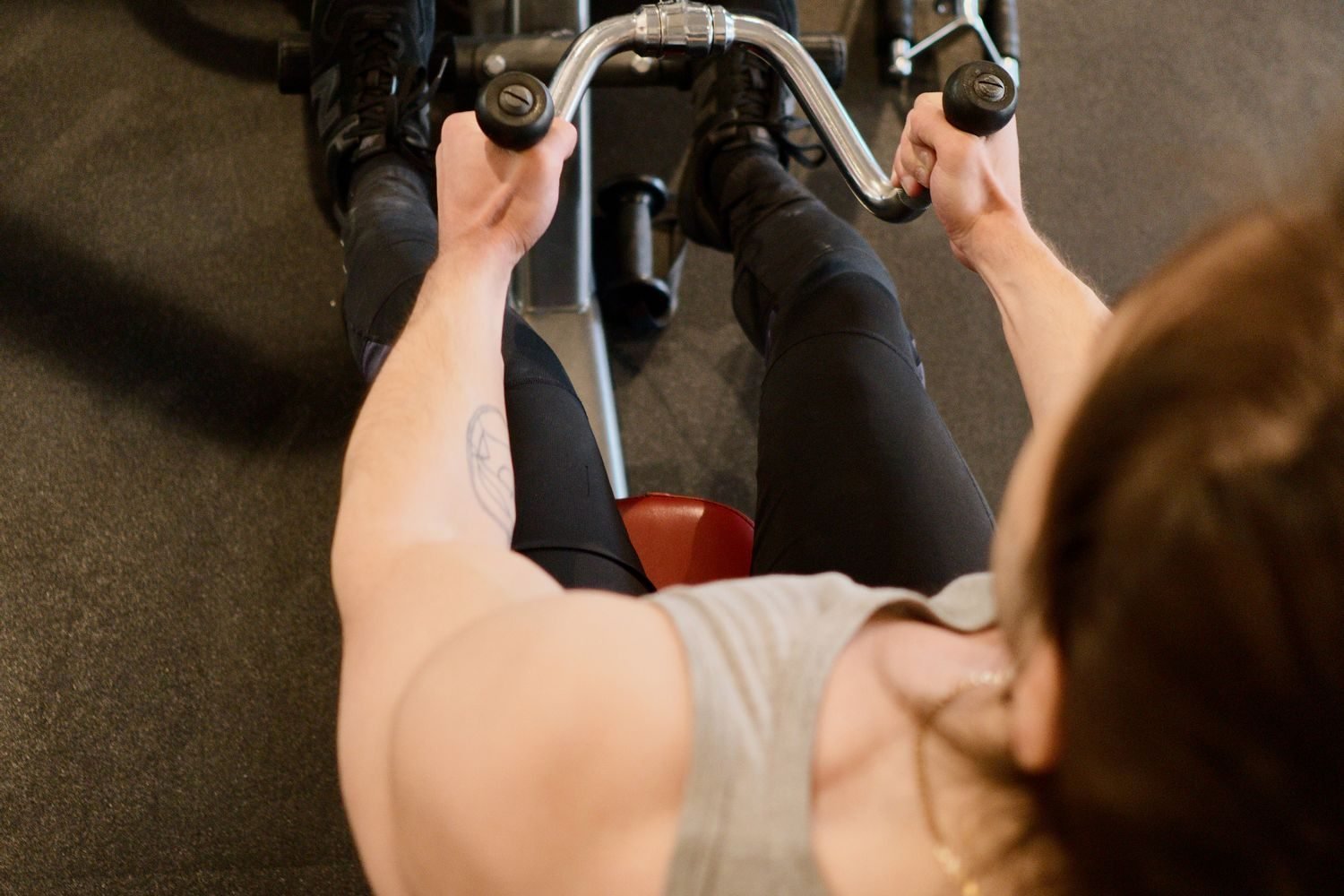
| Exercise | Sets | Reps | Rest |
|---|---|---|---|
| Lat Pulldown (wide grip) | 3 | 10-12 | 75 seconds |
| Seated Cable Row | 3 | 10-12 | 75 seconds |
| Assisted Pull-up or Straight-Arm Pulldown | 2 | 8-10 | 60 seconds |
| Chest-Supported Machine Row | 3 | 12-15 | 60 seconds |
| Back Extension (bodyweight) | 2 | 12-15 | 45 seconds |
Do this session twice a week with at least one rest day between sessions. Warm up with two light sets on the lat pulldown before you load your working weight, and stop each set one or two reps before your form starts to break down. Once you’re comfortable pulling this off with clean technique for a few weeks, our back and biceps workout is a natural next step that pairs pulling movements with direct arm work.
How many exercises and sets does a beginner actually need?
Four to five exercises per session is plenty. We see a lot of new clients come in wanting to do eight or nine different back movements because they read that more variety builds a better back. It doesn’t, not at this stage. What actually builds a beginner’s back is doing a handful of exercises consistently, with good form, across enough weeks that the pattern becomes automatic and the muscle adapts to the load.
Aim for 10-15 total working sets across the week, split over two sessions. That’s enough stimulus to drive real progress without leaving you so sore you can’t train again on schedule. Once your technique is solid and you’ve built a foundation of strength, you can start layering in more targeted work, like cable-based training for constant tension through the full range of motion, or dedicated isolation workouts to bring up specific weak points once you know where they actually are.
Is it safe for beginners to deadlift?
Not on day one, and not without coaching. The deadlift is a fantastic exercise, but it’s also one of the least forgiving lifts when form breaks down under load. A beginner who hasn’t learned to hinge at the hips, brace their core, and keep a neutral spine is at real risk of turning a simple exercise into a lower-back injury.
Our approach is to build the hip hinge pattern first with lighter, more controlled variations. A Romanian deadlift with light dumbbells or a trap bar deadlift with an empty or lightly loaded bar teaches the same hip movement without the technical demands of pulling from the floor with a straight barbell. Once that pattern is second nature and your lower back stays neutral under light load, adding a conventional deadlift with proper coaching is completely reasonable. Skipping straight to a loaded barbell deadlift as your first-ever back exercise is where most avoidable injuries happen.
What should you do once this workout feels easy?
Progress the exercises before you progress the weight blindly. Add a rep or two each week, then add small increments of load once you’re hitting the top of your rep range with good form across all sets. After six to eight weeks, most beginners are ready to add a free-weight row and start reducing their reliance on machines for every movement.
This is also the point where a lot of people plateau because they’re guessing at progression on their own, second-guessing their form, or just not sure what to change next. That’s exactly the gap our 1-on-1 personal training service is built to close. You get a coach watching your form in real time, adjusting your program as you get stronger, and making sure your back training actually builds the strength and the physique you’re training for, instead of stalling out after the first few weeks.
What is a good back workout for beginners at the gym?
A good beginner back workout uses two to three machine or cable exercises, done for 2-3 sets of 10-15 reps, twice a week. The lat pulldown, seated cable row, and a back extension cover the major pulling patterns without requiring advanced technique or heavy free-weight loading.
What back machines should beginners start with?
Start with the lat pulldown and the seated cable row. Both machines guide your movement path, so you can focus on pulling with your back instead of managing balance or bar control. A chest-supported row machine is a good third option once you’re comfortable with the first two.
How many back exercises should a beginner do?
Four to five exercises per session is enough. More variety doesn’t speed up progress for someone new to training. Consistency with a small set of exercises, done with good form over several weeks, builds strength and muscle far more reliably than constantly switching movements.
Is it safe for beginners to deadlift?
Deadlifting isn’t off-limits for beginners, but it shouldn’t be the first back exercise you learn. Build the hip hinge pattern with lighter variations like a Romanian deadlift or trap bar deadlift first, ideally with a coach checking your form, before loading a conventional barbell deadlift.
How often should beginners train their back each week?
Twice a week works well for most beginners. It gives you enough frequency to reinforce the movement pattern and build strength, while leaving enough recovery time between sessions since the back is involved in almost every other pulling and posture-related movement you do throughout the week.
Do beginners need to warm up before back exercises?
Yes. A couple of light sets on your first exercise, like an easy lat pulldown before your working weight, raises blood flow to the muscles you’re about to train and gives you a chance to rehearse the movement pattern before you add real load.