An abs workout for gym beginners is a short, technique-first core session built around 3 to 5 exercises that teach you to brace, breathe, and control your spine before you ever add load or complexity. At FitStrot we build these sessions around basic machine and floor movements like the cable crunch, plank, and leg raise, done for moderate reps with real rest between sets. The goal isn’t to exhaust you in your first week. It’s to get your form right so the exercises you add later actually work.
What Should a Beginner’s Abs Workout Actually Include?
A beginner core session needs three things: a movement that trains flexion (crunching forward), a movement that trains anti-extension (resisting your lower back from arching), and a movement that trains anti-rotation or a static hold. Most beginners walk into the gym and do the opposite. They pick whatever machine looks familiar from a YouTube video, do a random number of reps, and leave without knowing if any of it worked.
We program beginner ab days around control first, load second. That means a plank before a weighted crunch, and a slow, deliberate leg raise before anything explosive. If you want the broader picture of how ab training fits into a full program, our ab workouts guide walks through the principles in more depth. This article stays narrow on purpose: it’s for someone who hasn’t trained abs in a gym before and needs a starting point that won’t wreck their form or their motivation.
Which Gym Machines and Equipment Should Beginners Use for Abs?
You don’t need much. A cable stack, a mat, and maybe a Roman chair or captain’s chair cover almost everything a beginner needs for the first two months. Here’s how we’d point a first-timer around a typical gym floor.
The cable crunch machine (or a cable column with a rope attachment) is one of the best starting points because the cable controls the resistance path for you. You kneel, hold the rope behind your head, and crunch down using your abs, not your arms. It’s far more forgiving than a floor crunch because you can’t cheat the range of motion as easily.
The captain’s chair, that padded station with armrests where you hang and lift your knees, is the second piece worth learning early. It trains the lower abs and hip flexors together, and it teaches you to control a hanging position, which carries over to almost every other core exercise you’ll do later.
Skip the ab rollout wheel and hanging leg raises for now. Both are excellent exercises, but they punish poor bracing technique more than almost anything else in the gym, and beginners tend to load their lower back instead of their abs when they try them too early.
How Many Ab Exercises and Reps Should a Beginner Do?
Three to four exercises per session is plenty when you’re new. We see a lot of beginners assume more exercises means more results, so they string together eight or nine moves and burn out halfway through, with sloppy form on the back half of the workout. That’s backwards. Four exercises done with full control and proper breathing beat nine exercises rushed through on autopilot.
For reps, aim for 10 to 15 controlled reps on dynamic movements like crunches and leg raises, and 20 to 40 second holds on static ones like planks. Rest 45 to 60 seconds between sets. That’s enough recovery to keep your form sharp without turning the session into an hour-long ordeal.
What Does a Sample Beginner Gym Abs Workout Look Like?
Here’s a session we’d actually hand a first-time client at FitStrot. It takes about 20 minutes including rest, and every exercise on it is chosen because it’s hard to get badly wrong.
| Exercise | Sets | Reps / Time | Rest |
|---|---|---|---|
| Cable crunch (rope attachment) | 3 | 12-15 reps | 60 sec |
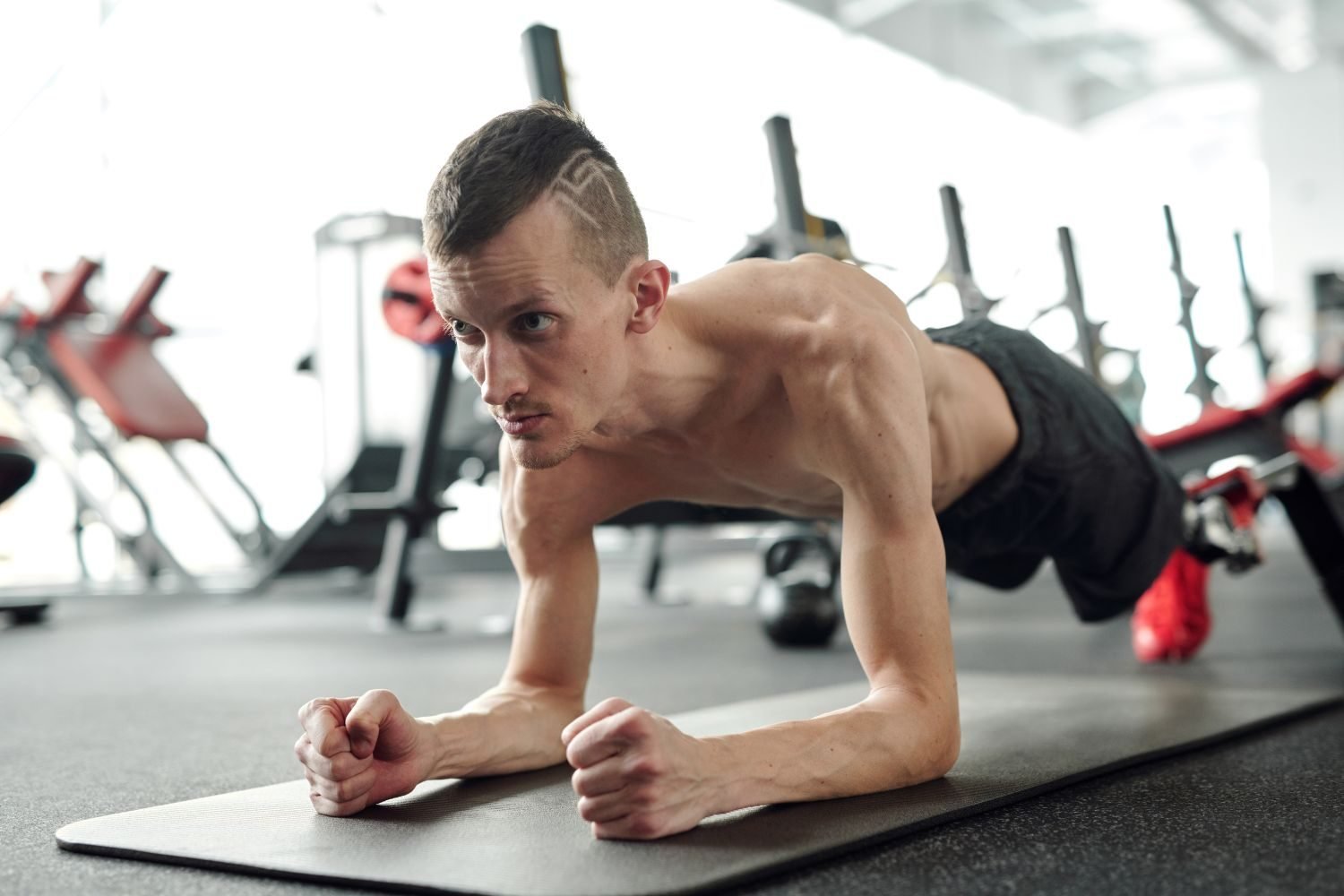
| Plank (forearm) | 3 | 20-30 sec hold | 45 sec |
| Lying leg raise (floor or bench) | 3 | 10-12 reps | 45 sec |
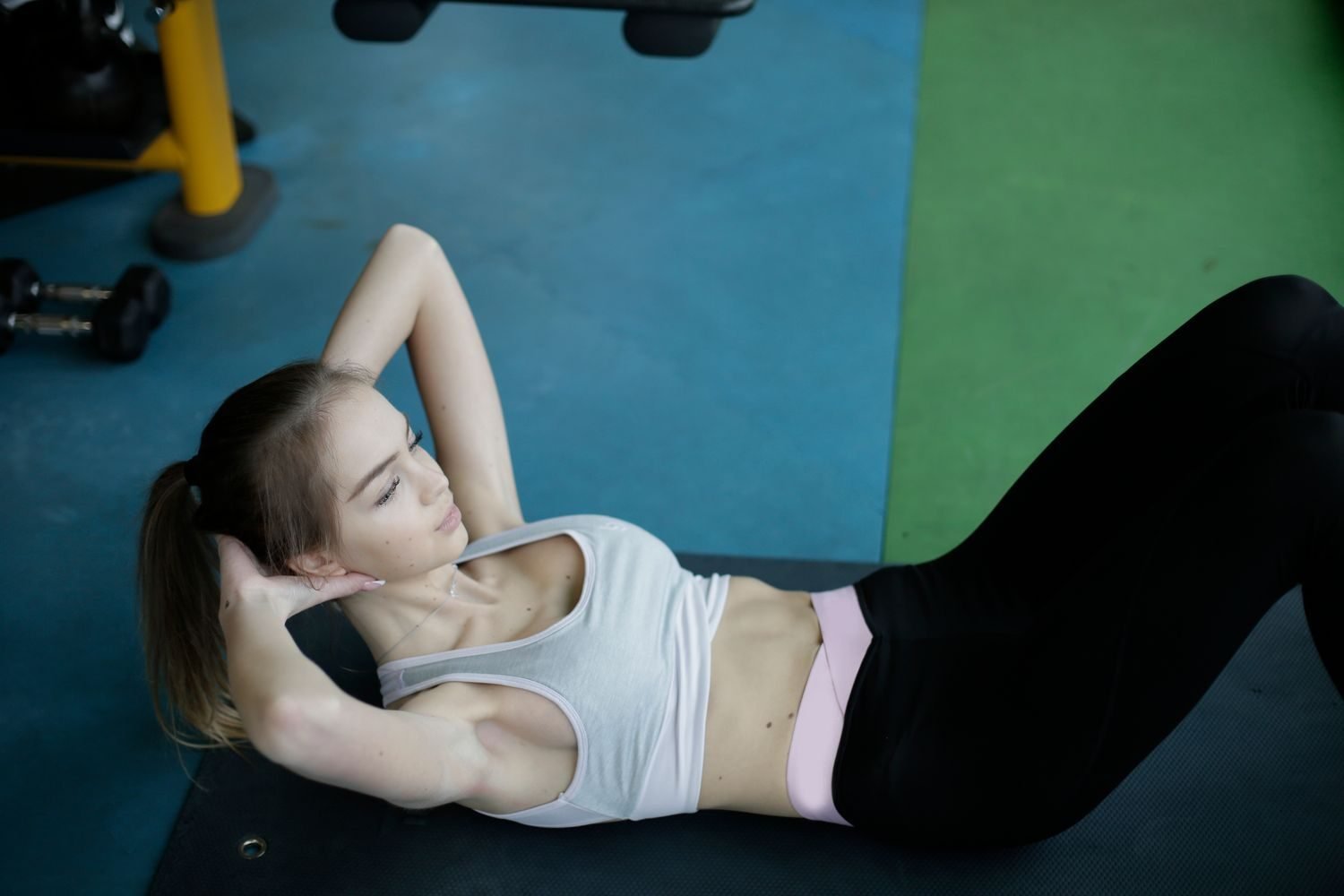
| Bicycle crunch | 2 | 12-15 reps per side | 45 sec |
Do this two to three times a week, always as part of a bigger session rather than an ab-only day. Once this feels easy and your form is consistent, that’s your cue to progress to a longer, more varied session. Our full gym ab workout is built for exactly that stage, with more exercises, added resistance, and less hand-holding on technique.
Will This Workout Give You Visible Abs?
Honestly, not on its own. Ab exercises build the muscle underneath, but whether you can see that muscle comes down to your body fat percentage, which is driven almost entirely by diet and overall training consistency, not by how many crunches you do. You can have strong, well-developed abs and still not see them if there’s a layer of fat sitting over them. This trips up a lot of beginners who expect a few weeks of crunches to reveal a six-pack.
We’re not going to pretend this is complicated. Train your abs for strength and control, eat in a way that supports fat loss if that’s your goal, and be patient. We go into the diet and body composition side of this in detail in our six-pack workout article, which pairs well with this one if visible abs are specifically what you’re after.
How Often Should Beginners Train Abs?
Two to three sessions a week is the sweet spot for someone just starting out. Your abs are a muscle group like any other. They need recovery time between sessions, especially early on when soreness tends to be worse simply because the tissue isn’t used to the work yet.
Training abs every single day doesn’t speed up results and it often gets in the way of proper form, since you’re rarely training a group hard enough to need daily work but you are tired enough to start cutting corners on technique. Two or three focused sessions, done well, beat seven rushed ones.
What Mistakes Do Beginners Make With Gym Abs Workouts?
Beginners tend to repeat the same few errors when they start training abs in the gym:
- Pulling with the neck and arms instead of the abs, especially on cable crunches and floor crunches. If your neck is sore the next day and your abs aren’t, that’s usually the reason. The fix is simple: keep your chin tucked slightly, hands lightly touching your head or the rope, and let the movement come from your ribs curling toward your hips.
- Holding your breath through the whole set. Exhale as you crunch or lift, inhale as you return to the start. It sounds minor but it changes how well you can actually brace, and it stops you from getting lightheaded halfway through a set.
- Judging the workout by how sore you are the next day. Soreness isn’t a reliable measure of progress, particularly for abs. Consistency and gradually adding reps or resistance over weeks matters far more than how much a session burns in the moment.
Where Do You Go From Here?
This workout is a starting point, not a permanent plan. After four to six weeks of consistent sessions, you’ll likely need more volume, added resistance, or new exercises to keep progressing, and that’s a good problem to have. If you want a program built specifically for your goals, your schedule, and where you actually are right now, that’s what our 1-on-1 personal training is for. We build it around you rather than handing you a generic template and hoping it fits.
Frequently Asked Questions
What is a good abs workout for gym beginners?
A good beginner abs workout uses 3 to 4 exercises covering flexion, anti-extension, and rotation, such as cable crunches, planks, and leg raises. Keep reps controlled, rest 45 to 60 seconds between sets, and prioritize form over how much weight or how many reps you can grind out.
How many ab exercises should a beginner do?
Three to four exercises per session is enough for most beginners. Doing more than that usually leads to rushed form and fatigue-driven mistakes by the last few exercises. Focus on quality reps across fewer movements rather than stacking a long list of exercises you can’t perform well by the end.
Can beginners get abs without a gym?
Yes, bodyweight moves like planks, bicycle crunches, and leg raises build the same core strength as gym equivalents. What matters more for visible abs is your diet and body fat percentage, which you can manage without a gym membership. A gym just gives you more resistance options as you progress.
How often should beginners train abs?
Two to three times a week is ideal for beginners. Abs recover like any other muscle group, and training them daily doesn’t speed up progress. It usually just adds fatigue that leads to poorer form, especially early on when technique still needs the most attention.
Do I need special gym equipment to start training abs?
No. A mat and access to a cable machine cover most of what a beginner needs. A captain’s chair is useful once you’re comfortable, but none of it is mandatory. Bodyweight versions of the same movements work fine while you’re still learning to brace and control your spine properly.