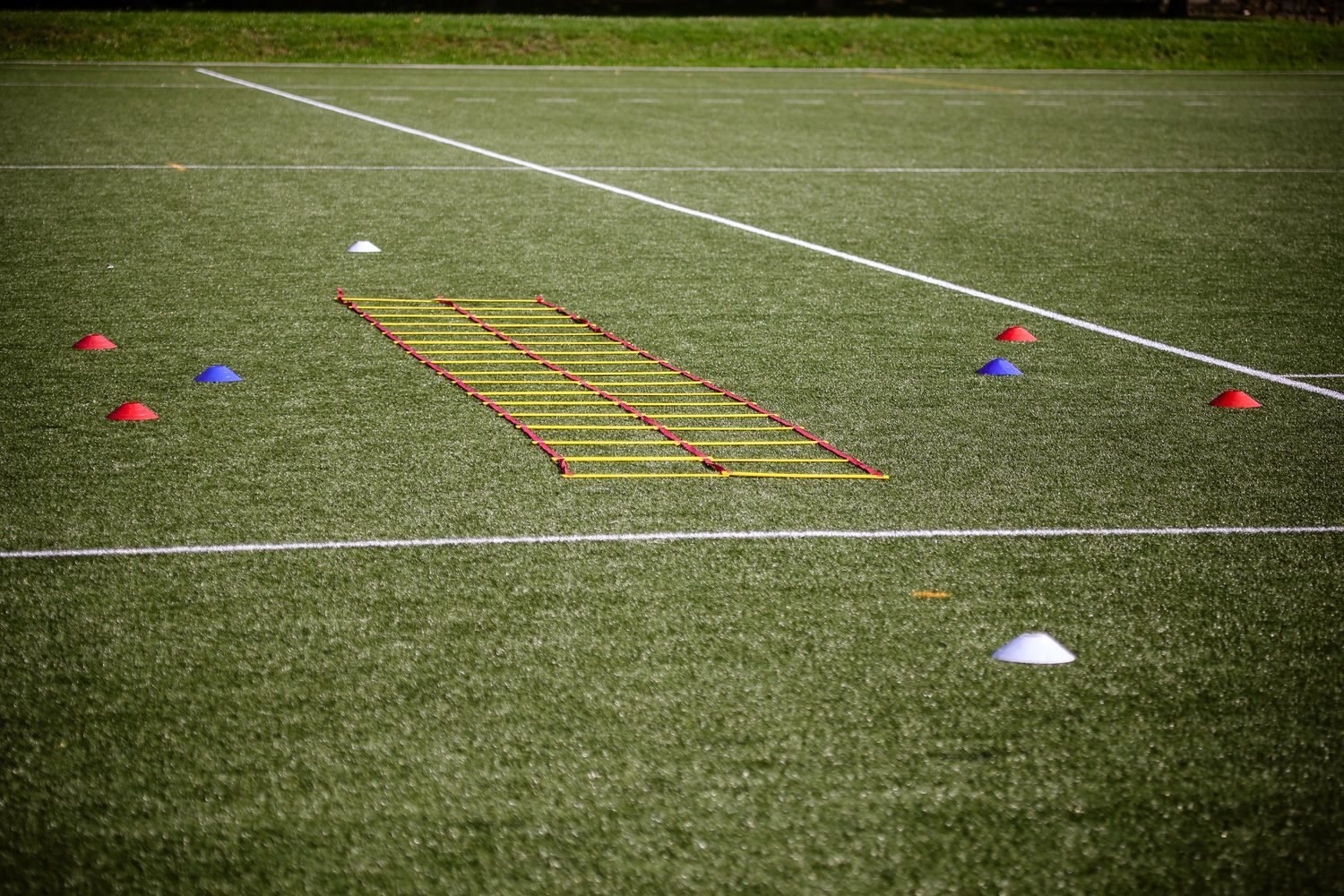
Agility workouts are training sessions built around quick changes of direction, fast footwork, and reactive movement, using drills like ladder runs, cone shuffles, and lateral bounds to improve how fast your body can start, stop, and change course. Unlike straight-line cardio, agility work trains your nervous system as much as your muscles. At FitStrot, we program agility drills for clients who want to move better in real life, not just look fit on a treadmill. It’s the training that separates someone who can run fast from someone who can actually change direction without falling over or tweaking a knee.
Why Does Agility Training Matter for Everyday Fitness?
Most gym programs focus on moving in one plane, forward and back on a treadmill, up and down on a squat. Real life doesn’t work that way. You step off a curb wrong, you lunge to catch a falling bag, you pivot to dodge someone on a crowded street. Agility training closes that gap. It builds the coordination between your eyes, brain, and muscles that lets you react to something unexpected without your body freezing up or overcorrecting.
We build agility work into client programs for a simple reason: it improves proprioception, which is your body’s sense of where it is in space. Better proprioception means fewer ankle rolls, fewer falls, and better balance as you age. It also carries over directly into sports like badminton, football, and tennis, all of which demand sharp direction changes under fatigue.
What Actually Happens in an Agility Workout?
An agility session usually combines a few categories of drills:
- Ladder drills train foot speed and coordination in tight spaces.
- Cone drills train deceleration and acceleration, the two skills most people never train directly.
- Lateral bounds build the hip and ankle strength needed to push off sideways instead of just forward.
- Reaction drills, where you respond to a call, a ball drop, or a partner’s cue, train your decision-making speed under time pressure.
None of these drills are complicated on their own. What makes them effective is stacking them with intent, short bursts, full recovery, and a focus on clean movement quality over exhausting yourself. We program agility work early in a session, right after the warm-up, because it demands a sharp nervous system. Doing ladder drills after a heavy leg day defeats the purpose since fatigue slows reaction time and sloppy footwork becomes the norm.
How Do You Structure an Agility Training Session?
A well-built agility session is short, focused, and never longer than 25 to 30 minutes of actual drill work. Here’s a sample session we’d use with a client building general athleticism, something we often layer into a broader athletic performance training block.

| Drill | Sets x Reps / Duration | Rest |
|---|---|---|
| Ladder drill: In-in-out-out | 3 x through ladder (10 sec each) | 30-40 sec |
| Cone shuffle (5 cones, lateral) | 4 x 15 sec | 40 sec |
| Lateral bounds (side to side) | 3 x 8 per side | 45 sec |
| 5-10-5 pro agility shuttle | 4 x 1 rep | 60 sec |
| Reaction ball drops (partner cue) | 3 x 8 catches | 45 sec |
Notice the rest periods aren’t short. Agility drills rely on speed and sharp technique, not on grinding through fatigue. If you’re gasping for air by the third set, you’re either resting too little or turning an agility session into a conditioning one by accident. That’s a different goal entirely, and one we’d address separately with a proper conditioning block instead.
How Often Should You Train Agility?
Two to three sessions a week is enough for most people. Agility is a skill, and skills improve through frequent, low-fatigue practice rather than occasional exhausting sessions. We’d rather see a client do 20 minutes of sharp footwork twice a week than one grueling hour-long session that leaves them too sore to move well the next day.
If you’re an athlete prepping for a specific sport season, you can push toward three or four short sessions weekly, especially in the eight weeks before competition starts. For general fitness clients, twice weekly slotted into a broader workout plan alongside strength and conditioning days works well without overloading the joints, which take on real stress during rapid direction changes.
Do You Need Equipment for Agility Training?
No, and this is where a lot of people talk themselves out of starting. An agility ladder and a set of cones help, sure, they make drills easier to structure and track. But you can run the exact same patterns using tape marks on the floor, water bottles as cone substitutes, or even just verbal cues for a partner drill. What actually matters is the movement pattern, not the gear.
We see clients make the mistake of thinking they need a fully stocked home gym before they can start agility work. In reality, a 10 by 10 foot patch of floor and a phone timer gets you 90% of the benefit. Save the ladder purchase for once you know you’ll stick with it.
Who Benefits Most from Agility Workouts?
Athletes are the obvious group, anyone playing football, badminton, tennis, or basketball needs this training built into their week. But agility work isn’t just for sport. Older adults benefit hugely from it because falls, not heart disease, are often what takes away independence first. Desk workers benefit because sitting all day dulls reactive movement patterns, and most people don’t notice until they roll an ankle stepping off an uneven sidewalk.
Weight loss clients often skip agility training because they assume it’s only for athletes chasing a sport-specific edge. That’s a mistake. Short bursts of agility work spike your heart rate the same way interval training does, and the coordination demand means you’re burning calories through skill acquisition too, your brain is working overtime alongside your muscles. It won’t replace a structured strength and conditioning plan for fat loss, but it’s a strong addition, not a substitute.
What Mistakes Do People Make with Agility Training?
The biggest one is rushing the drills before the pattern is clean. Speed without technique just builds bad habits faster. We always tell clients to slow a drill down until the footwork is correct, then add speed gradually. The second mistake is skipping a proper warm-up. Agility work asks your ankles, knees, and hips to handle force from odd angles, so a warm-up that includes dynamic stretches and a few light shuffles matters more here than in a straight strength session.
The third mistake is treating agility training as separate from everything else in your program. It works best woven into a broader plan that includes strength work for the joints supporting all that quick movement, plus enough conditioning to handle repeated efforts without breaking down.
How Do You Get Started?
Start with two sessions a week, keep them short, and prioritize clean movement over speed for the first month. Use the sample table above as a template and adjust volume based on how your joints feel the next day. If your ankles or knees ache after sessions, scale back the intensity and check your footwear, flat stable shoes matter more here than in most other training.
Every client is different though, and a generic drill list only gets you so far. If you want a program built specifically for your goals, whether that’s sport performance, fall prevention, or general athleticism, that’s what our 1-on-1 personal training is for. We assess how you move first, then build the agility work around what your body actually needs.
Frequently Asked Questions
What are agility workouts?
Agility workouts are training sessions focused on quick changes of direction, fast footwork, and reactive movement. They typically include ladder drills, cone shuffles, lateral bounds, and reaction-based exercises. The goal is to improve coordination, balance, and how quickly your body can start, stop, or pivot, skills that carry over into sport and daily movement alike.
Do you need cones or a ladder for agility training?
No. Cones and ladders make drills easier to structure, but they’re not required. You can mark patterns with tape, use household objects as markers, or run partner-cued reaction drills with no equipment at all. What matters is practicing the movement pattern consistently, not the gear you use to outline it.
How often should you train agility?
Two to three short sessions a week works well for most people. Agility is a skill that improves through frequent, low-fatigue practice rather than occasional exhausting workouts. Athletes prepping for a season can push toward three or four sessions weekly, while general fitness clients usually do fine slotting two sessions into their broader weekly plan.
Can agility training help with weight loss?
Yes, though it works best as an addition rather than a replacement for strength and conditioning work. Short, intense bursts of agility drills raise your heart rate similarly to interval training, and the coordination demand adds extra effort beyond pure cardio. Combined with a structured strength program, it supports fat loss well.
Can beginners do agility workouts?
Absolutely. Beginners should start slower than they think necessary, focusing on clean footwork before adding speed. Simple drills like basic ladder patterns and short lateral shuffles build the coordination base needed for more advanced work later. Rushing into fast, complex drills too early is the most common reason beginners get frustrated or hurt.