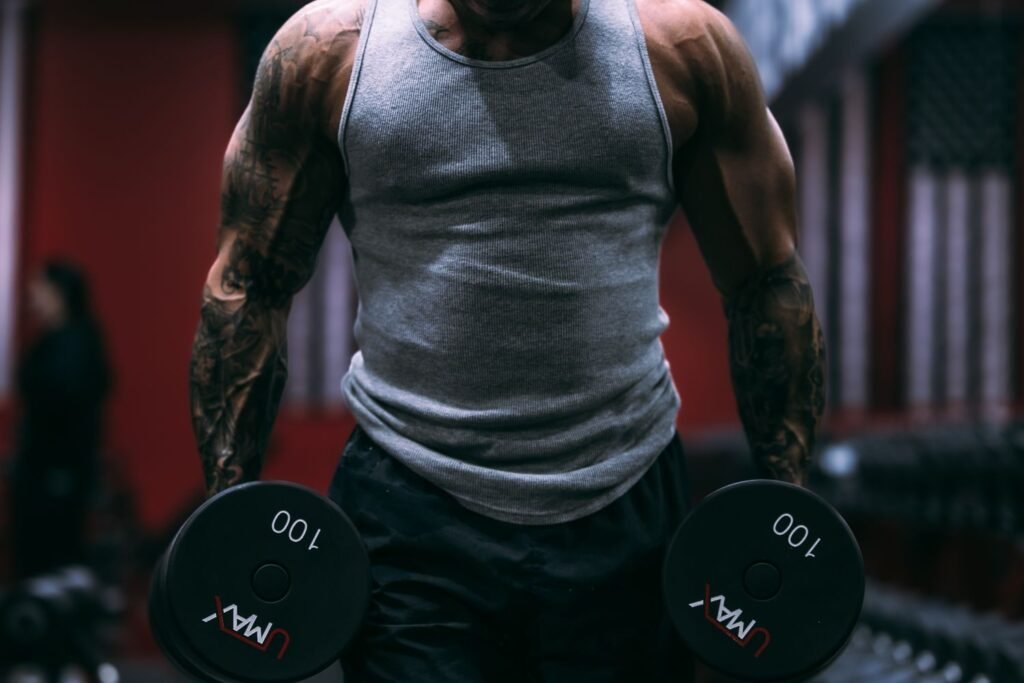
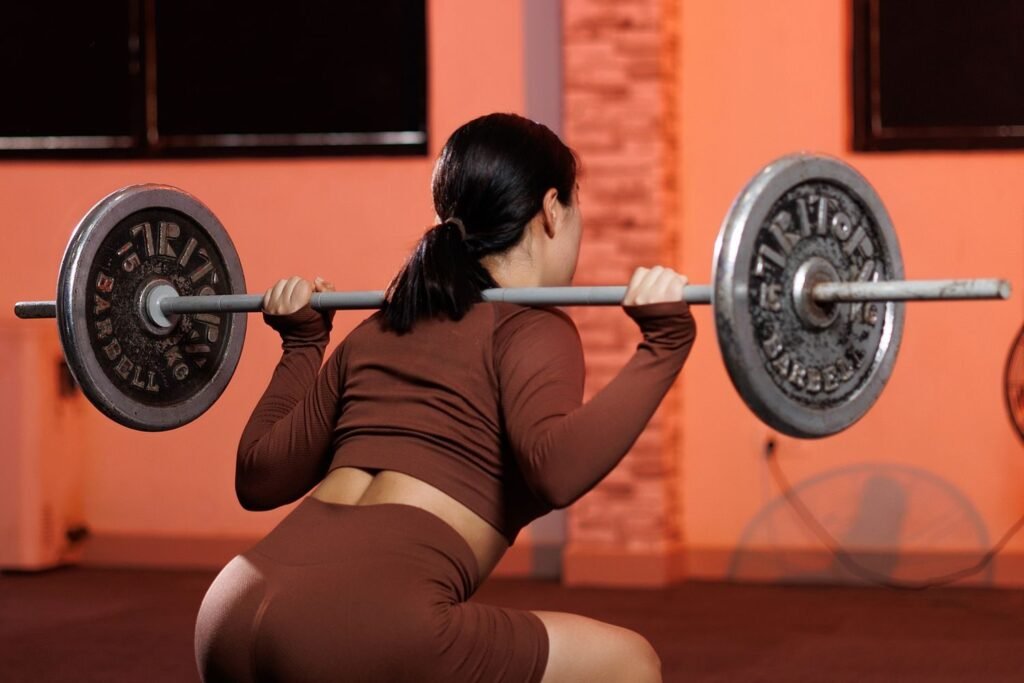
Ab workouts are exercises that target your core muscles, mainly the rectus abdominis (the “six-pack” muscle), the obliques on your sides, and the deep transverse abdominis that wraps around your midsection like a corset. Good ab workouts don’t need a gym. Crunches, planks, leg raises, bicycle crunches, and mountain climbers all use your own bodyweight, and done consistently they build real core strength, better posture, and a stronger back. What they won’t do on their own is give you visible abs. That comes down to body fat percentage, and that’s a nutrition conversation, not a rep-count one.
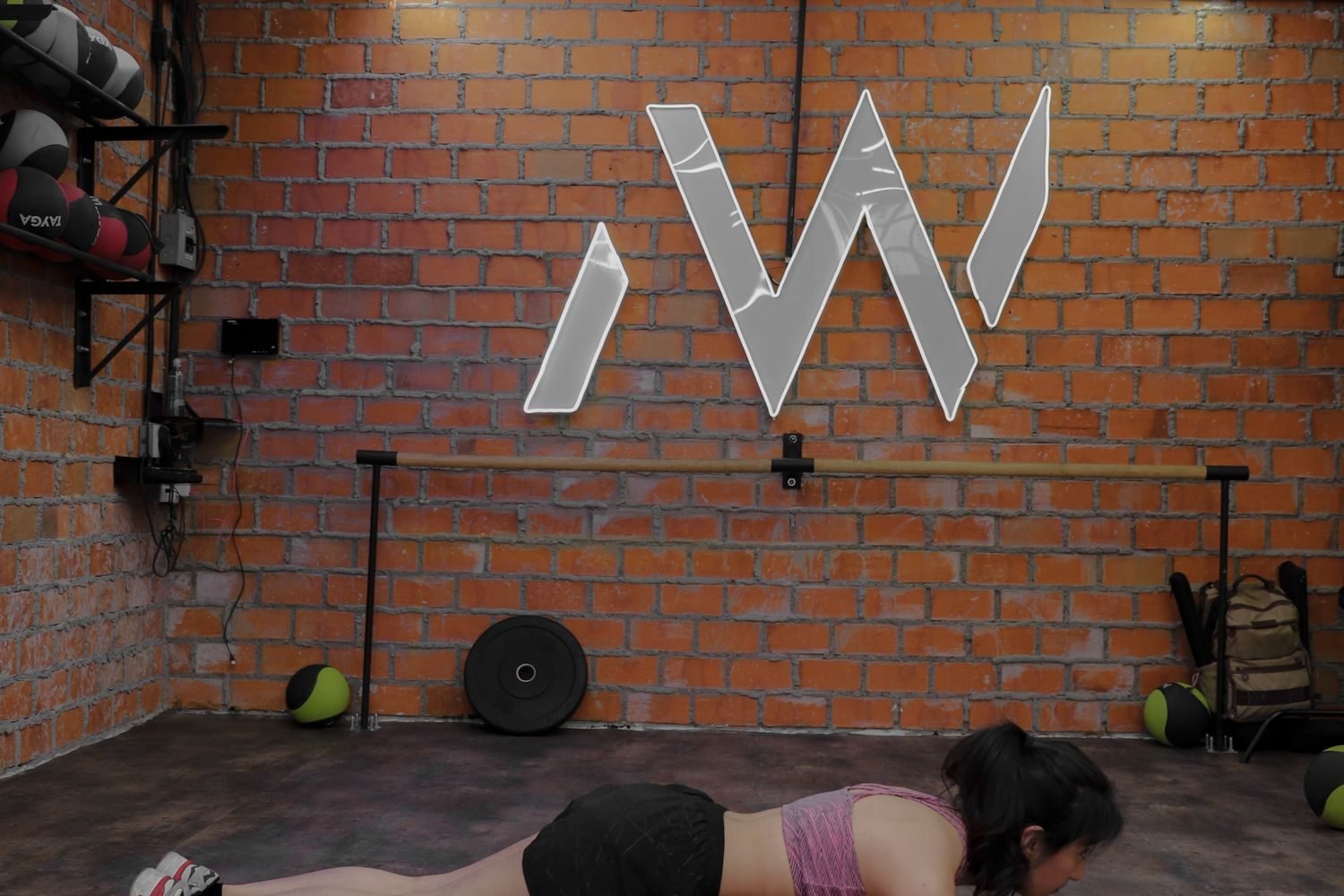
What Muscles Are You Actually Training?
Your “abs” aren’t one muscle. There are three groups working together every time you brace your midsection, and knowing what each one does changes how you train.
The rectus abdominis runs down the front of your stomach and is what shows up as a six-pack when body fat is low enough. It flexes your spine, so crunches, sit-ups, and leg raises hit it directly.
The obliques sit on either side of your waist and handle rotation and side bending. Bicycle crunches, Russian twists, and side planks train these. Neglect them and your core looks flat and one-dimensional even if your front abs are strong.
The transverse abdominis is the deepest layer, wrapping around your spine and organs like a built-in weight belt. You can’t see it, but it’s the one that keeps your lower back safe when you lift, sprint, or just carry groceries up three flights of stairs. Planks and dead bugs train this muscle better than crunches ever will.
A workout that only does crunches trains one-third of your core. That’s the most common mistake we see in ab routines people build for themselves.
Do You Need Equipment for Ab Workouts?
No. This is genuinely one of the few muscle groups you can train to a high level with nothing but a floor and some space. Planks, crunches, leg raises, bicycle crunches, and mountain climbers all use bodyweight and gravity as resistance. You can do a complete, effective session in a hotel room, a hostel, or your living room.
That said, equipment has its place once bodyweight moves stop being challenging. A cable machine, weighted plate, or ab wheel adds resistance you can’t get from your own body weight alone, and it lets you progress for years instead of plateauing after a few months. If you have gym access and want to push further, our gym-based ab workout guide covers the equipment-driven side of this in detail. For now, this article sticks to what you can do anywhere.
How Do You Do Ab Workouts With Good Form?
Most people don’t get weak abs, they get sloppy reps. Here’s what actually matters.
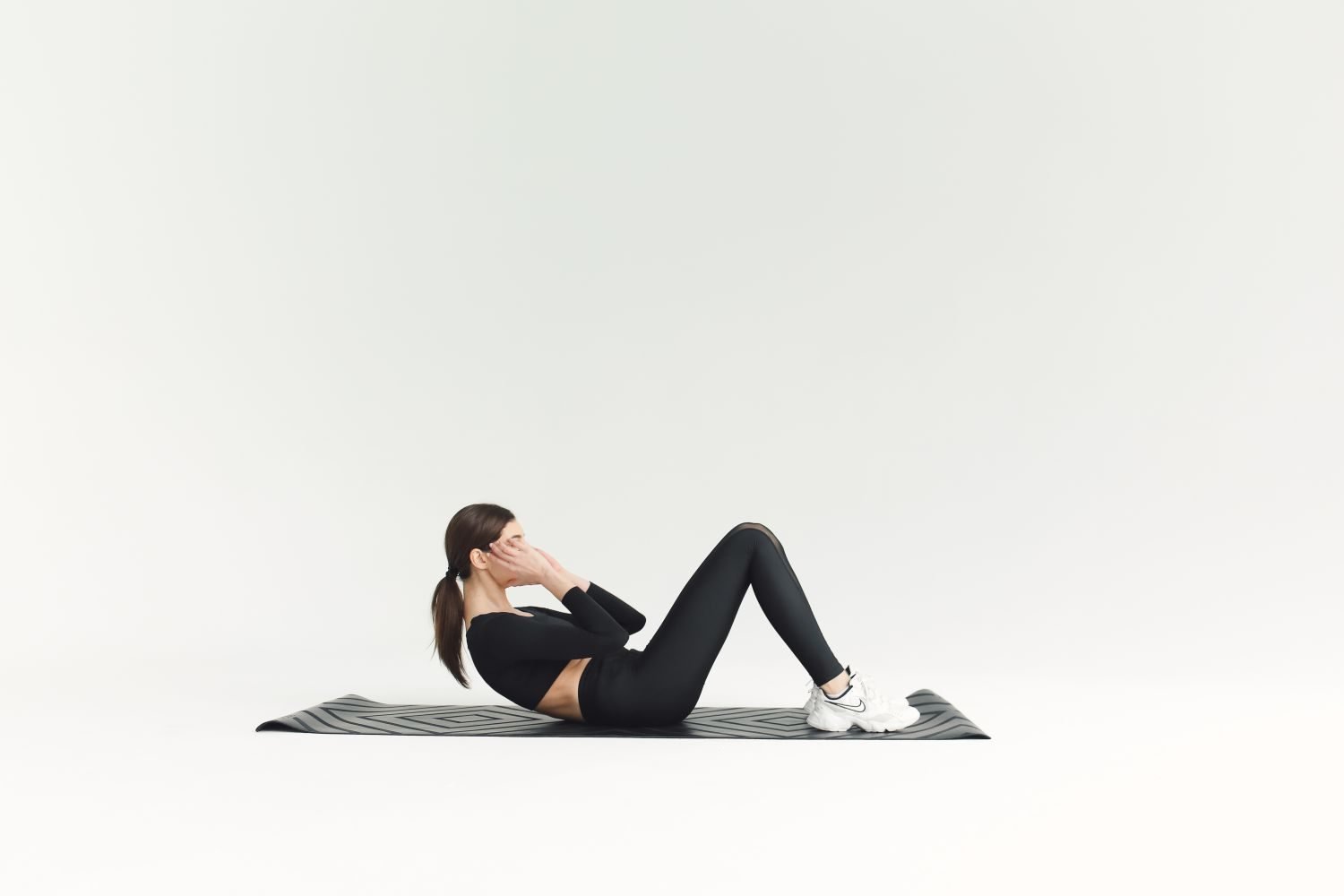
- Move from your ribs, not your neck. In a crunch, your chin shouldn’t be the thing driving the movement. Keep a fist-sized gap under your chin and lift your ribcage toward your pelvis.
- Breathe out on the effort. Exhale as you crunch, curl, or lift. Holding your breath spikes your blood pressure and makes the rep harder than it needs to be.
- Control the lowering phase. Dropping your legs or torso back down fast wastes half the exercise. The eccentric (lowering) portion is where a lot of the muscle-building work happens.
- Keep your lower back flat during leg raises. If your back arches off the floor, your hip flexors have taken over from your abs. Bend your knees slightly or reduce the range until your core can hold the position.
- Quality over volume. Twenty slow, controlled crunches beat eighty rushed ones. If your form breaks down, stop the set there.
What Does a Solid At-Home Ab Workout Look Like?
Here’s a sample bodyweight session we’d give a client who has no equipment and roughly 20 minutes. Do it three to four times a week, resting a day in between.
| Exercise | Sets x Reps / Time | Rest | Primary Focus |
|---|---|---|---|
| Plank | 3 x 30-45 sec | 30 sec | Transverse abdominis, stability |
| Bicycle Crunches | 3 x 20 reps (each side) | 30 sec | Rectus abdominis, obliques |
| Leg Raises | 3 x 12-15 reps | 45 sec | Lower rectus abdominis |
| Mountain Climbers | 3 x 30 sec | 30 sec | Core stability, conditioning |
| Standard Crunches | 3 x 20 reps | 30 sec | Upper rectus abdominis |
| Side Plank | 2 x 20-30 sec (each side) | 30 sec | Obliques |
Run through the six exercises as a circuit if you want to keep your heart rate up, or do straight sets if you’d rather focus purely on form. Either way works. What matters is showing up for this three or four times a week and not skipping the plank and side plank just because they’re less exciting than crunches.
Will Ab Workouts Alone Give You a Six-Pack?
No, and any trainer who tells you otherwise is selling something. Everyone has a rectus abdominis and it’s already somewhat developed just from daily movement. What decides whether it’s visible is the layer of fat sitting on top of it. Men typically need to get to around 10-14% body fat before ab definition starts showing, and women usually need to be in the high teens to low twenties. That number comes down to diet and overall calorie balance, not how many crunches you did this week.
This is where we see the most confusion. Someone does 300 crunches a day for a month, sees no visible change, and assumes the exercises aren’t working. The exercises are working. They’re building muscle underneath a layer of fat that hasn’t moved because the diet hasn’t changed. Ab workouts build the muscle. Your food and calorie deficit reveal it.
If a visible six-pack is genuinely your goal, you need a plan that combines targeted training with fat loss, not one without the other. We’ve laid out that fuller approach in our six-pack workout guide, which goes into the nutrition side this article doesn’t have room for.
How Often Should You Train Your Abs?
Three to four times a week is the sweet spot for most people. Your core recovers faster than bigger muscle groups like legs or back, so you can train it more frequently, but it still needs rest. Training abs every single day with no break tends to lead to nagging hip flexor tightness and lower back irritation rather than faster results.
If you’re also doing heavy compound lifts like squats or deadlifts, know that your core is already working hard during those movements. Two or three dedicated ab sessions a week on top of that is usually plenty. Beginners doing bodyweight-only training can afford four sessions since the intensity per session is lower.
Your abs are also part of your overall core, which includes your lower back, hips, and glutes working together. If you want a broader core-strengthening approach rather than an abs-only focus, our core workout guide covers that fuller picture.
Frequently Asked Questions
What are ab workouts?
Ab workouts are exercises that target the rectus abdominis, obliques, and transverse abdominis, the three muscle groups that make up your core. Common examples include crunches, planks, leg raises, bicycle crunches, and mountain climbers. They build core strength, improve posture, and support your lower back during everyday movement and lifting.
How do you do ab workouts correctly?
Move from your ribcage rather than yanking your neck, breathe out on the effort, and control the movement on the way down rather than dropping fast. Keep your lower back flat during leg raises and stop a set the moment your form breaks down. Consistency at moderate volume beats rushing through high reps with sloppy technique.
What are the real benefits of ab workouts?
A trained core improves posture, reduces lower back pain, and makes everyday movements like lifting, twisting, and bending safer and easier. It also improves performance in almost every other exercise, since your core stabilizes your spine during squats, presses, and running. Visible definition is a separate benefit that depends mostly on body fat.
Can beginners do ab workouts at home with no equipment?
Yes. Planks, crunches, leg raises, bicycle crunches, and mountain climbers all use bodyweight and need nothing but floor space. Beginners should start with shorter holds and lower rep counts, focus on form first, and add volume gradually as the core gets stronger over a few weeks.
How long until ab workouts show results?
Core strength itself improves within two to three weeks of consistent training, you’ll notice better stability and less lower back discomfort fairly quickly. Visible muscle definition takes much longer and depends on your starting body fat percentage, often several months of combined training and a calorie deficit rather than weeks.
Building a strong core is straightforward once someone corrects your form and keeps you consistent, which is exactly where most people go wrong on their own. FitStrot’s coaches, working under founder Yash Pathak’s 10 years of hands-on training experience, build ab and core programming into a full plan tailored to your body and your goals, not a generic routine copied off a forum. If you want a program built specifically around you rather than guesswork, check out FitStrot’s 1-on-1 personal training.