A workout and diet plan is a training program and a nutrition plan built to work as one system, not two separate to-do lists. The training gives your body a reason to change: lift heavier, add reps, get stronger. The food gives your body what it needs to actually respond to that signal: protein to rebuild muscle tissue, carbs to fuel the next session, enough total calories to support growth. Do one without the other and you stall. Train hard on poor nutrition and you’ll feel wrecked and see slow progress. Eat well with no structured training and you won’t build much of anything. This guide is about building both together for muscle gain and general fitness, not for fat loss. That’s a different goal with different rules, and we cover it in a separate series on the blog.

Why do training and diet have to be planned together?
Training is the stimulus. It’s the signal that tells your muscles, joints, and nervous system that something needs to adapt. But a signal alone doesn’t build anything. Your body needs raw material, mainly protein, carbohydrate, and enough total energy, to repair the muscle fibers you broke down in the gym and to stock up the fuel you’ll need for the next session.
This is why a workout plan without a diet plan usually stalls after a few weeks. You’ll feel strong for the first month because you’re a beginner and almost anything works early on. Then progress slows, recovery gets harder, and sessions start to feel heavier than they should. Nine times out of ten, that’s a food problem, not a training problem.
We see this constantly with people who come to us with a solid training split already in place. They’re doing the right exercises, tracking their sets, showing up consistently. But they’re eating on autopilot, guessing at protein, skipping meals before training, and then wondering why strength isn’t moving. Fix the food and the same training plan suddenly starts working.
What actually goes into a workout and diet plan?
A real one has five parts, and missing any of them weakens the whole plan.
- A training split that matches your schedule. Three, four, or five days a week, built around compound lifts and progressive overload, is what actually drives muscle and strength gains. If you haven’t settled on a split yet, our best workout routine guide breaks down how to pick one that fits your life.
- A weekly training schedule. Not just what to do, but when. Push days, pull days, leg days, rest days, all mapped out so you’re not deciding on the fly. We’ve laid out a full framework in our weekly workout schedule article.
- A protein target you actually hit. Somewhere between 1.6 and 2.2 grams per kilogram of bodyweight for most people building muscle. This is non-negotiable, and it’s usually the single biggest gap between people who progress and people who don’t.
- Carbs timed around your training. Carbs aren’t the enemy here. They fuel your sessions and help you recover faster. Our pre-workout meal guide covers exactly what to eat before you train and why timing matters.
- A calorie target that matches your goal. A mild surplus for muscle gain, maintenance for general fitness and body recomposition. Wildly overeating doesn’t build muscle any faster, it just adds fat.
What does a real workout and diet day look like?
Plans work better when you can see them laid out, not just described. Here’s a sample day for someone training four days a week and eating for muscle gain, built around a 75 kg man targeting roughly 2,700 to 2,800 calories and 150 grams of protein.
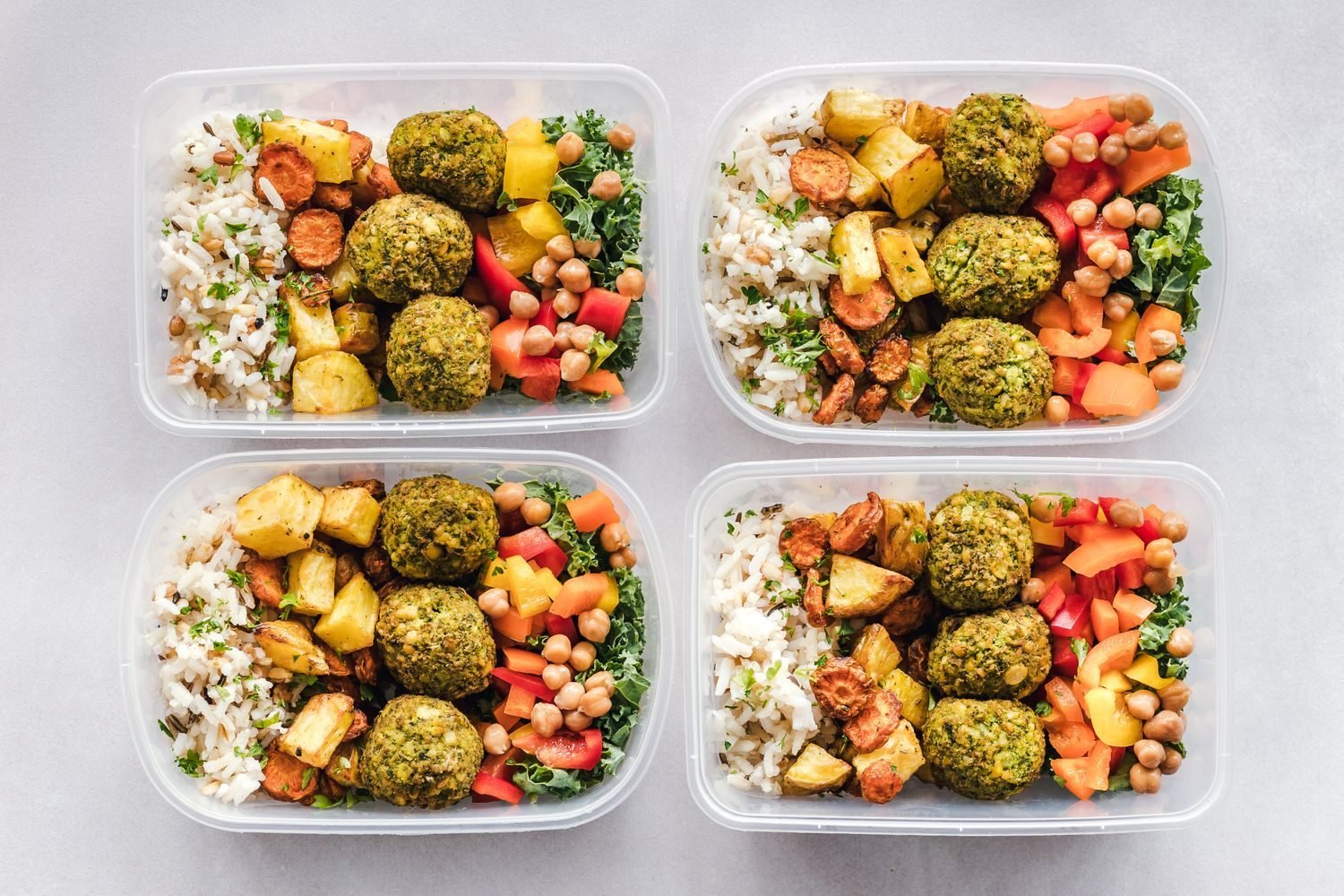
| Time | Meal or Session | Details |
|---|---|---|
| 6:30 AM | Pre-workout meal | Banana, 2 boiled eggs, black coffee (~25g protein, ~35g carbs) |
| 7:00 AM | Training: Upper body push | Bench press, overhead press, incline dumbbell press, triceps work (60-70 min) |
| 8:15 AM | Post-workout meal | Whey protein shake, oats, peanut butter (~35g protein, ~55g carbs) |
| 1:00 PM | Lunch | Rice, dal, grilled chicken or paneer, sautéed vegetables (~40g protein, ~70g carbs) |
| 4:30 PM | Snack | Greek yogurt with fruit and a handful of almonds (~20g protein) |
| 8:00 PM | Dinner | Roti, fish or tofu, sabzi, salad (~30g protein, ~50g carbs) |
| 10:00 PM | Before bed | A glass of milk or a small serving of cottage cheese (~10g protein) |
Notice the shape of it. Carbs cluster around the training window, protein is spread across the whole day instead of dumped into one meal, and nothing depends on willpower at 9 PM when you’re tired and hungry. That’s what a workable plan looks like on paper versus one that just sounds good in theory.
How much protein and carbs do you actually need?
For muscle gain, protein is the number you should never compromise on. Aim for 1.6 to 2.2 grams per kilogram of bodyweight, spread across three to five meals. Going higher than that doesn’t add much benefit. Going lower is where most people leave gains on the table.
Carbs depend on your training volume and activity level, but a reasonable starting range is 3 to 5 grams per kilogram of bodyweight for someone training four to six days a week. The exact number matters less than the timing. A carb-and-protein meal before training gives you the energy to push through your last few reps. A carb-and-protein meal after training kicks off recovery faster than waiting three or four hours to eat.
Fat should fill the remaining calories, roughly 20 to 30 percent of your total intake. It’s not something you need to obsess over as long as your protein and carbs are dialed in and your total calories match your goal.
Is this the same as a fat loss plan?
No, and mixing the two up is one of the most common mistakes we see. A workout and diet plan for muscle gain and general fitness runs on maintenance calories or a small surplus, with training built around progressive overload and getting stronger over time. A fat loss plan runs on a calorie deficit, with training built to preserve muscle while body weight comes down. The exercises can overlap, but the eating rules are almost opposite. If fat loss is your primary goal right now, look for our dedicated content on that instead of trying to force a muscle-gain structure onto a cutting goal.
How do you build your own workout and diet plan?
Start with the training side. Pick a split you can actually stick to four or five days a week using our best workout routine guide, then map it onto a full week with our weekly workout schedule framework so every day has a purpose, including rest days. If you want the full structure of what a well-built plan should include from warm-up to progression, our workout plan guide walks through it step by step.
Then build the food side around it. Calculate your protein target first, set your calories second, and place your carbs around your training sessions using the timing principles in our pre-workout meal article. Track for two weeks, see how your energy, strength, and weight are trending, and adjust from there. Plans aren’t set in stone. They’re a starting point you refine based on how your body actually responds.
If you’d rather skip the guesswork and trial and error, this is exactly what we build for people inside FitStrot’s 1-on-1 personal training. You get a training plan and a nutrition plan designed around your schedule, your equipment, and your goals, adjusted as you progress instead of left on autopilot for months.
Frequently Asked Questions
What is a workout and diet plan?
A workout and diet plan is a structured combination of a training program and a nutrition plan designed to support each other. The training provides the stimulus for muscle growth or fitness improvement, while the diet supplies the protein, carbs, and calories the body needs to recover and adapt. Used separately, both are far less effective.
How do you make a workout plan?
Pick a training split based on how many days you can train consistently, usually three to five. Build it around compound lifts like squats, presses, and rows, and increase weight or reps over time. Assign muscle groups or movement patterns to specific days and schedule rest days so recovery isn’t left to chance.
How do you do a workout and diet plan together?
Set your training split first, then build your nutrition around it. Calculate a daily protein target, set calories based on your goal, and time carbs around your training sessions for energy and recovery. Review both every one to two weeks and adjust as your strength, weight, and energy levels change over time.
What are the benefits of a workout and diet plan?
Combining training and nutrition gets you faster strength gains, better recovery between sessions, and steadier progress than training alone. It also removes the guesswork of daily eating decisions, keeps energy levels more consistent, and reduces the plateau periods that happen when workouts aren’t backed by enough protein, carbs, or total calories.
How long before you see results from a workout and diet plan?
Most people notice better energy and gym performance within two to three weeks of eating consistently around their training. Visible muscle gain typically takes six to eight weeks of consistent training and eating, and noticeable strength increases often show up even sooner, usually within the first three to four weeks.