A workout plan is a structured, written schedule of exercises, sets, reps, and rest days built around a specific goal, whether that’s fat loss, muscle gain, or general fitness. A good one is not just a list of exercises. It has four things working together: a clear goal, progressive overload, planned recovery, and a schedule you can actually stick to for months, not days. Skip any one of these and the plan falls apart, no matter how well the exercises were chosen.

What Is a Workout Plan, Exactly?
A workout plan tells you what to do, how much to do, and when to do it. It usually covers a training split (which muscle groups or movement patterns you hit on which days), the number of sessions per week, the exercises within each session, and how those numbers change over time. A plan without a timeline is just a workout. The timeline is what turns a handful of exercises into a system that produces results.
People often confuse a workout plan with a workout routine. A workout routine is closer to your day-to-day habit, the actual pattern you follow. A plan is the document behind it, the one that dictates progression and periodically changes as you adapt. Both matter, but the plan is what keeps the routine from going stale.
What Makes a Workout Plan Actually Effective?
Four factors decide whether a plan works. Get these right and almost any reasonable exercise selection will produce results. Get them wrong and even a well-designed program will stall.
1. It’s Built Around One Clear Goal
Fat loss, muscle gain, strength, and general conditioning are not the same goal, and they don’t share the same training structure. A plan trying to do all four at once usually does none of them well. Pick a primary goal for the next 8 to 12 weeks and build everything, exercise selection, rep ranges, cardio volume, around that single target. If you’re not sure where to start, a personalized workout plan built around your specific numbers works better than a generic template pulled off the internet.
2. It Applies Progressive Overload
Your body adapts to stress and then stops responding to that same stress. Progressive overload means you gradually increase the demand, more weight, more reps, more sets, or less rest, so your muscles and cardiovascular system keep having a reason to change. A plan that repeats the exact same weights and reps for months will get you to a plateau fast and then leave you there.
3. It Builds In Recovery, Not Just Training
Muscle doesn’t grow during the workout. It grows during the 48 hours after, when the tissue repairs and adapts, provided you’re sleeping enough and eating enough protein. A plan that trains the same muscle group hard on back-to-back days without adequate rest is working against itself. This is one of the most common mistakes we see in home-built plans: too much volume, too little recovery, and no deload week ever built in.
4. It’s Something You Can Actually Follow
The best plan on paper is worthless if it needs 90 minutes a day, six days a week, and you have a job and a commute. Adherence beats optimization almost every time. A slightly less “perfect” plan that fits your schedule and that you complete 90% of the time will always outperform a perfect plan you complete 40% of the time.
How Do You Build a Workout Plan Step by Step?
Here’s the sequence we walk clients through at FitStrot when building a plan from scratch.
Step 1: Define the goal and the timeframe. Write down what you want (lose fat, build 3-4 kg of muscle, run a 10K) and give it a realistic window, usually 10 to 16 weeks for a first meaningful change.
Step 2: Decide training frequency. Three to five sessions a week is realistic for most people balancing a job and a plan. Fewer than three makes progress slow. More than five without proper programming usually leads to burnout or injury.
Step 3: Choose a split that matches your frequency. Full body sessions work well at three days a week. Upper/lower splits suit four days. Push/pull/legs or body-part splits make more sense at five to six days. A weekly workout schedule mapped out in advance removes the daily “what do I train today” decision fatigue that kills consistency.
Step 4: Pick exercises by movement pattern, not by trend. Cover a squat, a hinge, a push, a pull, and a carry or core movement across the week. Everything else is optional variety.
Step 5: Set your starting sets, reps, and load. Start conservative. It’s far easier to add weight in week two than to walk back an injury from week one.
Step 6: Build in a progression rule. Something as simple as “add 2.5 kg or one rep per exercise per week, when possible” is enough to keep progressive overload running without overthinking it.
Step 7: Schedule deloads and reassess every 6 to 8 weeks. Reduce volume for a week roughly every two months, then retest your numbers and adjust the plan based on what actually happened, not what you hoped would happen.
What Should a Sample Weekly Workout Plan Look Like?
This is a general framework, not a prescription. Your split should shift based on your specific goal and starting point, which is why we always recommend checking a goal-specific guide like our best workout routine breakdown or a beginner workout plan if you’re just starting out.
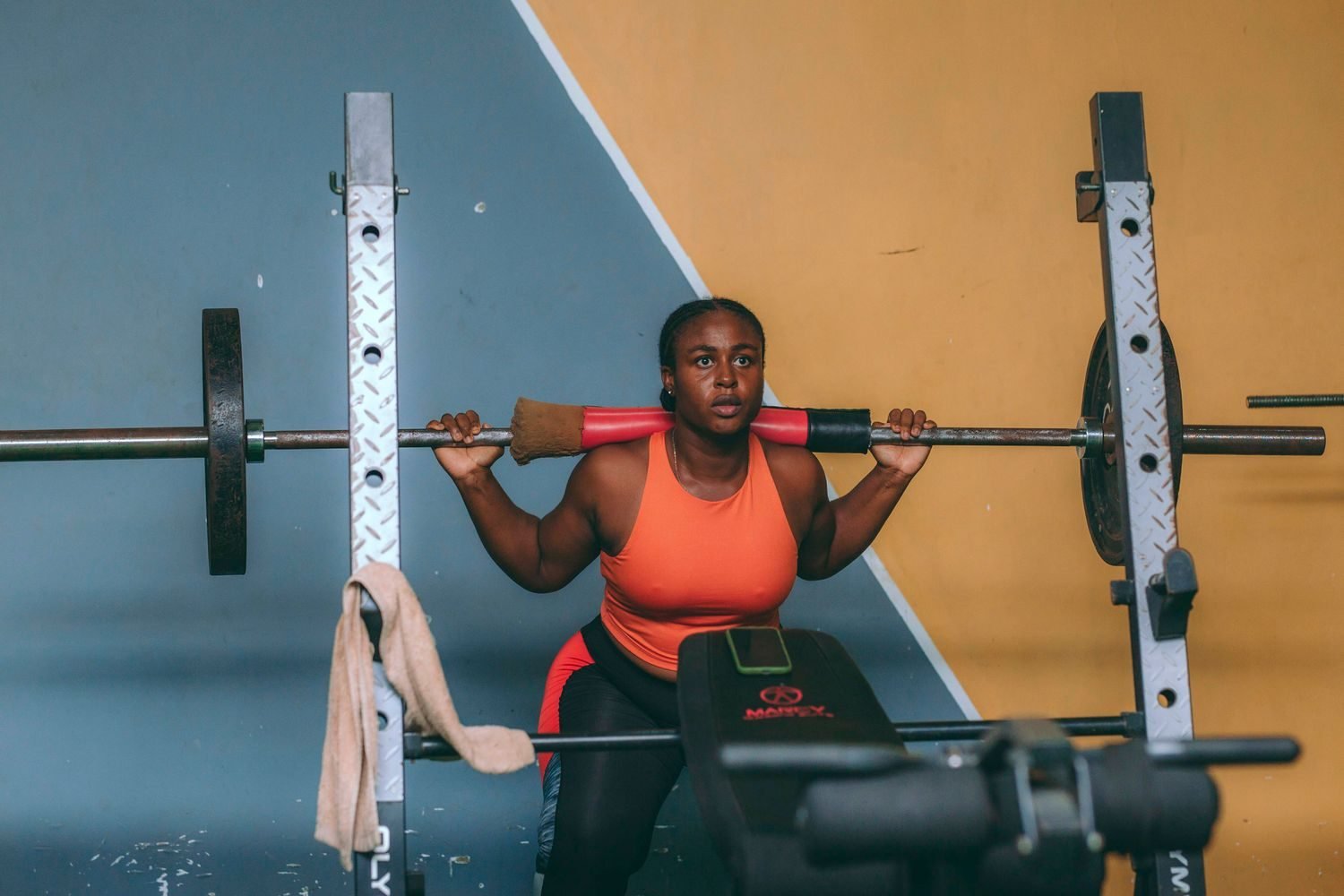
| Day | Focus | Example Session | Duration |
|---|---|---|---|
| Monday | Lower body strength | Squats, Romanian deadlifts, walking lunges, plank | 45-60 min |
| Tuesday | Cardio and mobility | Brisk walk or cycling, hip and shoulder mobility work | 30-40 min |
| Wednesday | Upper body strength | Push-ups or bench press, rows, shoulder press, curls | 45-60 min |
| Thursday | Active recovery | Light walk, foam rolling, stretching | 20-30 min |
| Friday | Full body strength | Deadlifts, push press, pull-ups or lat pulldown, farmer’s carry | 45-60 min |
| Saturday | Conditioning | Interval training, sport, or a longer cardio session | 30-45 min |
| Sunday | Rest | Full rest or gentle stretching | – |
Notice the pattern: no muscle group is trained on consecutive days without at least 48 hours to recover, and cardio, strength, and rest are all represented across the week. That balance matters more than any single exercise choice.
What Are the Real Benefits of Following a Workout Plan?
Training without a plan isn’t useless, but it’s inefficient. Here’s what a structured plan actually gets you that random workouts don’t.
- Measurable progress. When your sets, reps, and weights are written down, you know exactly whether you’re improving. Without that record, you’re guessing.
- Reduced injury risk. A plan spaces out volume across muscle groups and includes recovery days by design, instead of you deciding on the fly to “just do arms again” three days in a row.
- Time efficiency. You walk into every session knowing exactly what to do. No wandering the gym floor deciding what’s next, no wasted 20 minutes.
- Better adherence. Decision fatigue is a real reason people quit. A plan removes the daily decision of what to train, which removes one of the biggest reasons people fall off after week three.
- Faster results toward a specific goal. Random training produces random, slow results. Goal-specific programming with progressive overload produces goal-specific, faster results. The American College of Sports Medicine’s general guidance of at least two non-consecutive strength sessions a week, alongside regular cardio, is the baseline most structured plans build on top of, and it exists because that minimum frequency is what actually drives adaptation.
How Long Before a Workout Plan Shows Results?
Most people notice strength improvements within 2 to 4 weeks, largely from nervous system adaptation rather than actual muscle change. Visible body composition changes, less fat, more visible muscle, typically take 8 to 12 weeks of consistent training combined with a matching diet. Anyone promising dramatic transformation in two weeks is selling something, not coaching you.
This is also why we tell clients to judge a plan on 8-week blocks, not single sessions. One bad workout or one skipped week doesn’t mean the plan failed. A pattern of skipped weeks over two months does.
Should You Follow a Generic Plan or Build a Personalized One?
Generic plans work fine as a starting point, and there’s nothing wrong with following a solid template while you learn the basics. But they have a ceiling. A plan written for “the average person” can’t account for your injury history, your actual schedule, the equipment you have access to, or how your body specifically responds to volume and recovery.
That’s the gap a coach fills. Working one-on-one means the plan adjusts as your data comes in, not once every few months when you happen to remember to update a spreadsheet. If you’ve followed generic templates before and hit a wall, that’s usually the sign you’re ready for a plan built around your own numbers rather than an average.
If you want a workout plan built around your specific goal, schedule, and starting point instead of a generic template, FitStrot’s 1-on-1 personal training pairs you with a coach who adjusts your plan as you progress, not just once at the start.
Frequently Asked Questions
What is a workout plan?
A workout plan is a written schedule of exercises, sets, reps, and rest periods organized around a specific fitness goal over a defined timeframe. It typically includes a training split, exercise selection, progression rules, and recovery days, and it changes over weeks as your body adapts to the training stress.
How do I follow a workout plan correctly?
Pick a plan matched to your goal and current fitness level, train the prescribed days consistently, and track your sets, reps, and weights each session. Increase load or reps gradually, take your scheduled rest days seriously, and reassess every 6 to 8 weeks to adjust the plan based on your actual progress.
What are the benefits of a workout plan?
A workout plan gives you measurable progress tracking, reduces injury risk through planned recovery, saves time by removing daily guesswork, and improves adherence since you’re not deciding what to do on the spot. Combined, these lead to faster, more consistent results than unstructured, random training sessions.
How many days a week should a workout plan include?
Three to five days a week works for most people balancing training with a job and daily life. Three days suits full-body sessions, four to five allows for upper/lower or push/pull/legs splits. What matters more than the exact number is that you can repeat that frequency consistently for months.
Can beginners follow the same workout plan as experienced lifters?
No. Beginners need lower volume, simpler exercise selection, and more focus on technique, while experienced lifters need higher volume and more targeted progression to keep improving. Using an advanced plan too early usually leads to poor form and burnout, so starting with a beginner-appropriate structure matters more than it seems.