An effective tricep workout has to hit all three heads of the muscle: the long head, the lateral head, and the medial head. Most routines lean hard on pushdowns and call it a day, which trains the lateral and medial heads reasonably well but leaves the long head undertrained. The long head is the largest of the three, and it’s the one that crosses the shoulder joint, not just the elbow. That means it only gets fully loaded when your arm is overhead, in movements like overhead extensions or skull crushers taken behind the head. Skip that pattern and you’re training two-thirds of your triceps at best, no matter how heavy you press.
Why Do Triceps Have Three Heads, and Why Does It Matter?
The triceps brachii makes up roughly two-thirds of your upper arm mass, which is exactly why people obsessed with bigger arms need to stop treating biceps as the priority. It has three separate heads, and each one responds differently depending on the angle of your arm.
The lateral head sits on the outside of the arm and gives you that horseshoe shape people chase. The medial head sits underneath, does a lot of the stabilizing work, and gets involved in almost every pressing and extension movement regardless of arm position. The long head runs down the inside of the arm and is the only one that crosses both the shoulder and elbow joints. Because it crosses the shoulder, it needs the arm to be raised overhead to reach a full stretch and full recruitment. Pushdowns, where your arm stays at your side, barely stretch it at all.
What Does an Effective Tricep Workout Actually Need?
A tricep workout needs three things to actually build the whole muscle:
- A heavy compound press to overload the triceps as a unit
- An overhead extension to specifically target the long head through a full stretch
- An isolation finisher like a pushdown or kickback to fatigue the lateral and medial heads with constant tension
Leave any one of these out and you’re leaving muscle on the table.
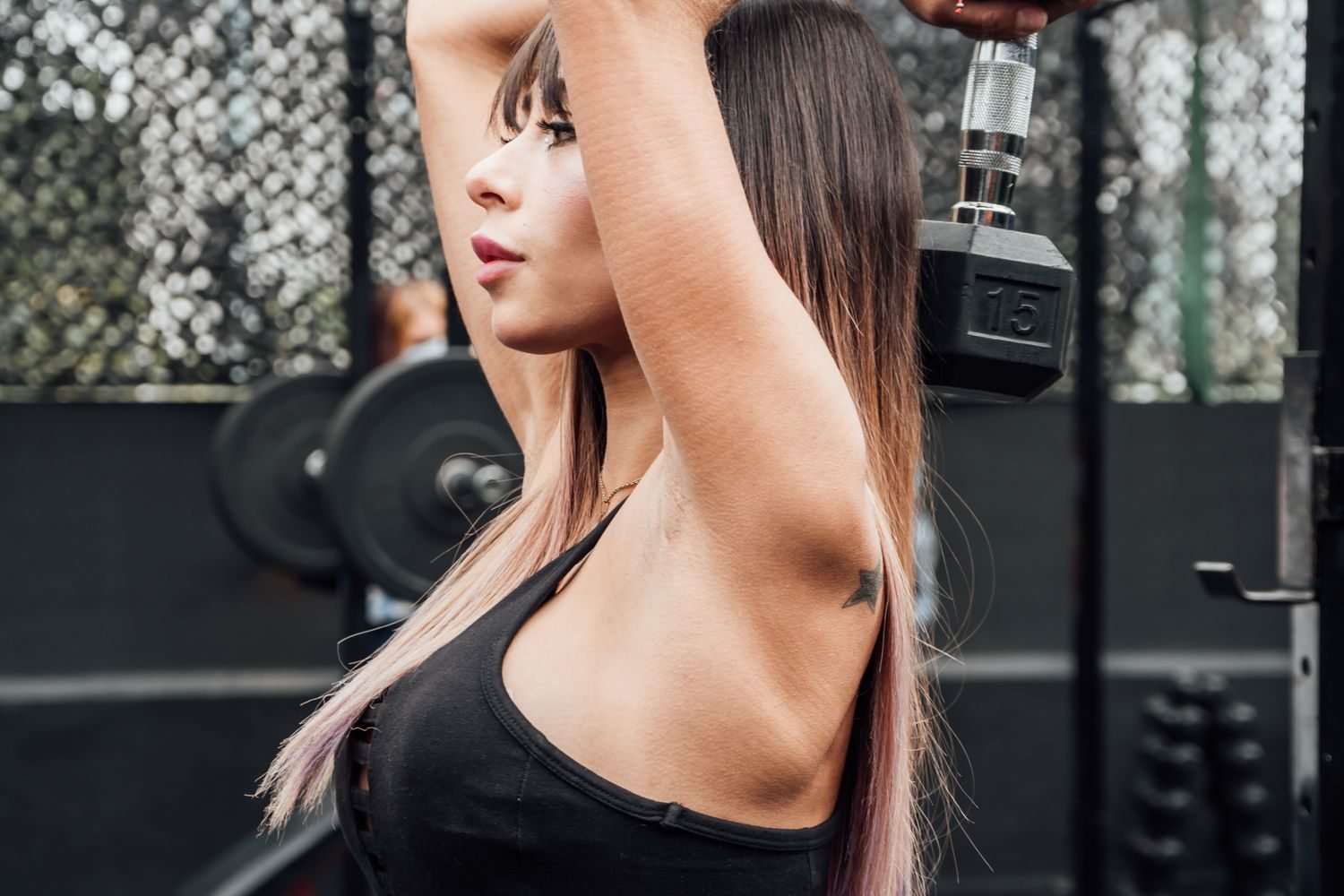
Close-grip bench press, dips, or a heavy diamond push-up variation cover the compound overload. Overhead dumbbell extensions, cable overhead extensions, or seated barbell extensions behind the head cover the long head. Rope pushdowns, straight-bar pushdowns, and kickbacks finish the job with a strong contraction. For a deeper breakdown of which specific exercises deliver the most muscle activation per set, our most effective tricep workout guide goes into more detail on exercise selection.
What Does a Full Tricep Workout Look Like?
Here’s a complete session you can run once or twice a week, whether you’re training arms on their own or pairing triceps with chest or shoulders on push day.
| Exercise | Target Head | Sets | Reps | Rest |
|---|---|---|---|---|
| Close-Grip Bench Press (or Dips) | Lateral & Medial, heavy overload | 4 | 6-8 | 90 sec |
| Overhead Dumbbell Extension | Long head, primary target | 3 | 10-12 | 60 sec |
| Rope Pushdown | Lateral & Medial | 3 | 12-15 | 45 sec |
| Single-Arm Overhead Extension or Kickback | Long head & Medial | 3 | 12-15 | 45 sec |
| Diamond Push-Up (finisher, to near failure) | All three heads | 2 | AMRAP | 45 sec |
Start with the compound movement while you’re fresh since it lets you move the most weight. Move to the overhead extension next while your shoulders are still stable. Finish with pushdowns and the bodyweight burnout, where fatigue actually helps by forcing full motor unit recruitment through a shorter range. If you train mainly in a commercial gym and want machine and cable substitutions for each slot, check our tricep workout for the gym breakdown.
How Should You Structure Tricep Training Across the Week?
Twice a week is the sweet spot for most people chasing arm growth, with at least 48 hours between sessions. Triceps also get worked indirectly on any pressing day, so if you bench or do shoulder presses twice a week already, one dedicated tricep session plus that indirect volume is usually enough. Three direct sessions can work for advanced lifters, but recovery becomes the limiting factor fast since the elbow tendons take longer to adapt than the muscle itself.
Pairing Triceps With Other Muscle Groups
Triceps pair naturally with chest and shoulders on a push day, or you can run them opposite biceps on a dedicated arm day. If you’re building out a full arm split, our bicep workouts guide covers the pulling side so you can balance both sides of the upper arm rather than ending up with strong triceps and underdeveloped biceps. And if you’d rather train arms as part of a complete session instead of isolating them, our upper body workout guide shows how to slot tricep work into a broader push-pull structure.
What’s the Best Rep Range for Tricep Growth?
Triceps respond well across a wide rep range because the muscle is made up of a mix of fiber types and gets recruited under both heavy load and high-rep burn. Keep compound presses in the 6 to 10 rep range for strength and overload, and push isolation work like extensions and pushdowns into the 10 to 15 rep range where you can really feel the stretch and contraction. Going below 6 reps on isolation movements usually just shifts load onto the shoulder or wrist joints instead of the muscle.
What Mistakes Wreck Most Tricep Workouts?
We see this constantly with new clients: they show up with a tricep program that’s three pushdown variations and nothing overhead. Their pushdowns go up week after week, their arms stay flat, and they can’t figure out why. The pushdown motion never puts the long head in a stretched position, so no matter how much volume gets piled on, that portion of the muscle never gets a real training stimulus. Adding one overhead movement, even just one exercise for three sets, is usually the single biggest change that gets arm growth moving again.
The other common error is rushing the eccentric on extensions. Triceps grow well under a slow, controlled lowering phase, and dropping the weight fast on the way down cuts a lot of the stimulus that makes overhead work worth doing in the first place.
Can You Train Triceps at Home Without Equipment?
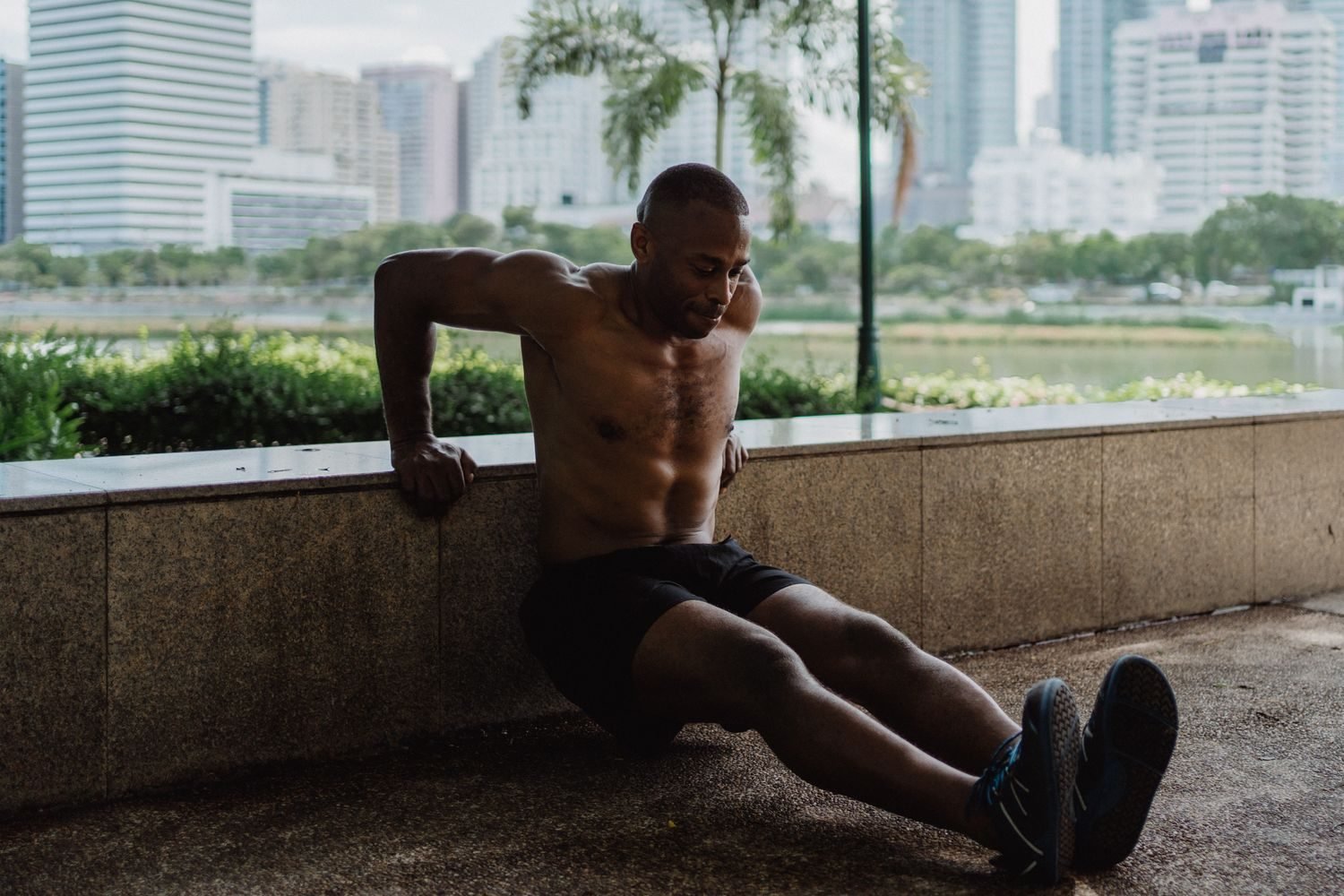
Yes, though it takes a bit more creativity than loading a barbell. Diamond push-ups, bench dips using a chair or sofa, and pike push-ups all overload the triceps without any equipment. For the overhead long-head piece, a single dumbbell or even a filled backpack works fine for overhead extensions. Resistance bands anchored under a door are a solid stand-in for cable pushdowns if you don’t have access to a gym.
That said, home workouts are where form breaks down fastest because there’s no one watching your elbow flare or your range of motion. If you want a coach checking your technique on overhead work and adjusting your program as you progress, FitStrot’s 1-on-1 personal training pairs you with a trainer who builds all three heads into your plan from week one, whether you’re training at home or in a gym.
Frequently Asked Questions
What is a tricep workout?
A tricep workout is a training session built around exercises that target the triceps brachii, the three-headed muscle on the back of the upper arm. A well-designed one includes a compound press, an overhead extension for the long head, and an isolation movement like a pushdown or kickback.
How do you do tricep workouts correctly?
Doing tricep workouts correctly means training all three heads, not just the ones that get hit by pushdowns. Start with a heavy compound movement like close-grip bench or dips, add an overhead extension for the long head, and finish with pushdowns or kickbacks for a strong, controlled contraction.
What are the benefits of tricep workouts?
Tricep workouts build arm size and strength, since the triceps make up most of the upper arm’s mass. They also improve pressing power in the bench press, overhead press, and push-ups, and stronger triceps reduce strain on the elbow and shoulder during everyday pushing movements.
How often should you train triceps each week?
Most people see the best results training triceps directly twice a week, with 48 hours of recovery between sessions. Since triceps also work during chest and shoulder pressing, total weekly volume usually ends up higher than the direct sessions alone once indirect work is counted.
Can you do tricep workouts without dumbbells?
Yes. Diamond push-ups, bench dips, and pike push-ups all effectively train the triceps using just bodyweight. A resistance band or a heavy household object can substitute for overhead extensions, though dumbbells make it easier to progressively overload the long head over time.