The Arnold press is a dumbbell shoulder press that adds a rotation to the movement, starting with your palms facing you at chin height and finishing with your palms facing forward overhead. That rotation is what separates it from a standard press. Instead of your shoulders moving through one fixed plane, the dumbbells travel through a wider arc that recruits the front and side deltoids more completely than a strict press does. We program it for almost every client who wants fuller, more rounded shoulders rather than just a bigger number on the bar.
What Makes the Arnold Press Different From a Regular Shoulder Press?
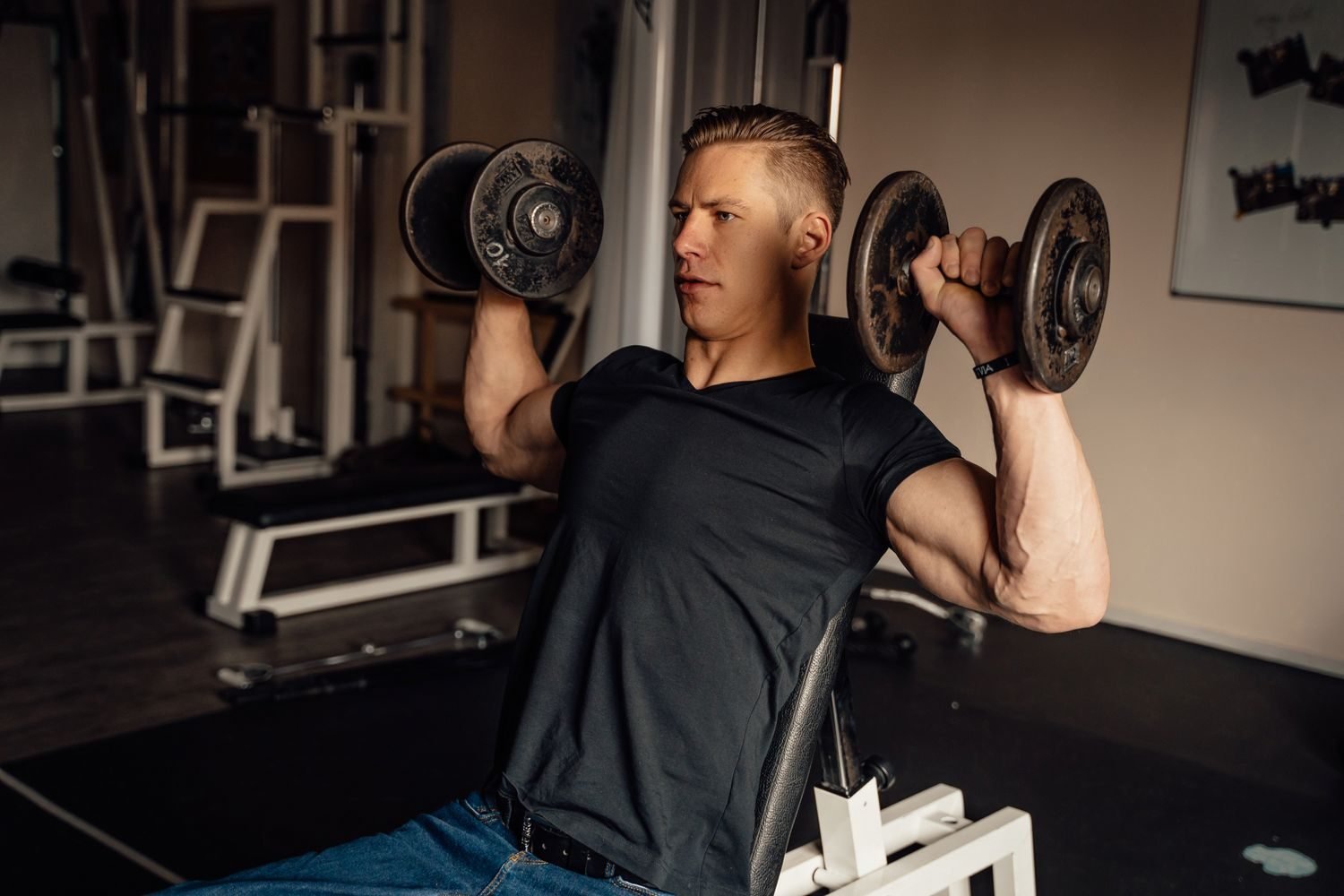
A regular barbell or dumbbell shoulder press keeps your palms facing forward from start to finish. Your shoulder joint moves in a single vertical line, and the front deltoid does most of the work while the side delt gets a secondary hit. The Arnold press changes that by adding internal-to-external rotation at the bottom of the rep. You start with palms facing your body and elbows tucked in front of your ribs, then rotate as you press, finishing with palms facing away and arms fully extended overhead.
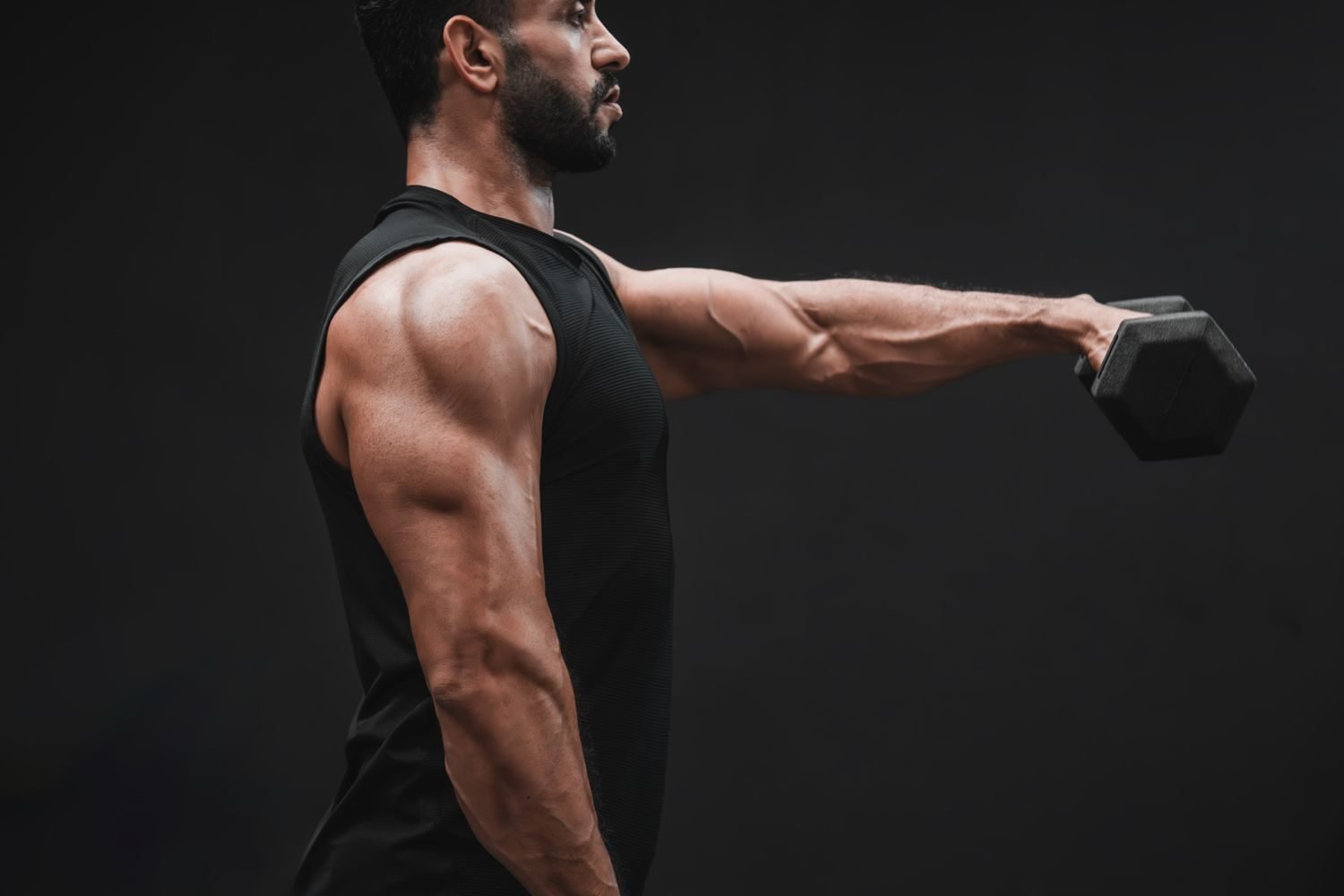
That extra rotation matters because it moves the dumbbell through more of the shoulder’s available range. Your front delt gets loaded hard during the rotation phase, and as your arm externally rotates and abducts, the side delt takes over more of the tension. You’re essentially combining a front raise pattern with a lateral raise pattern and a press into one continuous motion. Nothing else in a standard shoulder workout gives you that.
How Do You Perform the Arnold Press With Proper Form?
Sit on a bench with back support or stand with a slight brace through your core. Hold two dumbbells at shoulder height with your palms facing you and your elbows pointing forward, almost like you’re hugging a barrel. From there, press up while simultaneously rotating your wrists outward, so by the time your arms are extended overhead, your palms face forward and the dumbbells are roughly in line with your ears.
On the way down, reverse the rotation. Don’t just drop the weights back to your shoulders in a straight line. Let your palms rotate back inward as your elbows come down and forward, arriving back at the start position with palms facing your face again. The rotation is the whole point of the exercise. If you skip it and just press straight up and down, you’re doing a regular dumbbell press with extra wrist movement and none of the benefit.
Keep the pace controlled. This isn’t an exercise to rush through with momentum. A two-second rotation on the way up and a slightly slower controlled rotation on the way down keeps tension on the delts the whole time instead of letting the weight coast through the range.
Which Muscles Does the Arnold Press Actually Train?
The primary mover is the deltoid, and the Arnold press is one of the few pressing movements that trains all three heads to a meaningful degree in a single set. The anterior (front) delt handles the bottom portion and the initial press. The lateral (side) delt kicks in heavily as your arm rotates and moves away from your body. The posterior head gets some indirect stabilizing work too, though it’s not the main target here.
Beyond the delts, your triceps do a lot of the lockout work at the top of the press, and your upper traps and serratus anterior stabilize the shoulder blade as the arm moves overhead. Your core also has to work to keep your torso from swaying as you rotate two dumbbells through a wide arc, especially if you’re standing rather than seated. If you want a broader look at how this fits with other pressing and raise variations, our shoulder workout routine guide covers the full picture. This article is the deeper dive on the Arnold press specifically.
Who Should Add the Arnold Press to Their Routine?
The Arnold press works well for lifters who already have a year or so of consistent shoulder training behind them and want to round out delt development rather than just chase strength numbers. It’s a good fit if you’ve been doing standard shoulder presses for a while and your side delts are lagging behind your front delts visually. The rotational demand also makes it a smart choice for anyone training for sports that involve overhead reaching or throwing, since it trains the shoulder through a fuller functional range.
It’s not the best starting point for complete beginners. The coordination required to rotate smoothly while pressing under load takes some practice, and if your shoulder stability isn’t there yet, you’ll compensate with your lower back or by shrugging through your traps. We usually have newer clients build competence with strict presses and lateral raises first, then bring in the Arnold press once their shoulder control and scapular stability are solid. Anyone with a history of shoulder impingement should also get the movement checked by a coach or physio before loading it heavily, since the internal rotation phase can aggravate certain shoulder issues if the form breaks down.
How Much Weight Should You Use for the Arnold Press?
Start lighter than you think you need to. Because the movement involves a rotation under load, most people find they need to drop weight compared to what they’d use for a standard dumbbell shoulder press. Pick a load where you can complete the full rotation smoothly on every rep without your elbows flaring wildly or your lower back arching to help the weight up. If you’re grinding the last few reps and losing the rotation pattern, that’s a sign to size down and rebuild the movement quality before adding load back in.
What Does a Full Shoulder Workout Built Around the Arnold Press Look Like?
Here’s a sample session we build for clients who want a complete shoulder day centered on the Arnold press. It opens with the Arnold press while you’re fresh, since it demands the most coordination, then moves into more isolated delt and rear delt work.
| Exercise | Sets | Reps | Rest |
|---|---|---|---|
| Arnold Press (seated) | 4 | 8-10 | 90 sec |
| Dumbbell Lateral Raise | 3 | 12-15 | 60 sec |
| Standing Front Raise | 3 | 10-12 | 60 sec |
| Reverse Pec Deck or Bent-Over Rear Delt Fly | 3 | 12-15 | 60 sec |
| Cable Face Pull | 3 | 15 | 45 sec |
| Plank Shoulder Taps | 2 | 20 total taps | 45 sec |
This structure hits all three delt heads, brings in the traps and rotator cuff through the face pulls, and finishes with a core stability move since a lot of shoulder pressing power actually comes from a braced trunk. If you train shoulders and arms together, you can also pair this with our shoulder and bicep workout for a fuller upper body session, or check our deltoid workouts guide if you want to go deeper on delt-specific programming.
What Mistakes Do People Make With the Arnold Press?
These are the mistakes we see most often with the Arnold press:
- Rushing or skipping the rotation. Once fatigue sets in, lifters often abandon the rotation entirely, which turns the exercise into a sloppy standard press.
- Going too heavy too soon. This forces the lower back to arch, turning a shoulder exercise into a lower back exercise.
- Flaring the elbows too wide at the bottom. This puts unnecessary stress on the front of the shoulder joint instead of letting the rotation happen naturally through the wrist and forearm.
- Standing before the rotation is second nature. Standing adds a valuable core stability challenge once the pattern is grooved, but if you’re still learning the rotation, do it seated with back support until the movement feels automatic.
Ready to Build Your Shoulder Training Around Exercises Like This?
Getting the Arnold press right, and knowing when to program it against other pressing and raise work, is exactly the kind of detail that separates a workout you’re guessing at from one that’s actually built for your shoulders. Yash Pathak founded FitStrot after a decade of coaching people through this exact process, and our 1-on-1 coaches build shoulder programming that fits your current strength, mobility, and goals rather than handing you a generic template. If you want that kind of individual attention, take a look at our 1-on-1 personal training service and we’ll put together a plan around you.
What is an Arnold press?
The Arnold press is a dumbbell shoulder press variation where you rotate your palms from facing your body to facing forward as you press overhead. It was popularized by Arnold Schwarzenegger and is designed to train the shoulder through a wider range of motion than a standard press.
What muscles does the Arnold press work?
It primarily targets all three heads of the deltoid, with heavy emphasis on the front and side delts. The triceps assist with the lockout, and the upper traps, serratus anterior, and core work to stabilize the shoulder and torso throughout the movement.
Is the Arnold press better than a regular shoulder press?
Better depends on your goal. If you’re chasing pure overhead pressing strength, a strict barbell or dumbbell press with a fixed bar path lets you load heavier and track strength more directly. If you want fuller deltoid development and more shoulder range of motion, the Arnold press has an edge because the rotation trains the front and side delts through a broader arc. Many lifters benefit from including both rather than picking one over the other.
How much weight should you use for Arnold press?
Use less than you’d use for a standard shoulder press, since the rotation adds coordination demand and the range of motion is longer. Choose a weight that lets you complete every rep with a full, smooth rotation and no arching in your lower back. If your form breaks down before you hit your target reps, the weight is too heavy.
Can beginners do the Arnold press safely?
Beginners can do it, but it’s worth building a base of standard presses and lateral raises first so shoulder stability and control are already in place. Once that foundation exists, adding the rotation is a natural progression rather than a movement you’re learning and loading at the same time.