An RDL, or Romanian Deadlift, is a hip-hinge exercise that targets your hamstrings, glutes, and lower back by lowering a barbell or dumbbells down the front of your legs with a soft knee bend and a flat back, then driving your hips forward to stand back up. Unlike a conventional deadlift, which starts from the floor with the bar resting between reps, the RDL starts from the top in a standing position and never fully touches down. It’s one of the most effective posterior chain builders we program at FitStrot, and it belongs in almost every lower body session we write for clients.
What Is an RDL Workout?
An RDL workout is any training session built around the Romanian Deadlift as the main lift, usually paired with accessory movements for the glutes, hamstrings, and lower back. The RDL itself is a hip-dominant exercise. You hold weight in front of your thighs, push your hips back while keeping a slight bend in your knees, and lower the load until you feel a strong stretch in your hamstrings. Then you reverse the motion by driving your hips forward.
We program RDLs for almost every client who trains legs with us, whether the goal is strength, muscle growth, or simply fixing a weak posterior chain from too much sitting. It’s a movement that rewards good technique and punishes sloppy form fast, which is part of why we spend real time coaching it before we load it heavy.
RDL vs Conventional Deadlift vs Stiff-Leg Deadlift: What’s the Difference?
These three lifts get lumped together constantly, but they train different things and start from different positions.
A conventional deadlift workout starts with the bar on the floor. You break the floor with your hips and knees bending together, and there’s more quad involvement because your shins travel forward to reach the bar. Each rep resets from a dead stop on the ground.
The RDL starts standing, with the bar already in your hands. Your knees stay only slightly bent throughout and barely travel, so almost all the movement comes from your hips hinging backward. You lower the bar to somewhere between mid-shin and just below the knee, not to the floor, and you never lose tension in your hamstrings.
The stiff-leg deadlift is the RDL’s stricter cousin. Knees stay nearly locked out the entire time, which shifts even more load onto the hamstrings and reduces glute involvement. It also usually means a shorter range of motion since most lifters can’t hinge as far with straight legs before their back rounds. If you’re chasing hamstring length and flexibility specifically, stiff-leg pulls have their place, but for building strength and size across the whole posterior chain, we default to RDLs with most clients.
Which Muscles Does the RDL Work?
The RDL is primarily a hamstring and glute exercise, with a heavy secondary role for your lower back and grip.
- Hamstrings: The main mover. The hinge pattern loads them under stretch, which is exactly the kind of tension that builds size and strength in this muscle group.
- Glutes: Fire hard during the hip extension at the top of the lift. Squeeze your glutes at lockout and you’ll feel it.
- Erector spinae (lower back): Works isometrically to keep your spine neutral through the entire range. This is why RDLs also build a resilient lower back when done correctly.
- Lats and grip: Your lats keep the bar close to your body, and your forearms take a real hit holding heavier loads for reps.
Because it hits so much of the posterior chain in one movement, we treat the RDL as close to non-negotiable for clients dealing with knee pain, weak glutes, or a history of hamstring strains.
How Do You Do an RDL? Step-by-Step Form
Good RDL form is less about the weight on the bar and more about the sequence of the hinge. Here’s how we coach it.
- Set your stance. Feet hip-width apart, bar or dumbbells in front of your thighs, arms straight.
- Find your knee bend and lock it in. Bend your knees slightly, maybe 10 to 20 degrees, and keep that angle roughly constant for the whole set.
- Brace your core. Take a breath into your belly and tighten your midsection like you’re about to take a light punch.
- Push your hips back. Send your hips backward as if you’re closing a car door with them. Your chest stays up and your back stays flat, not rounded and not overarched.
- Keep the bar close. Let the bar or dumbbells travel down your thighs and shins, staying in contact or very close the entire way.
- Stop at your stretch limit. Lower until you feel a strong hamstring stretch, usually around mid-shin. Your lower back should stay neutral. If it starts to round, that’s your floor for that rep, not the floor of the room.
- Drive back up through your hips. Squeeze your glutes and push your hips forward to return to standing. Don’t yank with your lower back.
Breathe out near the top, reset your brace, and repeat.
What Mistakes Kill Your RDL Form?
We correct the same handful of errors over and over with new clients, so it’s worth calling them out directly.
Rounding the lower back. This is the big one. Once your lumbar spine starts curving under load, the exercise stops training your hamstrings efficiently and starts putting shear stress on your spine. If you can’t keep your back flat, the fix is almost always less range of motion or less weight, not more effort.
Losing the bar path. The bar needs to travel in a straight vertical line down your legs. When lifters let it drift forward, away from the body, the leverage gets brutal and the lower back takes over. Keep it dragging against your thighs and shins.
Bending the knees too much. Some knee bend is correct, but if you turn the RDL into a squat by bending your knees deeply, you’ve turned it into a different exercise. The hips should be doing almost all the work, not the knees.
Standing too tall at the top. Hyperextending your lower back at lockout to “finish” the rep is unnecessary and puts extra load on the spine for no benefit. Stand up straight, squeeze your glutes, and stop there.
We see a lot of clients treat the RDL as a squat-deadlift hybrid, bending their knees and hips at the same time instead of hinging cleanly, and once we cue them to keep the knee angle fixed and just push the hips back, the exercise clicks almost immediately.
How Should You Program RDLs Into Your Week?
RDLs work well as either your main lift or a secondary movement on a leg or posterior chain day. If your primary goal is hamstring and glute strength, put them early in the session, right after your warm-up, and load them for 4 to 6 sets of 6 to 10 reps. If you’re using them as accessory work after squats or a conventional deadlift workout, 3 sets of 8 to 12 reps with a lighter load and a strict tempo works better and won’t wreck your recovery for the next day’s training.
A balanced training week usually has one RDL-focused session and doesn’t need much more than that. Two sessions can work for lifters specifically chasing hamstring size, but recovery matters here. Your hamstrings and lower back need real rest between heavy hinge sessions, so we rarely program RDLs on back-to-back training days.
It’s also worth thinking about how your whole week is structured. A well-rounded program pairs a posterior chain day like this with upper body pulling and pressing work, maybe a preacher curl workout for isolated arm volume, and rotational core training such as a woodchopper workout to build the trunk stability that supports heavier hinging over time.
What Does a Sample RDL Session Look Like?
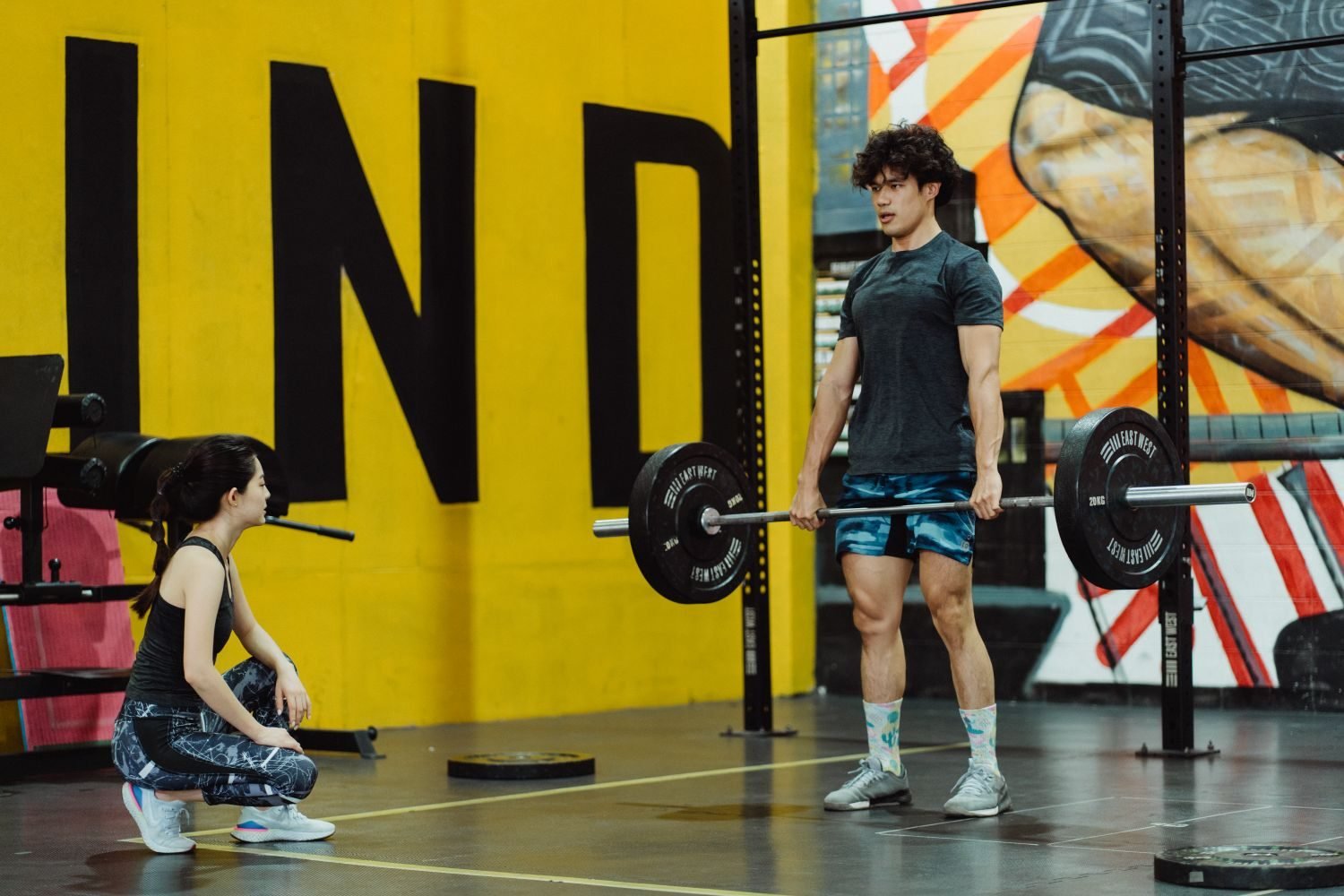
Here’s a real leg and posterior chain session we use with intermediate clients. Adjust loads to your own strength level.
| Exercise | Sets | Reps | Rest |
|---|---|---|---|
| Romanian Deadlift (barbell) | 4 | 8 | 90 sec |
| Bulgarian Split Squat | 3 | 10 per leg | 75 sec |
| Hip Thrust | 3 | 10 | 75 sec |
| Seated Leg Curl | 3 | 12 | 60 sec |
| Standing Calf Raise | 3 | 15 | 45 sec |
Notice the RDL sits first, when you’re freshest and your form is most reliable. Everything after it is there to finish off the glutes, hamstrings, and calves without demanding the same technical precision.
How Much Weight Should You Use and How Do You Progress?
Start lighter than you think you need to. Most lifters can hip-hinge correctly with a moderate load but lose form the second the weight climbs, so we usually have new clients spend their first couple of sessions with an empty bar or light dumbbells just grooving the pattern. Once the hinge feels automatic, you can add weight.
A reasonable starting point for someone with some lifting background is 40 to 50 percent of their conventional deadlift for sets of 8. From there, progress by adding small amounts of weight week to week as long as your range of motion and back position stay solid. If you have to round your back or shorten your range to move the weight, that’s the ceiling for now, not a green light to keep pushing.
Progressive overload on the RDL doesn’t only mean adding plates. You can add a rep or two before adding weight, slow down the lowering phase to increase time under tension, or add a pause at the bottom of the stretch. All three build strength and muscle without forcing you into a load your form can’t handle yet.
If you want a program built around your actual strength levels and goals rather than a generic template, our coaches at FitStrot put this together as part of 1-on-1 personal training, with form checks and progression handled for you session by session.
Frequently Asked Questions
What is an RDL workout?
An RDL workout is a training session built around the Romanian Deadlift, a hip-hinge exercise that targets the hamstrings, glutes, and lower back. It starts from a standing position rather than the floor and typically pairs with other posterior chain movements like hip thrusts or leg curls.
How do you do an RDL workout?
Hold a bar or dumbbells in front of your thighs, keep a slight knee bend, and push your hips back while lowering the weight down your legs until you feel a hamstring stretch. Keep your back flat throughout, then drive your hips forward to return to standing.
What are the benefits of RDL workouts?
RDLs build hamstring and glute strength, improve hip hinge mechanics, and strengthen the lower back through isometric loading. They also carry over to other lifts like squats and conventional deadlifts, and help reduce hamstring strain risk by training the muscle under a controlled stretch.
Can beginners do RDLs?
Yes, but beginners should start with light dumbbells or an empty bar and focus entirely on the hip hinge pattern before adding load. The movement is simple on paper but easy to get wrong, so slow, supervised practice pays off more than early heavy weight.
Should I do RDLs before or after squats?
If hamstring and glute strength is your priority, do RDLs first while you’re fresh. If squats are your main lift for the day, do RDLs afterward as accessory work with lighter loads and higher reps to finish off the posterior chain without fatiguing your hinge before your heaviest sets.