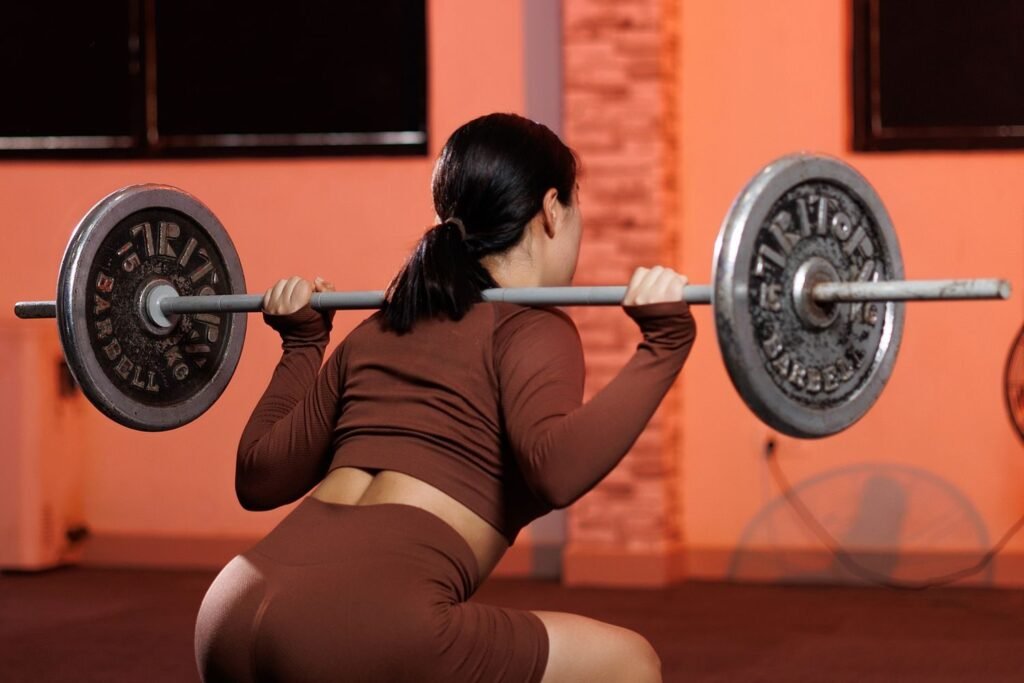
A PPL workout is a training split that organizes your gym week around three movement categories: push (chest, shoulders, triceps), pull (back, biceps), and legs (quads, hamstrings, glutes, calves). You train each category on its own day, then repeat the cycle either once a week (3 days) or twice a week (6 days). We build this split constantly for clients at FitStrot because it groups muscles by function instead of by body part, which means less redundant soreness and more usable volume per session. If you’ve searched “ppl workout” looking for the short version of push pull legs, this is it.
What Does PPL Actually Stand For?
PPL stands for Push, Pull, Legs. The abbreviation caught on because lifters needed a fast way to talk about the split in gym chat and coaching notes, and it stuck. We’ve already written a full breakdown of the push pull legs workout if you want the long-form version with exercise science behind each day. This article is the practical, quick-reference guide to actually running it.
- Push day covers every exercise where you’re moving weight away from your body: bench press, overhead press, dips, tricep pushdowns.
- Pull day covers everything where you’re bringing weight toward your body: rows, pull-ups, deadlifts (some coaches place these on leg day, we’ll explain why below), curls.
- Leg day is self-explanatory: squats, lunges, leg press, hamstring curls, calf raises.
How Does a Push Pull Legs Split Actually Work?
The logic is simple once you see it: muscles that work together get trained together. Your chest, shoulders, and triceps all fire during a bench press. Your back and biceps both work during a row. Grouping them this way means you’re not showing up to train chest on Monday and then hitting triceps again on Wednesday when they’re still recovering from Monday’s pressing work. Each muscle group gets hit hard, gets real recovery time, and comes back fresher for its next session.
Where deadlifts go is a genuine judgment call. Some programs put deadlifts on pull day since it’s a pulling movement. We usually program them on leg day for our clients because the posterior chain demand overlaps so heavily with squats and hip hinge work, and it keeps pull day from turning into a two-hour session. Either placement works. Pick one and stay consistent so you can track progress.
Who Should Run a PPL Workout?
PPL works best for people who can commit to training at least 3 days a week and who want a structure that scales as they get stronger. It’s not a split we’d hand to someone who can only train twice a week, a simple upper/lower or full body plan does more for you at that frequency. But if you’re consistent, PPL rewards you. It scales cleanly from 3 sessions to 6 without needing a redesign, which is rare for a training split.
We also lean on PPL heavily for intermediate and advanced clients who’ve outgrown full body routines and need more volume per muscle group to keep progressing. Beginners can run it too, just at lower volume and with more focus on technique than load, we’ll get into that in the FAQ.
Should You Run PPL 3 Days a Week or 6?
This is the decision most people get wrong, so let’s break down both versions honestly.
3-day PPL means you hit push, pull, and legs once each per week, then repeat. This fits people training Monday, Wednesday, Friday, or any three non-consecutive days that suit their schedule. The upside is recovery, you get a lot of rest between sessions, and it’s sustainable for years. The downside is frequency: each muscle group only gets trained once every seven days, which caps how much volume you can accumulate without single sessions running too long.
6-day PPL runs the same three days twice through the week (push, pull, legs, push, pull, legs), usually with one rest day. This doubles your weekly frequency per muscle group, which most research and our own coaching experience both point to as better for hypertrophy once someone has the training age and recovery capacity to handle it. The catch is obvious: it demands more time, more food, more sleep, and more discipline around avoiding overtraining. We don’t recommend 6-day PPL for anyone new to structured training. Build your base on 3-day PPL or a 4-5 day split first, then step up.
If you’re weighing PPL against other frequency options entirely, our guide to the best workout routine walks through how to match a split to your actual schedule and recovery capacity, not just what looks good on paper.
What Does a Real Sample PPL Week Look Like?
Here’s a 6-day PPL week we’ve used as a starting template with clients who train at an intermediate level and can recover well. Adjust sets and reps based on your own capacity, but the exercise selection and day structure hold up as a solid default.
| Day | Focus | Key Exercises |
|---|---|---|
| Monday | Push | Barbell bench press, seated overhead press, incline dumbbell press, lateral raises, tricep pushdowns |
| Tuesday | Pull | Pull-ups, barbell rows, seated cable rows, face pulls, barbell curls |
| Wednesday | Legs | Back squat, Romanian deadlift, leg press, walking lunges, calf raises |
| Thursday | Push | Overhead barbell press, flat dumbbell press, cable flyes, dips, skull crushers |
| Friday | Pull | Deadlift or rack pulls, lat pulldowns, chest-supported rows, rear delt flyes, hammer curls |
| Saturday | Legs | Front squat, leg curls, hip thrusts, Bulgarian split squats, standing calf raises |
| Sunday | Rest | Full recovery, light walking or mobility work optional |
Notice the two push days and two pull days aren’t identical. The first push day leans on horizontal and overhead pressing with heavier compound lifts, the second shifts angles and adds more isolation work. That variation matters more than people think, hitting the same exact movement pattern twice a week with identical exercises tends to plateau faster than rotating the emphasis slightly. If you want to zero in on pull day specifically, including exercise order and why we sequence rows before curls, our pull day workout guide covers it in more depth.
Running only 3 days a week? Just do Monday, Wednesday, Friday from the table above (Push, Pull, Legs) and skip the repeat. Same exercises, half the frequency.
How Is PPL Different From Other Splits?
People often confuse PPL with a bro split, but they’re built on opposite logic. A bro split trains one body part per day (chest Monday, back Tuesday, shoulders Wednesday, arms Thursday, legs Friday), which means each muscle gets trained once a week and sits idle the rest of the time. PPL groups muscles by movement function, so related muscles get worked together and recover together, and you can double up the whole cycle in a week if you want more frequency. If your schedule looks more like 6 structured days with a specific day-by-day layout in mind, our 6 day workout split article lays out exactly how we sequence a full week for clients running high-frequency training.
We see a lot of people jump into 6-day PPL straight out of a bro split because they think more days automatically means more results. It doesn’t work that way. Frequency only helps if recovery keeps pace with it, and most people need to build that capacity gradually rather than flipping a switch overnight.
Ready to Build Your Own PPL Program?
Reading a sample week is one thing. Getting the volume, exercise selection, and progression right for your specific body, schedule, and goals is another. At FitStrot, we build 1-on-1 programs around exactly this kind of split when it fits the client, adjusting loads, exercise order, and weekly frequency as you actually progress instead of following a template that stays static for months. If you want a PPL program built around your real schedule and recovery, not a generic PDF, check out our 1-on-1 personal training service and we’ll set it up with you.
Frequently Asked Questions
What does PPL mean in workouts?
PPL stands for Push, Pull, Legs. It’s a way of organizing your training week so that muscles working in similar movement patterns get trained on the same day, pushing muscles (chest, shoulders, triceps) on one day, pulling muscles (back, biceps) on another, and legs on a third.
Is PPL good for beginners?
Yes, with adjustments. Beginners can absolutely run a PPL split, but we’d keep it to 3 days a week rather than 6, use lighter loads while learning technique, and focus on a handful of core compound lifts per day rather than a long exercise list. Once form is solid and recovery is consistent, you can add volume or move to a 6-day version.
How many days a week should you run a PPL split?
Most people should start with 3 days a week, training each category once before repeating. Once you’ve built a training base and your recovery (sleep, food, stress) supports it, 6 days a week doubles your weekly frequency per muscle group and tends to produce faster results for intermediate and advanced lifters.
What’s the difference between PPL and a bro split?
A bro split trains one muscle group per day and only hits each group once a week. PPL groups muscles by function (push, pull, legs) so related muscles train and recover together, and the whole cycle can be repeated twice in a week for double the frequency if your schedule allows it.
Can you do PPL and still train abs or cardio?
Yes. Most of our clients add core work at the end of any of the three days, and cardio can go on rest days or tacked onto the end of a session depending on your goals and recovery capacity. It doesn’t need its own dedicated day.
Do you need to change exercises every week on PPL?
No. Consistency with your main lifts is what lets you track progressive overload accurately. Small variations, like the angle or grip changes shown in the two push days above, are enough to prevent staleness without sacrificing your ability to measure progress week to week.