Of the nutrients linked to hair shedding, iron deficiency has the strongest evidence behind it, followed by vitamin D and zinc — while biotin, despite dominating hair supplement marketing, is rarely the actual cause unless you have a diagnosed deficiency, which is uncommon on a normal diet. If you’re losing more hair than usual, the honest answer is that it depends on which deficiency, if any, you actually have. Guessing and supplementing blindly rarely fixes it and can occasionally make things worse.
This is a reference guide to the deficiencies most commonly blamed for hair loss, what the research shows for each, and how to tell if it applies to you. For the broader mechanism of how nutrition-related shedding works and its timeline, see our companion piece on nutrition and hair loss.
Can a nutritional deficiency actually cause hair loss?
Yes, but it’s a specific type of hair loss, not all of it. Nutritional deficiencies most commonly trigger telogen effluvium — a diffuse thinning where more hairs than normal shift into the “resting” phase and shed, usually two to four months after the trigger. It looks different from pattern baldness, which follows a predictable shape (receding hairline, crown thinning) with a strong genetic and hormonal basis.
Nutritional deficiency is one of several telogen effluvium triggers, alongside acute illness, major stress, crash dieting, and postpartum hormone shifts. That matters because fixing a deficiency won’t help hair loss caused by something else — and it’s also why deficiency-driven shedding is diffuse and whole-scalp, not localized to one patch or pattern.
Does iron deficiency cause hair loss?
This is the deficiency with the most consistent research support. A systematic review and meta-analysis found that serum ferritin and iron levels were measurably lower in patients with both acute and chronic telogen effluvium compared to people without hair loss. In premenopausal women specifically, serum ferritin below 20 ng/mL was associated with significantly higher risk of chronic telogen effluvium, and researchers note that ferritin below roughly 70 ng/mL can indicate “non-anemic iron deficiency” — meaning your iron stores are low enough to affect hair before you’re anemic enough to feel classically fatigued.
Ferritin (your body’s iron storage protein) is treated in dermatology research as the most useful lab marker for hair-related iron status, more so than hemoglobin alone, especially for chronic, longer-lasting shedding. Hemoglobin matters more for acute, sudden-onset shedding.
Who’s actually at risk
Iron deficiency without anemia is common in menstruating women, people who’ve recently given birth, vegetarians and vegans who don’t actively plan iron intake, frequent blood donors, and anyone with a GI condition that limits absorption, like celiac disease or IBD. If you fall into one of these groups and you’re shedding more than usual, iron deficiency deserves a look first. See our guide to nutritional anemia for iron-specific symptoms and food sources.
How to know if it’s you
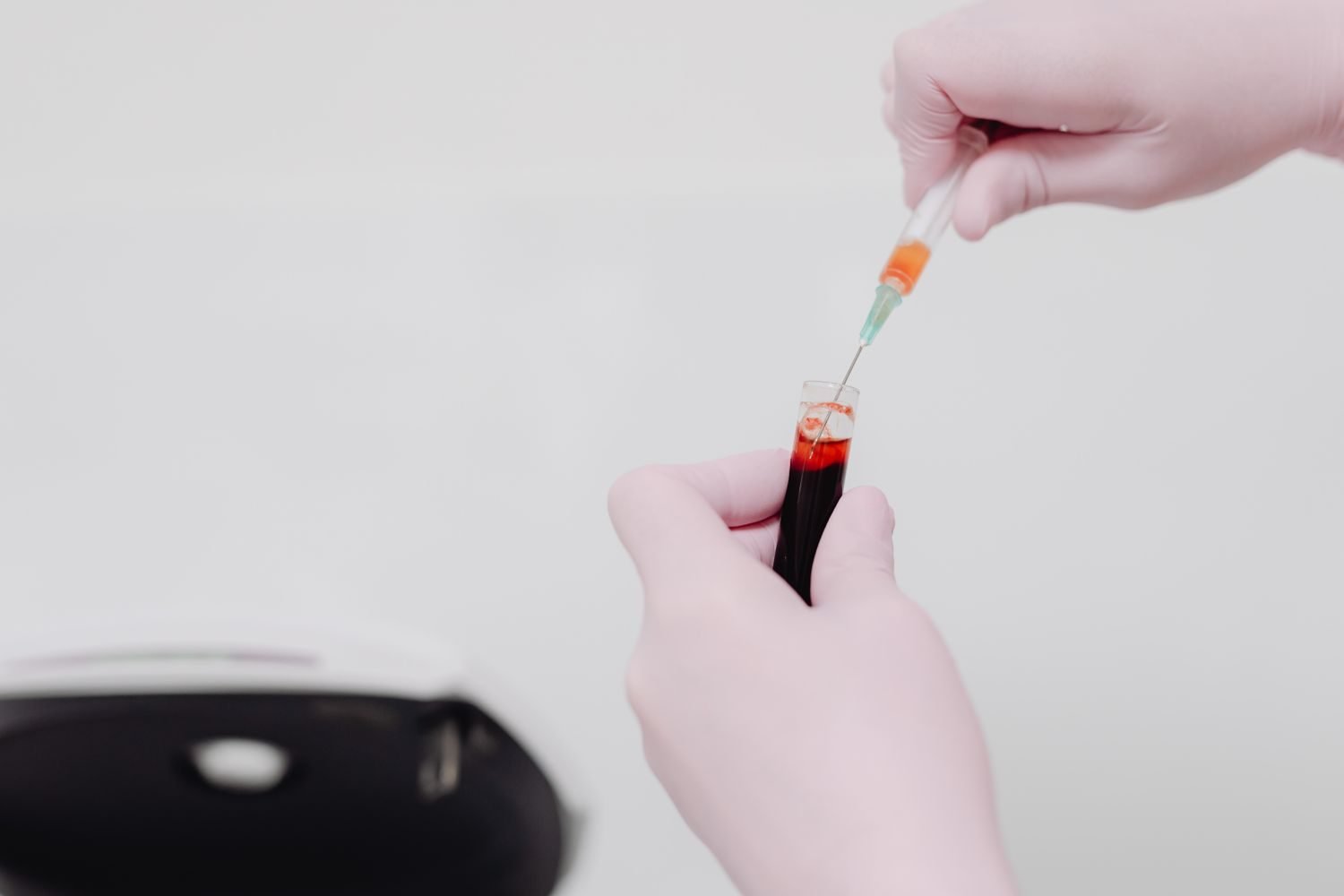
A blood ferritin test is the only reliable way to know — not symptoms, not guesswork. Ask your doctor for serum ferritin alongside a standard iron panel. Don’t start iron supplements without a result in hand; iron overload is real and in some cases dangerous, so supplementing “just in case” isn’t a safe default.
Does vitamin D deficiency cause hair loss?
Vitamin D is the second-most-researched nutrient here, and the mechanism is fairly well understood: hair follicles have vitamin D receptors, and in animal studies, follicles lacking functional receptors get stuck in the catagen phase — the transitional stage where a follicle is supposed to shrink down and reset before growing a new hair. Human studies have found lower vitamin D levels in people with diffuse hair shedding and in some cases of alopecia areata, an autoimmune form of hair loss, though the areata link is more association than proven causation.
Who’s actually at risk
People with limited sun exposure (indoor workers, northern latitudes, those covering most of their skin), older adults, people with darker skin, which reduces vitamin D synthesis from sunlight, and anyone with malabsorption issues are most likely to run low. Vitamin D deficiency is common enough generally that it’s worth checking regardless of hair symptoms.
How to know if it’s you
A 25-hydroxyvitamin D blood test is the standard measure. Levels below 20 ng/mL are generally classified as deficient, with 20–30 ng/mL considered insufficient by many labs. If you’re low, correction is usually straightforward under a doctor’s guidance — but like iron, more isn’t automatically better, since vitamin D is fat-soluble and can accumulate to toxic levels at very high, unsupervised doses.
Does zinc deficiency cause hair loss?
Zinc has a plausible, researched role here. It’s a cofactor for enzymes active in the hair follicle and appears to help regulate the follicle’s natural cycling process. A study published in Annals of Dermatology found that people with telogen effluvium and alopecia areata had significantly lower serum zinc levels than people without hair loss, and a broader survey study found consistent depletion of zinc alongside ferritin and vitamin D in people reporting hair shedding.
Who’s actually at risk
Restrictive diets, malabsorption conditions, chronic alcohol use, and certain medications can all lower zinc status. Vegetarians and vegans are also at somewhat higher risk, since plant-based zinc is less bioavailable than zinc from meat and shellfish.
How to know if it’s you — and a real caution
Serum zinc testing can screen for deficiency, though it’s an imperfect marker your doctor may weigh alongside diet history. The important caveat: this is a nutrient where both too little and too much cause problems. Supplementing above roughly 40 mg per day without medical supervision can deplete copper, which itself causes hair loss — so this is a “get tested before you supplement” nutrient, not a “more must be better” one.
Does biotin deficiency actually cause hair loss?
Almost never, in people eating a normal diet — and this is where the gap between marketing and evidence is widest. True biotin deficiency is considered rare in industrialized countries because a typical Western diet already provides adequate biotin through eggs, nuts, seeds, and organ meats. Clinically meaningful deficiency largely shows up in people with rare genetic conditions like biotinidase deficiency, those eating large amounts of raw egg whites over long periods, or people on certain anticonvulsant medications — not the general population buying biotin gummies off a shelf.
The research on biotin supplementation for hair growth in people without a diagnosed deficiency is thin. A rigorous double-blind, placebo-controlled trial found no meaningful difference between biotin and placebo groups, and a more recent systematic review reached a similar conclusion: current evidence doesn’t support routine biotin supplementation unless a deficiency is confirmed. Despite that, biotin remains the most heavily marketed hair supplement on the market — occupying, as one dermatology review put it, the lowest tier of evidence among people without a confirmed deficiency. There’s also a practical downside: high-dose biotin can interfere with thyroid and cardiac lab tests, sometimes producing falsely reassuring or alarming results. Tell your doctor if you’re taking it before any blood work.
How to know if it’s you
Honestly, for most people, it isn’t. Biotin deficiency is genuinely uncommon outside the risk groups above. If you don’t fall into one of those categories, the more productive move is checking iron, vitamin D, and zinc first — and talking to a doctor about testing rather than adding another supplement bottle to the shelf. Our hair nutrition guide covers how these nutrients fit into an overall eating pattern.
Can general malnutrition or low protein intake cause hair loss?
Yes, and it’s a more foundational issue than any single micronutrient. Hair is roughly 90% protein (keratin), and the follicle is one of the most metabolically active tissues in the body — one of the first things your body deprioritizes when energy or protein intake drops significantly. This is why crash diets, bariatric surgery recovery, eating disorders, and any period of inadequate overall intake are classic telogen effluvium triggers, independent of any single vitamin or mineral.
Unlike the deficiencies above, this isn’t caught with a single blood test — it’s usually inferred from history: a recent significant calorie deficit, rapid weight loss, low protein intake relative to body size, or a documented eating disorder. If that sounds like your recent months, the fix isn’t a supplement — it’s rebuilding adequate, consistent intake, ideally with professional guidance.

How do you find out which deficiency, if any, is causing your hair loss?
Testing beats guessing, every time. Because these deficiencies have overlapping symptoms and different fixes — and because over-supplementing several of them carries real risk — the responsible path is:
- Track the timeline. Note when shedding started and what happened two to four months before, since telogen effluvium has delayed onset.
- Get tested before supplementing. Ask for serum ferritin, a full iron panel, 25-hydroxyvitamin D, and serum zinc. Skip routine biotin testing unless you have a specific risk factor.
- Rule out non-nutritional causes. Thyroid dysfunction, recent illness, medication changes, and hormonal shifts all mimic nutritional telogen effluvium and need ruling out with your doctor.
- See a dermatologist if shedding is significant, sudden, or patchy. A dermatologist can distinguish telogen effluvium from other causes, including patterned or scarring hair loss, and confirm whether nutrition is actually the driver before you spend months adjusting your diet for nothing.
If bloodwork turns up a genuine gap, correcting it through food first — with supplementation reserved for confirmed deficiencies — is generally the safer approach. Our hair nutrition food guide breaks down food sources in more detail, and our zinc nutrition and vitamin nutrition pages go deeper on dosing for each nutrient individually.
Frequently asked questions
How long after a deficiency starts does hair loss appear?
Typically two to four months. Follicles don’t shed the moment a nutrient runs low — they finish their current growth cycle first, then shift into the resting phase and release the hair weeks later. This delay is why people often can’t connect shedding to an illness or stressful period from months earlier.
If I fix the deficiency, how long until hair loss stops and regrows?
Shedding usually slows within a few weeks to a couple of months of correcting the deficiency, but visible regrowth takes longer — often three to six months, since hair grows about half an inch per month. Full density can take up to a year to recover in some cases.
Can I just take a multivitamin instead of getting tested?
You can, but it’s inefficient and won’t correct a specific significant deficiency the way targeted supplementation does. It also makes it harder to know what actually helped, and some ingredients, like high-dose zinc or iron, carry risk if you’re not actually deficient. Testing first is more effective and safer.
Is it possible to have normal blood levels and still have nutrition-related hair loss?
It’s possible but less common — “normal” ranges are population averages, and some people shed at levels labs still consider borderline normal, particularly for ferritin. This is one reason a doctor or dermatologist who can interpret your specific numbers, rather than generic cutoffs, matters.
Should I stop taking biotin if it isn’t helping?
If you don’t have a confirmed deficiency, there’s little evidence it’s doing anything for your hair, and it can interfere with certain lab tests, so it’s reasonable to stop and redirect that budget toward getting tested for iron, vitamin D, and zinc instead.
Nutritional deficiencies are a real, fixable cause of hair loss, but the fix depends on knowing which one — if any — you actually have. If shedding is significant, sudden, or not improving after a few months, a dermatologist can rule out non-nutritional causes, and an online nutritionist consultation can help you build an eating pattern around whatever your bloodwork shows.