Nutritional balance for weight loss means keeping your vitamin and mineral intake adequate even while you eat fewer calories overall — not just cutting food volume across the board. Research on adults actively trying to lose weight has found that roughly 37% run low on vitamin D, 15% on magnesium, 12% on zinc, and 10% on iron, largely because a shrinking calorie budget shrinks nutrient intake along with it. The fix isn’t eating more. It’s eating fewer calories from foods that pack more nutrients per bite — what nutritionists call nutrient density.
This is one of the most overlooked parts of dieting. Most people planning a deficit ask “how many calories should I cut?” and stop there. Few ask “will I still hit my vitamin and mineral targets?” That second question usually decides whether you feel steady through a diet or end up fatigued, shedding hair, and catching every cold going around.
What Does “Nutritional Balance” Actually Mean During a Deficit?
Nutritional balance during weight loss means your reduced calorie intake still delivers close to 100% of your recommended daily amounts of essential vitamins and minerals — iron, zinc, magnesium, vitamin D, vitamin C, calcium, B vitamins — alongside adequate protein and fiber. It’s a different goal from simply eating “healthy,” and different again from just watching total calories.
Think of it as two budgets running at once: an energy budget (calories in vs. out) and a nutrient budget (micronutrients needed vs. consumed). Aggressive dieting usually manages the first carefully while the second runs on autopilot — and autopilot rarely lands on target below roughly 1,500-1,600 calories for most adults. Our guide to nutrition for weight loss covers the foundational principles worth pairing with the micronutrient focus here.
Why Do Diets Cause Vitamin and Mineral Deficiencies in the First Place?
The mechanism is simple math: most vitamins and minerals arrive in the body attached to food, so less food generally means less of everything in it. A review of three popular commercial weight-loss meal plans found measurable shortfalls in multiple micronutrients simply because the meal structures weren’t built with nutrient targets in mind, only calorie targets. Three patterns make this worse:
- Cutting too fast, too low. Diets that drop far below maintenance leave little room for nutrient-dense choices once convenience foods are factored in.
- Repetition and restriction. Eliminating entire food groups (dairy, grains, certain vegetables) often eliminates the primary source of a nutrient along with it — dairy-free diets commonly run low on calcium and vitamin D.
- Relying on “diet” packaged foods. Many low-calorie processed products are engineered to be low in fat or sugar, not high in micronutrients, so they fill the calorie slot without filling the nutrient one.
Obesity itself also raises the baseline risk: micronutrient deficiencies are already more common in people carrying excess weight, likely due to dietary patterns and higher physiological demand, according to research published via the National Institutes of Health. Deficiency risk during dieting often starts from a lower baseline than people expect.
What Are the Warning Signs of Micronutrient Shortfalls While Dieting?
The body tends to signal micronutrient shortages well before bloodwork confirms a clinical deficiency, and most of these signs are easy to dismiss as “just part of dieting”:
- Persistent fatigue that rest doesn’t fix — often linked to low iron, B12, or magnesium, since these nutrients are directly involved in energy metabolism and oxygen transport.
- Hair thinning or increased shedding — nutrients get routed to vital organs before hair follicles when supply runs short, so hair is often an early visible marker of low iron, zinc, vitamin D, or protein intake.
- Getting sick more often or recovering slowly — vitamin C, vitamin D, zinc, and selenium are each involved in immune cell function; even a mild, sustained shortfall can blunt the immune response.
- Brittle nails, dry skin, or slow wound healing — commonly tied to inadequate protein, zinc, or essential fatty acid intake.
- Muscle loss that outpaces fat loss — often a protein and vitamin D issue; one 16-week calorie-restricted trial found participants with corrected vitamin D levels lost 2.3 kg more fat mass and 0.8 kg less lean mass than those who stayed deficient.
None of these symptoms confirm a specific deficiency on their own, but a cluster of two or more appearing a few weeks into a diet is a reasonable cue to look at nutrient intake, not just the scale. Our article on nutritional deficiency breaks down how these gaps show up and what levels count as low.
How Do You Calculate Nutrient Density Per Calorie?
Nutrient density is essentially a ratio: how many vitamins, minerals, and other beneficial compounds a food delivers relative to its calorie count. A food is “nutrient-dense” when it gives you a meaningful share of your daily vitamin and mineral needs without using up a large share of your calorie budget. In practice, you don’t need a spreadsheet to apply this — a few swaps do most of the work:
- Leafy greens and cruciferous vegetables deliver vitamin K, vitamin C, folate, and fiber for very few calories.
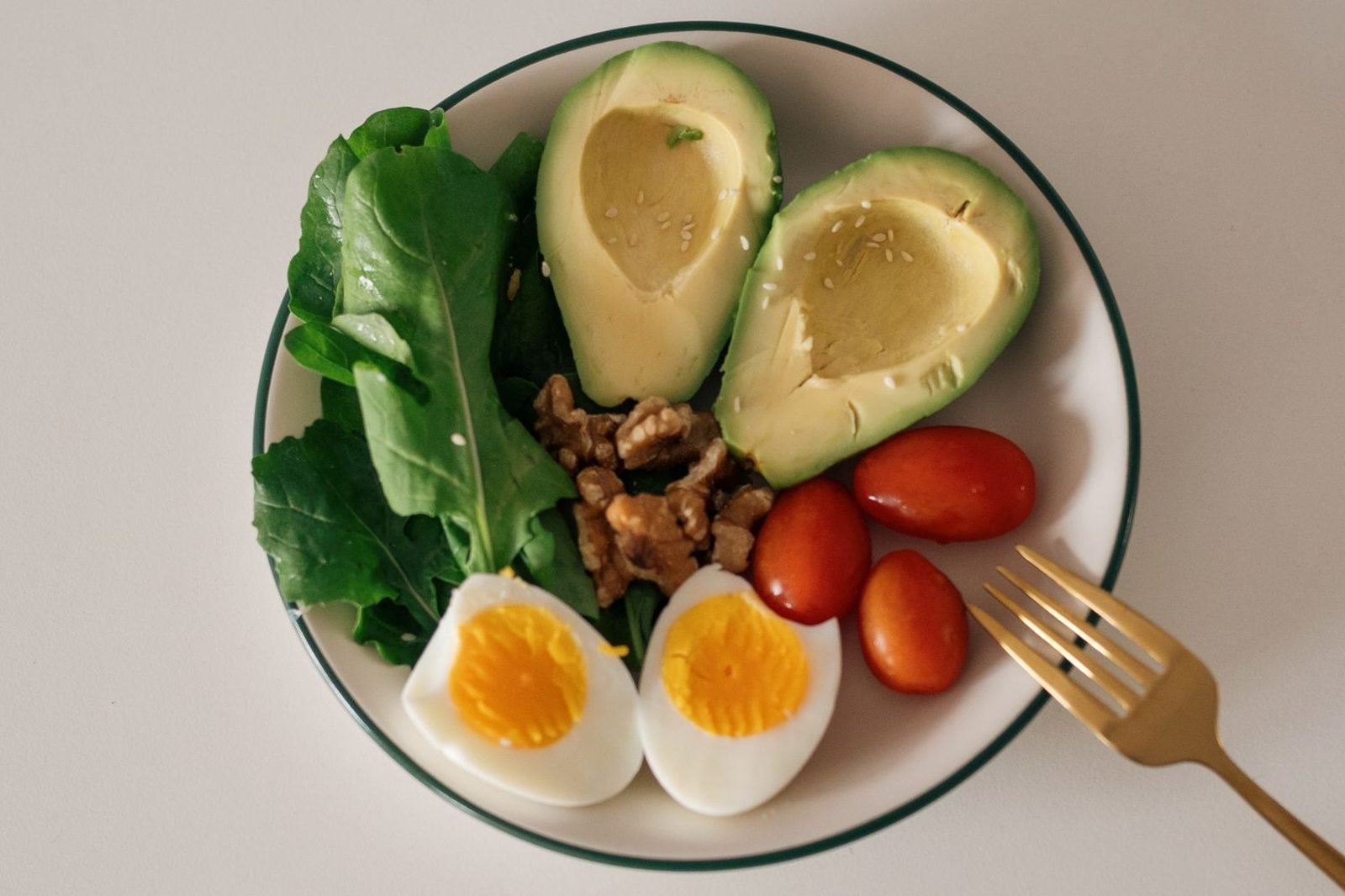
- Lean proteins — eggs, fish, poultry, legumes, Greek yogurt — carry iron, zinc, B12, and selenium alongside the protein itself.
- Colorful produce across the spectrum (berries, citrus, peppers, orange vegetables) spreads out antioxidant and vitamin coverage, since different pigments correlate with different nutrients.
- Nuts and seeds in small portions add magnesium, zinc, and vitamin E efficiently, though portions need watching since they’re calorie-dense too.
- Fortified staples like fortified plant milks or whole grains help close common gaps (vitamin D, B12, iron), especially for people cutting out dairy or meat.
Harvard Health frames this directly: nutrient-dense foods provide vitamins, minerals, protein, and other important nutrients without unnecessary calories, making them one of the more sustainable ways to support both weight loss and overall health. For a structured look at how this plays out meal by meal, the nutrition diet chart for weight loss lays out sample plates built with this density principle in mind.

How Low Can Calories Go Before Micronutrients Suffer?
There’s no single universal cutoff, since it depends on body size, activity level, and diet quality, but a few reference points help. Very low-energy diets providing under 800 calories a day generally need direct medical supervision, precisely because it becomes extremely difficult to fit adequate vitamins and minerals into that few calories, no matter how carefully the food is chosen.
For most adults pursuing a standard, moderate deficit, staying above roughly 1,200 calories per day (for many women) or 1,500 calories per day (for many men) — adjusted for individual size and activity — leaves enough room to include nutrient-dense staples without needing supplementation. Below that range, even a well-planned diet strains against the volume of food required to reach RDA-level intakes for iron, calcium, and B vitamins.
Protein deserves its own callout: research suggests roughly 1.2 to 1.6 grams per kilogram of body weight per day helps preserve muscle mass during a deficit — notably higher than the general RDA of 0.8 g/kg, which was set only to prevent outright deficiency, not to protect muscle during active fat loss. One controlled comparison found dieters eating around 1.0 g/kg lost roughly 1.6 kg of muscle over the study period, versus about 0.3 kg for those eating a higher-protein diet. See our piece on protein and nutrition for more on this dual role.
Should You Take a Multivitamin While Losing Weight?
A multivitamin can act as a reasonable safety net during a calorie deficit, but it isn’t a substitute for building meals around nutrient-dense foods, and it won’t fully offset a genuinely poor diet. Treat supplements as insurance against small daily gaps, not as the main strategy. A few practical guardrails:
- Choose a multivitamin formulated at or near 100% of daily values rather than “mega-dose” versions, since excess fat-soluble vitamins (A, D, E, K) can accumulate to unsafe levels.
- Pay particular attention to vitamin D, iron, and calcium if you’ve cut out dairy, red meat, or fortified grains — these fall short most often in restrictive diets.
- If fatigue, hair shedding, or frequent illness shows up despite a supplement, that’s a signal to get bloodwork done rather than adding more pills.
Our vitamin nutrition guide covers which vitamins are most commonly under-consumed and how to prioritize them through food first. Some people also look to plant-based approaches to fill gaps during dieting — our review of herbal nutrition for weight loss examines what the evidence actually supports.

How Do You Build a Deficit That Still Hits Micronutrient Targets?
Plan the nutrient side of your diet before the calorie side, then build the deficit around it:
- Set a moderate deficit. A reduction of roughly 500-750 calories per day below maintenance supports steady fat loss while leaving room for real variety.
- Anchor each meal with protein and vegetables first. Fill roughly half the plate with non-starchy vegetables and a palm-sized portion of lean protein before adding grains or fats.
- Rotate produce by color weekly. Different pigments carry different micronutrient profiles, reducing the odds of consistently missing any one nutrient.
- Track intake for one to two weeks early on. Logging food against a nutrient database makes gaps visible — most people are surprised by what they’re under-hitting.
- Reassess every few weeks. A plan that worked at 1,800 calories may not automatically work at 1,500.
This kind of planning is where working with a professional pays off, since it’s easy to underestimate how quickly nutrient gaps creep in once a deficit tightens over several months. If you’d like a plan built around your numbers and goals, an online nutritionist consultation can help you set a deficit that protects your energy, hair, and immune function while you lose weight — not just the number on the scale.
Frequently Asked Questions
Can you lose weight and still get all your vitamins and minerals?
Yes, in most moderate deficits (roughly 1,200-1,800 calories, depending on your size and activity level). The key is prioritizing nutrient-dense foods — vegetables, lean protein, whole grains — over low-calorie processed foods, which tend to be calorie-controlled but nutrient-poor.
What vitamin deficiency causes the most hair loss during dieting?
Iron and vitamin D are among the most commonly implicated, alongside inadequate protein and zinc. Hair follicles receive nutrients only after vital organs are supplied, so thinning often appears as an early visible sign of a broader nutrient shortfall.
How much protein do I need per day while dieting to lose weight?
Research generally supports roughly 1.2 to 1.6 grams per kilogram of body weight daily during a deficit — notably higher than the standard 0.8 g/kg RDA, because higher protein intake helps preserve muscle mass while calories are reduced.
Is it safe to eat under 1,200 calories a day to lose weight faster?
Generally not without medical supervision. Diets under 800 calories are considered very low-energy diets requiring clinical oversight, and even the 800-1,200 range makes it genuinely difficult to hit adequate vitamin and mineral intake through food alone.
Do I need a multivitamin if I’m eating a balanced diet while losing weight?
Not necessarily, but many people find it a useful safety net, especially if calories are on the lower end of a deficit or specific food groups have been reduced. It should supplement a nutrient-dense diet, not replace one.
What are the first signs your diet is too low in nutrients?
Fatigue that doesn’t improve with sleep, increased hair shedding, getting sick more often, and slower recovery from minor illness or wounds are the most commonly reported early signs, often appearing weeks before bloodwork would confirm a deficiency.