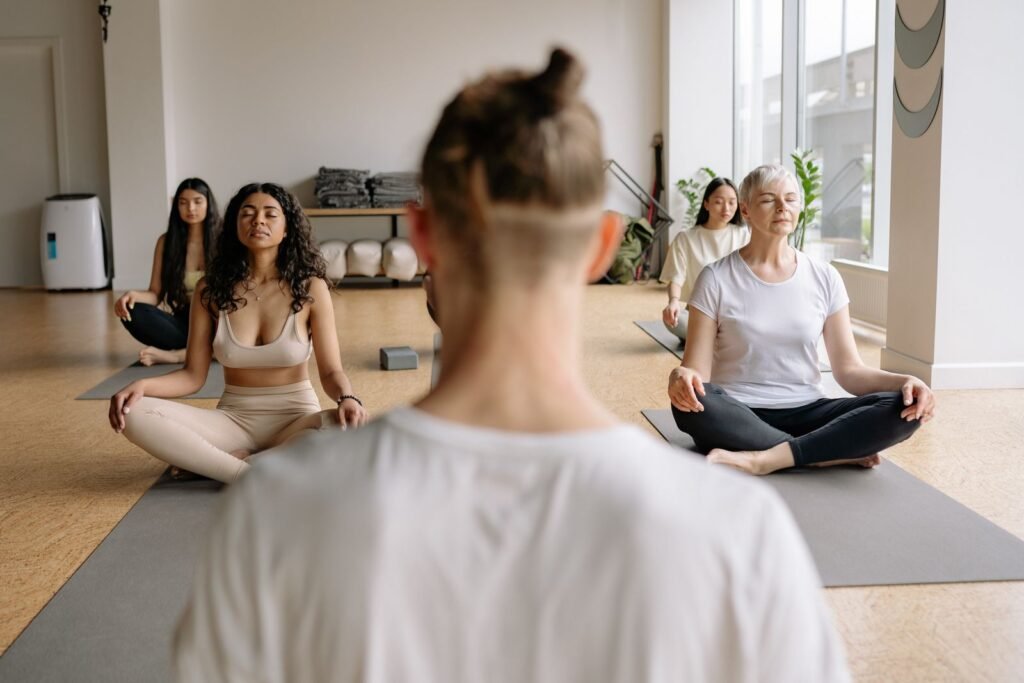
Shunya mudra is a simple hand gesture, formed by bending the middle finger down to the base of the thumb and pressing the thumb gently over it, that is traditionally used in yoga to balance the body’s space (akasha) element. It is most commonly practiced for ear-related concerns such as ringing in the ears, reduced hearing clarity, motion sickness, and vertigo, and is typically held for 10 to 15 minutes at a time. Like most mudras, it works best as a complementary practice alongside proper medical care, not as a replacement for it.
What Is Shunya Mudra?
“Shunya” is a Sanskrit word meaning “zero,” “void,” or “empty space,” and this mudra is built around the idea of reducing excess space in the body. In classical mudra theory, each finger corresponds to one of the five elements: the thumb to fire, the index finger to air, the middle finger to space (ether), the ring finger to earth, and the little finger to water. Shunya mudra is also known as Akash Shamak Mudra, which roughly translates to “the gesture that pacifies the sky element,” because it is believed to calm an overactive space element rather than build it up, which is the opposite intention of the closely related akash mudra.
Within the broader landscape of hand mudras and their benefits, shunya mudra occupies a specific niche: it is one of the few gestures aimed almost entirely at sensory and auditory function rather than digestion, energy, or emotional balance. That focus is what makes it worth learning even if you already practice other mudras regularly.
How Do You Perform Shunya Mudra Correctly?
The technique is straightforward once you know the finger placement, but small details in pressure and posture affect how comfortable and sustainable the practice feels.
- Sit in a stable meditative posture. Cross-legged positions such as Sukhasana (Easy Pose), Padmasana (Lotus Pose), or Vajrasana (Thunderbolt Pose) all work well. A straight spine matters more than the specific seat.
- Rest your hands on your knees or thighs, palms facing upward. This open-palm orientation is standard across most seated mudra practices, including yoga mudra variations used in meditation.
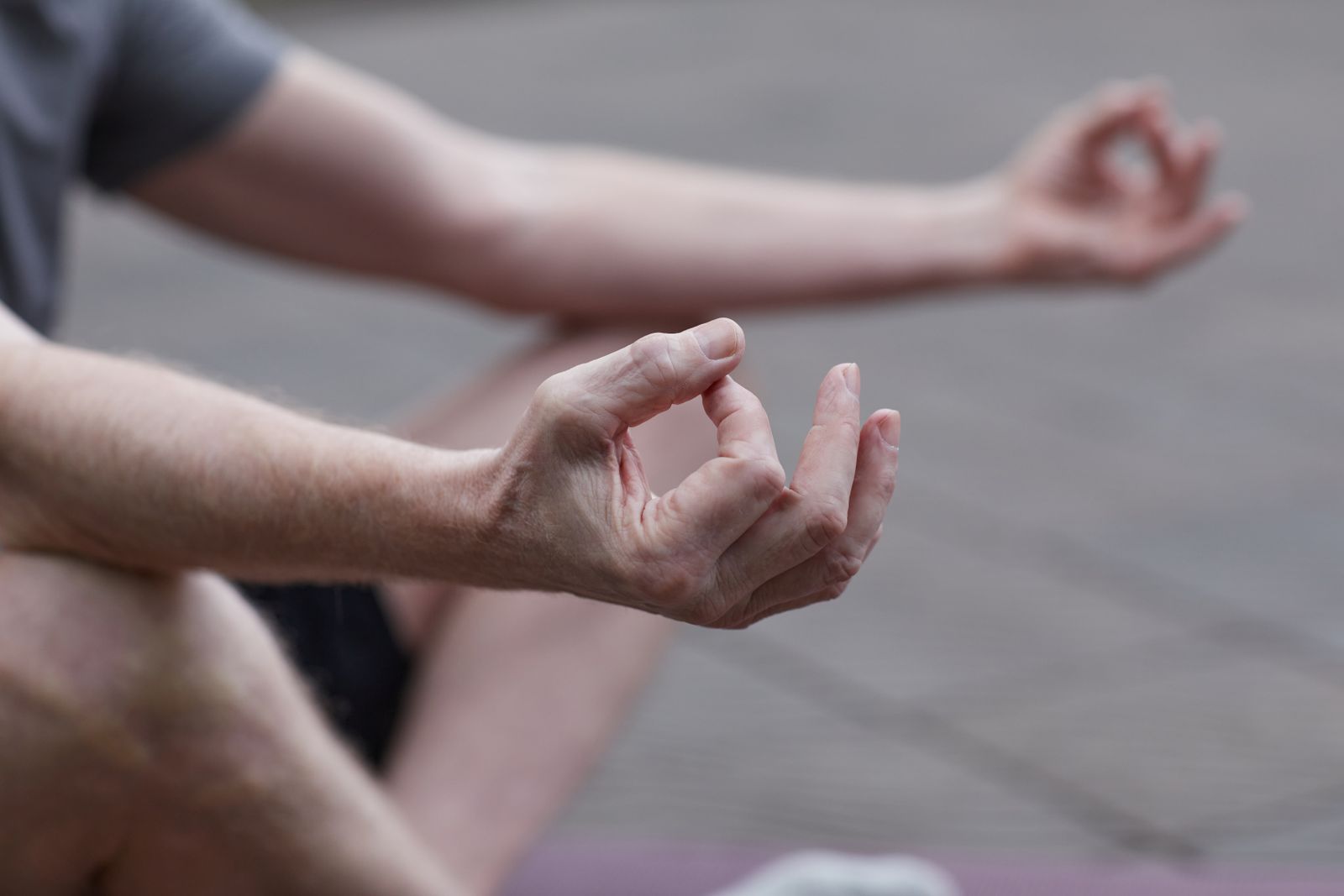
- Fold the middle finger of each hand inward until the fingertip touches the base of the thumb, or as close to it as is comfortable.
- Bring the thumb down over the folded middle finger and press gently against its middle bone (the second knuckle). The pressure should be light, not forceful.
- Keep the remaining three fingers, the index, ring, and little fingers, extended and relaxed rather than curled or rigid.
- Close your eyes and breathe slowly through the nose, holding the position for 10 to 15 minutes. Beginners can start with shorter 4 to 5 minute rounds and build up gradually.
This can be practiced up to two or three times a day. Many teachers recommend an early morning session, when the mind is naturally quieter and easier to settle, as an ideal time, though any consistent daily slot works.
Why Is Shunya Mudra Linked to the Space Element?
Ayurvedic and yogic theory describes the human body as made up of five elements, or “pancha mahabhutas”: earth, water, fire, air, and space. Space, or akasha, is considered the subtlest of the five and is associated with the hollow, porous parts of the body, the inner ear canals, the sinuses, the throat, blood vessel walls, and the gaps within bone marrow. When this element is thought to be excessive or imbalanced, symptoms are traditionally linked to the ears and to a general sense of spaciness, dizziness, or disconnection.
Because the middle finger represents the space element and the thumb represents fire, folding the middle finger against the thumb is described in traditional texts as a way to bring fire toward space, symbolically reducing its excess. This is a philosophical framework passed down through Ayurveda and hatha yoga traditions rather than a claim backed by modern clinical trials, so it is best understood as a lens for practice rather than a medical mechanism.
What Are the Traditional Benefits of Shunya Mudra?
Practitioners and traditional texts most commonly associate shunya mudra with the following:
- Ear health and hearing support: the most frequently cited use, often paired with the idea that it may ease tinnitus (ringing in the ears) over consistent practice.
- Motion sickness and vertigo relief: some practitioners use it before travel or during bouts of dizziness.
- Reduced numbness: particularly in the hands, feet, or lips, where a sense of “empty” or disconnected sensation is described.
- General mental clarity and grounding: paired with slow breathing, the practice is described as calming and centering, similar in feel to holding prana mudra or other grounding gestures.
These are traditional and anecdotal associations rather than medically proven outcomes. If you are dealing with persistent tinnitus, vertigo, or hearing loss, treat this mudra as a calming complementary practice and see an ENT specialist or audiologist for proper diagnosis and treatment.
Can Shunya Mudra Help With Tinnitus?
Tinnitus, the perception of ringing, buzzing, or hissing sounds without an external source, is the condition most frequently associated with shunya mudra in traditional and popular yoga literature. The reasoning given is that the inner ear is one of the “hollow” or space-dominant structures in the body, so calming excess space element is believed to ease the sensation.
In practice, many people report that the slow breathing and stillness involved in holding the mudra reduce their subjective distress around tinnitus, even if the underlying sound doesn’t change. That stress-reduction effect is worth taking seriously on its own, since anxiety and tinnitus perception are known to interact and worsen each other. If your tinnitus is new, sudden, one-sided, or accompanied by pain or hearing loss, prioritize a medical evaluation before relying on any mudra practice.
How Is Shunya Mudra Different From Vayu Mudra?
Shunya mudra and vayu mudra are easy to confuse because both involve folding a finger toward the thumb, but they target opposite elements and different concerns. Vayu mudra folds the index finger (representing air) under the thumb and is used to reduce excess air element, associated with bloating, joint stiffness, and conditions like Parkinson’s tremor in traditional descriptions. Shunya mudra folds the middle finger (representing space) and targets ear and balance-related concerns instead.
A simple way to remember the difference: think “air for joints and gas, space for ears and balance.” Because they use adjacent fingers, it’s worth double-checking your hand position in a mirror the first few times you practice either one.
What Does Shunya Mudra Have in Common With Other Mudras?
Shunya mudra belongs to a family of single-element mudras that also includes prithvi mudra (earth), varun mudra (water), and surya mudra (fire), each designed to correct one specific elemental imbalance rather than address the whole system at once. This is different from more general-purpose gestures like yoga mudra or Gyan Mudra, which are used broadly for concentration and meditation regardless of a specific physical complaint.
If you’re new to this style of practice, it helps to read a broader overview first. A guide to mudras and their benefits will show you how these single-element gestures fit alongside the more general ones, and help you decide which one matches your actual goal, whether that’s better sleep, digestion, focus, or, in this case, ear and balance support.
When Is the Best Time to Practice Shunya Mudra?
Early morning, on an empty stomach, is the time most commonly recommended in yoga tradition, largely because the mind is quieter and there are fewer distractions. That said, shunya mudra is flexible enough to use situationally: many people hold it during a bout of dizziness, right before a car or flight journey if they’re prone to motion sickness, or during a quiet moment at a desk if they notice ear discomfort building up.
A practical structure for beginners is three short sessions a day, morning, midday, and evening, of 4 to 5 minutes each, building toward one or two longer 15-minute sessions once the position feels natural. Consistency across days matters more than the length of any single session.
Are There Any Precautions or Contraindications?
Shunya mudra is considered a low-risk, gentle practice, but a few sensible precautions apply:
- Don’t press hard. The pressure from the thumb onto the middle finger should be light; forcing it doesn’t intensify the effect and can be distracting or uncomfortable.
- Discontinue if symptoms worsen. If tinnitus, dizziness, or ear discomfort increases rather than eases after several days of practice, stop and consult a doctor rather than persisting.
- Avoid practicing when very weak or fatigued. Traditional guidance suggests skipping the mudra during periods of extreme physical weakness.
- Treat it as complementary, not curative. This mudra is not a substitute for medical treatment of ear infections, hearing loss, vestibular disorders, or thyroid conditions. Use it alongside professional care, not instead of it.
As with any seated practice, if you have knee, hip, or back conditions that make traditional cross-legged sitting uncomfortable, you can practice shunya mudra seated in a chair with your feet flat on the floor and hands resting on your thighs.
How Does Shunya Mudra Fit Into a Broader Yoga or Meditation Routine?
Mudras are rarely practiced in isolation in traditional settings; they’re typically layered onto breathing practices or meditation that’s already part of your routine. Shunya mudra pairs naturally with slow diaphragmatic breathing or a short pranayama for beginners sequence, since both emphasize stillness and controlled breath. It also works well tacked onto the end of an online yoga session for stress relief, where a few minutes of seated mudra practice can serve as a calming close to a physical routine.
If your main goal is general relaxation and mental clarity rather than a specific ear concern, you might find broader breathing-based practices like anulom vilom pranayama or bhramari pranayama more directly useful, since bhramari in particular is also associated with the ears and auditory calm through its humming vibration.
Is There Scientific Evidence Behind Shunya Mudra?
It’s important to be direct here: shunya mudra’s benefits are rooted in traditional Ayurvedic and yogic theory about elemental balance, not in controlled clinical research specific to this gesture. There isn’t published clinical trial evidence demonstrating that folding the middle finger against the thumb changes hearing function or resolves tinnitus through any verified physiological mechanism.
What is better supported is the general research on mindfulness, slow breathing, and relaxation practices reducing perceived stress and anxiety, and stress is a known aggravating factor for tinnitus severity and dizziness in many people. So while the specific “space element” framework is traditional rather than clinical, the calming, breath-focused ritual around the mudra may offer real, if indirect, benefit. Approach it with that honest framing: a low-cost, low-risk complementary habit, not a verified medical treatment.
How Long Does It Take to Notice a Difference?
There’s no fixed timeline, and traditional sources vary widely in what they suggest, ranging from a few days to several weeks of consistent daily practice. What most teachers agree on is that consistency matters far more than duration in any single sitting. A realistic approach is to commit to daily practice for two to three weeks, tracking how you feel in a simple note or journal, and to stop or seek medical advice if you notice no change or if symptoms worsen rather than ease.
Questions People Ask About Shunya Mudra
What is shunya mudra used for?
Shunya mudra is primarily used to support ear health, including reducing the perceived intensity of tinnitus, easing motion sickness and vertigo, and calming a sense of numbness. It’s formed by folding the middle finger to the base of the thumb and pressing gently, and is traditionally linked to balancing the body’s space, or akasha, element.
How long should I hold shunya mudra each day?
Most guidance suggests starting with 4 to 5 minute sessions, two to three times daily, and building up to a single 10 to 15 minute session once the hand position feels comfortable and natural. Consistency across days is considered more important than the length of any one sitting.
Can shunya mudra cure tinnitus completely?
No. Shunya mudra is a traditional complementary practice, not a proven medical cure for tinnitus. Some practitioners report reduced distress around the ringing sensation with consistent practice, but persistent, worsening, or sudden tinnitus should always be evaluated by an ENT specialist or audiologist.
Which hand should I use for shunya mudra?
Shunya mudra is typically practiced with both hands simultaneously, one gesture formed on each hand while seated with palms resting upward on the knees or thighs. There is no traditional requirement to use only one hand; using both together is the standard approach.
What’s the difference between shunya mudra and gyan mudra?
Gyan mudra, formed by touching the index finger to the thumb, is a general-purpose gesture for focus, calm, and meditation. Shunya mudra folds the middle finger instead and is aimed specifically at the space element and ear-related concerns, making it a targeted practice rather than a broad, everyday one.
Can beginners practice shunya mudra safely?
Yes. Shunya mudra requires no special flexibility or prior yoga experience and can be practiced seated in a chair or cross-legged on the floor. Beginners should use light thumb pressure, start with short sessions, and stop if any symptom worsens rather than improves with practice.
Try This for Yourself
Mudras like shunya mudra are easiest to learn correctly, and easiest to stay consistent with, when they’re guided rather than self-taught from an article alone. If you’d like a teacher to check your hand position, pair it with the right breathing pattern, and build it into a fuller practice, join a live online yoga class with FitStrot and bring your questions to a real instructor.
Related reading: Yoga Mudra: Meaning and Benefits, Mudras and Their Benefits, Vayu Mudra for Joint and Air Balance, Bhramari Pranayama for Calm and Focus, or explore FitStrot’s online yoga classes to build a complete practice.