A dumbbell chest workout without a bench uses the floor instead of a bench to support your back while you press and fly. You lie down, knees bent, feet flat, and let the floor do the same job a bench would from your shoulders to your hips. The only real difference is range of motion: your elbows stop when they touch the ground instead of dipping below shoulder level. That’s a limitation you can work with, not a dealbreaker. With the right exercise selection, you can still train your chest hard using nothing but a pair of dumbbells and your living room floor.
What is a dumbbell chest workout without a bench, exactly?
It’s a chest-focused session built entirely around floor presses, floor flys, and standing press variations that don’t need any elevated surface. Instead of lying on a bench with your arms free to drop past your torso, you lie flat on the floor and let your upper arms stop at the ground. You lose a few inches of stretch at the bottom of each rep, but you keep the pressing pattern, the fly pattern, and most of the muscle recruitment that makes chest training effective in the first place.
This style of training has become popular for a simple reason: not everyone has a bench at home, and not everyone wants one. A pair of adjustable dumbbells takes up a fraction of the space. If you’re training in a small apartment, a hotel room, or a garage with barely enough room to lie down, this is the workout that actually gets used. For the bigger picture on how chest work fits into a full week of training, our chest workouts guide breaks down volume and frequency in more depth.
Can you still build chest size and strength without a bench?
Yes. Muscle growth responds to tension, volume, and progressive overload, not to which piece of furniture you’re lying on. Floor pressing loads the chest, front delts, and triceps almost identically to bench pressing through the range it allows. You can still add weight over time, still chase more reps, still push close to failure on your last set. None of that requires a bench.
Where you do lose something is at the very bottom of the movement, and we’ll get into why that matters and how to make up for it.
What’s the real limitation the floor creates?
Honesty first: the floor cuts your range of motion short. On a bench, your elbows can dip below the level of your torso, which stretches the chest fibers further and, according to most research on hypertrophy, tends to produce a stronger growth stimulus. On the floor, your upper arms hit the ground once they’re roughly parallel to it. You simply can’t go lower. That’s a few inches of stretch you’re leaving on the table compared to a full bench press or a deep dumbbell fly.
This isn’t a reason to skip floor training. It’s a reason to train smarter around it. You compensate by slowing down the eccentric, pausing briefly at the floor instead of bouncing off it, and adding exercises like flys and pullovers that stretch the chest through a different plane so the missing range gets picked up somewhere else in the workout.
How do you do a dumbbell chest workout without a bench?
You build the session around three movement types: a floor press for raw pressing strength, a fly or squeeze variation for the stretch and contraction the floor press can’t fully deliver, and an upper-chest or pullover movement to hit the fibers a flat press tends to skip. Rotate through those three categories and you’ve covered what a bench workout would normally give you.
Floor press variations for pressing power
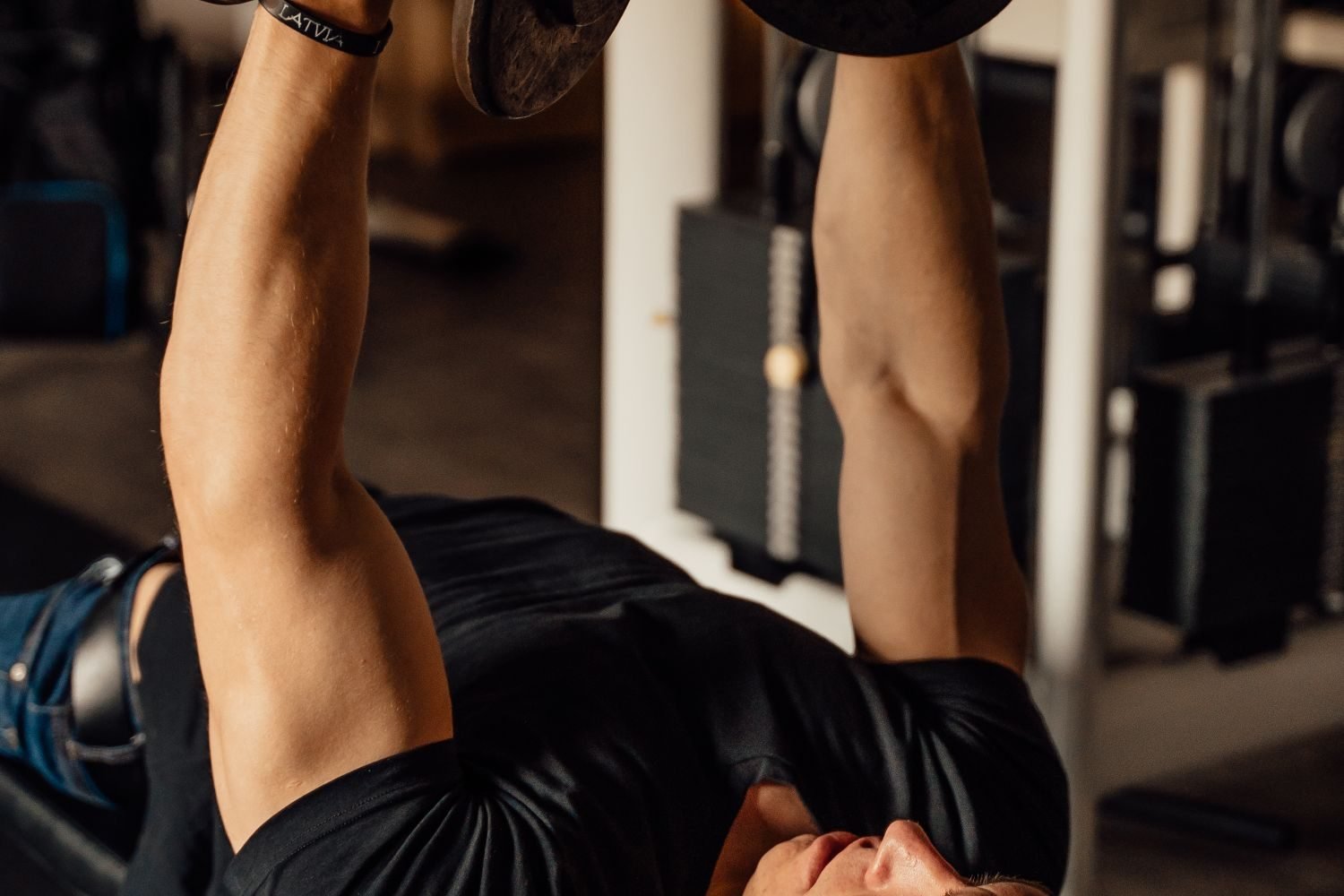
The dumbbell floor press is your main lift here. Lie on your back, knees bent, dumbbells at chest level, and press up until your arms are straight, then lower with control until your triceps touch the floor. Pause for a full second at the bottom instead of resting the weight and bouncing back up. That pause is what turns a short range of motion into a controlled, muscle-building rep instead of a momentum-driven one.
Single-arm floor presses add an anti-rotation demand, since your core has to fight the urge to twist toward the working side. Neutral-grip floor presses, palms facing each other, are easier on most people’s shoulders and worth using if you feel any pinching in a standard grip.
Standing and kneeling fly alternatives for the stretch you’re missing
Since a floor fly still gets cut short by the ground, standing and kneeling variations are worth adding into the mix. A standing squeeze press, sometimes called a Svend press, has you pressing two dumbbells together in front of your chest and holding the squeeze. It doesn’t replace a stretch-focused fly, but it hammers the inner chest and pec contraction hard, which a floor-based movement genuinely struggles to do.
A kneeling single-arm cross-body press works the chest through a different angle entirely, pressing one dumbbell diagonally across your body while kneeling tall. It’s a smaller, more controlled movement, but it recruits the chest fibers that a flat press mostly ignores.
The full dumbbell chest workout without a bench
Here’s a complete session you can run two to three times a week, with a day of rest between sessions. Warm up with a few minutes of arm circles and light band or bodyweight pressing before you load the dumbbells.
| Exercise | Sets | Reps | Rest | Coaching Cue |
|---|---|---|---|---|
| Dumbbell Floor Press | 4 | 10-12 | 60-90 sec | Pause when your triceps touch the floor, don’t bounce the weight back up |
| Neutral-Grip Floor Press | 3 | 10-12 | 60 sec | Palms facing each other, keep elbows closer to your torso than a standard grip |
| Single-Arm Floor Press | 3 | 8-10 per side | 60 sec | Keep your hips square to the ceiling, don’t let your torso rotate toward the working arm |
| Floor Dumbbell Fly | 3 | 12-15 | 45-60 sec | Soft bend in the elbows the whole way, stop the second your upper arms reach the floor |
| Standing Squeeze (Svend) Press | 3 | 15-20 | 45 sec | Press the dumbbells together as hard as you can for the entire set, not just at lockout |
| Kneeling Cross-Body Press | 3 | 10-12 per side | 45 sec | Stay tall through your hips, drive the dumbbell diagonally across your chest, not straight out |
| Floor Dumbbell Pullover | 3 | 12-15 | 60 sec | Slight bend in the elbows, lower the dumbbell behind your head only as far as feels comfortable |
| Push-Up Finisher | 2 | To near failure | 45 sec | Full range, chest close to the floor on every rep, no half reps to pad the count |
That’s roughly 25 working sets of chest and supporting muscle work in one session, which is plenty for a home workout. If you’ve got a lighter day planned, drop it to the first four exercises and call it done. If you’re pairing chest with arms on the same day, our chest and bicep workout guide lays out a combined session that works well for home training too.
What are the benefits of a dumbbell chest workout without a bench?
You get a full chest session with almost no equipment and almost no setup time, which means you’re far more likely to actually do it. A bench is one more thing to buy, store, and assemble. Skip it and your workout fits in a bag and travels with you.
Training off the floor also forces better control. You can’t cheat the bottom of a floor press by letting your arms drop past a comfortable range under momentum, because the ground stops you. That built-in check tends to clean up sloppy pressing form over time. And because most of these movements are unilateral-friendly, single-arm floor press and cross-body press especially, you end up training core stability and anti-rotation strength as a side effect of a chest day.
In our coaching sessions, we see a lot of people press their elbows straight into the floor and stop the rep dead there, then wonder why their chest doesn’t feel worked the next day. The floor isn’t cheating you out of gains, it’s just doing its job as a stopper. The fix is simple: pause on the floor instead of bouncing off it, and add the squeeze and cross-body movements to pick up the contraction work a flat press alone won’t give you. Once people make that adjustment, the soreness comes back fast.
How do you keep progressing without a bench over time?
Progress the same way you would with any strength program:
- Add small amounts of weight when your top set feels solid across all reps.
- Add a rep before you add weight if your dumbbells jump in large increments.
- Track your numbers somewhere, even a note on your phone, so you’re not guessing week to week.
- Rotate in a heavier single-arm day or a higher-rep squeeze-press day every few weeks to keep the stimulus from going stale.
If you eventually get access to a gym, running the same movements as barbell or machine work off our chest gym workout chart is a natural next step, since the muscle groups and pressing angles carry over directly. Until then, the floor version holds its own.
FAQ
What is a dumbbell chest workout without a bench?
It’s a chest routine done entirely on the floor with dumbbells, using floor presses instead of bench presses and standing or kneeling fly variations instead of bench flys. The floor supports your back and shortens your range of motion slightly, but the pressing and squeezing patterns still train the chest effectively.
How do you do a dumbbell chest workout without a bench?
Lie on the floor with knees bent, press dumbbells from chest level until your arms are straight, then lower with a brief pause once your triceps touch the ground. Mix in standing squeeze presses and kneeling cross-body presses to add the contraction and stretch work a floor press alone can’t fully provide.
What are the benefits of a dumbbell chest workout without a bench?
You get a full chest session with minimal equipment, easy setup, and better rep control since the floor stops you from cheating the bottom range. It’s also travel-friendly, works well in small spaces, and the single-arm variations add core and anti-rotation training as a bonus.
Can you build a bigger chest without a bench?
Yes, as long as you keep adding weight or reps over time. Muscle growth depends on progressive overload and consistent training, not the specific equipment you use. Floor pressing loses a small amount of range compared to a bench, but pairing it with fly and squeeze variations closes most of that gap.
How often should you train chest without a bench?
Two to three times a week works well for most people, with at least one rest day between sessions. That frequency gives your chest enough volume to grow while allowing proper recovery, especially if you’re also training other muscle groups like arms or shoulders in the same week.
If you’d rather not guess your way through sets, reps, and progression on your own, FitStrot’s 1-on-1 personal training builds a chest program around the equipment you actually have, whether that’s a full gym or just a pair of dumbbells on your bedroom floor.