Meal planning in nutrition works when it’s built around a simple structure, not a rigid script: pick a handful of repeatable meals, shop with a list organized by store section, batch-cook the slow-cooking staples once, and leave room to swap things around when life doesn’t cooperate. The people who stick with a nutrition meal plan for months, not days, are the ones who treat it as a loose framework rather than a fixed menu carved in stone. This guide walks through exactly how to build that framework, step by step, including where most people go wrong.
What does meal planning in nutrition actually involve?
At its core, meal planning in nutrition means deciding in advance what you’ll eat over a set period — usually a week — so that grocery shopping, cooking, and daily decisions get easier. It’s not the same as following someone else’s fixed menu. A good plan accounts for your schedule, budget, cooking skill, and how much variety you need to stay interested.
The process has four moving parts: taking stock of what you already have, choosing a small set of meals or components, building a grocery list around that, and setting aside time to prep. Skipping any one of these is usually why a plan falls apart by Wednesday. This connects to broader diet and nutrition habits — a plan only works if it’s realistic for the week you’re actually having, not the week you wish you were having.
How do you build a weekly meal plan around a real work schedule?
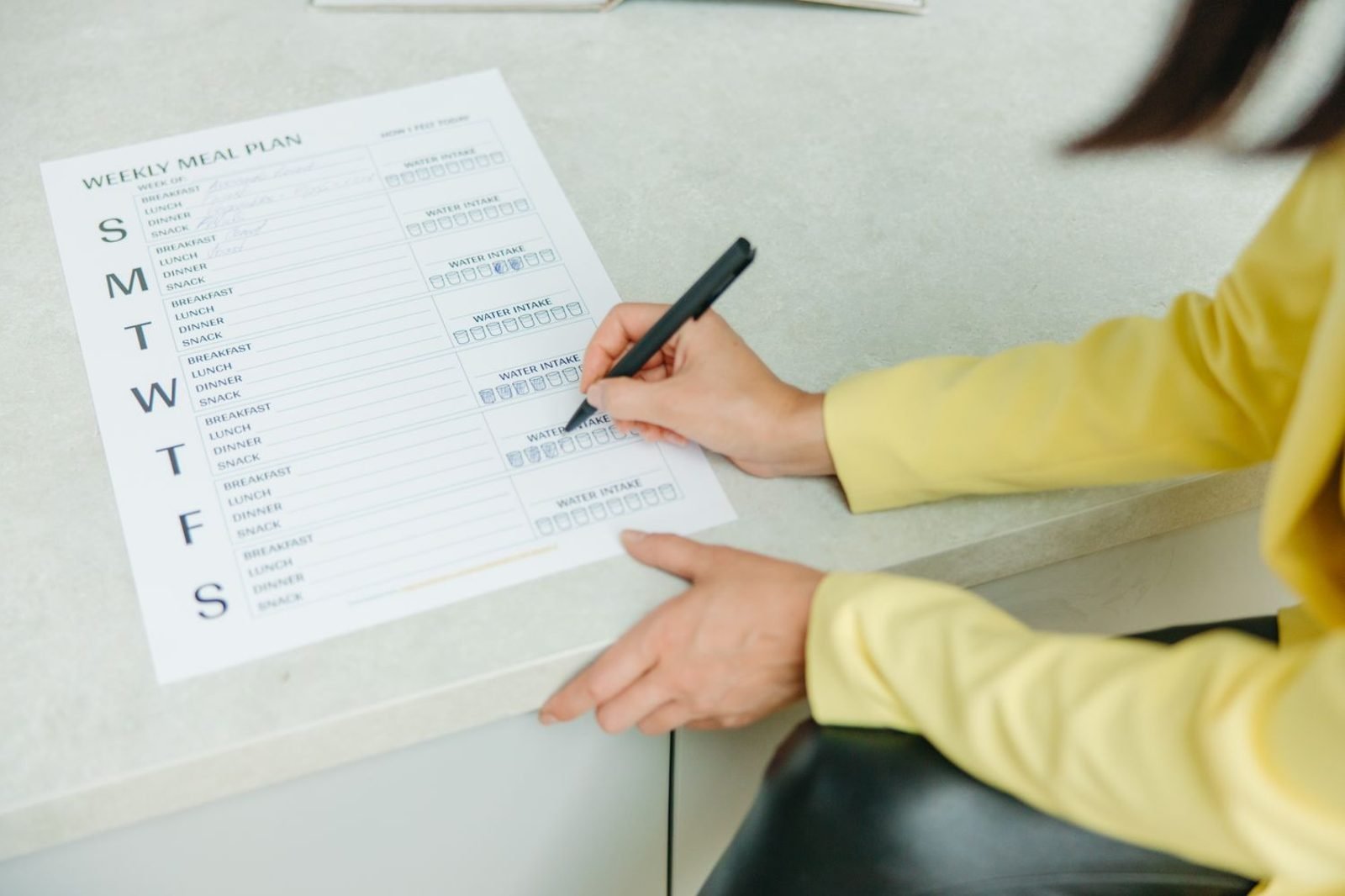
Map your week before you touch a recipe. Most people don’t need seven unique dinners — they need two or three meals that repeat, plus one or two nights built around leftovers or something fast. A workable structure looks like this:
- Pick 1-2 “anchor” proteins for the week (say, chicken thighs and a batch of lentils) that can be reused across three or four different meals.
- Block out your highest-stress days first. If Tuesday and Thursday are packed, plan those around food you’ve already cooked, not something new.
- Reserve one night as a “clear-out” meal using whatever’s left in the fridge — this single habit does more to cut food waste than almost anything else.
- Leave one meal genuinely unplanned. A takeout night or a “whatever’s easiest” night isn’t a failure of the plan — it’s part of it.
This is also where nutrition calories tracking, if you use it, becomes far more accurate — when meals repeat, you already know the numbers instead of estimating them fresh every day.
What’s the smartest way to write a grocery list from a meal plan?
Write your list in the order your store is laid out — produce, proteins, dairy, pantry, frozen — rather than in the order meals occur to you. This shaves real time off a shopping trip and cuts down on impulse aisle wandering, which is where a lot of food-budget creep happens.
A few habits that make the list more useful:
- Consolidate ingredients across recipes. If three meals call for canned tomatoes, buy one larger can instead of three small ones where the recipe allows it.
- Check your pantry and fridge before writing anything down. A five-minute inventory check prevents duplicate purchases of things like rice, oats, or spices you already have.
- Buy perishables only for the days you’ll actually cook them rather than for the whole week at once — fresh herbs and delicate greens don’t last, and overbuying them is a quiet source of waste.
- Stock shelf-stable basics when they’re on sale — dried beans, whole grains, canned fish, and jarred sauces have long shelf lives and make last-minute meals possible without a store run.
This is a practical extension of a nutrition and balanced diet approach — shopping by section naturally pulls you toward whole foods and away from centre-aisle impulse buys.
How does batch cooking actually save time during the week?
Batch cooking means doing a concentrated block of prep — usually 60 to 90 minutes — once or twice a week, so assembling an actual meal on a Tuesday night takes minutes instead of forty-five. The trick is sequencing: start with whatever takes longest, and let it cook unattended while you handle everything else.
A practical order for a prep session:
- Get slow-cooking items going first — proteins like chicken or a pot of beans, whole grains like brown rice or farro, and roasted vegetables. These run in the oven or on the stove with minimal supervision.
- Use the “hands-on” waiting time to chop produce for the rest of the week, so raw ingredients are ready to cook, not just ready to prep.
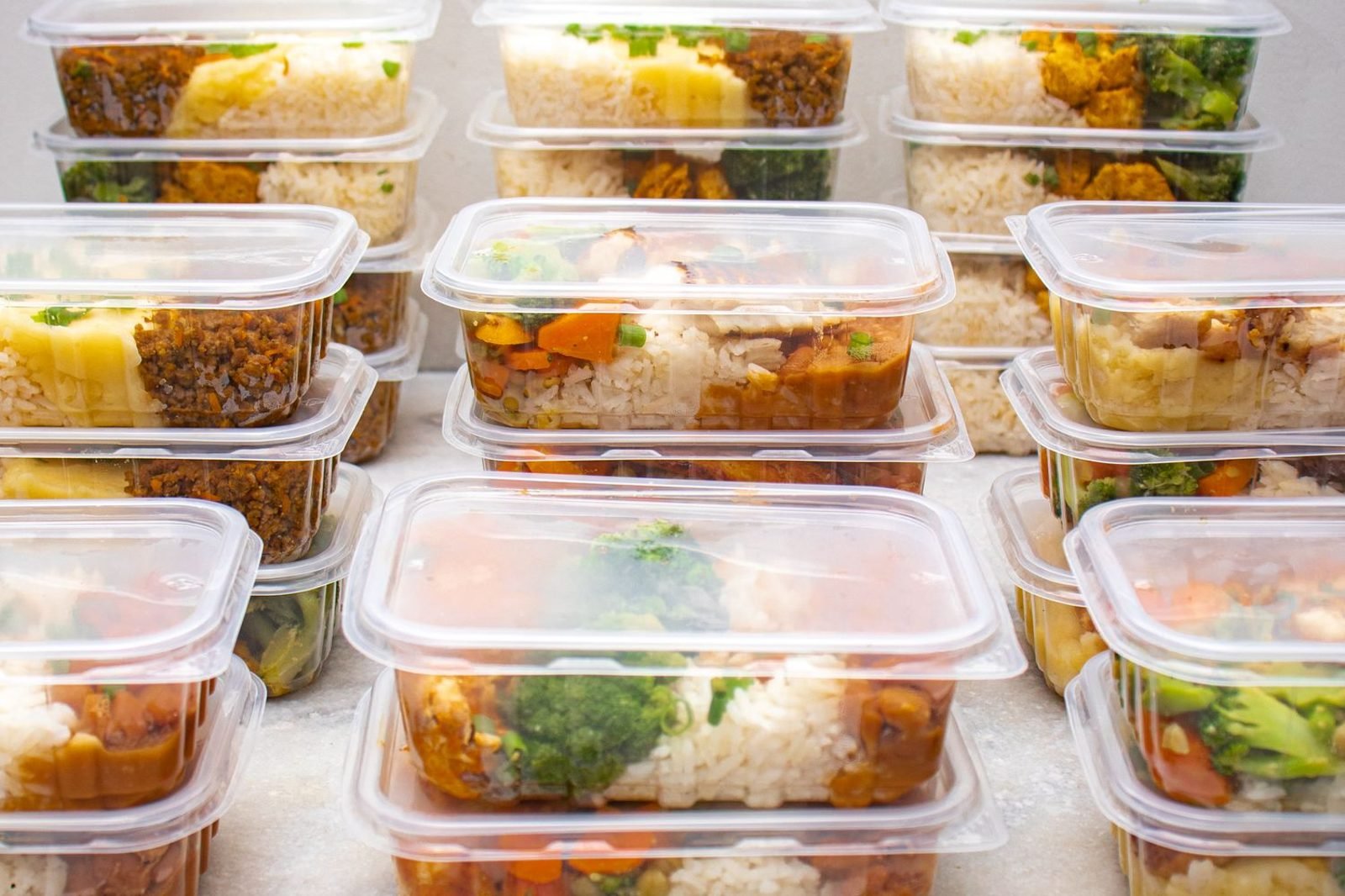
- Portion into containers as things finish, rather than piling everything into one big dish — individual portions get grabbed and reheated more consistently than a communal pot.
- Label everything with the date. It sounds trivial, but it’s the difference between confidently eating something on day four and tossing it out of uncertainty.
The numbers matter more than people think here: according to the USDA’s Food Safety and Inspection Service, cooked leftovers are safe in the refrigerator for 3 to 4 days and in the freezer for 3 to 4 months, provided they’re refrigerated within two hours of cooking. Food left out longer than two hours (or one hour above 90°F) should be discarded. If you’re batch cooking for the full week, freeze anything you won’t eat within four days rather than pushing your fridge stock past that window.
How do you build flexibility into a meal plan so it actually lasts?
The plans that survive more than a couple of weeks are built around components, not fixed dishes. Instead of planning “chicken fajitas on Tuesday,” plan “roasted chicken, rice, and a vegetable” that can become fajitas, a grain bowl, a salad topper, or a quick soup depending on your mood or what’s about to go bad in the fridge.
This component-based approach reduces decision fatigue (choosing from three prepped elements, not starting from scratch) and builds in the flexibility that keeps a plan from collapsing the moment your week goes sideways. A few ways to build that in deliberately:
- Plan proteins and starches separately from sauces and seasonings. The same base of chicken and rice becomes five different meals depending what you pair it with.
- Keep a backup meal on hand at all times — something frozen or shelf-stable that requires almost no decision-making for the nights your plan simply doesn’t happen.
- Review, don’t rebuild, each week. Keep a rotating list of meals that worked and pull from it, rather than starting from a blank page every Sunday.
- Allow for one planned “off-plan” meal. Eating out or ordering in isn’t a failure — pretending it will never happen is what breaks the plan.
This flexibility matters whether the goal is general health, muscle gain, or nutrition for weight loss — a plan that bends without breaking is one you’ll still be using in three months, which beats a “perfect” plan abandoned in three weeks.
What are the most common meal-planning mistakes to avoid?
Most meal plans don’t fail because of bad recipes — they fail because of how the plan is structured. The most frequent issues:
| Common mistake | Why it fails, and the fix |
|---|---|
| Overplanning | Scheduling seven completely different, complex dinners is a lot to execute after a full workday. Most people do better with two or three repeatable meals and a couple of loosely defined “whatever’s available” nights. |
| Zero flexibility | A plan that assumes every day will go exactly as scheduled doesn’t survive a late meeting, a sick kid, or just being tired. Build slack in on purpose. |
| Ignoring leftovers | Cooking something new every single night while last week’s extras sit forgotten in the fridge is one of the biggest sources of food waste and wasted grocery money. A dedicated leftovers night solves this in one move. |
| Shopping without checking the pantry first | Buying ingredients you already have is a quiet but steady drain on a food budget. |
| Planning meals nobody actually wants to eat | A nutritionally “perfect” plan abandoned by Wednesday is less useful than a good-enough plan followed all week. |
| Treating protein as an afterthought | Building meals around a vegetable or carb first and adding protein later often leads to under-planned portions — anchor each meal around the protein source instead. This ties into protein and nutrition basics that make meals more satisfying and easier to portion. |

How much time should meal planning actually take each week?
A sustainable routine breaks into two short blocks: 15-20 minutes to plan and write the grocery list, and 60-90 minutes for the prep and batch cooking session. Compressing everything into a single marathon session is one of the fastest ways to make meal planning feel like a chore instead of a habit.
If even that feels like too much at first, start smaller: plan just three dinners a week and let the rest be spontaneous. According to the Harvard T.H. Chan School of Public Health’s Nutrition Source, relying on easy, no-recipe-needed staples alongside just one or two new recipes a week is enough to keep a routine going without it becoming overwhelming. The goal isn’t a flawless system — it’s a plan you’ll still be running a month from now, as decisions around nutrition food become more automatic and the planning time itself shrinks.
Frequently Asked Questions
How far in advance should I meal plan?
One week is the sweet spot for most people — long enough to batch shop and prep efficiently, short enough that produce stays fresh and plans don’t feel stale. Planning further out usually adds complexity without much added benefit unless you’re specifically stocking a freezer.
Is meal planning only useful for weight loss?
No. While it’s a common tool for weight management, meal planning is just as valuable for saving money, reducing food waste, managing a medical condition, or cutting down on the mental load of deciding what to eat every day. The benefits apply regardless of the underlying goal.
What if I don’t like cooking in bulk?
Batch cooking doesn’t have to mean identical containers all week. You can batch-cook just the base components — a grain, a protein, a roasted vegetable — and combine them differently each day, keeping meals varied without five separate cooking sessions.
How do I stop wasting food I planned to eat?
Build a designated “leftovers” or “clear-out” night into the plan every week, and store prepped food in clear, labeled containers at eye level in the fridge. Food that’s visible with a clear “eat by” date gets used; food buried in the back gets forgotten.
Can I meal plan on a tight budget?
Yes — planning tends to lower grocery costs because it prevents duplicate purchases and impulse buys. Building meals around sale items, shelf-stable staples like beans and rice, and one flexible protein per week keeps costs down without sacrificing variety.
Should meal plans include snacks, or just main meals?
It depends how you eat, but including even a rough plan for snacks prevents the ad-hoc, less-nutritious choices that happen when hunger hits unplanned. A short list of three or four go-to snacks is usually enough — it doesn’t need the same detail as main meals.
Meal planning in nutrition isn’t about a perfect, unchanging schedule — it’s about reducing daily decisions enough that healthy eating becomes the default. If you want a plan built around your schedule, preferences, and goals, an online nutritionist consultation can help turn these principles into a routine that fits your life.