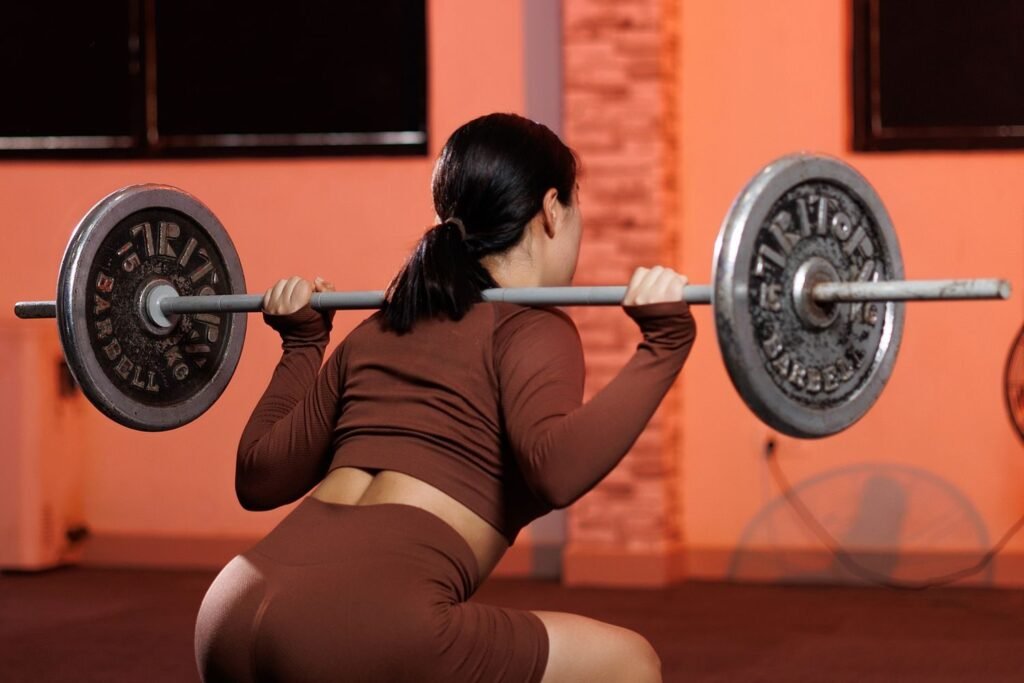
A bodyweight back workout is a training session that builds the muscles of your upper and lower back using only your body weight and, ideally, a pull-up bar, plus household substitutes like towels, doorframes, or a sturdy table for horizontal rows. It works, but with a caveat we tell every client upfront: back is a pulling muscle group, and pulling movements respond best to external resistance, the kind you get from a proper cable back workout. Without a bar or some kind of anchor point, you’re limited to isometric holds and light activation work, which helps posture and mobility but won’t build serious back strength on its own.
Why Is Back the Hardest Muscle Group to Train Without Equipment?
Push muscles like chest, shoulders, and triceps are easy to overload with bodyweight because push-ups, dips, and pike presses let you move your own body mass against gravity in a way that’s genuinely hard. Pulling muscles don’t work like that. To row or pull something toward you, you need something to pull against. A doorframe or table edge can substitute for a cable machine in a pinch, but it’s not going to load your lats and mid-traps the way a weighted row or a lat pulldown will.
We build training plans for a lot of clients who travel for work or train from small apartments, and we’re honest with them from day one. If you have access to a pull-up bar, you can build a genuinely strong back with bodyweight training alone. If you don’t, you can maintain back health, fix posture, and keep the muscles active, but you should treat it as a bridge, not a permanent replacement for loaded pulling.
Do You Need a Pull-Up Bar for a Bodyweight Back Workout?
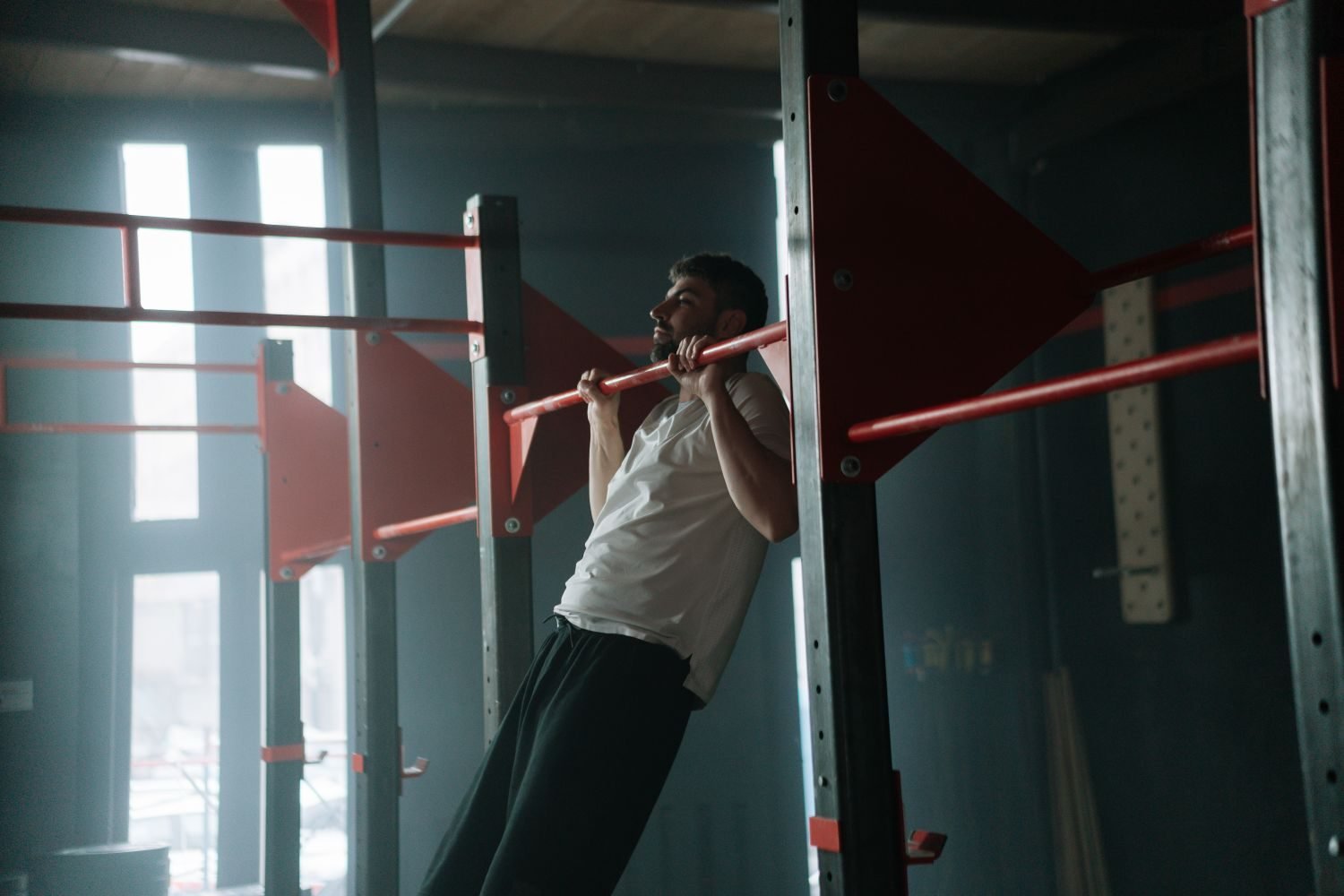
You don’t need one, but it changes what’s realistic. A pull-up bar is the single best piece of equipment for a home back workout because it lets you pull your entire body weight, which is a real, scalable load. Pull-ups and chin-ups hit your lats, rear delts, biceps, and grip all at once, and you can regress them with bands or negatives if you’re not there yet, or add a backpack with books once bodyweight gets easy.
If you don’t have a bar, doorway pull-up bars that wedge into a frame cost less than a decent pair of running shoes and take five minutes to install. We recommend them constantly to clients who train from home. If that’s genuinely off the table, you can still get a productive session in using the exercises below, just don’t expect the same rate of strength gain you’d see with weighted pulling, a basic bar, or a full back workout for beginners once you have gym access.
What Are the Best No-Equipment Back Exercises If You Don’t Have a Bar?
These are the exercises we actually program when a client has zero equipment and no bar access. They won’t build a back the way weighted rows will, but they train the muscles through a real range of motion and they’re far better than skipping back day entirely.
- Superman holds target your erector spinae and glutes. Lie face down, lift your arms and legs off the floor at the same time, and hold. Add a slow pulse for extra time under tension.
- Reverse snow angels are done in the same position. Sweep your arms from your sides up overhead and back down, like you’re making a snow angel while lying on your stomach. This hammers your rear delts and mid-traps, the muscles that keep your shoulders from rounding forward.
- Prone Y-T-W raises combine three arm positions, a Y, a T, and a W, performed lying face down. Each position targets a slightly different part of your upper back, and cycling through all three in one set is one of the most effective bar-free moves for posture.
- Towel rows using furniture are the closest thing to a real row you can do without a bar. Loop a towel around a stable table leg or banister, lean back holding both ends, and row your chest toward the anchor point. The steeper your body angle, the harder the pull.
- Doorway rows work the same way. Grip the sides of a doorframe, lean back with straight arms, and pull your chest through the frame. It’s a crude substitute for an inverted row, but it’s genuinely useful when that’s all you’ve got.
What Does a Full Bodyweight Back Workout Look Like?
Here’s a sample session we’d give a client training back at home, written to work whether or not you have a bar. If you don’t have one, swap the pull-ups for an extra set of towel rows or doorway rows.
| Exercise | Sets | Reps | Rest |
|---|---|---|---|
| Pull-ups or chin-ups (or towel rows if no bar) | 4 | As many as possible with good form | 90 seconds |
| Doorway rows | 3 | 12-15 | 60 seconds |
| Prone Y-T-W raises | 3 | 8 per position | 45 seconds |
| Reverse snow angels | 3 | 15 | 45 seconds |
| Superman holds | 3 | 20-30 second hold | 45 seconds |
| Scapular pull-ups (from a dead hang, if bar is available) | 3 | 10 | 60 seconds |
Run through this in order, and don’t rush the isometric work. A slow, controlled superman hold with a two-second pause at the top does far more than a fast version where momentum does the work.
How Should You Structure This Workout for Real Progress?
Progression is where most home training falls apart. People do the same superman holds for months and wonder why nothing changes. If you want actual results, you need to make the work harder over time, even without added weight.
For pull-ups, that means adding reps first, then slowing the tempo, then adding external load once bodyweight reps get easy. For the isometric and floor-based moves, extend the hold time, slow the tempo down to a three or four second count on each rep, or reduce your rest between sets. We see clients plateau on bodyweight back work specifically because they treat the exercises as a checklist instead of a training stimulus. Track what you did last session and try to beat it, even by a small margin.
How Often Should You Do a Bodyweight Back Workout?
Two to three sessions a week is the sweet spot for most people. Back recovers reasonably fast from bodyweight work because the loads are lower than a weighted row or deadlift, so you can train it more frequently than you might a heavy barbell back day. Leave at least one full day between sessions if you’re doing pull-ups to fatigue, since grip and lat soreness can linger longer than you’d expect.
When Should You Move Beyond Bodyweight-Only Training?
If your goal is general posture, mobility, and keeping your back active while traveling or working from a small space, bodyweight training can be a long-term approach as long as you have bar access. If your goal is building real back thickness and width, you’ll hit a ceiling faster than with almost any other muscle group, and that’s just the physics of pulling movements.
Once you have access to a gym, even occasionally, it’s worth mixing in equipment-based work that gives you far more control over resistance and range of motion than bodyweight rows ever will. And if your focus is specifically on the upper back and posture, our upper back workouts article covers that in more depth than we can here.
The honest answer is that bodyweight and equipment-based training aren’t competitors, they’re tools for different situations. Use bodyweight work when that’s what you’ve got, and add resistance the moment you can.
Want a Back Training Plan Built Around Your Actual Setup?
Every client we work with trains in a different environment, some with a full gym, some with just a doorway bar and a resistance band. We build programs around what you actually have access to, not a generic template. If you want a back training plan designed specifically for your equipment, schedule, and goals, take a look at our 1-on-1 personal training service and we’ll build it with you.
Frequently Asked Questions
Can you train back effectively with just bodyweight?
You can maintain and activate your back muscles with bodyweight training, and if you have access to a pull-up bar, you can build real strength too. Without a bar, bodyweight-only back training is more about posture and muscle activation than building significant size or strength, since pulling movements need real resistance to overload properly.
What is a good bodyweight back workout?
A good one combines a pulling exercise, pull-ups if you have a bar or towel rows if you don’t, with isometric and floor-based movements like superman holds, reverse snow angels, and prone Y-T-W raises. The sample workout above covers all of these in one session and takes about 30 to 40 minutes.
Do you need a pull-up bar for a bodyweight back workout?
No, but it makes a big difference. A pull-up bar lets you load your entire body weight, which is the closest thing to true resistance training you can do without weights. Without one, you can still train back using towel rows, doorway rows, and floor exercises, but expect slower strength progress.
How often should you do a bodyweight back workout?
Two to three times a week works well for most people. Back recovers relatively quickly from bodyweight-only work, so you can train it more frequently than a heavy weighted back session, just leave a full rest day between sessions that include pull-ups to failure.
Can you build a wider back with bodyweight training alone?
To an extent, mainly through pull-ups and chin-ups, which do build lat width over time. But without added resistance once bodyweight reps become easy, your progress will plateau. Adding a weighted vest, a backpack, or eventually gym equipment is the natural next step once bodyweight pull-ups stop being challenging.