Stretching after a workout means holding static stretches for 15 to 30 seconds on each major muscle group once your session is over, while your muscles are still warm. It is different from the dynamic stretching you do before a workout, which uses movement to raise your heart rate and prep your joints. Post-workout stretching will not stop soreness or “flush out” anything from your muscles, no matter what the gym floor folklore says. What it actually does is bring your heart rate down gradually, protect and slowly build your range of motion over weeks of consistent practice, and give you a couple of quiet minutes to notice how your body is actually feeling. Skip it once and nothing bad happens. Skip it for months and your mobility slowly narrows without you noticing.
Why does stretching after a workout actually matter?
Most people stretch after training because someone once told them it prevents soreness. It doesn’t. The soreness you feel a day or two after a hard session is delayed onset muscle soreness (DOMS), caused by microscopic muscle fiber damage and inflammation, not lactic acid sitting in your legs. Lactic acid clears from your blood within an hour of finishing exercise, stretch or no stretch. So if soreness prevention isn’t the reason, what is?
Three things. First, static stretching after a workout helps transition your body out of “work mode,” bringing your heart rate and breathing down at a controlled pace instead of stopping cold. Second, doing it consistently over weeks helps you maintain or slowly improve flexibility, especially in muscles you keep training hard, like hamstrings and hip flexors after leg day. Third, it’s a built-in check-in. Spending five minutes moving through each muscle group gives you a chance to notice tightness, restriction, or pain that you’d otherwise miss while rushing out the gym door.
How is post-workout stretching different from your warm-up?
Before a workout, your muscles are cold and your joints haven’t moved through their full range yet. That’s when you want dynamic stretching, active movements like leg swings, walking lunges, and arm circles that raise your core temperature and rehearse the movement patterns you’re about to load. Holding a static stretch on cold muscle before lifting or sprinting can actually reduce the power output of that muscle for a short window afterward. If you haven’t sorted your pre-training routine yet, our guide on warming up before a workout covers exactly what to do in those first ten minutes.
After training, the situation flips. Your muscles are warm, your joints have already moved through a full range, and you’re not about to ask them for another explosive rep. This is when static stretching, holding a position without bouncing, actually makes sense. You’re not prepping the muscle for output anymore. You’re giving it a chance to lengthen back out.
What does a solid post-workout stretch routine actually look like?
You don’t need twenty stretches and a foam roller collection. Six moves, done properly, cover every major muscle group you’re likely to have trained. Hold each one for 20 to 30 seconds per side, breathe normally, and ease into the stretch instead of forcing it.

| Stretch | Targets | How to do it |
|---|---|---|
| Standing quad stretch | Quadriceps, hip flexors | Stand tall, pull one heel toward your glutes, keep knees close together, hold onto a wall if you need balance. |
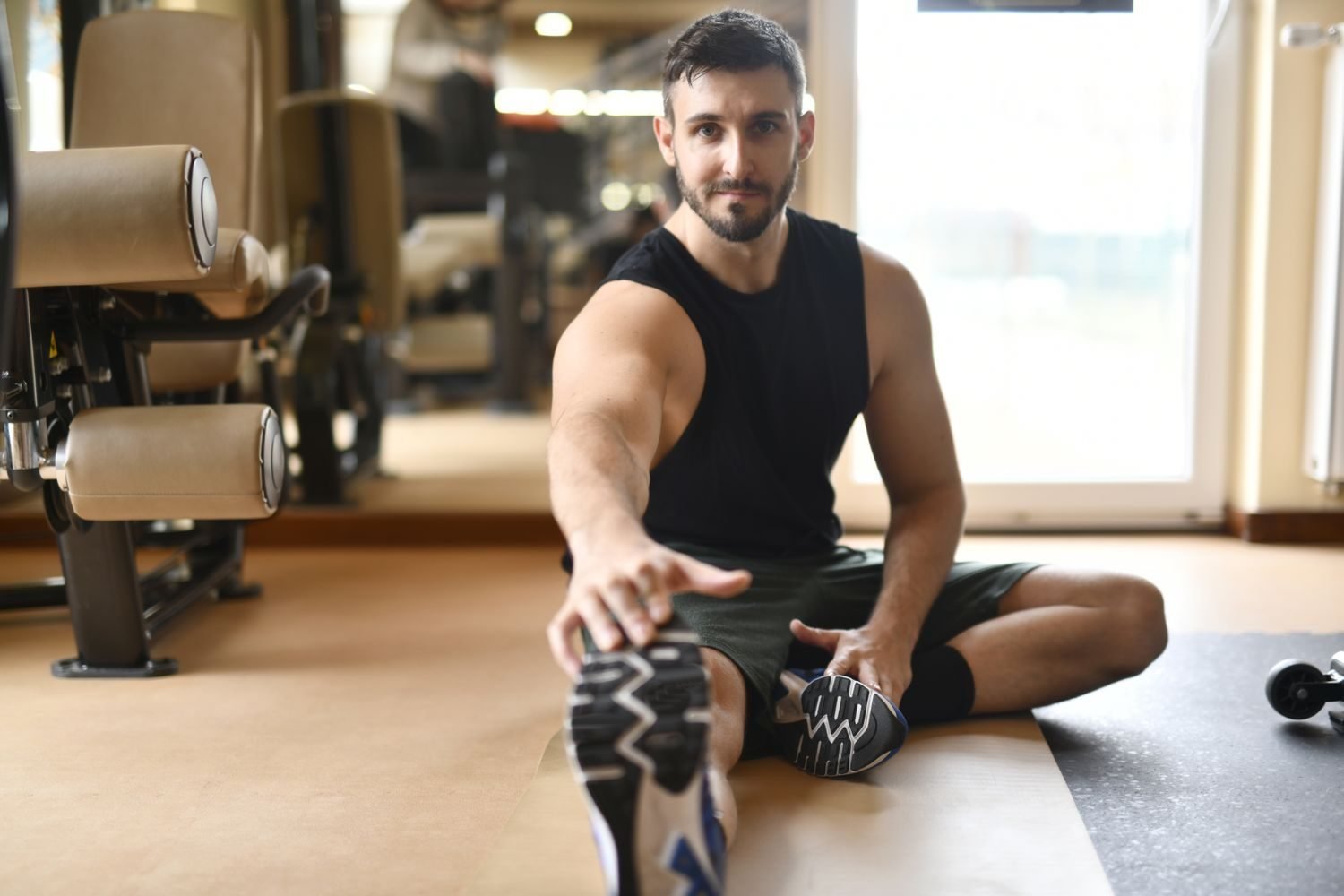
| Seated hamstring stretch | Hamstrings, calves | Sit with one leg extended, hinge forward from the hips with a flat back until you feel a pull behind the thigh. |
| Kneeling hip flexor stretch | Hip flexors, quads | Kneel on one knee, tuck your pelvis slightly, and shift your weight forward until you feel the stretch at the front of the hip. |
| Cross-body shoulder stretch | Shoulders, upper back | Bring one arm across your chest, use the other arm to gently pull it closer, keep shoulders relaxed. |
| Doorway chest stretch | Chest, front shoulders | Place your forearm on a doorframe at shoulder height and rotate your body away until you feel the chest open up. |
| Calf stretch against a wall | Calves, Achilles | Step one foot back, keep it straight and heel down, lean into the wall until you feel a pull in the lower leg. |
If you trained your back or did a heavier lower-body session, add a child’s pose or a seated spinal twist for the lower back and glutes. We’ve laid out a longer version of this, including breathing cues and a full-body sequence, in our cool-down stretches after workout guide.
How long should you hold each stretch, and how often should you do it?
Twenty to thirty seconds per stretch is the sweet spot backed by most flexibility research. Anything shorter barely gives the muscle time to relax into the position. Anything much longer isn’t adding meaningful benefit for a general post-workout routine, it’s just eating into your day. Two to three rounds per muscle group, three or four times a week, is enough to see your flexibility improve over a couple of months. Do it after every session if you have the time. If you only have five minutes, prioritize whatever muscle group you trained hardest that day.
What’s the difference between normal muscle tightness and something that needs more attention?
Normal post-workout tightness feels dull, generalized, and roughly symmetrical on both sides of your body. It tends to show up 24 to 48 hours after training, peaks around day two, and fades on its own within three to five days, especially if you keep moving lightly. It gets better with a warm-up, not worse. That’s classic DOMS, and stretching, walking, and time are the fix.
We see this mix-up constantly with clients in their first few months of structured training: they feel tight quads after a heavy squat day and assume something’s wrong, when it’s just their body adapting to a new stimulus. The tightness that actually needs attention feels different. It’s usually one-sided, sharp rather than dull, and it shows up at a specific joint or point in the muscle rather than across the whole muscle belly. Watch for these warning signs:
- Swelling
- Bruising
- A pulling or popping sensation during the movement itself
- Pain that gets worse instead of better over a few days
- Any numbness and tingling
Those aren’t stretch-it-out problems. They need rest, and sometimes a physio, not a deeper hamstring stretch.
If you’re training through soreness and aren’t sure which category you’re in, we’ve written a full breakdown on whether you should work out with sore muscles that walks through exactly when to push and when to back off.
Getting this distinction right is honestly one of the more underrated coaching skills. It’s also exactly why a lot of people do better with a second pair of eyes on their training. FitStrot’s 1-on-1 personal training is built around that kind of judgment call, someone who actually watches how you move, adjusts your program around real recovery signals, and makes sure your stretching and training work together instead of you guessing week to week.
Frequently Asked Questions
Should you stretch after a workout?
Yes. Stretching after a workout, once your muscles are warm, helps bring your heart rate down gradually and supports your flexibility over time. It won’t prevent soreness or speed up recovery on its own, but it’s still worth five to ten minutes at the end of every session for the mobility benefit alone.
What helps sore muscles after a workout?
Light movement, hydration, adequate protein, and sleep do more for sore muscles than any single recovery trick. Gentle walking or an easy bike ride increases blood flow to sore areas. Static stretching and a warm shower can also ease the discomfort, but time, usually 48 to 72 hours, is what actually resolves DOMS.
How do you relieve sore muscles after a workout quickly?
There’s no instant fix, but a warm shower, light stretching, gentle walking, and staying hydrated can take the edge off within an hour or two. Foam rolling the affected muscle group also helps some people feel looser. Avoid ice baths or heavy massage immediately post-workout if you’re chasing strength or muscle gains.
How do you do stretching after a workout properly?
Wait until your session is done and your muscles are warm, then hold each static stretch for 20 to 30 seconds without bouncing. Cover your major muscle groups, quads, hamstrings, hips, chest, shoulders, and calves, breathing normally throughout. Ease into mild discomfort, never sharp pain, and repeat two to three rounds per muscle group.
What are the real benefits of stretching after a workout?
Regular post-workout stretching gradually improves your flexibility and joint range of motion, helps your body transition out of exercise mode instead of stopping abruptly, and gives you a built-in moment to check for unusual tightness or pain. It won’t eliminate soreness, but it supports better movement quality over weeks and months of consistent training.