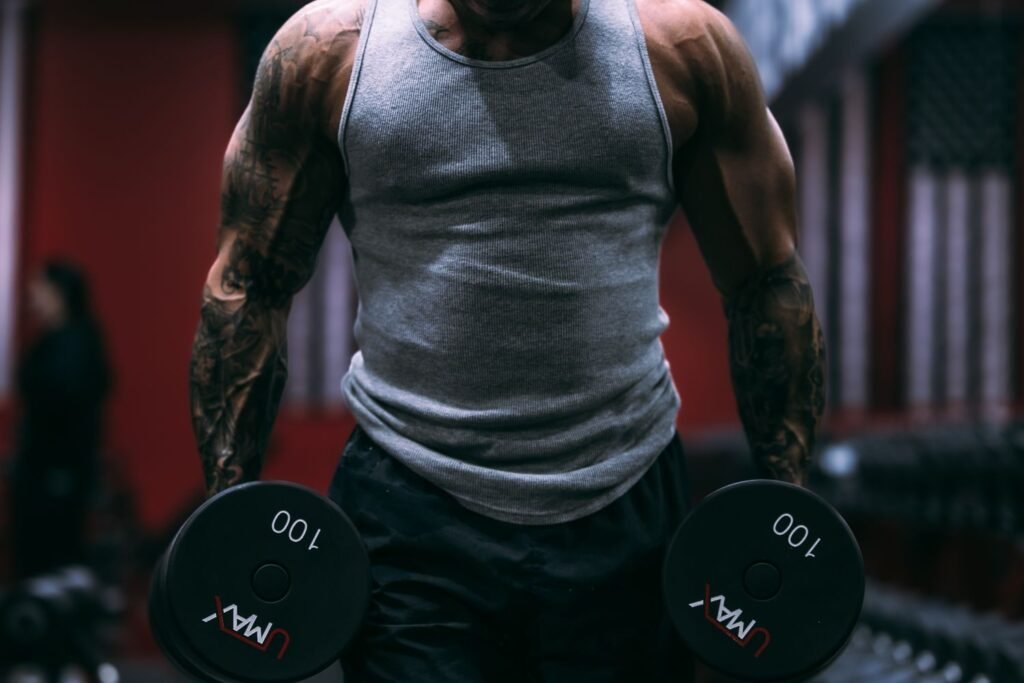
Yes, you can and should train biceps and triceps on the same day. They’re opposing muscle groups, so while your biceps pull and flex the elbow, your triceps push and extend it. That means one muscle rests while the other works, which makes for a fast, efficient session with less wasted time between sets. This “antagonist” pairing is one of the most popular arm-day structures for a reason. It lets you hit both muscles hard, keep your heart rate up, and finish arm day in 40 to 50 minutes instead of stretching it across two separate sessions.
Why Pair Biceps and Triceps in the Same Workout?
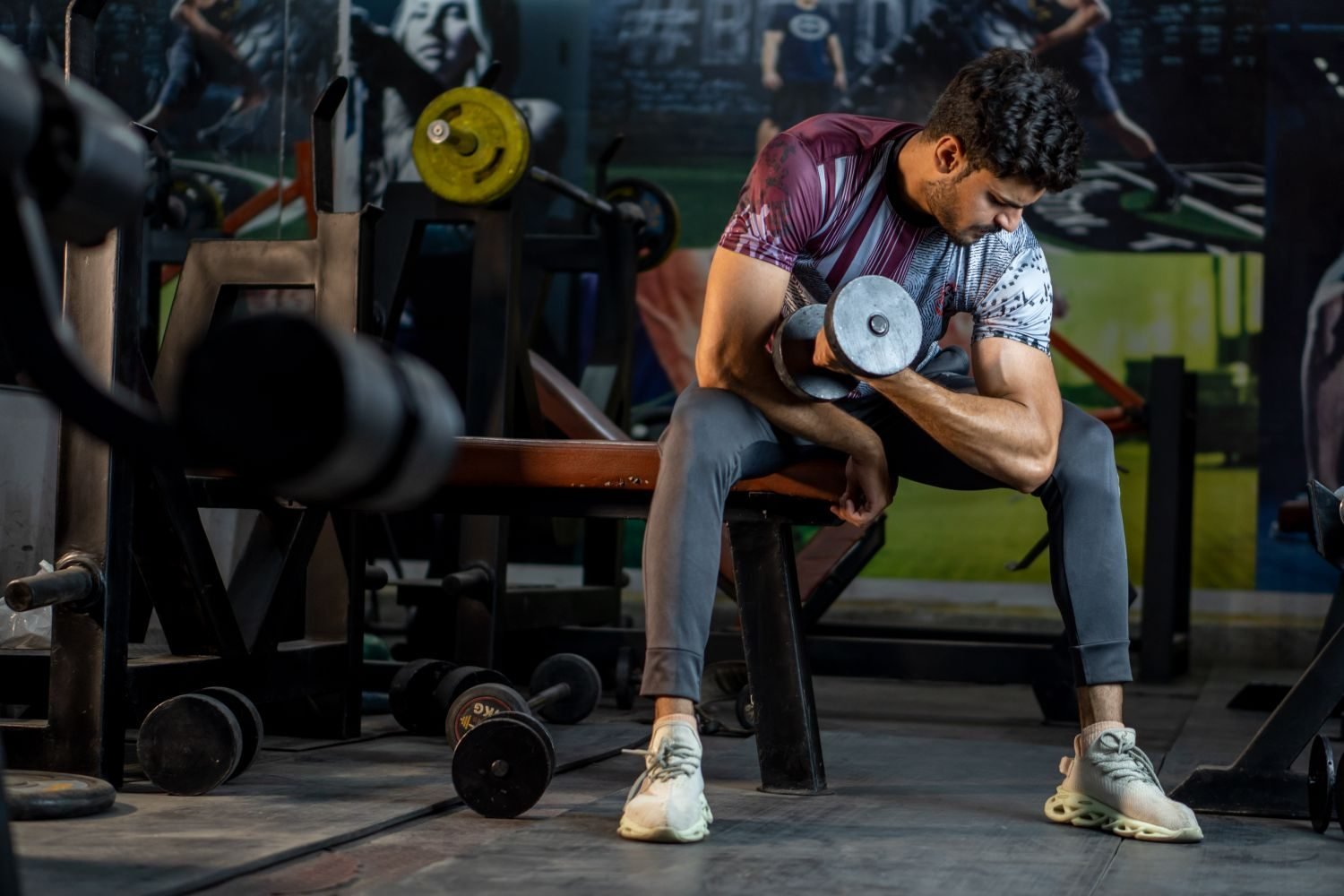
Biceps and triceps sit on opposite sides of your upper arm and do opposite jobs. Curl a dumbbell and your biceps shorten while your triceps lengthen. Push a bar overhead and it flips. Because they’re never both under heavy load at the same moment, you can move from a bicep exercise straight into a tricep exercise without either muscle fighting for the same recovery window.
This is different from pairing two exercises for the same muscle, where fatigue stacks up fast and your second set suffers. With antagonist pairs, your biceps get a mini break while your triceps take over, and vice versa. You end up doing more total work in less time, and most lifters report the pump feels better too, since blood is flowing through the whole arm instead of pooling in one spot.
What Are the Real Benefits of Training Arms This Way?
Pairing biceps and triceps in one session pays off in a few concrete ways:
- Time. A combined session lets you get 8 to 10 working sets for biceps and a similar number for triceps done in under an hour, which is hard to pull off if you’re training them on separate days with a full warm-up each time.
- Balance. A lot of lifters overtrain biceps because curls are fun and undertrain triceps because pushdowns feel less exciting. Programming them in the same session, in a fixed order, forces you to give both the attention they need.
- Recovery. Both muscles get roughly 48 to 72 hours off before you hit arms again, which fits neatly into most weekly training splits without you needing to dedicate two separate arm days.
We see a lot of lifters spend twenty minutes on curls and five minutes on triceps work, then wonder why their arms still look thin from the side. Triceps make up roughly two-thirds of your upper arm mass, so skipping them isn’t a shortcut, it’s the actual mistake. Pairing the two muscles in one session is a simple fix because it puts tricep work right in the middle of the workout instead of as an afterthought.
How Do You Structure a Biceps and Triceps Workout?
Keep it simple. Pick 4 to 5 exercises total, alternate between biceps and triceps, and either superset them (no rest between the paired exercises, rest after the pair) or run them as straight sets (full rest after each exercise). Beginners usually do better with straight sets since it’s easier to focus on form. If you’ve been training for a while and want a shorter, more intense session, supersets are the better call.
Start with a compound-style move for each muscle when your energy is highest, then move into isolation work as the session goes on. Close-grip presses and barbell curls early, cable and dumbbell isolation work later. This order lets you lift heavier where it matters and finish with a strong pump on the smaller movements.
If you want more ideas specifically for biceps, our dumbbell bicep workout guide and our biceps workout for the gym guide both go deeper into curl variations and progression. For a broader look at each muscle on its own, check our full bicep workouts guide and tricep workouts guide.
What Does a Full Biceps and Triceps Session Look Like?
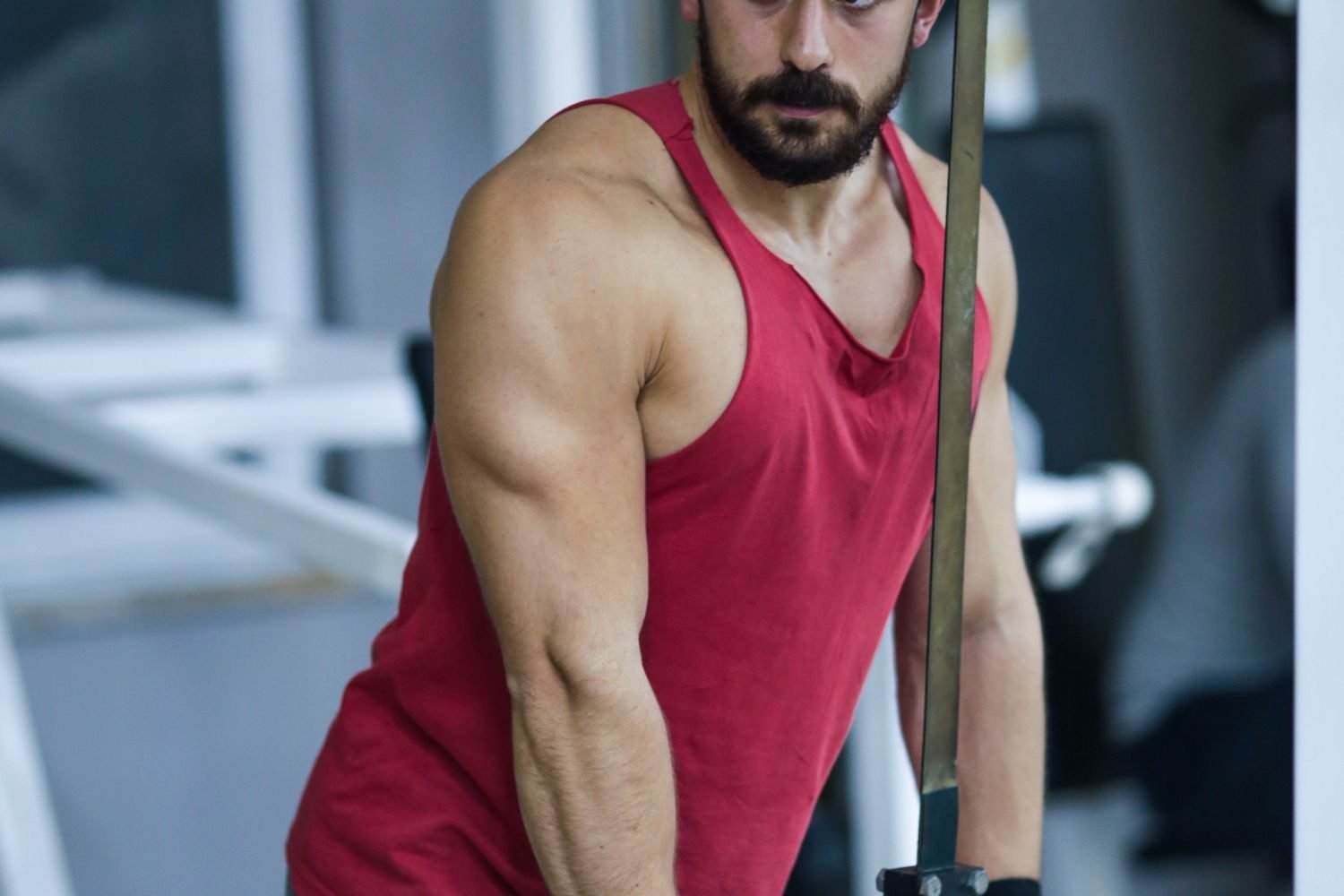
Here’s a complete session you can run as supersets (rest 60 to 90 seconds after each pair) or as straight sets (rest 45 to 75 seconds after each individual exercise). Either way, do the paired exercises back to back in your training order.
| Pair | Exercise | Muscle | Sets | Reps | Rest |
|---|---|---|---|---|---|
| 1 | Barbell Bicep Curl | Biceps | 3 | 10-12 | 60-90 sec after pair |
| Close-Grip Bench Press | Triceps | 3 | 8-10 | ||
| 2 | Incline Dumbbell Curl | Biceps | 3 | 10-12 | 60-90 sec after pair |
| Overhead Dumbbell Triceps Extension | Triceps | 3 | 10-12 | ||
| 3 | Hammer Curl | Biceps | 3 | 12 | 45-60 sec after pair |
| Triceps Rope Pushdown | Triceps | 3 | 12-15 | ||
| 4 | Concentration Curl | Biceps | 2 | 12-15 | 45 sec after pair |
| Bench Dip or Diamond Push-Up | Triceps | 2 | To failure | ||
| 5 (finisher) | Cable Curl into Cable Pushdown drop set | Biceps + Triceps | 1 | 15 + 15 | None, this is your last set |
That’s 15 to 16 working sets total, split almost evenly between the two muscles. If you’re short on time, drop pair 4 and the finisher and you still get a solid 10-set session. If you’re more advanced, add a second finisher round or bump the rope pushdown to a drop set.
Should You Superset or Stick to Straight Sets?
Supersets are great when your goal is efficiency and conditioning. You’ll finish faster, keep your heart rate elevated, and get a stronger pump because blood stays in the arm the whole time. The tradeoff is that your strength on the second exercise in each pair will dip slightly since you’re not fully rested.
Straight sets are better when strength and form are the priority. You get full recovery before each set, so your numbers on things like close-grip bench press stay closer to what you’d hit on a dedicated day. This matters more if you’re still building technique on compound pressing or pulling movements.
A practical approach is to superset the isolation work (curls with pushdowns, hammer curls with kickbacks) and use straight sets for anything heavier or more technical, like close-grip bench or barbell curls. That gives you the time savings where it matters least and the recovery where it matters most.
How Does This Fit Into a Weekly Training Split?
Most people don’t need a standalone arm day every single week to see growth, since biceps and triceps already get worked indirectly on push and pull days. But a dedicated combined session is still worth having if you want faster arm development or you train four to six days a week.
A common setup looks like this: push day for chest, shoulders, and triceps, pull day for back and biceps, then a separate arm day later in the week that hits both muscles directly with the kind of session above. This gives biceps and triceps two stimulus points a week, direct work on arm day plus indirect work on push and pull days, without overlapping so closely that recovery suffers.
If you’re on a 3-day full body split instead, you can tack a shorter version of this arm workout onto the end of one session rather than running it as its own day. Either way works. What matters is that you’re not training the same muscle hard on back-to-back days without at least 48 hours between sessions.
Getting this timing right, along with exercise selection and load progression, is exactly the kind of thing that’s hard to self-coach around. A trainer who can see your form and adjust your split week to week saves you months of guessing. That’s the whole idea behind FitStrot’s 1-on-1 personal training, built by founder Yash Pathak around 10 years of coaching experience, with programming that adapts as you progress instead of a template you outgrow in a month.
Frequently Asked Questions
Can you do a biceps and triceps workout on the same day?
Yes. Biceps and triceps are opposing muscle groups, so one can rest while the other works. This makes same-day pairing efficient and one of the most common ways to structure arm day, whether you train them as supersets or as separate straight sets within the same session.
How do you do a biceps and triceps workout on the same day?
Pick 4 to 5 exercises, alternating between a bicep move and a tricep move. Either superset them back to back with minimal rest, or use straight sets with full rest between each exercise. Start with heavier compound movements like curls and close-grip presses, then finish with isolation work.
What are the benefits of a biceps and triceps workout on the same day?
You save time since both muscles get trained in one 40 to 50 minute session instead of two separate days. It also forces balanced attention, since triceps often get neglected when trained alone. Blood flow stays high through the whole arm, which many lifters find improves the pump and overall session intensity.
How many exercises should you do for arms in one session?
Four to five exercises total, split evenly between biceps and triceps, is enough for most people. That works out to 12 to 16 working sets. Going much higher usually adds junk volume without extra growth, especially since both muscles already get indirect work on push and pull days.
Can beginners train biceps and triceps together?
Yes, and it’s actually a good starting structure. Beginners should lean toward straight sets rather than supersets so they can focus on form and control without rushing between exercises. Two to three sets per exercise with a moderate rep range of 10 to 15 is a safe starting point.