An arm workout chart is a structured table that lays out every exercise, set, rep range, rest period, and the specific muscle head you’re targeting for a full biceps and triceps session, all in one glance-and-go reference. We build these charts for our clients because arms respond best to variety across the different heads of the biceps and triceps, not just endless curls. A good chart tells you exactly what to lift, how heavy to think about it, and how long to rest, so you walk into the gym with a plan instead of guessing between sets.

What Is an Arm Workout Chart and Why Does It Work?
Your arms are made up of six distinct areas worth targeting on a well-built chart:
- Biceps long head
- Biceps short head
- Brachialis (underneath the biceps)
- Triceps long head
- Triceps lateral head
- Triceps medial head (together, the three triceps heads make up two-thirds of your upper arm size)
A chart works because it forces you to hit all of these instead of defaulting to whatever curl variation feels comfortable. When we design programs for clients at FitStrot, we always map exercises to specific heads first, then fill in sets and reps around that structure. That’s the difference between an arm day that just feels tiring and one that actually builds size and strength over months.
Most people who search for a chart are looking for something they can screenshot or print and follow without overthinking it mid-workout. Some lifters train triceps separately as part of a chest triceps workout instead of a dedicated arm day, but whichever split you use, mapping exercises to specific heads first is what actually builds size. That’s exactly what we’ve laid out below.
What Does a Complete Arm Workout Chart Look Like?
Here’s the exact structure we use as a starting template for intermediate lifters. Adjust the load based on your current strength, but keep the sets, reps, and rest periods close to what’s listed here.
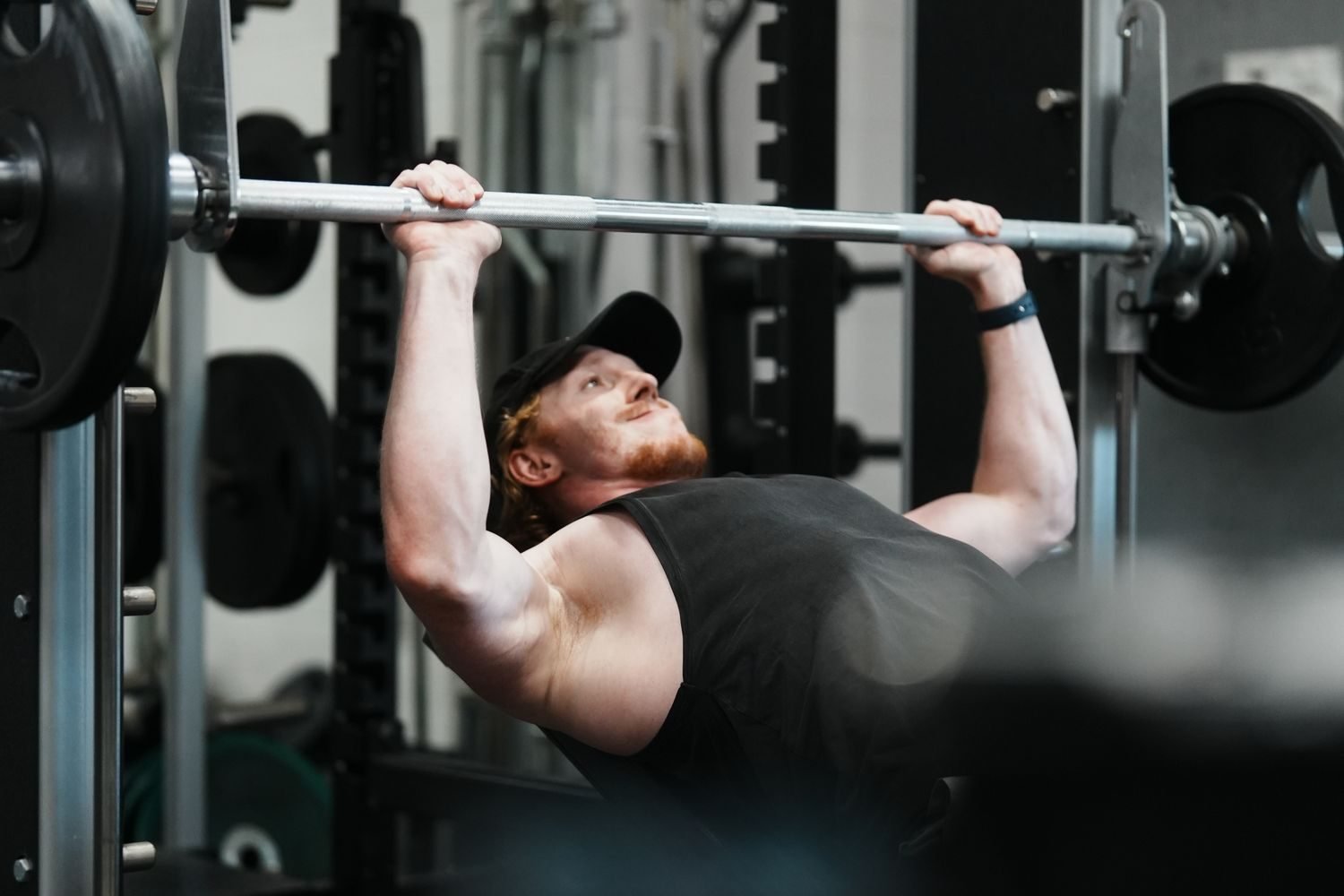
| Exercise | Sets | Reps | Rest | Primary Target |
|---|---|---|---|---|
| Barbell Curl | 4 | 8-10 | 60-75 sec | Biceps (short head) |
| Incline Dumbbell Curl | 3 | 10-12 | 60 sec | Biceps (long head) |
| Hammer Curl | 3 | 10-12 | 45-60 sec | Brachialis / forearm |
| Preacher Curl | 3 | 10-12 | 60 sec | Biceps (short head, peak) |
| Close-Grip Bench Press | 4 | 8-10 | 75-90 sec | Triceps (lateral/medial head) |
| Overhead Dumbbell Extension | 3 | 10-12 | 60 sec | Triceps (long head) |
| Rope Pushdown | 3 | 12-15 | 45-60 sec | Triceps (lateral head) |
| Skull Crushers | 3 | 10-12 | 60 sec | Triceps (long/medial head) |
Notice the order. We put the heavier compound-style movements first, close-grip bench and barbell curls, when your nervous system is fresh, then move into isolation work for each specific head. This isn’t a random sequence. It’s built so the muscles that fatigue fastest under heavy load get trained before you’re running on fumes.
How Should You Use This Arm Workout Chart in the Gym?
Print it, screenshot it, or just keep this page open on your phone between sets. Work through the biceps block first if you’re doing arms as a standalone day, or alternate biceps and triceps exercises if you prefer supersets to save time. Either approach works. What matters more is that you’re tracking the weight you use each week so you can add load or reps over time. A chart without progression tracking is just a list of exercises, not a training tool.
If you’re newer to structured training, start on the lower end of the rep ranges listed and focus on form before you chase heavier weight. Our biceps workout for beginners guide breaks down form cues for the curl variations in more detail if you want to slow down and get the technique right first.
How Do You Split Biceps and Triceps Work for Best Results?
You don’t have to train them together. Some of our clients pair triceps with chest day since pressing movements already pre-fatigue the triceps, which makes for an efficient session. Others prefer a dedicated arm day where biceps and triceps get full attention without competing with a bigger muscle group for energy and volume. Both approaches build arms. The chart above works for either setup, you just decide whether it’s a standalone session or split across two training days.
If you’re building out a full weekly split and want to see where an arm day fits alongside your other training days, our gym workout chart covers the full-body version of this same concept, with pull, push, and leg days mapped out the same way.
How Do You Know If Your Arm Workout Chart Is Actually Working?
Track two things: the weight you’re lifting for each exercise and how your arms measure or look in the mirror every four to six weeks. If your numbers on the chart are climbing (even by small increments) you’re on the right track. If they’ve been flat for a month or more, something needs to change, either your rep ranges, your rest periods, or your recovery between sessions.
We see a lot of people plateau because they keep the exercises the same for too many months in a row. The muscle adapts to the specific stress and stops responding. Swapping one or two exercises on the chart every six to eight weeks, while keeping the same head-targeting logic, tends to restart progress without needing to overhaul the whole plan.
If you’d rather have someone build and adjust this for you week to week based on how your body is actually responding, that’s exactly what our 1-on-1 personal training program is built for. You get a coach checking your form, adjusting your chart, and keeping you accountable instead of guessing on your own.
Frequently Asked Questions
What is a good arm workout chart?
A good arm workout chart covers all five muscle heads (two in the biceps, three in the triceps) with a mix of compound and isolation movements, clear sets and reps for each, and defined rest periods. It should be specific enough that you’re not making decisions mid-workout, just following the plan and focusing on execution.
How many exercises should be on an arm day?
Six to eight exercises total, split roughly evenly between biceps and triceps, is enough for most lifters. Going much beyond that usually means the last few exercises get done with poor form because you’re too fatigued to lift with intent. Quality sets beat a longer list every time.
How often should you train arms?
Two to three times per week works well for most people, whether that’s a dedicated arm day or biceps and triceps trained as part of push and pull days. What matters is total weekly volume and giving each muscle group at least 48 hours to recover before you hit it hard again.
Can you train arms every day?
We don’t recommend it. Biceps and triceps are smaller muscle groups and they do recover faster than something like your back or legs, but they still need time to repair between sessions. Training arms every day with real intensity usually leads to stalled progress or overuse issues in the elbows, not faster growth. Light activation work daily is fine, hard training every single day isn’t.
Should you change your arm workout chart over time?
Yes. Keep the underlying structure (targeting each muscle head, sensible rep ranges, adequate rest) but rotate specific exercises every six to eight weeks. Your body adapts to repeated stimulus, so a chart that never changes eventually stops producing results even if you’re training hard.