A 7-day vegetarian weight loss meal plan works best when it is built around a calorie deficit of roughly 300-500 calories a day, with protein spread across every meal instead of loaded into just one. For most vegetarians, that means leaning on paneer, dal, curd, soy, and sprouts rather than relying on extra rotis or rice to feel full. Below is a complete Indian vegetarian 7-day chart, the reasoning behind it, and the protein math that makes it actually work — not just for a week, but as a template you can repeat.
Why do vegetarians struggle more with weight loss?
It usually is not a willpower problem — it is a plate composition problem. A typical Indian vegetarian thali leans heavily on rice, roti, and potato-based sabzis, which are satisfying in the moment but digest quickly, leaving you hungry again within two hours. Without meat, fish, or eggs as an anchor, many vegetarian meals end up short on protein and long on refined carbohydrates, which makes portion control harder and snacking more likely.
The fix is not to eat less food overall — it is to shift the ratio. Building each meal around a protein source (dal, paneer, curd, soy, sprouts, or a legume) alongside vegetables, and treating rice or roti as a smaller side rather than the main event, changes how long a meal keeps you satisfied. This is the same principle covered in more depth in our guide to nutrition for weight loss, but for vegetarians the protein piece needs deliberate planning since it does not happen by default the way it might with a chicken-and-rice bowl.
How much protein do vegetarians actually need for weight loss?
A reasonable target during weight loss is around 0.8-1.2 grams of protein per kilogram of body weight per day — so a 65 kg person would aim for roughly 55-78 grams daily. That is achievable on a vegetarian diet, but it takes intention because most plant proteins are “incomplete” on their own, meaning they lack one or more essential amino acids.
The workaround Indian vegetarian cooking already uses is combining foods: dal with rice, roti with curd, or chana with vegetables. Together these combinations supply a fuller amino acid profile than either food eaten alone. Dairy sources like paneer and curd are complete proteins by themselves — paneer has around 18g of protein per 100g, making it one of the most protein-dense vegetarian staples available, while curd contributes about 3-4g of protein per 100g along with gut-friendly probiotics. Cooked dal typically provides 15-18g of protein per cup, and soy products like tofu or soy chunks run even higher. Spreading these across breakfast, lunch, and dinner — rather than saving all your protein for one big meal — is what actually moves the needle. For a fuller list of options, see our high-protein vegetarian foods list.
What does a 7-day vegetarian weight loss meal plan look like?
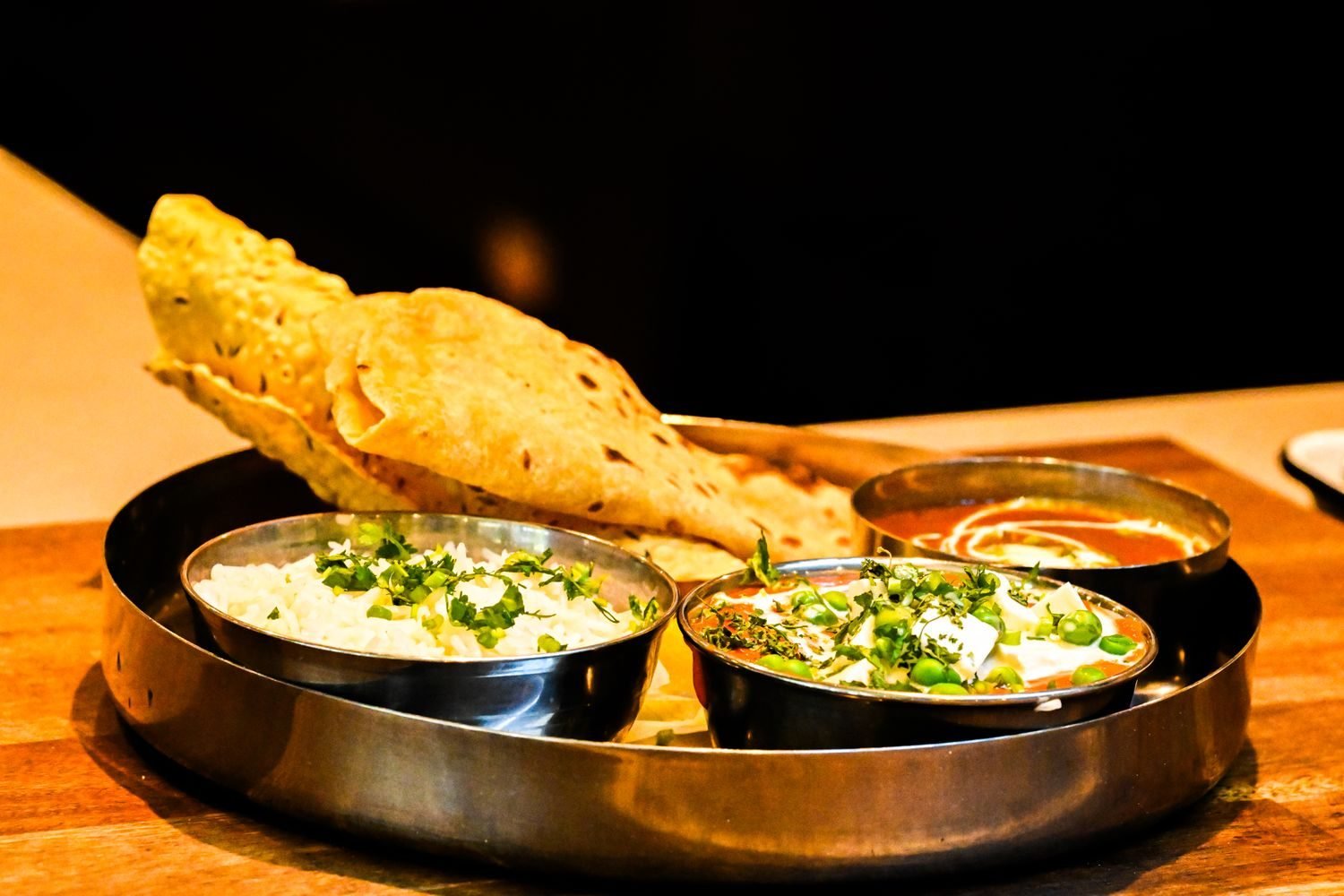
The chart below is built around roughly 1,400-1,600 calories a day (adjust portions up or down depending on your height, activity level, and current weight), with each day supplying 55-70g of protein through a mix of paneer, dal, curd, soy, and sprouts. Rice and roti portions are kept moderate — one or two servings a meal rather than three — so vegetables and protein take up more plate space.
| Day | Breakfast | Lunch | Snack | Dinner |
|---|---|---|---|---|
| Day 1 | Moong dal chilla (2) with mint chutney + 1 cup curd | 1 roti + 1 cup rajma + cucumber-tomato salad | Roasted chana (30g) + green tea | Palak paneer (100g paneer) + 1 small roti |
| Day 2 | Vegetable poha with peanuts + 1 glass buttermilk | Brown rice (1 cup) + dal tadka + bhindi sabzi | 1 apple + 10 almonds | Tofu and vegetable stir-fry + 1 roti |
| Day 3 | Besan chilla (2) + 1 cup curd | 1 roti + chana masala + salad | Sprouts bhel (1 cup) | Paneer bhurji (100g) + sauteed vegetables |
| Day 4 | Oats porridge with milk + chia seeds | 1 cup rice + moong dal + lauki sabzi | Roasted makhana (1 cup) | Soya chunk curry + 1 small roti |
| Day 5 | Vegetable upma + 1 cup curd | 1 roti + masoor dal + mixed vegetable sabzi | 1 orange + a handful of walnuts | Paneer tikka (grilled, 100g) + salad |
| Day 6 | Sprouts and vegetable salad + 1 boiled sweet potato | 1 cup rice + sambar (with extra dal) + beans poriyal | 1 cup buttermilk + roasted chana | Kadhi (curd-based) + 1 roti + steamed vegetables |
| Day 7 | Stuffed paneer paratha (1, light oil) + curd | 1 roti + rajma or chole + salad | Fruit bowl (papaya/guava) | Dal palak + 1 cup rice (small portion) + salad |
Notice the pattern: every single meal has an identifiable protein source, and no meal is built around rice or roti alone. That is the core difference between a plan that leaves you hungry by 4 p.m. and one that does not. If you want a broader framework this chart sits inside, our nutrition diet chart for weight loss covers how to adapt calorie and macro targets to your own numbers.
Which vegetarian protein sources should you stock up on?
A short list of staples covers most of the week above and is worth keeping in your kitchen on rotation:
- Paneer — around 18g protein per 100g; works in curries, grilled, or scrambled (bhurji).
- Dal (moong, masoor, toor, chana) — 15-18g protein per cooked cup, plus fibre that slows digestion.
- Curd/dahi — 3-4g protein per 100g, plus probiotics; a good base for kadhi, raita, or a simple side.
- Soy chunks/tofu — among the highest plant protein sources by weight, and neutral enough to absorb any curry flavour.
- Sprouts (moong, chana) — low calorie, high fibre, easy to add to salads or a quick bhel.
- Rajma, chole, black chana — legumes that double as protein and a slow-digesting carbohydrate.
If you eat eggs occasionally but still consider yourself broadly vegetarian, our companion 7-day high-protein meal plan for weight loss includes non-vegetarian and egg-based options for comparison. And if you are avoiding dairy entirely, our vegan nutrition guide walks through plant-only protein strategies since curd and paneer will not be options.
How do you avoid the refined-carb trap in Indian vegetarian meals?
The most common slip-up is not a single indulgent meal — it is the daily default of white rice or maida-based items (naan, extra puris, bakery snacks) filling the gap left by low protein. A few practical swaps help:
Swap white rice for a smaller portion, more often
Rather than cutting rice completely (which rarely lasts), reduce the portion to around 3/4 to 1 cup cooked and pair it with a larger serving of dal or sabzi. The goal is rebalancing the plate, not eliminating a food group.
Choose roti over fried breads on most days
A plain roti (whole wheat, minimal oil) is a reasonable carb source. Puris, parathas made with excess ghee, and naan add calories quickly without adding satiety — save these for occasional meals rather than daily ones.
Use curd and buttermilk instead of creamy gravies
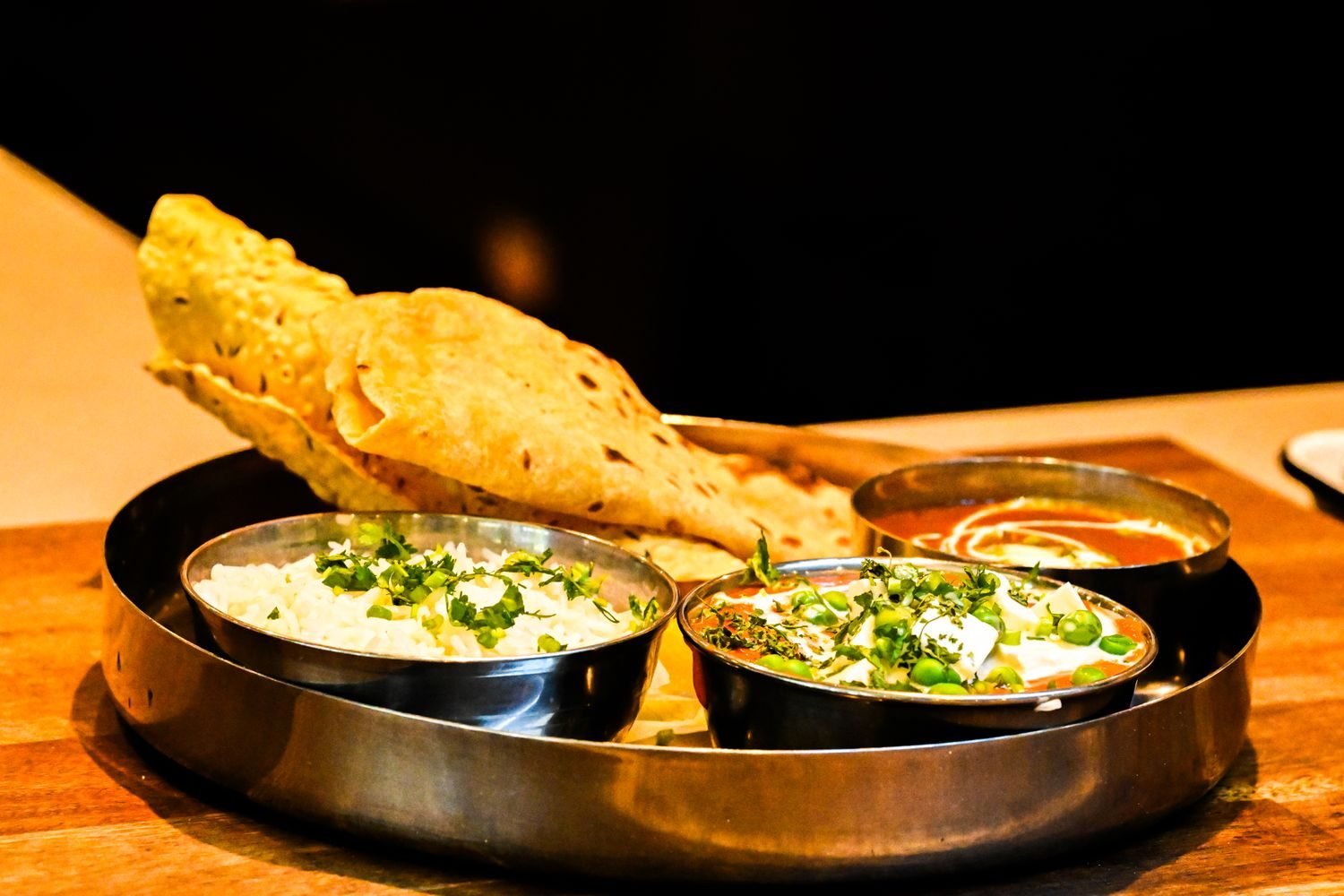
Many Indian vegetarian curries lean on cashew paste, cream, or excess oil for richness. Curd-based gravies (like the kadhi in the Day 6 dinner above) deliver flavour and protein without the same calorie load.
Can you lose weight on a vegetarian diet without counting every calorie?
Yes, though some awareness of portions helps, especially in the first couple of weeks while you recalibrate what a “normal” serving looks like. A few habits substitute reasonably well for strict tracking:
- Fill half your plate with vegetables or salad before adding rice/roti.
- Include a protein source at every meal, not just lunch or dinner.
- Keep fried snacks and sweets to two or three times a week rather than daily.
- Drink water or buttermilk before meals rather than sugary beverages.
- Watch oil quantity in tempering (tadka) — it adds up faster than most people expect.
These habits, applied consistently across a week like the one charted above, tend to produce a steady deficit without the plan feeling restrictive enough to abandon by day four. If you would rather have exact numbers to work against, our nutrition diet chart for weight loss breaks down how to calculate your own calorie and protein targets instead of using general guidelines.
What should you do if the plan feels too low in energy or protein for your body?
Everybody’s calorie and protein needs differ based on height, weight, activity level, and any existing health conditions like thyroid issues or PCOS, both of which are common reasons weight loss stalls despite a reasonable diet. The chart above is a starting template, not a fixed prescription — someone who is taller, more active, or has more muscle mass will likely need larger portions or an extra snack to avoid under-eating, which can backfire by slowing metabolism and increasing cravings.
If you have tried a vegetarian calorie deficit for a few weeks without results, or you are unsure how to adjust the portions in this plan for your specific numbers, working with a professional is usually faster than more trial and error. An online nutritionist consultation can help you personalize this exact framework — protein targets, calorie levels, and meal timing — to your body and lifestyle instead of guessing.
Frequently Asked Questions
Is a vegetarian diet enough to lose weight without eggs, meat, or fish?
Yes. Weight loss depends on a sustained calorie deficit, not on whether protein comes from animal or plant sources. Vegetarians can meet protein needs through paneer, dal, curd, soy, and legumes — the plan just requires more deliberate meal building than a diet where meat automatically anchors each plate.
How many rotis or how much rice should I eat per meal while losing weight?
Most people do well with one to two rotis or roughly 3/4 to 1 cup cooked rice per meal, paired with a protein source and vegetables. Exact portions depend on your calorie target, activity level, and body size, so treat this as a general starting point rather than a fixed rule.
Will eating paneer daily slow down weight loss?
Not typically, since paneer is protein-dense (about 18g per 100g) and fairly filling in modest portions. The concern is usually preparation — paneer cooked in heavy cream or excess oil adds calories fast. Grilled, lightly sauteed, or added to a vegetable-based curry keeps it weight-loss friendly.
Do I need protein powder on a vegetarian weight loss plan?
Not necessarily. Whole foods like dal, paneer, curd, and soy can meet most people’s protein targets. A vegetarian or plant-based protein powder can be a convenient top-up if you are consistently falling short after meals, especially post-workout, but it is a supplement to the plan, not a requirement.
How long before I see results on this 7-day vegetarian plan?
Visible changes usually take longer than a week — most people notice shifts in energy and digestion within the first week, with measurable weight change over 3-4 weeks of consistency. The plan is meant to be repeated and adjusted, not used as a one-time reset.