A practical 7-day diabetes meal plan works when it does two things at once: keeps each meal’s carbohydrate load in a predictable range (roughly 45-60 grams for a main meal, 15-20 grams for a snack) and fills the rest of the plate with protein, fibre, and non-starchy vegetables so blood sugar rises slowly instead of spiking. Below is a full week of Indian meals — vegetarian and non-vegetarian swaps included — built on the plate method, with approximate carb counts per meal so you can see the logic instead of just following a list.
This isn’t a replacement for individualised care. Carb tolerance varies by body weight, medication, activity level, and how long someone has had diabetes, so treat this chart as a starting template and adjust portions with your doctor or a registered dietitian’s guidance.
What is the diabetes plate method, and why build a meal plan around it?
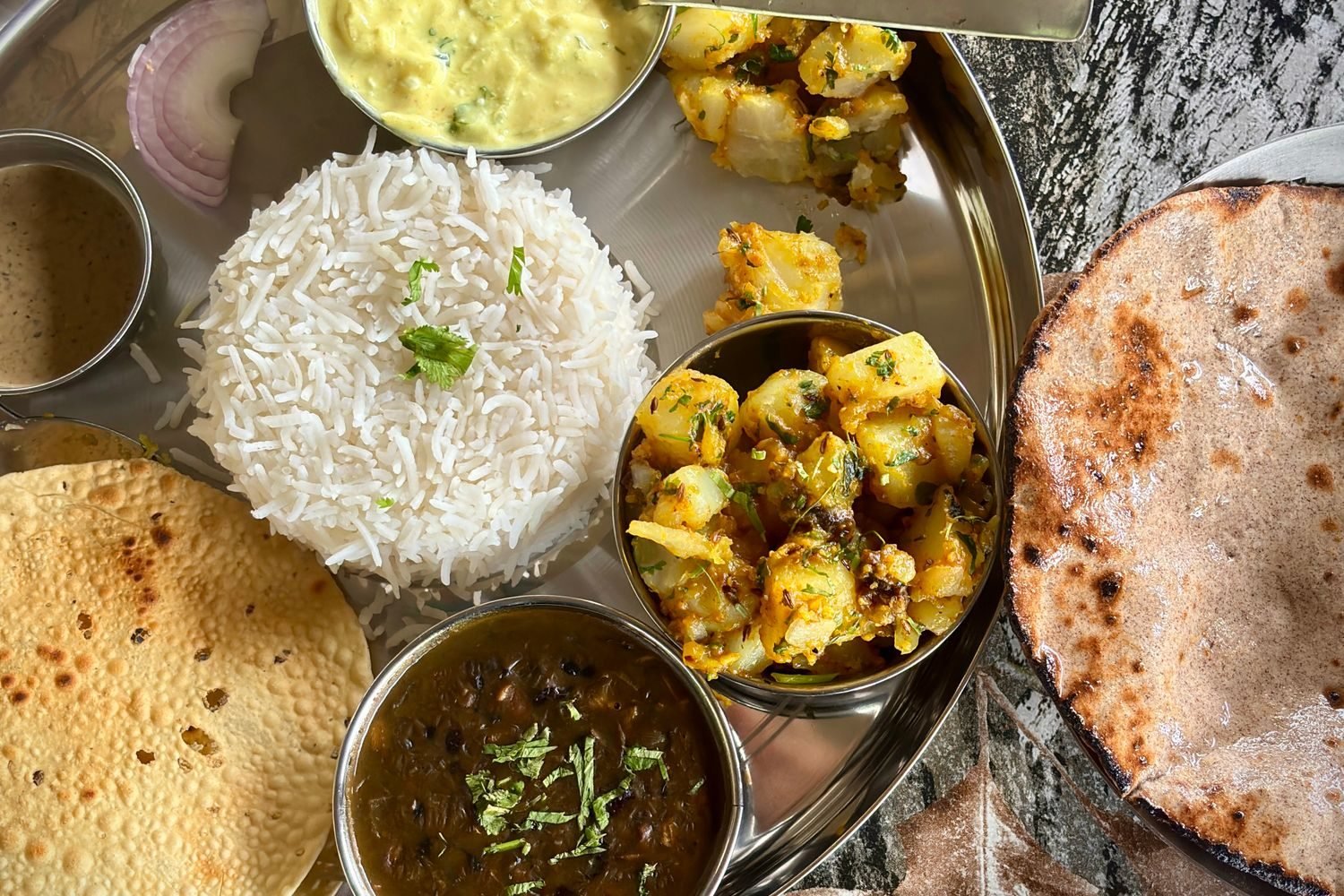
The plate method, popularised by the American Diabetes Association, is a visual shortcut for structuring meals without weighing every ingredient. On a 9-inch plate: half is filled with non-starchy vegetables (bhindi, lauki, spinach, cabbage, salad), a quarter with protein (dal, paneer, egg, chicken, fish), and a quarter with carbohydrate foods — rice, roti, or fruit. It works because the vegetable half adds fibre and volume that slow glucose absorption, while the small carb quarter naturally caps portion size without forcing anyone to count every gram.
Carb counting is the more precise cousin of this method. One “carb serving” equals 15 grams of carbohydrate, and most balanced meals land at 3-4 servings (45-60 grams), with snacks around 1 serving (15 grams). You don’t need to weigh food daily to use this — once you know that one medium roti is roughly 15g of carbs and a cup of cooked rice is about 45g, you can build meals by eye. We cover the full mechanics of this — glycaemic index, fibre pairing, and why refined carbs behave differently from whole grains — in our diabetes nutrition basics guide, so this article focuses only on turning that theory into an actual week of meals.
How many carbs should each meal have on a diabetes meal plan?
As a general starting range for adults with type 2 diabetes who are not on intensive insulin therapy, most meal plans work out to:
- Breakfast: 30-45g carbs
- Lunch: 45-60g carbs
- Dinner: 45-60g carbs
- Snacks (1-2 per day): 15-20g carbs each
That puts total daily carbohydrate intake in the 150-220g range for most people, though this shifts based on body size, activity, and blood sugar targets set by your physician. The numbers in the 7-day chart below sit within this range, but they’re approximations based on standard Indian food portions — not lab-measured values — so use them as a planning guide, not a prescription. If you’re also managing weight alongside blood sugar, our weight-loss diet chart shows how portion and calorie structuring overlaps with this approach.
What does a full 7-day diabetes meal plan look like?
The chart below gives a vegetarian option for every meal, with a non-vegetarian swap noted where relevant. Carb counts are approximate per serving. Rotate the grains (roti, brown rice, millets like jowar or bajra) across the week for variety and to spread out your fibre and micronutrient intake rather than repeating the same staple daily.
| Day | Breakfast (~30-40g) | Lunch (~45-55g) | Snack (~15g) | Dinner (~40-50g) |
|---|---|---|---|---|
| Day 1 | Vegetable besan chilla (2 medium) + mint chutney | 2 multigrain rotis + palak dal + cucumber-onion salad | Handful of roasted chana (30g) + black tea | 1 cup brown rice + rajma + sautéed lauki (or grilled fish for non-veg) |
| Day 2 | Vegetable daliya (broken wheat porridge, 3/4 cup) | 1 roti + 1/2 cup rice + chana dal + bhindi sabzi | 1 small apple with skin | 2 jowar rotis + paneer bhurji + tomato-cucumber salad (or egg bhurji) |
| Day 3 | 2 boiled eggs + 1 slice whole wheat toast + tomato | 2 bajra rotis + moong dal + mixed vegetable sabzi | Cucumber-carrot sticks + 2 tbsp hummus | 1 cup vegetable pulao (brown rice) + raita + salad (or chicken curry, small portion rice) |
| Day 4 | Moong dal cheela (2) + coriander chutney | 2 rotis + rajma curry + sautéed spinach | 1 small orange or guava | 3/4 cup brown rice + fish curry + steamed vegetables (or dal for veg) |
| Day 5 | Oats upma with vegetables (3/4 cup) | 2 multigrain rotis + kadhi + bhindi sabzi | Roasted makhana (1 cup) | 1 roti + 1/2 cup rice + chicken curry + salad (or paneer tikka, veg) |
| Day 6 | Vegetable poha (3/4 cup) with peanuts | 2 jowar rotis + chole + onion-tomato salad | Buttermilk (1 glass) + roasted chana | 1 cup dal khichdi (mixed dal + rice) + cucumber raita |
| Day 7 | Besan-vegetable chilla (2) + curd (1/2 cup, unsweetened) | 2 rotis + egg curry (or paneer) + lauki sabzi + salad | 1 small pear or 1/2 cup papaya | 3/4 cup brown rice + moong dal + mixed vegetable sabzi |
Every lunch and dinner in this chart follows the plate ratio: half the plate in salad or a non-starchy vegetable sabzi, a quarter in dal, egg, paneer, chicken, or fish, and a quarter in roti or rice. That structure is what keeps the carb count in range even when the specific dish changes day to day.
How do you adapt this plan for vegetarian, non-vegetarian, or specific conditions?
The chart above already builds in non-veg swaps, but a few adjustments matter depending on your situation. If you’re new to structuring meals this way, our diabetes nutrition guide explains the food-group logic behind these swaps in more depth.
For strict vegetarians
Lean more on dal, paneer, curd, and legume combinations (rajma, chole, moong) to keep protein adequate at each meal — protein is often under-portioned in vegetarian diabetes plans, and low protein can make post-meal glucose spikes worse.
For non-vegetarians
Fish and skinless chicken swap easily for paneer or dal at lunch and dinner with minimal change to the carb count, since carbs come almost entirely from the grain and vegetable portions, not the protein source.
For those on insulin or sulfonylureas
Meal timing and carb consistency matter more here, since mismatched carbs and medication dosing can cause hypoglycaemia. This is exactly the scenario where medical nutrition therapy — a structured, clinician-guided approach — is worth pursuing rather than adjusting a template plan on your own.
For gestational or type 1 diabetes
Both require tighter, individualised carb targets set in consultation with an endocrinologist. Use this chart only as a starting structure, not a fixed prescription, in these cases.
What are common mistakes people make with a diabetes meal chart?
A few patterns show up repeatedly when people try to self-manage with a printed chart alone:
- Skipping the vegetable half of the plate. A roti-and-dal meal without the sabzi or salad portion loses most of its fibre buffering, so the same carbs hit the bloodstream faster.
- Treating fruit as a free food. Fruit still counts toward carb totals — a medium banana is roughly 25-27g of carbs, more than many assume, so plan it into the day rather than adding it on top.
- Overcorrecting with very low-carb days. Extremely restrictive days followed by normal ones create inconsistency that’s harder to manage than a moderate, repeatable pattern, especially on glucose-lowering medication.
- Not accounting for cooking oil and ghee. These don’t affect carb counts but do affect calories and, indirectly, weight — a factor tightly linked to insulin sensitivity.
- Copying a generic chart without adjusting portions. Body size, activity level, and current HbA1c change what “one serving” should look like for a given person, which is why a chart is a starting point, not a diagnosis. Our broader piece on the nutritional management of diabetes mellitus covers how these factors are typically assessed.
How do you know if this meal plan is working for you?
The most reliable signal isn’t how the food tastes or how full you feel — it’s your blood glucose readings. If you’re monitoring at home, a fasting reading generally in the 80-130 mg/dL range and a post-meal (2-hour) reading under 180 mg/dL are the commonly cited targets from the American Diabetes Association, though your doctor may set different numbers based on your history. If readings run consistently high after a specific meal on this chart, that’s useful information — it usually means that meal’s carb portion needs trimming or its protein/fibre ratio needs adjusting, not that the whole plan has failed.
Track patterns over 1-2 weeks rather than reacting to a single reading, and bring that log to your next doctor or dietitian visit. HbA1c, taken every 3 months, remains the best long-term marker of whether the overall approach — not just this week’s chart — is working. If your readings stay stubbornly high despite following a structured chart, that’s usually a sign to move from general nutrition guidance to personalised nutrition support.
Frequently asked questions
Can I repeat this 7-day diabetes meal plan every week?
Yes, but rotating grains, vegetables, and protein sources every 2-3 weeks helps maintain a wider range of micronutrients and prevents the plan from feeling repetitive enough to abandon. Keep the same carb-per-meal structure and plate ratio — that consistency is more important than variety.
How many rotis or how much rice can a diabetic eat per meal?
As a general guide, 2 medium rotis (about 30g carbs) or 3/4-1 cup cooked rice (about 45g carbs) fits the quarter-plate carb portion for lunch or dinner. Exact tolerance varies by person, so adjust based on your post-meal glucose readings and your doctor’s guidance.
Is fruit allowed on a diabetes meal plan?
Yes, in controlled portions — a small apple, guava, or orange (about 15g carbs) works well as a snack. Fruits with a lower glycaemic load, like berries, guava, and citrus, are generally easier on blood sugar than very ripe bananas, mangoes, or grapes eaten in large portions.
Do I need to count carbs exactly, or is the plate method enough?
For most people with type 2 diabetes managed through diet and oral medication, the plate method alone is sufficient day to day. Precise carb counting becomes more important for people on mealtime insulin, where dosing depends on accurate gram counts — that’s a conversation to have with your endocrinologist.
Should I follow this chart without consulting a doctor?
This chart is a general educational template, not a personalised prescription. Diabetes management depends on your current medication, kidney function, weight goals, and lab values, so review any structured meal plan with your doctor or endocrinologist before making it your default routine, especially if you’re on insulin or other glucose-lowering medication.
A 7-day chart gives you a repeatable starting structure, but real, sustained blood sugar control comes from fine-tuning that structure to your body, labs, and daily routine — something a template alone can’t do. If you’d like a plan built around your actual reports, medication, and food preferences, an online nutritionist consultation is a practical next step.