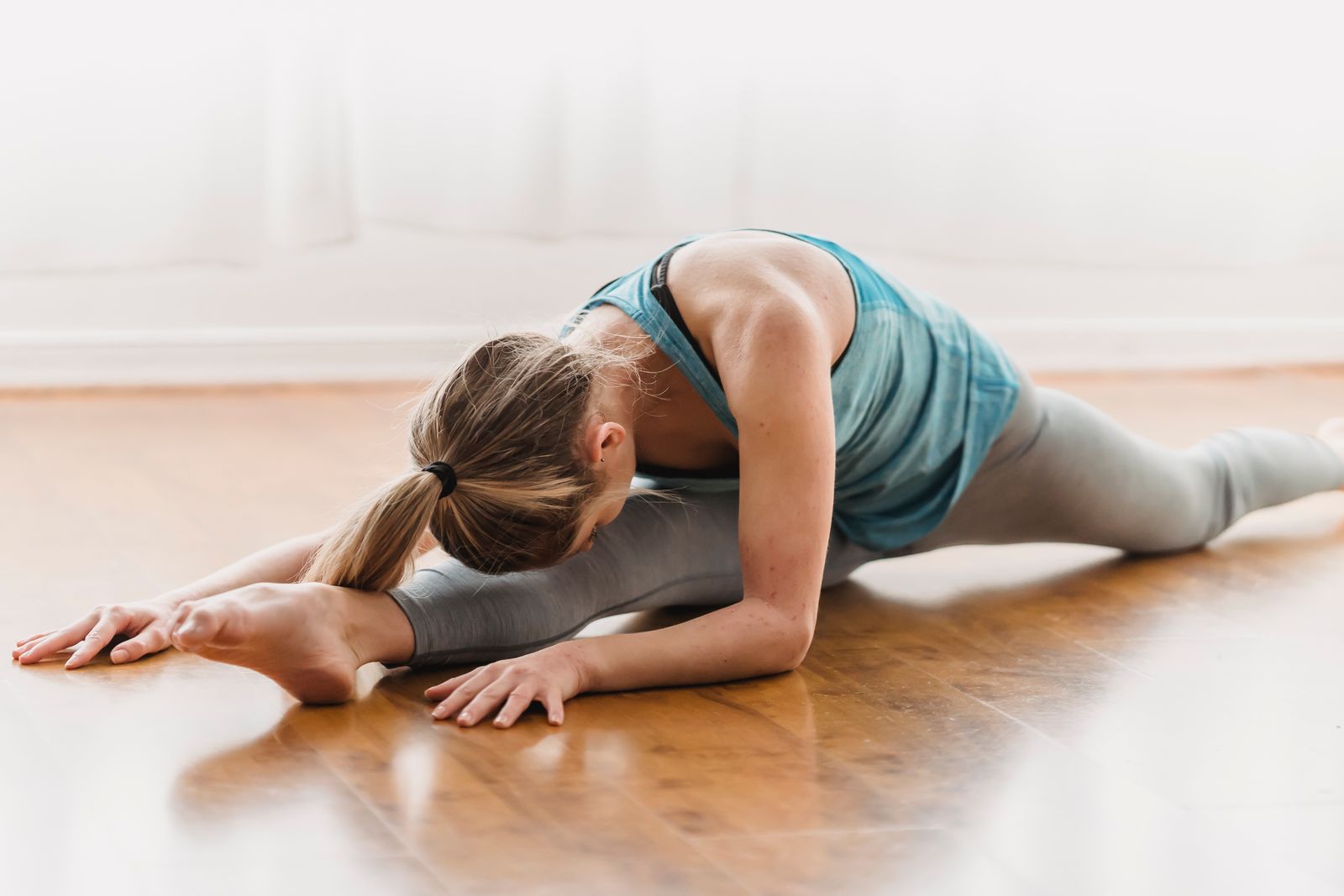
Yoga to reduce thigh fat works best as part of a consistent practice that combines standing poses, hip-opening stretches, and steady breathwork, since no single asana can spot-reduce fat from one body part. Poses like Warrior II, Chair Pose, Triangle Pose, and Bridge Pose build lean muscle in the thighs, improve circulation, and raise your overall calorie burn when practiced regularly alongside a balanced diet. The change you see in your thighs comes from a combination of full-body fat loss, muscle toning, and better lymphatic drainage rather than from targeting the thighs in isolation. A realistic expectation is visible toning within 6 to 8 weeks of daily practice, paired with mindful eating and enough sleep.
Can Yoga Really Reduce Thigh Fat?
Yoga can help reduce thigh fat, but not through spot reduction. Fat loss happens across the whole body based on overall calorie balance, hormonal health, and activity level, and the thighs are simply one of the areas that respond as that balance shifts. What yoga does very well is combine strength-building holds, which increase muscle density in the quadriceps and hamstrings, with cardiovascular styles like vinyasa yoga that elevate heart rate enough to support fat loss over time. A firmer, more toned thigh often appears before the number on the scale changes much, because muscle definition becomes visible as surface fat gradually decreases.
The other piece of the puzzle is water retention and lymphatic congestion, which can make thighs look puffier than the underlying fat percentage suggests. Certain yoga poses, especially inversions and forward folds, encourage lymph and blood flow back toward the torso, which can reduce that heavier, swollen feeling in the legs within days rather than weeks.
What Causes Thigh Fat to Accumulate in the First Place?
Thigh fat accumulation is influenced by genetics, hormone patterns, and lifestyle factors working together. Estrogen tends to direct fat storage toward the hips and thighs in many women, which is why this area often responds more slowly to general weight loss efforts compared to the midsection. Prolonged sitting also plays a role: it weakens the glutes and hip flexors, slows circulation in the legs, and can contribute to a “pear-shaped” fat distribution over time.
Diet quality matters just as much as exercise. Diets high in refined carbohydrates and sodium can worsen fluid retention in the lower body, while inadequate protein intake makes it harder to build the lean muscle that gives thighs a toned appearance. Understanding these root causes is why a single Instagram “thigh workout” rarely delivers lasting results without addressing sleep, stress, and nutrition alongside movement.
Which Yoga Poses Target the Thighs Most Effectively?
The following asanas to reduce thigh fat are widely recommended because they combine isometric muscle engagement with sustained holds, which is what builds endurance and tone in the quadriceps, hamstrings, and inner thighs.
Chair Pose (Utkatasana)
Chair Pose is one of the most effective yoga poses to reduce thigh fat because it forces the quadriceps and glutes to work isometrically against gravity. Stand with feet hip-width apart, bend the knees as if sitting into an invisible chair, and raise the arms overhead. Hold for 30 to 60 seconds, keeping the weight in the heels. This pose is frequently the first one taught in beginner yoga poses sequences because it teaches proper alignment before progressing to more demanding standing postures.
Warrior II (Virabhadrasana II)
Warrior II builds strength through the front and back thigh simultaneously while also opening the hips. Step the feet wide apart, bend the front knee to a right angle, and extend the arms parallel to the floor. Holding this position for 5 to 8 breaths per side trains the thigh muscles under tension, which is a key driver of toning. It pairs naturally with other standing postures found in yoga poses for strength routines.
Triangle Pose (Trikonasana)
Triangle Pose stretches and strengthens the inner and outer thighs at once, while also improving hip mobility. Keep both legs straight, hinge at the hip over the front leg, and reach the top arm toward the ceiling. This lateral stretch is particularly useful for people whose thigh tightness comes from long hours of sitting.
Bridge Pose (Setu Bandhasana)
Bridge Pose activates the glutes and hamstrings, the muscle groups that support the back of the thigh. Lying on your back with knees bent, press through the feet to lift the hips, squeezing the glutes at the top. This pose also supports lower-body circulation, making it a strong complement to yoga for back pain routines since it strengthens the posterior chain.
Extended Side Angle Pose (Utthita Parsvakonasana)
This deep lunge variation lengthens the side body while loading the front thigh under sustained tension. It is more demanding than Warrior II and works well once the earlier poses feel comfortable, typically after 2 to 3 weeks of consistent practice.

How Do Hip-Opening Poses Help With Thigh Fat?
Hip-opening poses such as Garland Pose (Malasana), Pigeon Pose, and Wide-Legged Forward Fold release tension in the hip flexors and inner thighs, which often carry both physical tightness and stored tension from prolonged sitting. Loosening these muscles improves blood flow to the entire thigh region, which supports the metabolic processes involved in fat breakdown. Hip openers also improve the range of motion needed to perform deeper standing poses correctly, which means better muscle engagement in poses like Warrior II and Triangle Pose. If you’re new to this category, yoga for hip pain sequences are a gentle entry point before progressing to more intense holds.
What Role Does Breathwork Play in Thigh Fat Loss?
Breathwork, or pranayama, supports thigh fat loss indirectly but meaningfully by regulating the stress hormone cortisol. Chronically elevated cortisol is commonly linked to increased fat storage around the hips, thighs, and abdomen, so techniques that calm the nervous system can support fat loss efforts over the medium term. Practices like Kapalbhati pranayama and alternate nostril breathing (Nadi Shodhana) are commonly included at the end of a thigh-focused practice to shift the body out of a stressed state and into one more conducive to recovery and fat metabolism. Five to ten minutes of breathwork after an asana practice is a simple, low-effort addition with outsized benefits for consistency, since it also improves sleep quality.
How Does a Full-Body Yoga Practice Compare to Targeted Thigh Exercises?
A full-body yoga practice tends to outperform isolated thigh exercises for lasting fat loss because it raises overall energy expenditure and builds functional strength across multiple muscle groups at once. Styles like power yoga and vinyasa yoga move continuously between poses, keeping the heart rate elevated in a way that static, thigh-only routines don’t achieve. This matters because total fat loss, not localized muscle fatigue, is what ultimately changes how the thighs look. That said, combining a full-body flow 3 to 4 times a week with 2 sessions specifically emphasizing the poses listed above tends to produce the most noticeable results within 2 months.
How Should You Structure a Weekly Yoga Routine for Thigh Fat Loss?
A sustainable weekly structure balances intensity with recovery so the muscles have time to rebuild between sessions.
- Days 1, 3, 5: A 30 to 40 minute flow combining Chair Pose, Warrior II, Triangle Pose, and Extended Side Angle, held for 5 to 8 breaths each side, repeated for 3 rounds.
- Days 2, 4: A gentler hip-opening and restorative session using Pigeon Pose, Garland Pose, and Bridge Pose, along with 10 minutes of pranayama.
- Day 6: A longer 45 to 60 minute vinyasa-style flow to elevate calorie burn and build overall endurance.
- Day 7: Complete rest or gentle stretching to allow muscle recovery.
This kind of structured rotation is a common feature of programs built around yoga for weight loss, since alternating intensity prevents burnout and supports adherence, which matters more for long-term results than any single “perfect” routine.
What Diet Changes Support Yoga for Thigh Fat Loss?
No amount of yoga will meaningfully reduce thigh fat if diet works against it. A protein-adequate diet, roughly 1.2 to 1.6 grams per kilogram of body weight depending on activity level, supports the muscle tone that makes thighs appear leaner. Reducing added sugar and refined carbohydrates helps limit the fat storage triggered by insulin spikes, while cutting excess sodium reduces the water retention that can make thighs look heavier than their actual fat percentage. Staying hydrated, ironically, also reduces water retention, since the body holds onto water more aggressively when it senses under-hydration. These same nutritional principles apply broadly across yoga for belly fat goals, since both areas respond to the same underlying metabolic conditions.
How Long Does It Take to See Results From Yoga for Thigh Fat?
Most consistent practitioners notice a difference in muscle tone and how clothes fit within 3 to 4 weeks, though visible fat loss typically takes longer, often 6 to 8 weeks of regular practice combined with dietary awareness. This timeline varies based on starting body composition, hormonal factors, sleep quality, and how closely diet is managed alongside the practice. It’s worth noting that early “results” in the first one to two weeks are often reduced water retention and improved posture rather than actual fat loss, which is a normal and expected part of the process rather than a sign that the practice isn’t working.
What Mistakes Slow Down Thigh Fat Loss Progress?
The most common mistake is practicing inconsistently, doing an intense session one week and skipping the next two, which prevents the body from adapting. Another frequent error is focusing exclusively on static holds without ever elevating the heart rate through flow-based sequences, since calorie expenditure matters as much as muscle engagement for fat loss specifically. Ignoring nutrition is a third major pitfall: even a perfect practice can’t outpace a calorie surplus. Finally, many people compare their thighs day to day, which is unreliable given normal fluctuations in water retention; tracking progress every 2 to 3 weeks with photos or measurements gives a far more accurate picture.
How Does Yoga for Thigh Fat Fit Into a Broader Weight Management Goal?
Thigh-focused yoga works best as one component of a broader weight management strategy rather than a standalone fix. Combining it with general yoga for weight loss practices, mindful eating, and adequate sleep creates the calorie deficit and hormonal environment needed for fat loss to occur anywhere on the body, including the thighs. For those coming from the opposite goal, the same underlying principles of consistency and full-body engagement appear in yoga for weight gain programs, just with different dietary targets. Framing thigh toning as part of an overall lifestyle shift, rather than an isolated 30-day challenge, is what separates temporary changes from lasting ones.
Questions People Ask About Yoga to Reduce Thigh Fat
Can yoga alone reduce thigh fat without dieting?
Yoga alone can improve thigh muscle tone and circulation, but meaningful fat loss almost always requires a supporting calorie-conscious diet. Poses build strength and some styles raise heart rate enough to burn calories, but without attention to food intake, most people see toning before they see significant fat reduction.
How many days a week should I do yoga for thigh fat loss?
Most people see the best results practicing 5 to 6 days a week, alternating between more intense flow-based sessions and gentler, hip-opening or restorative sessions. Daily practice without any recovery days can lead to fatigue and inconsistent adherence, so building in at least one rest or light day is recommended.
Is Surya Namaskar good for thigh fat loss?
Yes, Surya Namaskar (Sun Salutations) is commonly recommended because it moves continuously between poses that engage the thighs, glutes, and core, elevating heart rate while building strength. Many practitioners include 10 to 12 rounds as a warm-up before a more targeted thigh sequence.
Why do my thighs look bigger some days even though I practice yoga regularly?
Day-to-day changes in thigh appearance are usually caused by water retention from sodium intake, hormonal fluctuations, or simply how much you’ve been sitting, rather than actual fat gain. Comparing progress every 2 to 3 weeks rather than daily gives a much more accurate and less discouraging picture.
Should I do yoga in the morning or evening for thigh fat loss?
Either time works, as consistency matters more than timing for fat loss. Morning practice tends to boost energy and appetite regulation for the day, while evening practice can help release tension built up from sitting, so the better choice is whichever time you can realistically stick to long-term.
Can beginners do these thigh-focused yoga poses safely?
Yes, all the poses covered here have beginner-friendly modifications, such as using a wall for balance in Warrior II or shortening the hold time in Chair Pose. Starting with shorter holds and gradually increasing duration over 2 to 3 weeks allows beginners to build strength safely without strain.
Try This for Yourself
Reading about thigh-toning poses is a good start, but real results come from consistent, guided practice. If you want proper alignment cues, structured weekly sequencing, and accountability that a blog post can’t provide, join a live online yoga class designed around real fat-loss and toning goals, taught by instructors who can correct your form in real time.
Related reading: Yoga for Weight Loss, Yoga for Belly Fat, Yoga for Weight Gain, Beginner Yoga Poses, or explore our online yoga classes to get started today.