Women need meaningfully more iron than men through most of their adult life, more folate during the reproductive years, and a calcium strategy that starts decades before menopause actually arrives. These aren’t minor tweaks to a generic diet plan — they come from real physiological differences, mainly monthly blood loss, the possibility of pregnancy, and a bone-density clock that starts ticking earlier than most women realize. Understanding these four levers — iron, calcium, folate, and how needs shift across life stages — is the foundation of women’s nutrition, and it’s different enough from general male nutrition requirements that treating “adult nutrition” as one-size-fits-all leaves a lot of women under-fueled in ways that show up as fatigue, weak bones, or complications down the line.
This guide covers what actually differs for female physiology and why, without repeating the deep dives on pregnancy or menopause — think of it as the hub that explains the “why” behind those life-stage-specific needs.
Why do women need more iron than men?
Menstruation is the single biggest reason. The Recommended Dietary Allowance (RDA) for iron in premenopausal women is 18 mg per day, more than double the 8 mg per day recommended for adult men and for postmenopausal women, according to the National Institutes of Health Office of Dietary Supplements (NIH ODS). That gap exists because monthly blood loss depletes iron stores in a way male physiology simply doesn’t have to account for.
The numbers on deficiency back this up. Research cited by NIH-affiliated studies estimates that up to 12% of reproductive-age American women are iron deficient, and around 4% have full iron deficiency anemia — with heavy menstrual bleeding, which affects up to 30% of premenopausal women, being a major driver. Rates run even higher among Hispanic and Black women compared to white and Asian women, and deficiency is notably more common in women aged 25–54 than in women 55 and older, which lines up with the years menstruation is actively happening.
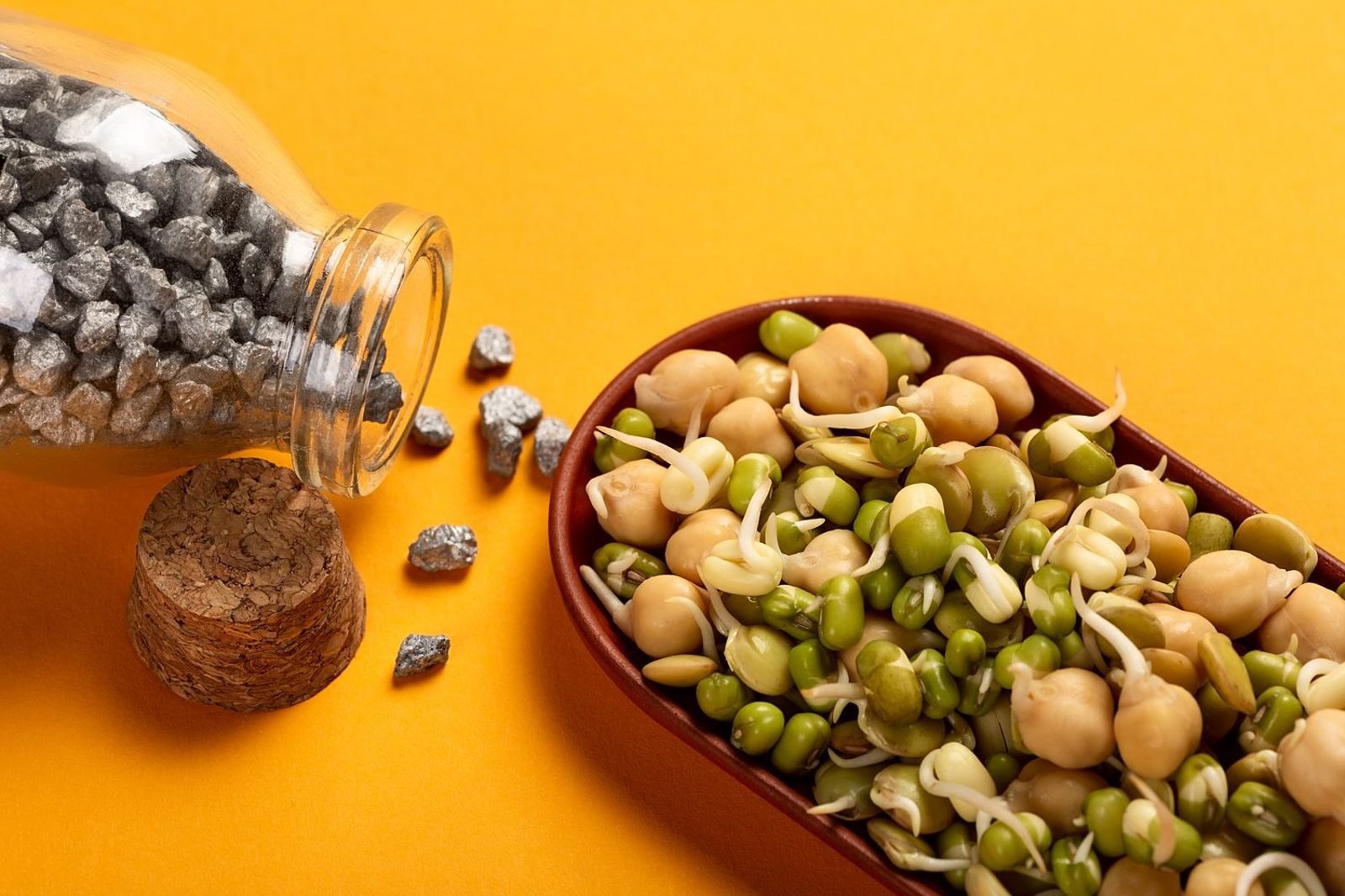
Practically, this means women of reproductive age should be deliberate about iron-rich foods:
- Heme iron (absorbed efficiently): red meat, poultry, and fish
- Non-heme iron (absorbs better paired with vitamin C from citrus, peppers, or tomatoes): beans, lentils, spinach, and fortified cereals
Coffee and tea can inhibit absorption if consumed right alongside an iron-rich meal. If you notice heavy periods, unusual fatigue, dizziness, or pale skin, get ferritin levels checked rather than guessing — the difference between low iron and full-blown nutritional anemia matters for how it’s treated.
How much calcium do women actually need for bone health?
Adult women 50 and younger need 1,000 mg of calcium per day, and that requirement rises to 1,200 mg per day after age 50, per NIH ODS guidelines. The reasoning behind the RDA is bone maintenance itself — calcium intake recommendations are set specifically around the amount needed to build peak bone mass early on and slow bone loss later, since bone density is the clinical marker used to establish these values.
Timing matters as much as the number here. Peak bone mass — the maximum bone density a person will ever have — is typically reached by the late twenties to early thirties. After that, bone is gradually lost rather than built, and postmenopausal women lose density faster due to the drop in estrogen, which is why the RDA steps up at 50. A 25-year-old skimping on calcium isn’t just risking a deficiency this year; she’s lowering the ceiling on lifetime bone density that everything afterward gets subtracted from.
What foods deliver calcium without relying on supplements?
Dairy remains the most calorie-efficient source — a cup of milk or yogurt delivers roughly 300 mg — but it’s not the only route:
- Fortified plant milks
- Canned salmon or sardines with bones
- Tofu set with calcium sulfate
- Leafy greens like kale and bok choy
All of these contribute meaningfully toward the daily target. Vitamin D matters here too, since it governs how much calcium the gut absorbs, which is why the two are almost always discussed together. For a deeper breakdown of sources and absorption factors, see this site’s guide on calcium nutrition.
Why is folate so important for women who could become pregnant?
Because neural tube defects like spina bifida form in the first 3–4 weeks of pregnancy — often before a woman even knows she’s pregnant — folate needs to already be adequate at the point of conception, not started after a positive test. The U.S. Public Health Service, along with the CDC and ACOG, recommends that women capable of becoming pregnant consume at least 400 mcg of folic acid daily, on top of folate from food, specifically to reduce neural tube defect risk.
The general adult RDA for folate is 400 mcg dietary folate equivalents (DFE) per day for anyone over 13, but it climbs to 600 mcg DFE during pregnancy and 500 mcg DFE while breastfeeding, according to NIH ODS. The “DFE” unit exists because synthetic folic acid in supplements and fortified foods absorbs more efficiently than natural food folate — 1 mcg of folic acid from a supplement on an empty stomach counts as 2 mcg DFE, part of why a fortified cereal or modest supplement can close a gap diet alone often doesn’t.
This recommendation applies more broadly than “trying to conceive” — it’s aimed at any woman who could become pregnant, since roughly half of U.S. pregnancies are unplanned. Lentils, asparagus, spinach, avocado, and fortified grains are strong dietary sources, but given how early neural tube closure happens, most clinicians recommend a supplement as a backstop. For more on how these needs escalate once pregnancy is confirmed, see the guides on nutrition for pregnant women and pregnancy nutrition.
How do nutrient needs shift across a woman’s life stages?
Female nutrient needs aren’t static — they move in response to specific physiological transitions, and recognizing which stage you’re in helps you know which numbers actually apply to you right now.
Adolescence and the start of menstruation
Iron needs jump the moment periods start, which is exactly when many teenagers are also cutting back on red meat or skipping meals — a combination that shows up in research as a period of measurably higher iron deficiency risk. Bone building is also front-loaded here, since the teenage years and early twenties are when most peak bone mass is accumulated.
Reproductive years (roughly 20s–40s)
This is where the 18 mg iron RDA and the 400 mcg folate recommendation both apply simultaneously, regardless of whether pregnancy is actively being planned. It’s also worth noting these needs coexist with whatever a woman’s general activity or training load requires — nutrient timing for athletic performance doesn’t replace these baseline requirements, it sits on top of them.
Pregnancy and breastfeeding
Iron, folate, and calcium needs all increase further during pregnancy — iron RDA rises to 27 mg/day and folate to 600 mcg DFE — but these deserve their own detailed treatment rather than a summary here. See nutrition for pregnant women for the full breakdown.
Perimenopause and menopause
Once menstruation stops, the iron RDA drops back down to 8 mg/day — the same as men — since the primary source of iron loss is gone. Calcium need, however, rises to 1,200 mg/day precisely because estrogen decline accelerates bone loss, making this the stage where bone-protective nutrition becomes most urgent rather than less.
What other nutrients deserve attention in a woman’s diet?
Iron, calcium, and folate get the most attention because they have clear RDAs tied to sex-specific physiology, but a well-rounded approach to vitamin nutrition matters too. Vitamin D works alongside calcium for bone density and is commonly low, since diet alone rarely supplies enough. Vitamin B12 is essential for red blood cell formation and works alongside iron and folate in that same pathway, which is why the three are often tested together when fatigue is unexplained. Protein needs don’t differ dramatically by sex per kilogram, but women who under-eat overall — common during dieting phases — often fall short on protein first, with knock-on effects for muscle mass and bone density.
None of these nutrients function in isolation. A woman getting plenty of calcium but insufficient vitamin D absorbs less of it. A woman eating iron-rich food alongside coffee blunts the absorption she’s aiming for. The practical takeaway isn’t to obsess over any single number, but to build meals that combine these nutrients — a spinach salad with citrus dressing and grilled salmon covers iron, vitamin C, calcium, and vitamin D in one plate.
Frequently Asked Questions
Do women need iron supplements even if they’re not anemic?
Not automatically — supplementing without a documented deficiency can push intake past the tolerable upper limit of 45 mg/day. But if you have heavy periods, fatigue, or a diet low in iron-rich foods, ask a doctor for a ferritin test before deciding, since low-normal iron can still affect energy before it technically qualifies as anemia.
Can women get enough calcium without eating dairy?
Yes. Fortified plant milks, tofu made with calcium sulfate, canned fish with edible bones, and leafy greens like bok choy and kale all contribute meaningfully toward the 1,000–1,200 mg daily target. It usually takes combining two or three sources per day rather than relying on one.
Should every woman of childbearing age take a folic acid supplement?
Major health bodies including the CDC and ACOG recommend at least 400 mcg of folic acid daily for anyone who could become pregnant, since neural tube defects form before pregnancy is typically confirmed. This applies broadly, not just to women actively trying to conceive.
At what age should women start worrying about bone density?
Ideally well before menopause. Peak bone mass is usually reached by the late twenties to early thirties, so calcium and vitamin D intake in your teens, twenties, and thirties directly affects how much bone density you have to draw on decades later.
Why do iron needs drop after menopause?
Once periods stop, the main source of ongoing iron loss disappears, so the RDA falls from 18 mg/day back to 8 mg/day — the same level recommended for men. Continuing to take a high-dose iron supplement after menopause without a clinical reason isn’t necessary and can risk excess intake.
Every woman’s nutrient picture looks a little different depending on age, menstrual history, activity level, and whether pregnancy is a factor — which is exactly the kind of thing worth reviewing with a professional rather than guessing from averages. If you want a plan built around your actual bloodwork and life stage, an online nutritionist consultation is a good next step.