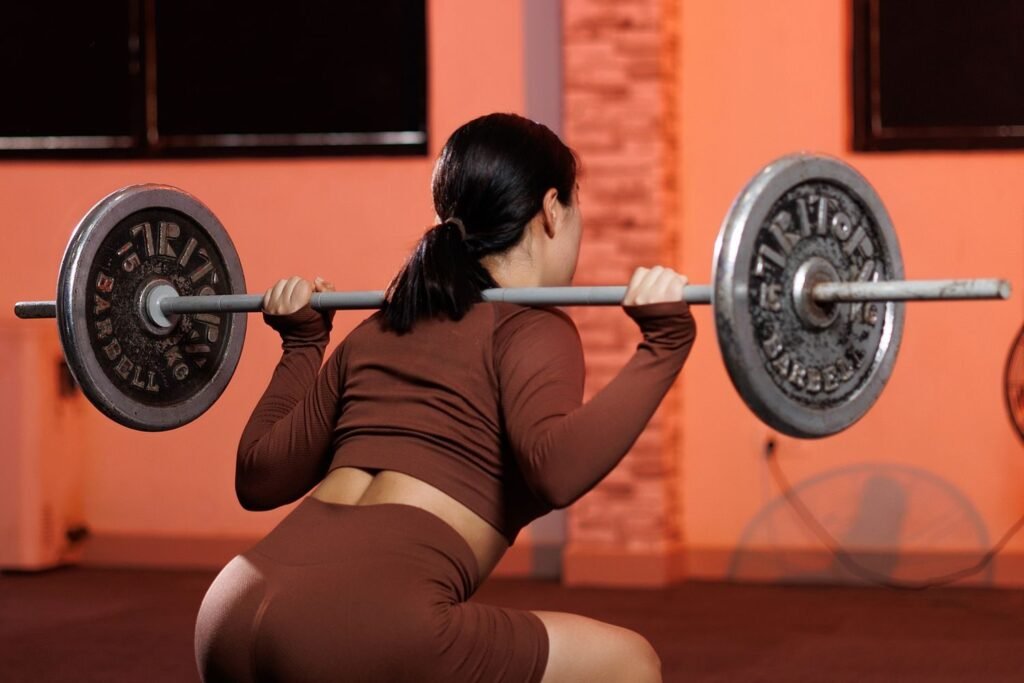
A v shape workout is a training program built around widening your shoulders and back while tightening your waistline, so your torso reads like the letter V when you’re standing relaxed. At FitStrot we build this look for clients through targeted lat, rear delt, and upper back training combined with core work and fat loss, since no single exercise creates a V-taper on its own. It’s a full physique strategy, not a 20-minute add-on.
What Is a V-Shape Workout, Really?
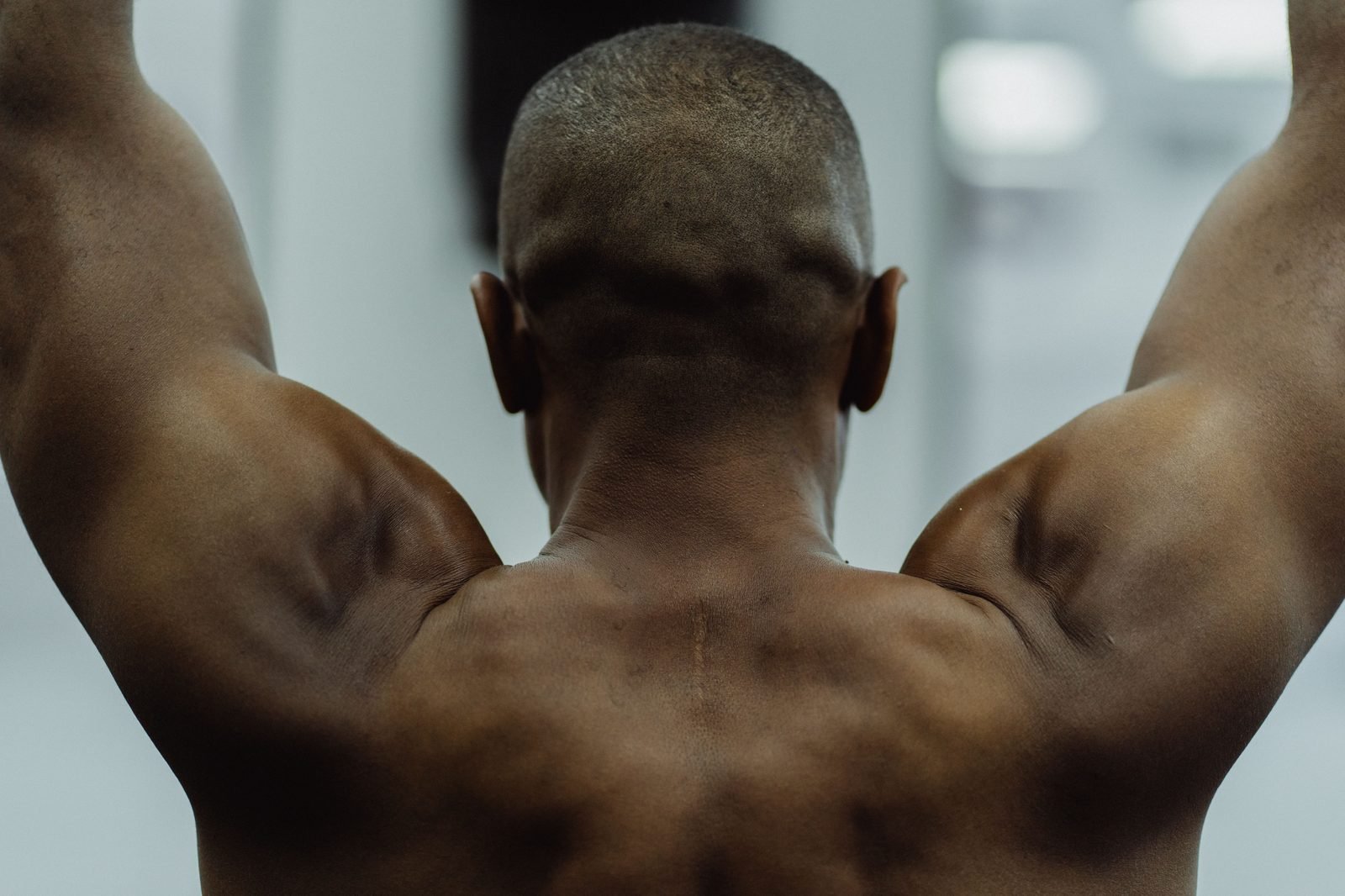
The V-shape, or V-taper, is the classic “broad shoulders, narrow waist” silhouette you see on swimmers, gymnasts, and most physique athletes. It’s an illusion created by contrast. The wider your lats and delts get, and the tighter your waist gets, the sharper that V looks in a t-shirt or with your shirt off. There’s no single “V-shape exercise.” It’s a combination of back width work, shoulder width work, upper back thickness work, and waist management through diet and core training.
Most guys who ask us for a v shape workout are really asking for three things at once: wider lats, rounder delts, and a flatter stomach. We treat those as three separate training problems that get solved together in one weekly split.
Which Muscles Actually Build the V-Taper Look?
Four muscle groups do almost all the work here, and they’re not equally weighted.
- Lats (latissimus dorsi): These are the biggest contributor to back width. Pull-ups, lat pulldowns, and wide-grip rows target the lats directly and are the backbone of any serious V-taper plan.
- Side and rear deltoids: Your side delts add width right at shoulder level, which is the top of the V. Rear delts add thickness from behind and improve posture, which makes the whole upper body look wider from every angle. Lateral raises and rear delt flyes are non-negotiable here, not optional finishers.
- Upper and mid back: Traps, rhomboids, and rear delts together give you that dense, wide look through the back rather than a flat one. This is where consistent back workouts pay off over months, not weeks.
- Waist and core: A tight, flat midsection is what makes the shoulders look dramatically wider by comparison. This comes down to core training plus, more importantly, overall body fat percentage.
Miss any one of these four and the V looks incomplete. Big lats with a soft waist just looks like a bigger torso, not a tapered one.
How Do You Do a V Shape Workout?
You build a v shape workout by training back width and shoulder width on separate focused days, hitting upper back volume at least twice a week, and layering in core and conditioning work to manage waist size. Prioritize pull-ups, lat pulldowns, lateral raises, and rear delt flyes. Pair this with a calorie deficit if your waist isn’t visibly tight, because no amount of lifting will reveal a V-taper hiding under body fat.
The training itself isn’t complicated. What trips people up is sequencing and consistency. Wide-grip pulling movements need to come first in a session while you’re fresh, since they demand the most coordination and grip strength. Delt isolation work comes after your compound lifts. And your waist related work, whether that’s core training or cardio, needs to happen on a schedule you can actually stick to for months, not just during a two-week pre-summer push.
What Does a Sample V-Taper Training Split Look Like?
Here’s a four-day split we commonly build out for clients chasing a wider back and tighter waist. It rotates through lat-dominant pulling, shoulder width work, upper back thickness, and core, so nothing gets neglected across the week.
| Day | Focus | Key Exercises | Sets x Reps |
|---|---|---|---|
| Day 1 | Back Width (Lats) | Pull-ups, wide-grip lat pulldown, straight-arm pulldown | 4 x 6-10 |
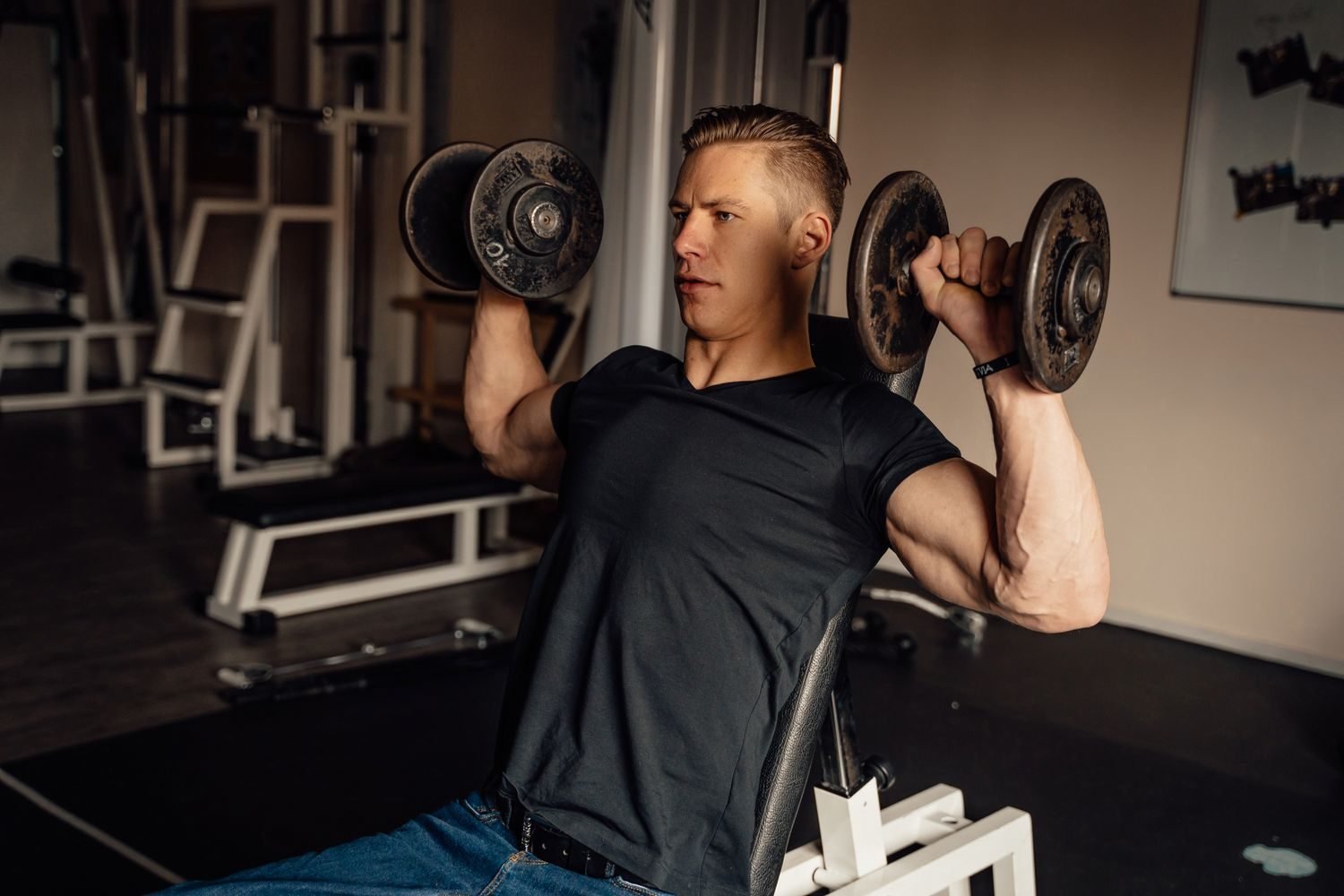
| Day 2 | Shoulder Width (Delts) | Seated lateral raise, cable lateral raise, rear delt flye, overhead press | 4 x 12-15 |
| Day 3 | Upper Back Thickness | Barbell rows, seated cable rows, face pulls, shrugs | 4 x 8-12 |
| Day 4 | Core & Conditioning | V-ups, hanging leg raises, plank variations, 20-25 min cardio | 3-4 x 12-15 |
We usually rotate this across a week alongside leg and push days, since neglecting legs while chasing a V-taper just makes the upper body look disproportionate in a different way. If you want more detail on structuring the pulling days specifically, our gym back workout routine guide breaks that down exercise by exercise, and our upper back workouts article covers the thickness work in more depth.
What Are V-Ups and How Do They Fit Into This?
A v-ups workout is a core exercise where you lie flat, then simultaneously lift your legs and torso off the ground so your body folds into a V shape, reaching your hands toward your feet at the top. It hits your rectus abdominis and hip flexors hard, and it’s tougher than it looks because it demands control through the full range rather than momentum.
V-ups aren’t going to carve visible abs by themselves. No ab exercise burns fat off your stomach specifically, that’s not how fat loss works. What v-ups do is build core strength and a bit of muscle definition that becomes visible once your body fat is low enough to show it. We program them on core days as a finisher, usually for 3 sets of 12 to 15 reps, paired with hanging leg raises for the lower abs and planks for overall bracing strength.
If you’re new to them, start with bent-knee v-ups or tuck-ups before progressing to the full straight-leg version. The straight-leg v-up is genuinely hard and most beginners can’t do more than a handful of clean reps at first.
Do Genetics Limit Your V-Shape Potential?
Yes, to some extent, and we’d rather tell you that upfront than sell you a fantasy. Your bone structure, particularly clavicle length and hip width, sets a rough ceiling on how dramatic your V-taper can look. Some guys have naturally wide clavicles and narrow hips and get a striking V-shape with moderate training. Others have to work harder for a similar visual effect.
That said, genetics set the ceiling, not the floor. Even with average bone structure, building your lats and delts while trimming your waist creates a real, visible difference from where most people start. In our coaching, we see clients who assumed their shoulders would “never widen” make noticeable changes within a few months once they actually trained delts and lats with real intent instead of treating them as an afterthought behind chest and arms.
How Do You Lose the Belly Fat That Hides Your V-Taper?
You can have excellent lat and shoulder development and still not look V-shaped if your waist is carrying extra fat. This is the part people skip, and it’s often the part that matters most. A visible V-taper needs a body fat percentage low enough to show your waistline, typically somewhere in the 12-15% range for men, though this varies by individual.
Getting there is mostly a nutrition problem, not a training problem. A moderate calorie deficit, adequate protein to protect the muscle you’re building, and consistency over months rather than weeks will do more for your V-shape than any amount of extra ab work. Core training builds the muscle underneath. Diet is what lets it show.
How Long Does It Take to Build a Noticeable V-Shape?
Most clients start noticing a real difference in their proportions somewhere between three and six months of consistent training, assuming nutrition is dialed in alongside the workouts. Back and shoulder width build gradually since you’re adding muscle to your lats and delts, which is a slow process by nature. Waist tightening can move faster or slower depending purely on how consistent the diet side stays.
The biggest mistake we see people make isn’t in the gym, it’s abandoning the plan after a month because the mirror hasn’t changed enough yet. A V-taper is a body composition and structural change, and those take real time to show. Sticking with the split and the eating plan for a full training block matters more than any single exercise choice.
Should You Train This Alone or Get Personalized Coaching?
You can absolutely build a V-shape workout on your own using the framework above. Where people usually get stuck is in the details: exercise selection that matches their specific proportions, progressive overload that doesn’t stall out after a few months, and nutrition that actually supports muscle growth and fat loss at the same time instead of working against each other.
This is exactly the kind of thing 1-on-1 coaching solves faster than trial and error. At FitStrot, our coaches build a customized V-taper plan around your current physique, your training history, and your schedule, then adjust it as you progress. If you’d rather skip months of guesswork, check out FitStrot’s 1-on-1 personal training and we’ll build the plan with you directly.
Frequently Asked Questions
What is a v shape workout?
A v shape workout is a training approach focused on widening your back and shoulders while tightening your waist, creating the classic V-taper silhouette. It combines lat-focused pulling exercises, shoulder width work like lateral raises, upper back training, and core work, along with fat loss nutrition to reveal waist definition.
How do you do a v shape workout?
Train lats with pull-ups and lat pulldowns, build shoulder width with lateral raises and rear delt flyes, add upper back rows for thickness, and include core work like v-ups and planks. Do this across 3-4 focused sessions weekly, and pair it with a calorie deficit if your waist needs tightening to reveal the taper.
What are the benefits of a v shape workout?
A v shape workout builds a wider, more athletic-looking upper body, improves posture through stronger upper back and rear delt muscles, and strengthens your core. Beyond appearance, the pulling and pressing movements involved build functional strength for daily activities and other lifts, while the balanced approach reduces shoulder injury risk from muscle imbalances.