A good gym back workout routine trains both width and thickness in the same week, using a mix of vertical pulls for the lats and horizontal rows for the mid-back, done across 5 to 7 exercises with progressive loading. At FitStrot we build this exact split for clients once they’ve got a few months of consistent training behind them and want a back that looks wider from the front and thicker from the side. This guide walks through exercise selection, free weights versus machines, and a full sample routine you can start using this week.
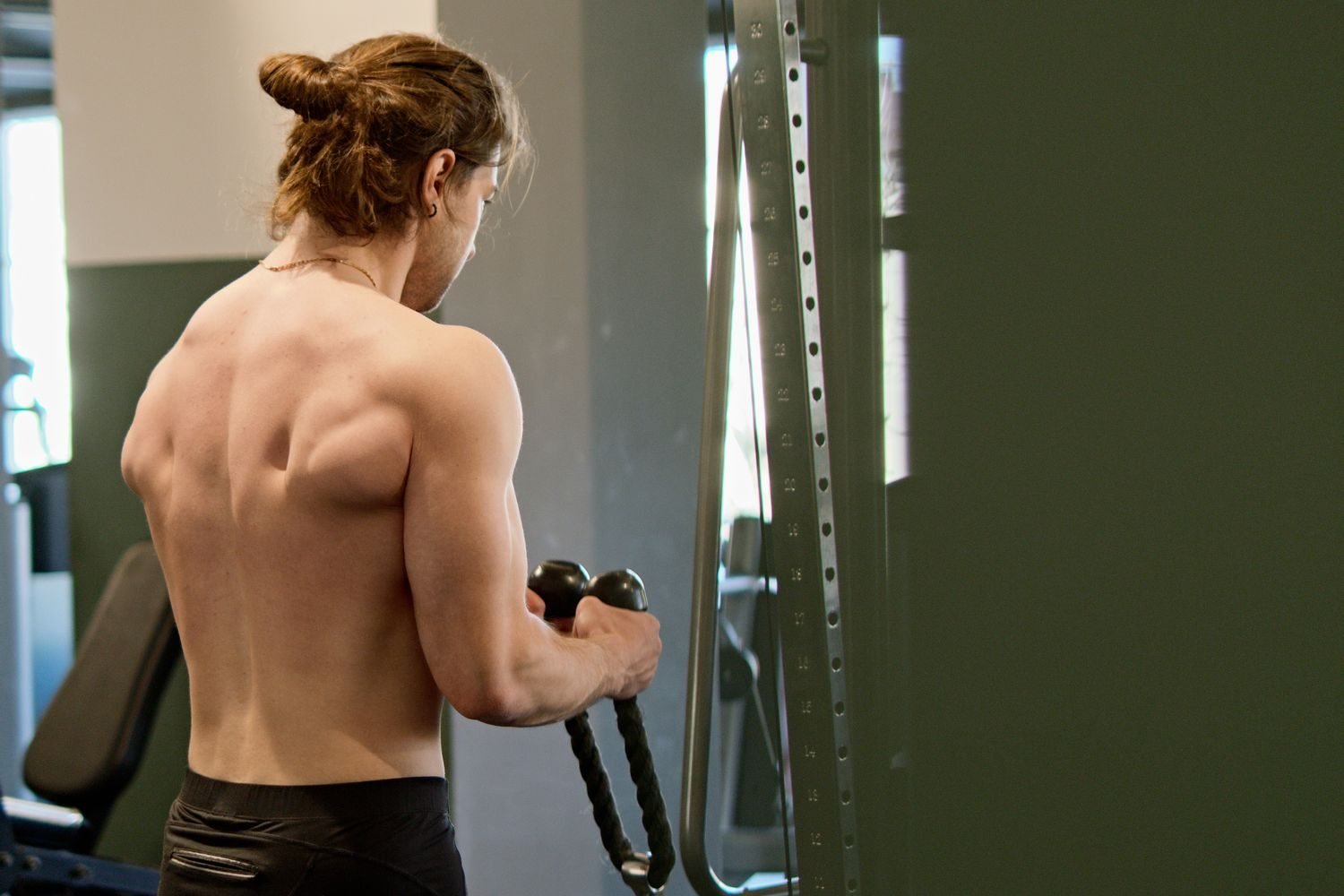
What Makes a Gym Back Workout Routine Actually Work?
Your back isn’t one muscle, it’s a group of them working in different directions. The lats pull your arms down and in, giving you that V-taper width. The rhomboids and mid-traps pull your shoulder blades together, building the thickness you see when someone flexes from the side. A routine that only does pulldowns and never rows will leave you flat through the middle back no matter how wide your lats get. If you’re newer to training back altogether, start with our back workout for beginners and come back here once pullups and rows feel controlled, not shaky.
This routine assumes you can already do a handful of unassisted pullups or lat pulldowns with decent form, you’ve rowed with a barbell or machine before, and you’re training at least twice a week consistently. If that’s you, we’re building on a base that already exists rather than starting from zero.
How Do You Build Back Width Versus Back Thickness?
Width comes from the lats, and the movement pattern that hits them hardest is a vertical pull, meaning your arms travel from overhead down to your sides. Pullups, lat pulldowns, and straight-arm pulldowns all fall into this category. Thickness comes from horizontal pulling, where you’re dragging weight into your torso instead of down past it. Barbell rows, seated cable rows, chest-supported rows, and single-arm dumbbell rows all build that dense, thick look through the mid-back.
The mistake we see most often in clients who’ve been training on their own is loading up on pulldown variations because they feel productive and skipping rows because they’re harder to load and easier to cheat on. A back that’s wide but flat through the middle usually comes from exactly that imbalance. The fix isn’t complicated. Every session should have at least one dedicated vertical pull and one dedicated horizontal pull, non-negotiable, before you add anything else.
If you want a deeper breakdown of row and pulldown variations specifically done on cables, our cable back workouts guide covers angles and grip changes that shift emphasis between width and thickness within the same machine.
Which Exercises Belong in an Intermediate Back Routine?
An intermediate routine has room for more exercise variety than a beginner one because your joints and connective tissue have adapted to the loading. Here’s how we categorize the movements we program most:
- Vertical pulls (width): weighted pullups, wide-grip lat pulldown, close-grip pulldown, straight-arm pulldown.
- Horizontal pulls (thickness): barbell bent-over row, pendlay row, chest-supported machine row, seated cable row, single-arm dumbbell row.
- Posterior chain crossover: deadlifts and rack pulls, which load the entire back including the erectors and traps.
- Isolation and finishers: straight-arm pulldown, face pulls, rear delt work, which clean up the details a compound lift can’t fully target.
Don’t try to cram every one of these into a single session. Pick two vertical pulls, two horizontal pulls, and one isolation movement, and you’ve got a complete session without turning it into a two-hour ordeal.
Free Weights or Machines, Which Should You Use for Back?
Both, and picking one over the other entirely is a mistake. Free weight rows and pullups demand more stabilization, recruit more supporting muscle, and let you progress load in a way that carries over to real strength. Machines let you isolate the back without your grip or lower back fatiguing first, which matters a lot once you’re pushing harder loads and need a few sets where the muscle, not your grip strength, is the limiting factor.
We usually structure sessions so the first one or two exercises are free weight and compound, when you’re freshest and can handle heavier loads with good technique. Machine and cable work comes later in the session, when fatigue has set in and you still want quality tension without needing perfect stabilization. This isn’t a rigid rule, but it’s worked well across most of the clients we’ve programmed for.
What Does a Full Sample Back Routine Look Like?
Here’s a complete intermediate back session we’d actually put in front of a client. It hits both width and thickness, mixes free weights with machines, and takes about 50 to 60 minutes including warm-up sets.

| Exercise | Sets | Reps | Rest |
|---|---|---|---|
| Weighted Pullups (or assisted, if needed) | 4 | 6-8 | 2-3 min |
| Barbell Bent-Over Row | 4 | 8-10 | 2 min |
| Chest-Supported Machine Row | 3 | 10-12 | 90 sec |
| Wide-Grip Lat Pulldown | 3 | 10-12 | 90 sec |
| Single-Arm Dumbbell Row | 3 | 10-12 per side | 60-90 sec |
| Straight-Arm Pulldown | 3 | 12-15 | 60 sec |
| Face Pulls | 3 | 15-20 | 45-60 sec |
Run this once a week if back is one of several sessions in your split, or split it into two shorter sessions across the week if you’re training back twice. Either way works as long as total weekly sets stay in a similar range. If you’d rather pair back day with an arm-focused finisher instead of running it standalone, our back and biceps workout shows how to combine the two without either muscle group getting shortchanged on volume.
How Should You Warm Up Before Training Back?
Skip the treadmill warm-up and go straight to movement-specific prep instead. Two or three light sets of a band pull-apart or scapular pullup wake up the shoulder blades and rotator cuff, which matters more for back training than a general cardio warm-up ever will. Follow that with one or two ramp-up sets on your first working exercise, gradually approaching your working weight rather than jumping straight into your heaviest set cold. This takes five minutes and meaningfully cuts down on shoulder irritation, which is the most common complaint we hear from people who train back hard without prepping it properly.
How Often Should You Train Back at the Gym?
Twice a week is the sweet spot for most intermediate lifters. That gives you enough frequency to keep progressing load and volume without either session becoming so long that quality drops in the second half. If your split only allows one back day, that’s still enough to make progress as long as you’re pushing your sets close to failure and adding weight or reps over time. What matters more than frequency is consistency. A single well-executed back session every week beats two rushed, sloppy ones.
Your traps and rear delts, part of what makes your upper back workouts effective, recover faster than your lats and lower lats, so you can often get away with hitting them a bit more frequently without extra soreness carrying into your next session.
Want This Routine Built Around Your Own Schedule and Equipment?
A written routine is a starting point, not a finished plan. Your equipment, your recovery, and how your body responds to volume all change what actually works for you over time. That’s exactly what we handle in our 1-on-1 personal training program, where Yash and the FitStrot coaching team build and adjust your back training week to week based on how you’re actually progressing, not a generic template.
What is a good gym back workout routine?
A good routine trains both vertical pulling movements like pullups and pulldowns for width, and horizontal pulling movements like rows for thickness, across roughly 5 to 7 exercises per session, with progressive overload tracked over time.
How do you build back width versus back thickness?
Width comes primarily from vertical pulls that work the lats, such as pullups and pulldowns. Thickness comes from horizontal pulls that target the rhomboids and mid-traps, such as barbell rows and cable rows. A complete routine needs both in every session, not just one or the other.
How many exercises should a back routine have?
Five to seven exercises is typical for an intermediate session, covering at least one vertical pull, one horizontal pull, and an isolation or finisher movement. Fewer than that and you’ll likely miss a movement pattern. More than that and quality usually drops as fatigue builds.
How often should you train back at the gym?
Twice a week works best for most intermediate lifters, though once a week is still enough to make progress if you’re training with good intensity and tracking your loads. Consistency matters more than squeezing in extra frequency.
Can you train back and biceps on the same day?
Yes, and it’s actually a common way to structure a split since biceps get pre-fatigued by pulling movements anyway. Pairing them lets you finish arm work while the muscles are already warmed up from your back session.