A strength workout is a training session built around low reps (roughly 1 to 6 per set), heavy loads relative to your one-rep max, and long rest periods of 3 to 5 minutes between sets. The goal is not muscle size. It’s force output: how much weight you can move. Strength workouts center on compound lifts like the squat, bench press, deadlift, and overhead press, since these movements let you load the most weight and recruit the most muscle mass at once. If your routine looks like 3 sets of 12 with 60 seconds of rest, you’re training for size, not raw strength. The two goals overlap, but they aren’t the same program.

What Makes a Strength Workout Different From a Hypertrophy Workout?
The biggest difference is intensity versus volume. A strength workout asks you to lift heavier weight for fewer reps, usually 80 to 95 percent of your one-rep max. A hypertrophy workout uses moderate loads, usually 65 to 75 percent of your one-rep max, for higher reps, typically 8 to 15 per set, with shorter rest.
Strength training also asks less of your muscles metabolically and more of your nervous system. When you lift near your max, your body has to recruit more motor units and fire them faster. That’s a skill, and it needs practice at low fatigue. Hypertrophy training thrives on accumulated fatigue and time under tension instead, which is why the two programs look so different on paper even though they share the same exercises.
We see a lot of clients come in doing 4 sets of 15 on everything and calling it a strength workout, because it feels hard and they’re sweating by the end. Feeling hard is not the same as getting strong. If you want your one-rep max on the squat or deadlift to actually go up, you have to train close to that number, not just chase a burn.
What Rep Ranges and Rest Periods Actually Build Strength?
Stick to 1 to 6 reps per set for your main lifts. Singles, doubles, triples, and sets of five all count as strength rep ranges. Lower reps (1 to 3) build the most raw force and neural efficiency. Slightly higher reps in that range (4 to 6) still build strength while giving you more practice volume on technique.
Rest is the part beginners cut short, and it costs them. A study by Schoenfeld and colleagues, published in the Journal of Strength and Conditioning Research (2016), compared resistance-trained men resting 1 minute versus 3 minutes between sets over an 8-week program. The group resting 3 minutes saw significantly greater strength gains on the squat and bench press than the group resting only 1 minute. Your muscles and nervous system need that time to recover ATP stores and fire at full capacity again. Cutting rest to 60 or 90 seconds on a heavy set just means your third and fourth sets are weaker than they should be.
Plan on 3 to 5 minutes of rest between working sets on the big lifts. That’s longer than most gym sessions allow if you’re sharing equipment, which is one more reason a lot of people end up training hypertrophy by accident without meaning to.
Which Lifts Belong in a Strength Workout?
Build your session around compound, multi-joint lifts that move the most weight:
- Squat trains quads, glutes, and core under a heavy load and is the clearest test of total-body leg strength.
- Bench press measures upper-body pushing strength, loading chest, shoulders, and triceps together.
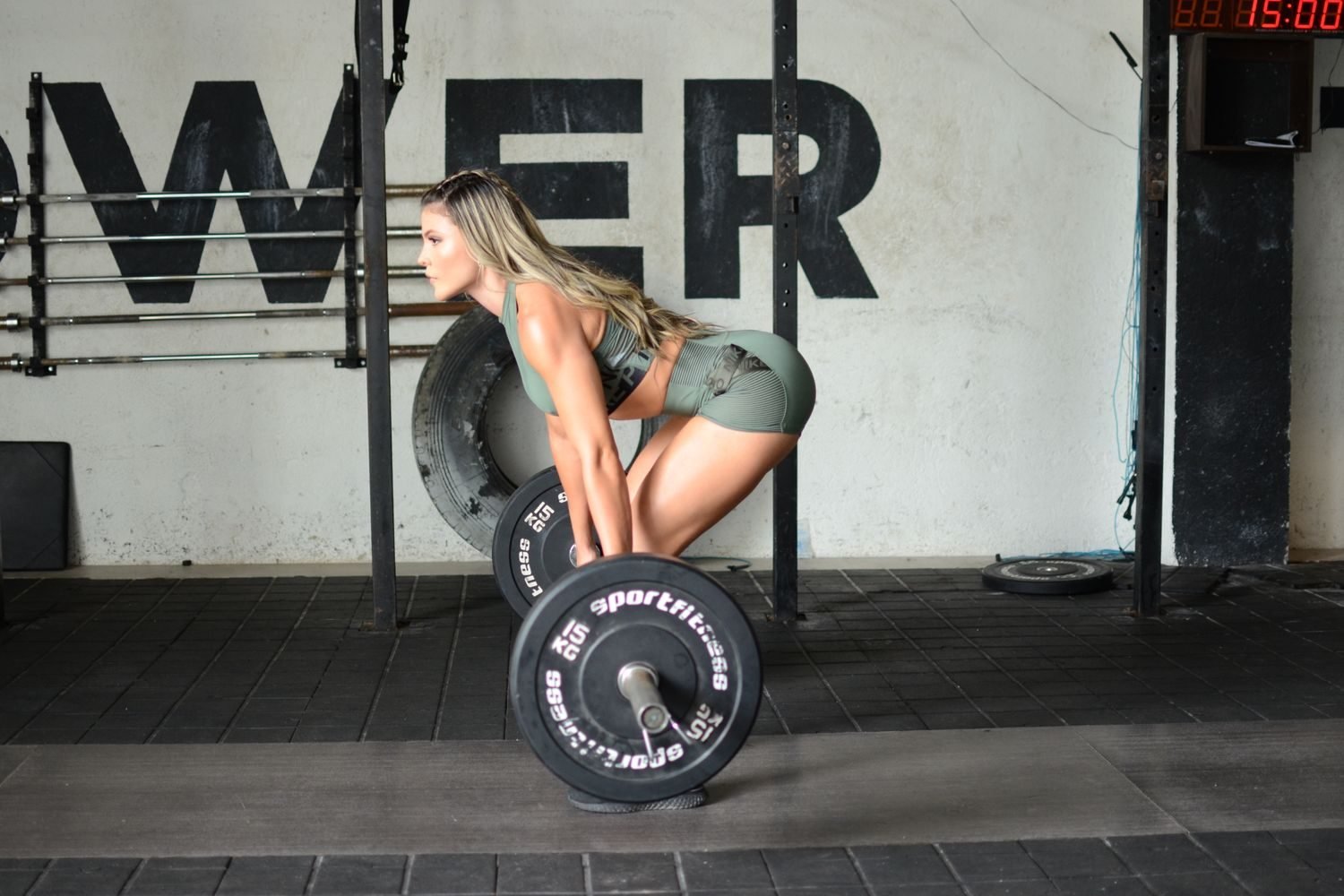
- Deadlift is arguably the purest strength lift there is, since it has no eccentric warm-up phase and tests raw pulling power from the floor. If you want to go deeper on programming this lift specifically, our deadlift workout guide breaks down setup, cues, and progression.
- Overhead press builds shoulder and core strength without the mechanical assistance a bench gives you, which is why most lifters find their overhead numbers lag behind their bench press.
Accessory work like rows, lunges, and carries has a place, but it stays secondary. The heavy compound lift always comes first, while your nervous system is fresh.
What Does a Sample Strength Workout Look Like?
Here’s a full-body strength session we’d program for someone with at least a few months of consistent training under their belt. Adjust the loads based on your current one-rep max estimates.
| Exercise | Sets x Reps | Load (% of 1RM) | Rest |
|---|---|---|---|
| Back Squat | 5 x 3 | 85% | 4 min |
| Bench Press | 5 x 3 | 85% | 4 min |
| Deadlift | 4 x 2 | 88% | 5 min |
| Overhead Press | 4 x 4 | 80% | 3 min |
| Weighted Pull-Up | 3 x 5 | Bodyweight + load | 3 min |
| Barbell Row | 3 x 6 | 75% | 2.5 min |
Notice there’s no drop set, no superset, no burnout finisher. Every set here should be graded on bar speed and form, not on how tired you feel afterward. If your squat is grinding and your bar path drifts forward on rep three, the weight is too heavy for that day, and you should drop it rather than push through.
This works well as one of two or three strength days a week, alternated with lighter technique or hypertrophy days. If you’re also looking to add size while you build strength, our double muscle workout plan covers how to structure a week that hits both goals without one canceling out the other.
How Do You Progress a Strength Workout Over Time?
Progressive overload for strength is simple on paper: add weight once you complete every set with good form. In practice, most people progress too fast and stall, or too slow and waste months. A reasonable approach is 2.5 to 5 kg added to your squat, bench, and press every one to two weeks when you’re newer to lifting, stretching out to monthly or slower once you’ve trained for a year or more.
Track your numbers. A strength workout without a logbook is just guessing. Write down the weight, sets, and reps every session, and check back every few weeks to confirm the trend is actually going up.
Eating enough matters here too. Strength gains slow down dramatically in a calorie deficit because your body has less raw material to support recovery and neural adaptation. If your main goal right now is getting stronger rather than leaning out, our bulking workout plan pairs well with this kind of low-rep, heavy-load training.
What Are the Benefits of a Strength Workout?
Strength training builds more than muscle. It improves bone density, which matters more as you pass your 30s. It trains your nervous system to recruit muscle fibers more efficiently, so everyday tasks like carrying groceries or climbing stairs get easier even without a change in body weight. It also protects your joints, since stronger muscles and tendons around a joint reduce the load that joint has to absorb on its own.
There’s a metabolic upside too, since heavy compound lifting burns real energy and keeps your resting rate elevated afterward as your body repairs. And unlike a lot of hypertrophy work, strength training gives you a number to chase: your squat, bench, deadlift, and press totals. That kind of measurable progress keeps people consistent longer than chasing a pump ever does.
Some soreness after a heavy session, especially on deadlift or squat day, is normal. If it’s sticking around longer than a few days or feels sharp rather than dull, read through our guide on muscle pain after workout to figure out whether it’s normal recovery or something you should back off from.
How Do You Do a Strength Workout Safely?
Warm up properly before your heavy sets. Start with the empty bar or light dumbbells and work up in stages, so your first heavy set isn’t the first heavy load your joints have felt that day.
Form comes before load, every time. A heavy squat with your knees caving in or a deadlift with a rounded lower back isn’t building strength, it’s building an injury. If you’re new to barbell training or coming back after time off, get a coach’s eyes on your technique before you add serious weight.
Frequently Asked Questions
What is a strength workout?
A strength workout is a training session using heavy loads (usually 80 to 95 percent of your one-rep max), low reps (1 to 6 per set), and long rest periods (3 to 5 minutes) between sets. It centers on compound lifts like the squat, bench press, deadlift, and overhead press to build maximal force output rather than muscle size.
How do you do a strength workout?
Pick two to four compound lifts per session, warm up in stages to your working weight, and perform 3 to 5 heavy sets of 1 to 6 reps with 3 to 5 minutes of rest between sets. Track your loads, add weight gradually as reps get easier, and prioritize clean form over chasing a heavier number.
What are the benefits of a strength workout?
Strength workouts build bone density, improve nervous system efficiency, protect joints through stronger surrounding muscle and tendon tissue, and boost daily functional capacity. They also give you a measurable number, your lift totals, to track over time, which tends to keep people more consistent than training for looks alone.
How many days a week should you do a strength workout?
Two to four strength-focused sessions a week works for most people. Beginners often do well with three full-body strength days, while more advanced lifters may split squat, bench, deadlift, and press across four days to allow fuller recovery between heavy sessions on the same lift.
Can beginners do a strength workout?
Yes, but beginners should spend the first few weeks learning technique with lighter loads before chasing heavy singles or triples. Form breaks down fast under load, and bad patterns get harder to fix the more weight you add. A coach can speed up this learning phase considerably.
If you’d rather not guess your way through rep ranges, loads, and rest periods on your own, FitStrot’s 1-on-1 personal training puts a coach on your programming and your form from day one. Founder Yash Pathak has spent 10 years building strength programs for people who want real numbers on the bar, not just a good sweat.