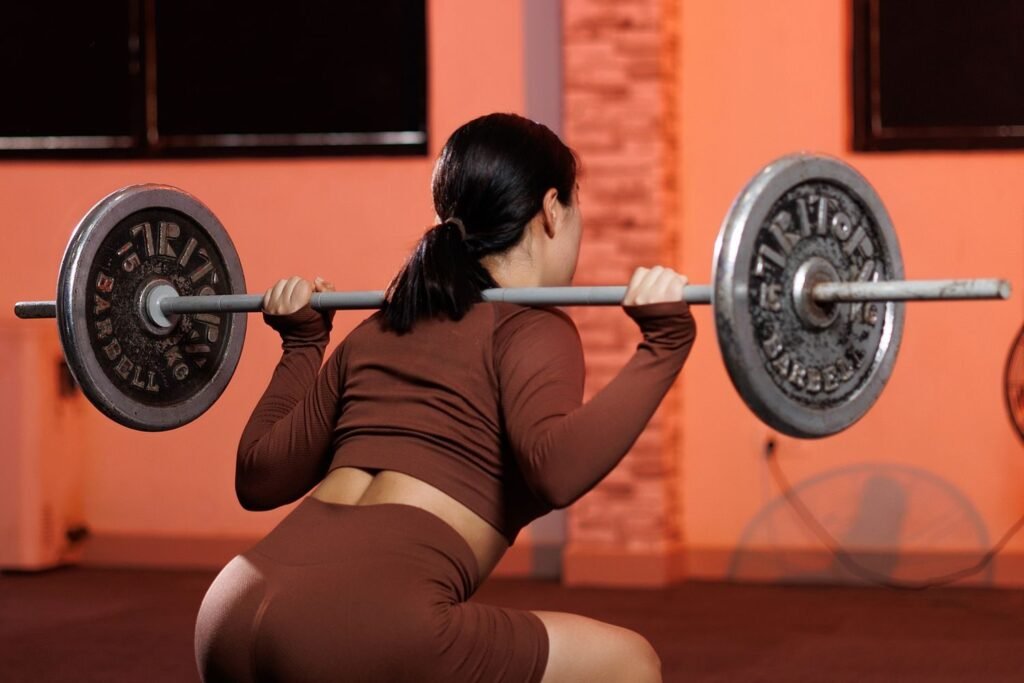
A quad workout is a training session built around exercises that load the quadriceps, the four muscles on the front of your thigh that straighten your knee and drive most of the power in squatting, running, and jumping. A good quad workout mixes compound lifts like squats and leg presses with isolation moves like leg extensions, hitting the muscle from a few angles so it grows and gets stronger without your knees taking a beating. We build these sessions for clients every week, and the ones who stick with a structured plan see real strength gains within a few training blocks.
What Muscles Do Quad Workouts Target?
The quadriceps femoris is actually four separate muscles working as one unit: the rectus femoris (front and center, also helps flex the hip), vastus lateralis (outer quad), vastus medialis (inner quad, the teardrop-shaped muscle above your knee), and vastus intermedius (buried underneath the rectus femoris, doing quiet work you can’t see or feel directly).
When people ask us for an inner quad workout, they usually mean they want more definition on the vastus medialis. When they ask about an outer quad workout, they’re chasing that sweep on the vastus lateralis. Here’s the truth: you can bias these muscles slightly with foot position and stance width, but you can’t isolate one head of the quad while switching the others off completely. Squats, lunges, and leg presses all hit the full quad group, just with different emphasis depending on how deep you go and where your feet sit.
Most of our programs also pair quad work with hamstring and glute training in the same session. A proper quad and hamstring workout keeps your knees stable because these muscle groups pull against each other, and neglecting one while overtraining the other is a fast way to end up with nagging knee or hip pain.
What Are the Best Quad Exercises?
Not every leg exercise trains the quads the same way. Here’s what we actually program, ranked by how much quad work you get per set:
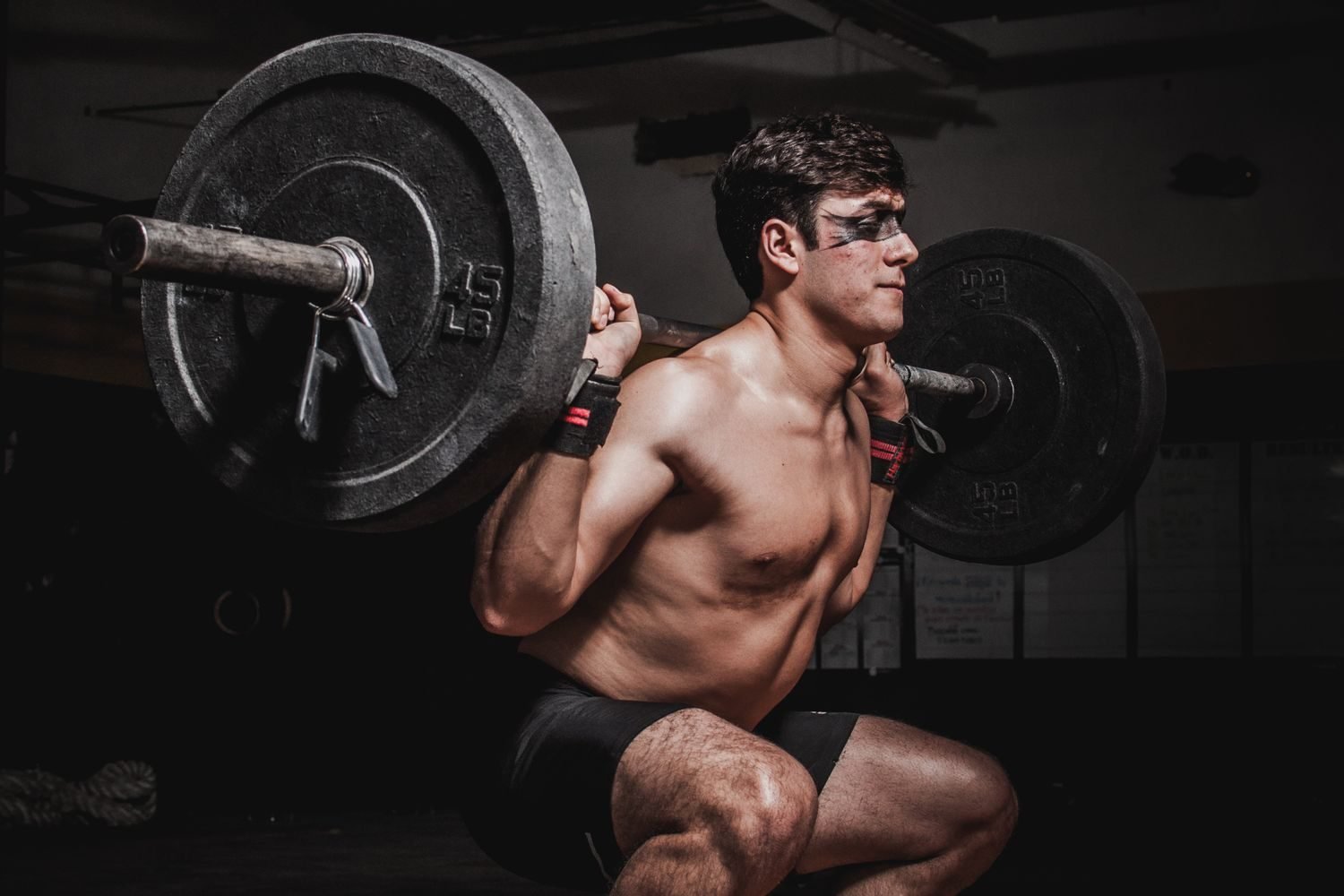
- Back squat – the benchmark for overall leg strength, loads quads, glutes, and core together.
- Front squat – shifts more load onto the quads specifically because the upright torso position demands more knee-dominant drive.
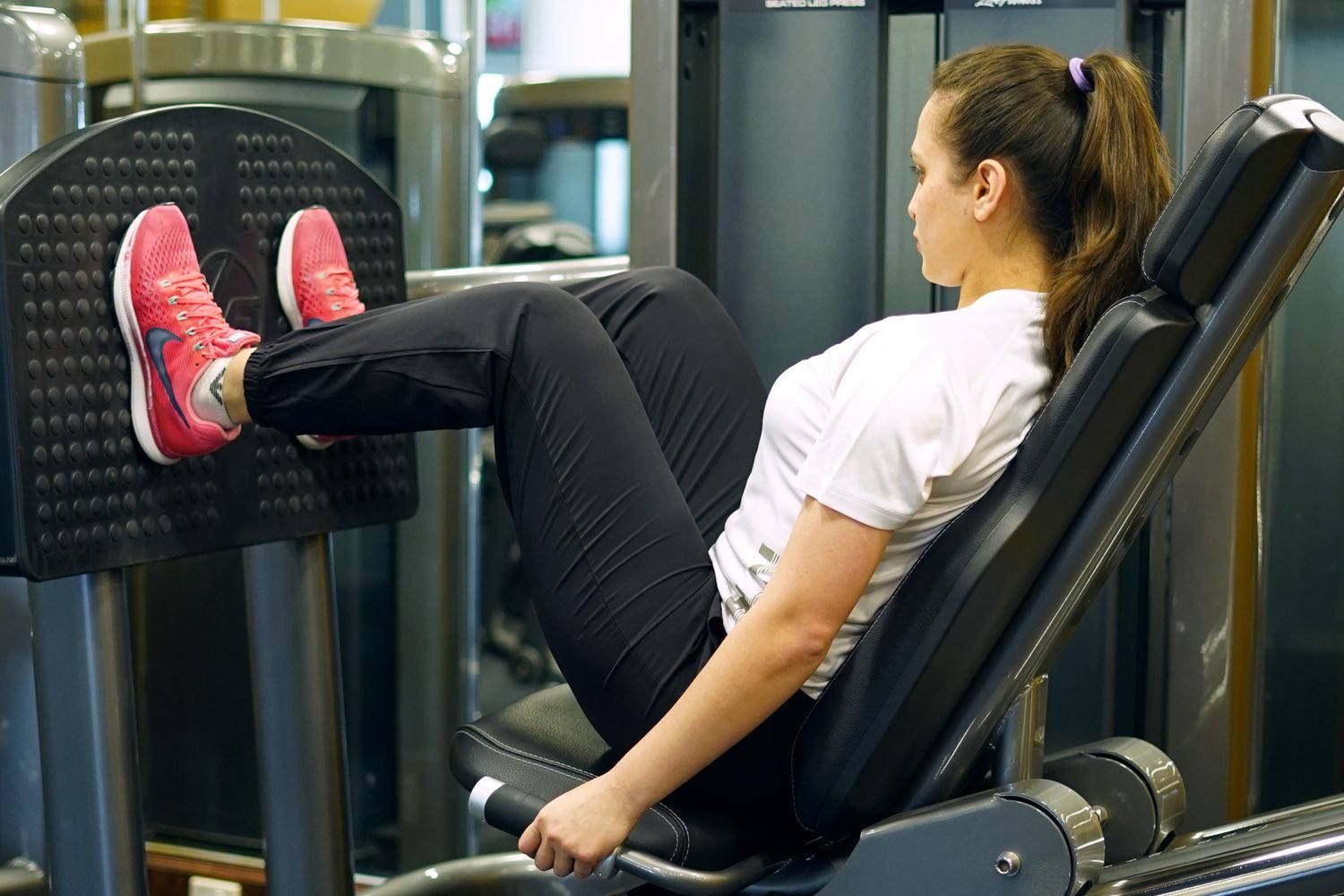
- Leg press – lets you push heavy without worrying about balance or spinal loading, great for beginners and for anyone nursing a lower back issue.
- Walking lunges – single-leg work that also challenges balance and hip stability, which a machine can’t replicate.
- Bulgarian split squat – brutal on the front leg’s quad, and it exposes strength imbalances between your left and right side fast.
- Leg extension – pure isolation, no hip involvement, useful for finishing off the quads when your legs are already tired from compound lifts.
- Step-ups – functional, knee-friendly when done at a moderate height, and easy to load progressively at home or in the gym.
If you want the full picture on how these fit alongside hamstring and glute training, our thigh workouts guide breaks down the whole upper leg, not just the front.
What Does a Complete Quad Leg Workout Look Like?
Here’s a sample quad leg workout we’d give an intermediate client training in a gym. It takes about 50 minutes including warm-up sets and covers compound and isolation work in one session.
| Exercise | Sets | Reps | Rest |
|---|---|---|---|
| Back squat | 4 | 6-8 | 2-3 min |
| Leg press | 3 | 10-12 | 90 sec |
| Walking lunges | 3 | 10 per leg | 90 sec |
| Bulgarian split squat | 3 | 8-10 per leg | 75 sec |
| Leg extension | 3 | 12-15 | 60 sec |
| Standing calf raise | 3 | 15-20 | 45 sec |
Swap the back squat for a goblet squat or front squat if your gym has limited rack access, and drop the load on everything by 10-15% in your first week back after a layoff. If you train in a commercial gym and want more variety across the whole session, our leg workouts at the gym article has additional combinations you can rotate in.
How Do You Do Quad Workouts at Home?
You don’t need a rack or a leg press machine to build real quad strength. Quad workouts at home rely on bodyweight volume, tempo changes, and single-leg variations to create enough tension without external load. Here’s what works:
- Bodyweight squats with a 3-second lowering phase – slowing the eccentric makes 20 reps feel like 40.
- Split squats – back foot elevated on a chair or step if you have one.
- Step-ups using a sturdy chair, box, or staircase.
- Wall sits – unglamorous but effective, especially for building tendon resilience around the knee.
- Single-leg glute bridges into a squat for a bit of quad and hamstring crossover in one move.
If you own a resistance band or a couple of dumbbells, loaded goblet squats and banded lateral walks add another layer of difficulty. We program home quad sessions for clients who travel often, and the biggest lever isn’t equipment, it’s controlling tempo and adding reps before you add load.
How Do You Train Inner and Outer Quads Separately?
Foot and stance position changes which part of the quad works hardest, even if the whole muscle group is always involved.
For more outer quad emphasis, use a slightly narrower stance with toes pointed forward. Squats, leg presses, and lunges done this way put more demand on the vastus lateralis. For more inner quad emphasis, widen your stance a little and turn your toes out 15 to 30 degrees, which is why sumo-style squats and wide-stance leg presses tend to build a fuller vastus medialis over time.
Neither of these tweaks isolates one head completely, and anyone promising true isolation is overselling it. What actually changes the shape of your quads over months isn’t one clever exercise variation, it’s consistent volume across a range of stances and rep ranges.
How Do You Combine Quad and Glute Training?
A quad glute workout makes sense because most compound leg exercises already hit both muscle groups, just with different emphasis depending on your squat depth and hip hinge angle. Deep squats and lunges lean more quad-dominant. Hip thrusts, Romanian deadlifts, and glute bridges lean more glute-dominant.
We usually build sessions with two or three quad-biased compound lifts, then finish with one or two glute-focused accessory moves like hip thrusts or cable kickbacks. This keeps the whole lower body balanced instead of building strong quads on top of weak glutes, which is a common cause of knee pain we see in clients who only ever squat and never hinge.
What Mistakes Do People Make With Quad Workouts?
A few mistakes show up constantly, in gyms and in home programs alike:
- Skipping the eccentric. Bouncing out of the bottom of a squat robs you of the part of the rep that actually builds the most tension.
- Never training single-leg. Bilateral lifts hide side-to-side imbalances that single-leg work exposes and fixes.
- Going too heavy, too soon on leg extensions. This is an isolation movement on a joint that doesn’t love shear force, so ego-lifting here is a fast way to irritate your knees.
- Ignoring the hamstrings entirely. Quad-dominant programs with no hamstring or glute work create imbalances that eventually show up as knee instability or lower back strain.
- Training quads the same way every week. Rotating rep ranges and exercise variations matters more than most people think.
We see clients make the fastest progress when they stop chasing soreness and start tracking actual load and reps over time. Being sore after every session feels productive, but it’s a poor substitute for progressive overload, and it usually means recovery isn’t keeping pace with training.
How Often Should You Train Quads?
Most people do well training quads directly two to three times a week, with at least one rest day between heavy sessions. Beginners can often handle three sessions if intensity stays moderate, while advanced lifters pushing heavier loads usually settle into two focused sessions with better recovery in between.
If you’re following a split routine, quad work fits naturally into a push pull legs workout, where the leg day covers quads, hamstrings, glutes, and calves in one session, repeated once or twice through the week depending on your split frequency. This structure works well because it gives the muscle group real recovery time without leaving too many days between stimulus.
Your recovery capacity, sleep, and stress levels all affect how many hard quad sessions you can actually handle in a week, which is one reason we don’t hand out the same program to every client. What looks right on paper doesn’t always hold up once real life gets involved.
Should You Get Coached Through Your Quad Workouts?
Programming your own leg training is doable, but most people either undertrain because they’re scared of soreness or overtrain because they don’t know when to back off. A coach adjusts your sets, reps, and exercise selection based on how your knees, hips, and recovery are actually responding week to week, not on a template written for someone else.
At FitStrot, our coaches build quad and full lower-body programs around your equipment, schedule, and injury history, then adjust as you go. If you want that kind of individual attention, take a look at our 1-on-1 personal training service and we’ll build a plan around your goals.
Frequently Asked Questions
What are quad workouts?
Quad workouts are training sessions built around exercises that target the quadriceps, the four muscles on the front of your thigh. They typically combine compound lifts like squats and leg presses with isolation moves like leg extensions to build strength and size across the whole muscle group.
How do you do quad workouts?
Start with a compound movement like a squat or leg press while you’re fresh, follow with unilateral work like lunges or split squats, then finish with an isolation move like leg extensions. Aim for 3-4 exercises, moderate to heavy loads, and controlled tempo, especially on the lowering phase.
What are the benefits of quad workouts?
Strong quads improve your squat, sprint speed, and jump power, and they protect your knees by supporting the joint through a full range of motion. They also improve everyday function like climbing stairs and standing up from a chair, which matters as much for long-term mobility as it does for the gym.
Can you do quad workouts every day?
No, we don’t recommend training quads every single day. The muscle needs 48 hours or more to recover from a hard session, and training through that fatigue usually leads to worse form, higher injury risk, and slower progress overall.
Do quad workouts help with knee pain?
Done correctly, yes. Strengthening the quads, especially the vastus medialis, improves knee tracking and stability. Done poorly, with bad form or too much weight too soon, quad training can aggravate existing knee issues, so form and load management matter more than intensity here.