Good nutrition in old age isn’t about one perfect meal — it’s a repeatable daily structure: 3 modest meals plus 2-3 small snacks spaced roughly every 3 hours, 20-30 grams of protein at each meal to fight muscle loss, calcium and vitamin D worked in by midday, and a short walk or strength session timed around your best-energy hours. Build a day around this rhythm instead of three big sit-down meals, and you’ll eat more consistently even when appetite is unreliable.
Below is a walk-through of what an actual day of eating can look like for someone over 65 — timing, portions, and how movement fits in — a template to adapt rather than rules to memorize. Individual needs vary with medications, chronic conditions, and mobility, so check any specific plan with a doctor or registered dietitian before making major changes.
Why does meal structure matter more as we age?
Appetite naturally declines with age — a pattern researchers call the “anorexia of aging,” driven by slower digestion, blunted taste and smell, and hormonal shifts that make people feel full faster. At the same time, protein needs actually increase even as calorie needs hold steady or drop. That mismatch is exactly why structure matters: three unplanned meals eaten only “when hungry” tend to under-deliver on both calories and protein for many older adults.
A predictable schedule of meals and snacks does double duty — it helps trigger hunger cues on a routine, and it spreads nutrient intake so no single meal carries too much weight. For the biology behind these changes, see our geriatric nutrition guide.
How many meals and snacks should an older adult eat per day?
A widely used approach among dietitians working with older adults is smaller, more frequent eating occasions rather than three large meals:
- 3 main meals — breakfast, lunch, and dinner, kept moderate rather than heavy
- 2-3 small snacks — mid-morning, mid-afternoon, and sometimes a light evening snack
- Roughly every 3 hours — spacing that keeps energy steadier and avoids the “too full to finish” problem that comes with large plates
This isn’t a rigid rule — some people do better with two larger meals and one substantial snack, and research on two-meal protein patterns in older adults shows this can work if each meal delivers enough protein. The point is consistency: eating at roughly the same times each day supports a steadier appetite than grazing without a pattern. If appetite loss is persistent and worsening, mention it to a doctor, since it can signal a medication side effect. Our nutrition for elderly guide has more troubleshooting tips for families noticing this at home.
What does a full day of eating actually look like?
Below is a sample structure — not a prescription — showing how meals, snacks, protein, and key nutrients distribute across a day. Portions should fit individual calorie needs, which for adults over 50 generally range from about 1,600 calories a day for a less active woman up to 2,800 calories for a very active man, per federal dietary guidance.
- 7:00-8:00 AM — Breakfast: Greek yogurt with berries and nuts, or eggs with whole-grain toast. Aim for 20-30 grams of protein here — many older adults badly under-eat protein at breakfast.
- 10:00 AM — Morning snack: A piece of fruit with almonds, or cottage cheese, plus a good window for a calcium-rich option like fortified milk.
- 12:30-1:00 PM — Lunch: A protein source (chicken, fish, beans, or tofu) with vegetables and a whole grain like brown rice. Lunch often has the most reliable appetite, so it can be the day’s largest meal.
- 3:30 PM — Afternoon snack: Hummus with vegetable sticks, or cheese with whole-grain crackers — protein and fiber to avoid an energy dip before dinner.
- 6:00-6:30 PM — Dinner: A lighter but still protein-forward meal — baked fish or lean meat, a cooked vegetable, and a small starch. Keeping dinner earlier and lighter aligns with research linking late-day calorie loading to a higher risk of frailty in older adults.
- 8:00 PM (optional) — Evening snack: A small serving of yogurt or warm milk if there’s a long gap before bed and hunger returns.
Two nutrients deserve a specific spot on this timeline: calcium and vitamin D. The National Institutes of Health recommends adults over 70 get about 1,200 mg of calcium and 800-2,000 IU of vitamin D daily — spreading calcium-rich foods like dairy, fortified plant milk, and leafy greens across two or three eating occasions absorbs better than one large dose. Our calcium and nutrition article covers food sources and timing in more detail.

How much protein does an older adult need, and when should it be eaten?
Muscle loss, or sarcopenia, accelerates with age partly because aging muscle becomes less responsive to protein — “anabolic resistance.” Older adults typically need more protein per kilogram of body weight than younger adults to trigger the same muscle-building signal. A position paper from the PROT-AGE study group recommends healthy older adults consume at least 1.0-1.2 grams of protein per kilogram of body weight daily, and 1.2-1.5 g/kg for those managing an acute or chronic illness — noticeably higher than the general adult RDA of 0.8 g/kg.
Just as important as the daily total is how protein is distributed. Research suggests roughly 20-30 grams of high-quality protein per meal is the threshold needed to meaningfully stimulate muscle protein synthesis in older adults. Many people eat a light breakfast, moderate lunch, and protein-heavy dinner, meaning two of three meals fall short. Spreading protein evenly — eggs or yogurt at breakfast, not just meat at dinner — works better than one large evening meal. For food sources and daily targets, see our protein and nutrition guide.
How should meals be timed around medications?
Many common medications interact with food — some need an empty stomach for proper absorption, others need food to prevent stomach upset, and some interact directly with specific nutrients, such as certain blood thinners and vitamin K-rich leafy greens, or thyroid medications and calcium supplements taken too close together. Because a well-structured eating day involves several eating occasions, it’s worth building a simple personal map of which medications go with which meal or snack.
This is one area where general guidance can’t substitute for a conversation with a doctor or pharmacist, since interactions are specific to the exact drugs and doses involved. A pharmacist can typically review a medication list in minutes and flag timing conflicts — worth asking at the next prescription refill.
How does exercise fit into the daily nutrition routine?
Nutrition and movement work together, not separately — protein without resistance exercise, or exercise without enough protein, both fall short for preserving muscle. The CDC recommends older adults get at least 150 minutes of moderate-intensity aerobic activity per week (about 30 minutes, 5 days a week), plus muscle-strengthening activity covering all major muscle groups on 2 or more non-consecutive days, along with balance work. Research combining resistance training with adequate protein shows the two together preserve muscle strength and mass far better than either alone — protein alone, without exercise, tends to do little for healthy older adults.
A practical daily structure:
- Time strength or resistance activity for when energy is naturally higher — often mid-morning after breakfast has digested
- Have a protein-containing snack within a couple of hours of a strength session, since muscle is most responsive to protein right after resistance activity
- Keep a short walk after lunch or dinner as a low-effort way to hit aerobic minutes without a dedicated workout block
None of this needs to be intense — brisk walking counts, and balance work can be as simple as standing on one foot while holding a counter. The goal is consistency across the week, paired with a diet that gives those muscles something to rebuild with.
What are common obstacles to this daily structure, and how can they be managed?
Even a well-designed routine runs into real-world friction:
- Low appetite at set mealtimes: Keep the portion small and nutrient-dense rather than skipping it — a few bites of something protein-rich beats nothing.
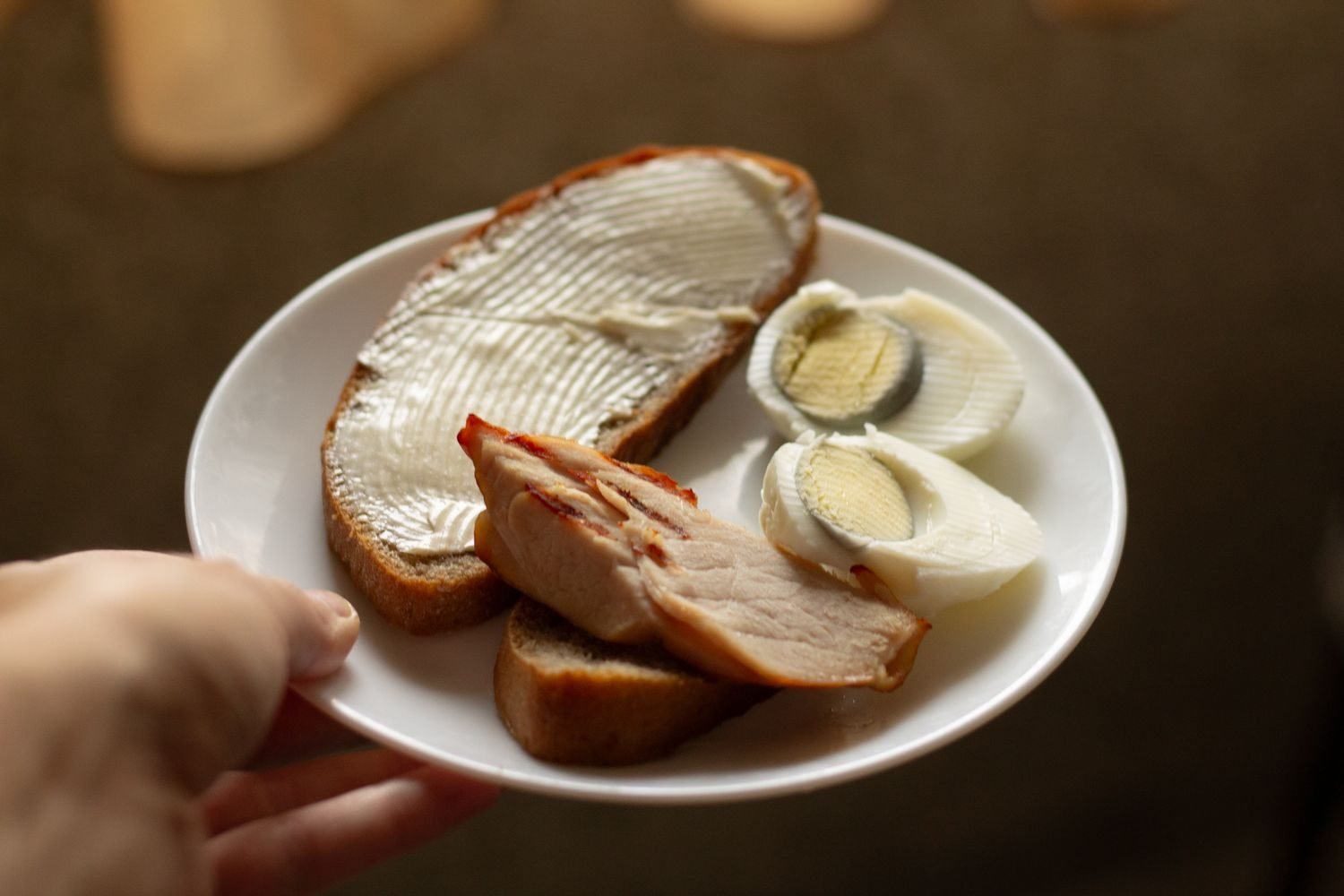
- Difficulty cooking multiple times a day: Batch-cooking proteins — baked chicken thighs, hard-boiled eggs, a pot of lentils — makes it easier to hit protein targets at each meal without cooking from scratch every time.
- Chewing or swallowing difficulty: Softer proteins like Greek yogurt, eggs, ground meats, beans, and protein smoothies fill the same role as tougher foods, and should be raised with a doctor if new or worsening.
- Eating alone: Appetite loss is often as much social as physical. Scheduling at least one meal a day with family or a community meal program can meaningfully improve how much is eaten.
These obstacles are worth naming honestly, since a routine that ignores them tends to fall apart within a week or two. Caregivers can find more day-to-day strategies in our nutrition for elderly article.
Frequently Asked Questions
Is it better to eat three big meals or several small ones in old age?
Smaller meals and snacks — roughly every 3 hours — tend to work better for older adults with reduced appetite, since large plates can feel overwhelming and go unfinished. Total daily nutrition matters more than the exact number of eating occasions, so adapt this to what’s sustainable for you.
What time should an older adult eat dinner?
Earlier and lighter is generally better. Research on meal timing in older adults links loading most calories late in the day with a higher risk of frailty, so dinner around 6-6:30 PM, smaller than lunch, is a reasonable default — adjust for schedule and medication needs.
How much protein should I eat at each meal, not just per day?
Aim for roughly 20-30 grams of high-quality protein per meal. This range appears to meaningfully stimulate muscle protein synthesis in older adults, and spreading protein evenly across meals works better than concentrating it mostly at dinner.
Can I take my supplements at the same time as my medications?
Not always — some supplements, particularly calcium, can interfere with absorption of certain medications if taken too close together. This is specific to individual drugs and doses, so confirm timing with a doctor or pharmacist rather than assuming.
Do I need to eat before or after exercising?
A light snack with protein and carbohydrate before exercise can help with energy, and a protein-containing snack within a couple of hours after resistance exercise supports muscle recovery. Light activity, like a short walk, generally doesn’t need special food timing.
Bringing it together
A well-structured day for an older adult isn’t about following a rigid meal plan to the letter — it’s about building a rhythm of regular, protein-forward eating occasions, timing movement and medications thoughtfully around them, and adjusting for real obstacles like appetite loss or cooking fatigue. Small, consistent choices — more protein at breakfast, a short walk after lunch, snacks spaced through the day — add up to more stable energy and stronger muscles than any single “perfect” meal ever could.
Because medications, chronic conditions, and calorie needs vary so much after 65, review any new eating routine with a doctor or dietitian, especially with existing health conditions or a recent, unexplained change in appetite or weight. For personalized guidance, consider booking an online nutritionist consultation.