The fastest way to gain weight the healthy way is to eat 250-500 calories above your daily maintenance need, spread across 5-6 meals, with roughly 1.6-2 grams of protein per kilogram of body weight every day. Follow that surplus consistently for 8-12 weeks and most people gain 0.5-2 kg (1-4 lb) a month, mostly as muscle rather than just fat around the middle. Below is a ready-to-use 7-day diet chart, built around Indian staples with vegetarian and non-vegetarian swaps, so you don’t have to plan every meal from scratch.
This isn’t a generic food list — it’s a day-by-day structure you can follow starting tomorrow morning. If you want the reasoning behind why certain foods work better than others, our guide to the best foods for weight gain covers that in more depth. This article is about turning that knowledge into a plate you can actually cook.
How much of a calorie surplus do you actually need?
You need more calories than you burn, but “more” doesn’t mean unlimited. A surplus of 250-500 calories a day is the range most nutrition guidance converges on for steady, mostly-lean weight gain — that works out to roughly 0.25-0.5 kg (0.5-1 lb) per week for most adults. Underweight individuals trying to reach a healthy BMI can lean toward the higher end of that range, sometimes touching 500-750 calories a day under supervision, since their bodies are more likely to use the extra energy for tissue repair and muscle rather than storing it all as fat.
Going far beyond that — say, an extra 1,000+ calories a day — speeds up the number on the scale but tends to add disproportionate fat, especially visceral fat around the abdomen, which isn’t the goal for most people trying to gain weight for health or aesthetic reasons. As a general baseline, adult men typically need 2,400-3,000 calories a day to maintain weight and adult women need 1,600-2,400 calories, depending on age and activity level — so the chart below is built as an addition on top of a normal three-meals-a-day pattern, not a replacement for it.
Protein is the second lever, and it matters as much as the calorie count. Aim for about 1.6-2.2 grams of protein per kilogram of body weight daily. Without enough protein, a chunk of your surplus calories gets stored as fat instead of building muscle. If you’re unsure how much protein you personally need, our protein and nutrition guide breaks down the math by body weight and activity level.
What does a 7-day weight gain diet chart look like?
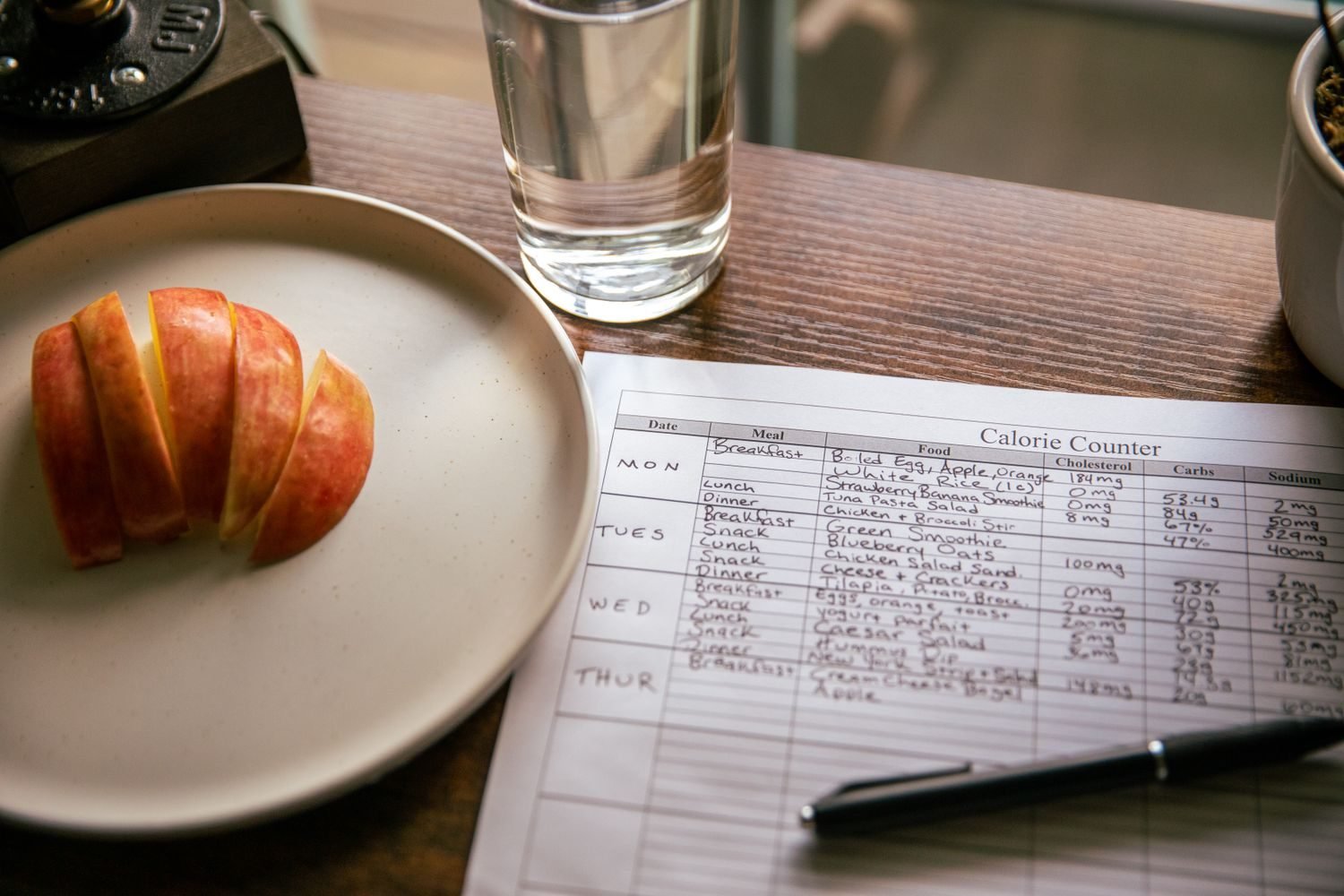
The chart below gives you six eating windows a day — three main meals and three snacks — so the calorie surplus is spread out instead of forced into two or three huge meals that are hard to finish. Portions are approximate; scale them up or down by 10-15% based on your body size and how hungry you are. Where a dish is naturally vegetarian, we’ve added a non-veg swap in brackets so both preferences are covered without duplicating the whole table.
| Day | Early Morning | Breakfast | Mid-Morning | Lunch | Evening Snack | Dinner |
|---|---|---|---|---|---|---|
| Monday | 1 glass milk + 5 soaked almonds | 2 vegetable paratha with curd + 1 banana | 1 boiled sweet potato | 2 cups rice, dal, paneer sabzi (or chicken curry), salad | Peanut chikki + roasted chana | 2 chapati, mixed vegetable curry, 1 bowl curd |
| Tuesday | 1 glass milk + 4 walnuts | Poha with peanuts + 1 boiled egg (or extra peanuts for veg) | 1 apple with 1 tbsp peanut butter | 2 cups rice, rajma, mixed veg, ghee on top | Cheese sandwich (whole wheat) | 3 chapati, egg curry (or chole), sautéed spinach |
| Wednesday | 1 glass milk + 6 soaked raisins | 2 besan cheela + 1 cup curd | Banana milkshake | 2 cups rice, moong dal, bhindi sabzi, papad | Roasted makhana with ghee | 2 chapati, paneer bhurji (or fish curry), salad |
| Thursday | 1 glass milk + 5 almonds | Vegetable upma with peanuts + 1 boiled egg (optional) | 1 bowl fruit chaat with peanuts | 2 cups rice, dal makhani, aloo gobi | Whole wheat toast with cheese | 3 chapati, chicken curry (or soya chunk curry), salad |
| Friday | 1 glass milk + 4 walnuts | 2 stuffed paratha (paneer/aloo) with curd | 1 mango or seasonal fruit | 2 cups rice, sambar, vegetable poriyal, curd | Peanut butter banana toast | 2 chapati, egg bhurji (or lauki chana dal), salad |
| Saturday | 1 glass milk + 6 soaked raisins | Idli-sambar (4 pieces) with coconut chutney | Roasted chana + jaggery | 2 cups rice, kadhi, mixed sabzi, ghee | Dry fruit and oats energy ball (2-3) | 3 chapati, mutton curry (or paneer tikka masala), salad |
| Sunday | 1 glass milk + 5 almonds | Vegetable daliya with ghee + 1 boiled egg (optional) | Seasonal fruit bowl with curd | 2 cups rice/biryani, raita, chicken or paneer curry | Milkshake with banana and dates | 2 chapati, dal, seasonal vegetable, salad |
Notice the pattern: milk, nuts, and a fruit start the day; every lunch and dinner pairs a grain with a protein source and a vegetable; and the snacks are calorie-dense but still whole foods — peanuts, dates, cheese, milkshakes — rather than fried packaged items. That’s what keeps this a nutrition-forward surplus rather than an empty-calorie one.
How should you adjust portions based on your body weight?
The chart above is calibrated for someone around 55-65 kg aiming for a moderate surplus. If you fall outside that range, adjust rather than following it blindly.
- Under 50 kg or clinically underweight: Add one extra snack (a second milkshake or a handful more nuts) and increase rice/chapati portions by roughly one-quarter at lunch and dinner.
- Above 70 kg but still wanting to gain lean mass: Keep portions largely as shown but prioritize the protein items — an extra egg, an additional palm-sized portion of paneer or chicken — rather than adding more rice or bread.
- Highly active or exercising regularly: You’ll likely need the higher end of the 250-500 calorie surplus, plus a post-workout snack such as a banana with milk or a peanut butter sandwich within an hour of training.
If you’re not sure where you currently stand, checking your BMI and what it means for your nutrition needs is a useful first step before you start layering on extra calories.
What should you eat more of, and what should you limit?
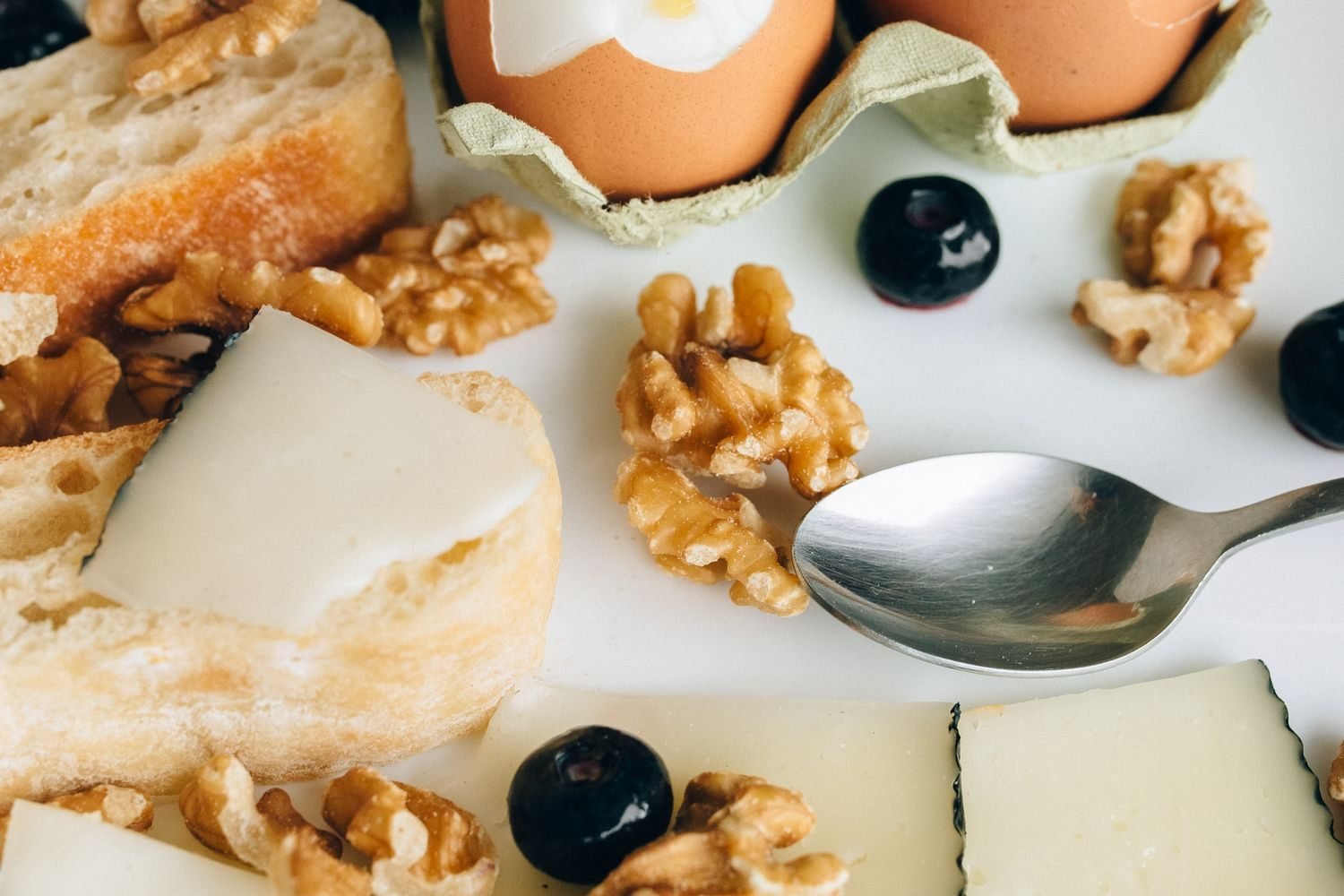
The chart leans on a specific set of ingredients for a reason — they pack more calories and nutrients into a smaller volume of food, which matters if you struggle to eat large quantities in one sitting.
Foods to lean on
- Whole milk and dairy — milk, curd, paneer, and cheese add both calories and complete protein without needing huge portion sizes.
- Nuts and seeds — almonds, walnuts, and peanuts are calorie-dense (roughly 550-650 kcal per 100g) and bring in healthy fats.
- Whole grains — rice, wheat, and oats form the base of most meals and are easier to eat in larger quantities than protein alone.
- Ghee and healthy oils — a spoon of ghee on dal or rice adds roughly 45 calories per teaspoon without needing extra plate space.
- Dried fruits — dates, raisins, and figs are useful in snacks and shakes when appetite is low.
Foods to limit
- Deep-fried snacks and bakery items — these add calories but little protein or micronutrients, and tend to blunt appetite for the next real meal.
- Sugary drinks as a primary calorie source — an occasional milkshake is fine, but sodas and syrups shouldn’t replace whole-food calories.
- Excess caffeine before meals — tea or coffee right before eating can suppress appetite further in people who already struggle to eat enough.
For a longer list of specific foods and why each one works, the weight gain foods list pairs well with this chart.
How do you know the diet chart is working?
Track two things weekly rather than daily: body weight (same time of day, same conditions) and how your clothes fit around the waist versus the arms and thighs. A gain of roughly 0.25-0.5 kg per week is the target range — faster than that for more than a few weeks usually means the surplus is too large and more of the gain is fat than muscle.
If you’ve been following a plan like this for 3-4 weeks with no movement on the scale, the most common reason is under-eating without realizing it — people frequently overestimate how much they’re actually consuming. Re-check portion sizes against the chart before increasing calories further. If you’re strength training alongside this diet, expect the scale to move a little slower but the muscle-to-fat ratio to be noticeably better than diet alone.
For a wider view of what a full weight-gain nutrition strategy looks like — training, sleep, and medical considerations included — see our complete guide to nutrition for weight gain. And if you’re working in the opposite direction for someone else in your household, the weight loss diet chart uses the same day-by-day format.

What are common mistakes people make on a weight gain diet?
Three mistakes show up repeatedly. First, relying on junk food for the surplus — it’s easy to hit a calorie target with chips and sweets, but you’ll gain fat disproportionately and miss out on the protein and micronutrients your body needs to build muscle and maintain energy. Second, skipping meals and trying to “catch up” later, which usually backfires because it’s harder to eat a very large meal than several moderate ones. Third, ignoring protein while focusing only on total calories — a rice-and-ghee-heavy diet without enough dal, dairy, egg, or meat will add weight, but a larger share of it ends up as fat rather than lean tissue.
A fourth, subtler mistake is treating the diet chart as permanent and rigid. Rotate the vegetables, dals, and fruits within each category so you don’t get bored and abandon the plan by week three — the structure matters more than the exact dish on any given day.
Frequently Asked Questions
How many extra calories should I eat daily to gain weight safely?
Most guidance points to a surplus of 250-500 calories above your maintenance intake per day. This supports a gain of about 0.25-0.5 kg a week, mostly as lean mass rather than fat, especially when paired with adequate protein and some resistance exercise.
Can I follow this diet chart if I’m vegetarian?
Yes. Every non-vegetarian item in the chart has a vegetarian alternative listed in brackets — paneer, dal, soya chunks, and eggs (if you eat eggs) can substitute for chicken, fish, or mutton without changing the overall calorie or protein structure of the day.
How long before I see visible weight gain results?
Most people notice a change on the scale within 3-4 weeks of consistent surplus eating, and visible changes in the face and limbs typically show up around 6-8 weeks. Consistency matters more than the size of the surplus — a steady 300-calorie surplus beats an inconsistent 800-calorie one.
Should I eat more rice or more protein to gain weight faster?
Both matter, but protein should not be sacrificed for extra carbs. If you need to add calories quickly, add a spoon of ghee, a handful of nuts, or an extra glass of milk rather than doubling rice portions alone — this keeps the protein-to-calorie ratio in a healthier range.
Is it okay to skip the early morning snack in the chart?
It’s better not to, especially if you struggle to eat large meals. The early morning milk-and-nuts snack adds calories without competing with your appetite at breakfast, lunch, or dinner, which matters most for people who feel full quickly.
Do I need to exercise while following this diet?
It’s not mandatory, but resistance training 3-4 times a week significantly improves how much of your surplus becomes muscle instead of fat. Without any exercise, a larger share of the extra calories tends to be stored as fat, particularly around the midsection.
Every body responds differently to a surplus, and factors like thyroid function, digestion, and activity level can change how much you personally need. If you’d like this chart adjusted to your exact calorie target, medical history, or food preferences, an online nutritionist consultation can help you build a plan that’s tailored rather than generic.