Male nutrition isn’t just smaller portions of “regular” nutrition advice with a different RDA chart attached. Men carry a distinct physiology — higher baseline testosterone, a prostate gland that changes with age, and a cardiovascular risk profile that diverges from women’s by a decade or more. If you want a food strategy that actually maps onto what’s happening inside a male body over time, three areas matter most: the nutrients tied to healthy testosterone production (not “boosting” it, but not undermining it either), the foods linked to prostate health, and the dietary pattern that keeps heart disease — the single leading cause of death in American men — at bay for as long as possible.
None of this requires supplements marketed as “testosterone boosters.” Correcting an actual nutrient deficiency can meaningfully help; piling more of a nutrient onto an already-adequate diet generally does very little. Here’s what the evidence supports across the three physiological systems that make male nutrition its own category.
Does diet actually affect testosterone levels?
Only at the margins — and mostly by fixing a shortfall, not by “boosting” an already-normal level. The nutrient with the best clinical support is zinc. Zinc deficiency is closely linked to lower testosterone, and in men who started out deficient, correcting their zinc status raised testosterone significantly. The catch: if you’re not deficient, taking more zinc doesn’t reliably push levels higher. The Recommended Dietary Allowance for adult men is 11 mg per day, roughly what you’d get from a 3-ounce serving of beef chuck roast, six medium oysters, or a cup of chickpeas combined with fortified cereal (source: NIH Office of Dietary Supplements).
Vitamin D is a more complicated story. Observational studies show that men with higher vitamin D levels tend to have higher testosterone. But when researchers gave men vitamin D supplements in randomized trials, most failed to find a significant effect on testosterone — mechanistically, vitamin D plays real roles in testicular and prostate tissue, but that hasn’t translated into a supplementation effect in controlled studies. Correcting a genuine deficiency is worth doing for bone and immune health; don’t expect it to move your hormone panel on its own.
Healthy fats matter for a more structural reason — testosterone is synthesized from cholesterol, and very low-fat diets have been associated with lower testosterone in some studies. That doesn’t mean loading up on saturated fat; it means not swinging to near-zero dietary fat, especially given what low-fat, high-refined-carb diets tend to do to cardiovascular markers (more on that below). A reasonable target is getting fat from olive oil, nuts, seeds, avocado, and fatty fish. For specific fat sources and gram targets, see our guide on daily nutrition requirements for men.
The bottom line: no food or supplement combination reliably raises testosterone in a man whose levels are already normal. If you suspect low testosterone — fatigue, low libido, loss of muscle mass, mood changes — that’s a conversation for bloodwork with a physician, not a grocery list.

What foods support prostate health as men age?
The prostate is a gland unique to male anatomy, and it changes for nearly every man as he ages — benign prostatic hyperplasia (enlarged prostate) affects a large share of men by their 60s, and prostate cancer is the second most common cancer in men. Nutrition can’t eliminate that risk, but a handful of dietary patterns show up consistently in the research.
Lycopene, the red pigment in tomatoes and watermelon, is the most-studied compound here. The evidence is genuinely mixed — some large cohort studies found no association between blood lycopene levels and prostate cancer risk, while others, including analyses using National Health and Nutrition Examination Survey (NHANES) data, found low lycopene intake correlated with higher risk. In men with existing benign prostatic hyperplasia, one clinical trial found that 15 mg of lycopene daily for six months slowed disease progression and eased symptoms. The defensible takeaway: eating tomato-based foods regularly (cooking releases more bioavailable lycopene than raw) is a reasonable, low-risk habit, not a guaranteed shield.
The stronger, more consistent signal is around what to reduce. Diets heavy in processed meat and, to a lesser degree, red meat have been associated with higher prostate cancer risk across multiple large studies — consistent with broader cancer-prevention guidance from organizations like the American Institute for Cancer Research. Swapping some red meat for fish, poultry, legumes, or the plant proteins covered in our bodybuilding nutrition guide supports the same muscle-building goals while nudging prostate risk in a better direction.
Other prostate-supportive habits with reasonable evidence behind them:
- Cruciferous vegetables (broccoli, cauliflower, Brussels sprouts) — associated with lower prostate cancer risk in observational research, likely through sulforaphane and related compounds.
- Green tea and coffee — some population studies link regular intake to modestly lower risk, though the evidence isn’t strong enough to call either protective on its own.
- Maintaining a healthy weight — obesity is linked to more aggressive prostate cancer at diagnosis, making weight management one of the more actionable levers available.
Men over 40, especially with a family history of prostate cancer, should treat this as a “stack the odds” strategy alongside regular screening — not a replacement for it.
Why does heart disease hit men differently, and earlier?
Heart disease remains the leading cause of death for American men, and the numbers show a real sex gap: in 2024, men had an age-adjusted death rate of 844.8 per 100,000, compared to 613.5 per 100,000 for women (CDC, 2024 mortality data). The gap opens early — research shows sex differences in cardiovascular disease risk are measurable by age 35 and persist through midlife, well before most men are thinking about heart health at all.
Part of this is biological — men tend to accumulate visceral fat around the abdomen more than women do, and abdominal fat is more metabolically active and more strongly linked to insulin resistance and cardiovascular risk than fat stored elsewhere. Part of it is behavioral: smoking and hypertension are more common in men, and dietary pattern research shows men are more likely than women to follow a “Western” pattern — heavier in red and processed meat, refined grains, and fried food — and less likely to adjust eating habits for health.
The nutritional response isn’t exotic. It’s the same handful of changes in every major cardiovascular guideline, but they carry more urgency for men given the earlier age of onset:
- Prioritize unsaturated fats over saturated fats. Replacing butter, fatty cuts of red meat, and fried foods with olive oil, nuts, and fatty fish is one of the most consistently supported dietary changes for lowering LDL cholesterol.
- Increase fiber intake. Soluble fiber from oats, beans, and vegetables helps lower LDL cholesterol and supports healthy blood pressure.
- Watch sodium. Given that hypertension is more prevalent in men, moderating processed and restaurant food — the primary sodium sources in most diets — matters more than avoiding the salt shaker at home.
- Manage abdominal fat through overall calorie balance and activity, since visceral fat specifically tracks with cardiovascular risk markers in men.
If you’re active or training regularly, pairing cardiovascular-conscious eating with the right fueling strategy also protects performance — see our sports nutrition guide for how to balance heart-healthy fats with the carbohydrate and protein needs of training.
How should male nutrition priorities change by decade?
The physiology shifts enough by life stage that it’s worth thinking in decades rather than applying one static plan forever.
20s and 30s: Testosterone is typically at its lifetime peak, so this is less about “supporting” hormones and more about building habits — adequate protein, consistent zinc and vitamin D intake, and an eating pattern not dominated by processed and red meat, since early dietary patterns predict cardiovascular risk trajectory later.
40s and 50s: Testosterone begins a gradual decline (roughly 1% per year on average from the 30s onward), cardiovascular risk accelerates, and prostate changes typically begin. This is the decade where lycopene-rich foods, fiber, reduced processed meat, and sodium awareness earn the most attention — plus baseline bloodwork on vitamin D, zinc, lipids, and PSA with a doctor.
60s and beyond: Nutrient absorption can decline, appetite often drops, and both zinc and vitamin D deficiencies become more common in older adults, per NIH data. Maintaining protein intake to counter age-related muscle loss (sarcopenia) matters as much as the heart- and prostate-focused choices from earlier decades. Our daily nutrition requirements for men article has the full RDA breakdown by life stage, and our vitamin nutrition guide covers absorption and deficiency signs.

What does a realistic male nutrition plate look like?
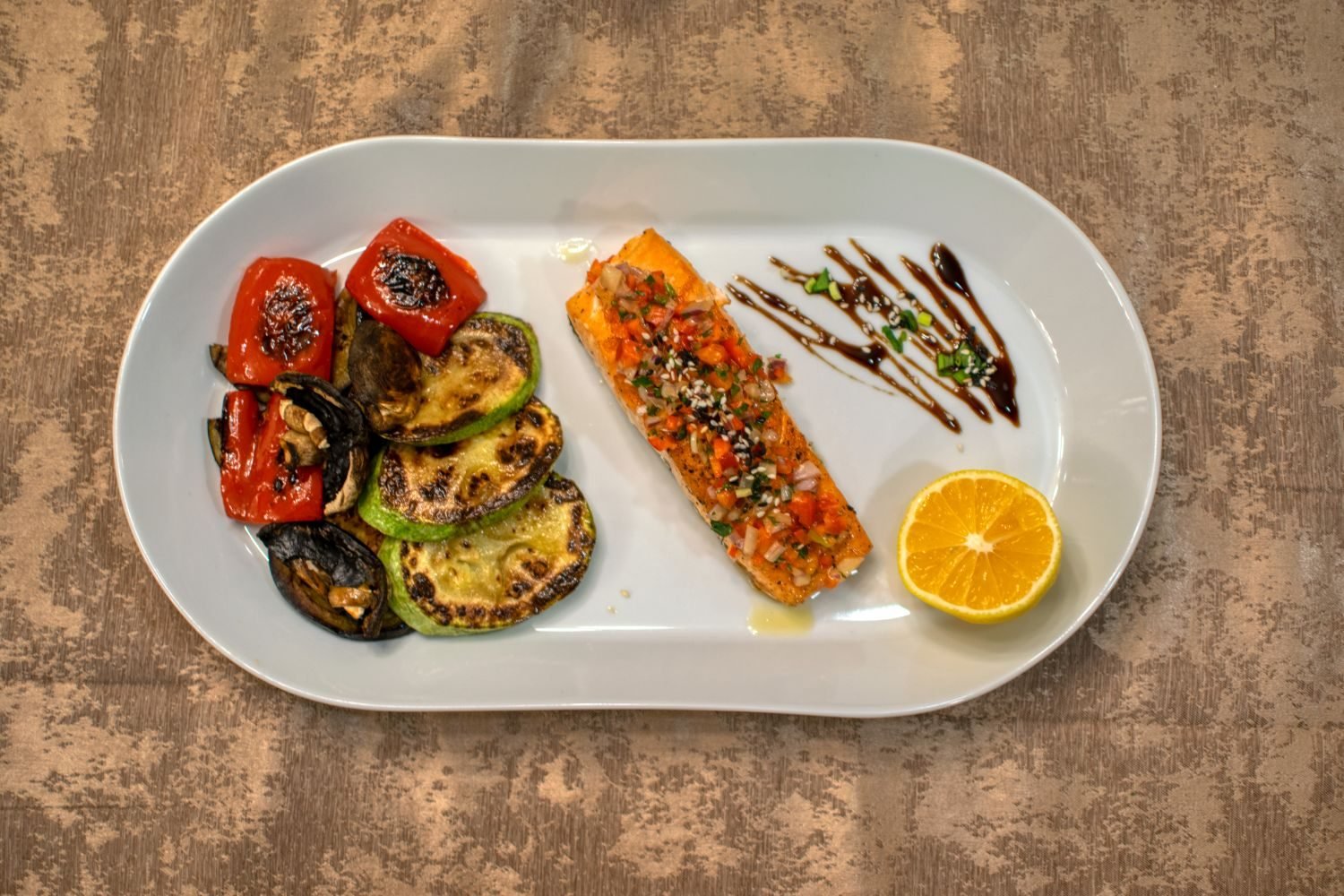
Pulling the three systems together, a practical day-to-day approach looks less like a supplement stack and more like a repeatable plate:
- A palm-sized portion of protein most meals, rotating between fish, poultry, legumes, and moderate amounts of lean red meat rather than daily processed meat.
- A serving of tomato-based food (marinara, roasted tomatoes, tomato soup) several times a week for lycopene.
- Healthy fat at most meals — olive oil, nuts, seeds, or avocado — rather than an ultra-low-fat approach.
- At least one serving of cruciferous vegetables most days.
- Fiber-rich carbohydrates (oats, beans, whole grains) in place of refined grains where practical.
- Zinc sources (shellfish, beef, pumpkin seeds, legumes) covered through food first; our zinc nutrition guide has a full food-source list if you want to check your intake without supplementing blindly.
None of this is about chasing a single “male superfood.” It’s about matching the pattern to what’s biologically true for men — a hormone system that responds to deficiency correction more than excess, a prostate that benefits from specific protective foods, and a cardiovascular system that starts accumulating risk earlier than most men expect.
FAQ: Male nutrition questions men actually ask
Can eating more zinc raise my testosterone above normal?
No. Zinc supplementation has been shown to raise testosterone in men who were zinc-deficient to begin with, but there’s no strong evidence it pushes levels higher in men who already have adequate zinc status. Focus on meeting the 11 mg RDA through food rather than exceeding it.
Should I take a vitamin D supplement for testosterone?
Vitamin D supplementation is worth considering if bloodwork shows you’re deficient, for bone and immune health reasons — but most randomized trials have not found that it raises testosterone, even though low vitamin D is associated with lower testosterone in observational studies. Treat it as general health support, not a hormone strategy.
Does eating red meat cause prostate cancer?
Research shows an association between high processed and red meat intake and elevated prostate cancer risk, not direct causation. The more consistent finding is around processed meat specifically. Moderating both, rather than eliminating red meat entirely, is the evidence-supported approach.
At what age should men start focusing on heart-healthy eating?
Now, regardless of age. Research shows cardiovascular risk differences between men and women are measurable by age 35, and dietary patterns established in your 20s and 30s predict risk decades later. Waiting until your 40s or 50s means working against habits that are already established.
Is lycopene supplementation better than eating tomatoes?
Whole food sources are generally the better starting point. Cooked tomato products (sauce, paste, soup) actually provide more bioavailable lycopene than raw tomatoes because cooking breaks down plant cell walls and releases the compound. Supplement trials exist for conditions like BPH, but for general prevention, food-based intake remains the better-supported, lower-risk choice.
Do I need different nutrition advice than my female partner?
In several specific respects, yes. Men have a higher zinc RDA (11 mg vs. 8 mg), a prostate gland that requires its own dietary considerations, and a cardiovascular risk profile that accelerates roughly a decade earlier than women’s. General healthy-eating principles overlap heavily, but these male-specific factors deserve their own attention.
If you want a nutrition plan tailored to your specific bloodwork, training load, and life stage rather than general guidance, an online nutritionist consultation can turn these principles into a plan built around your actual numbers.