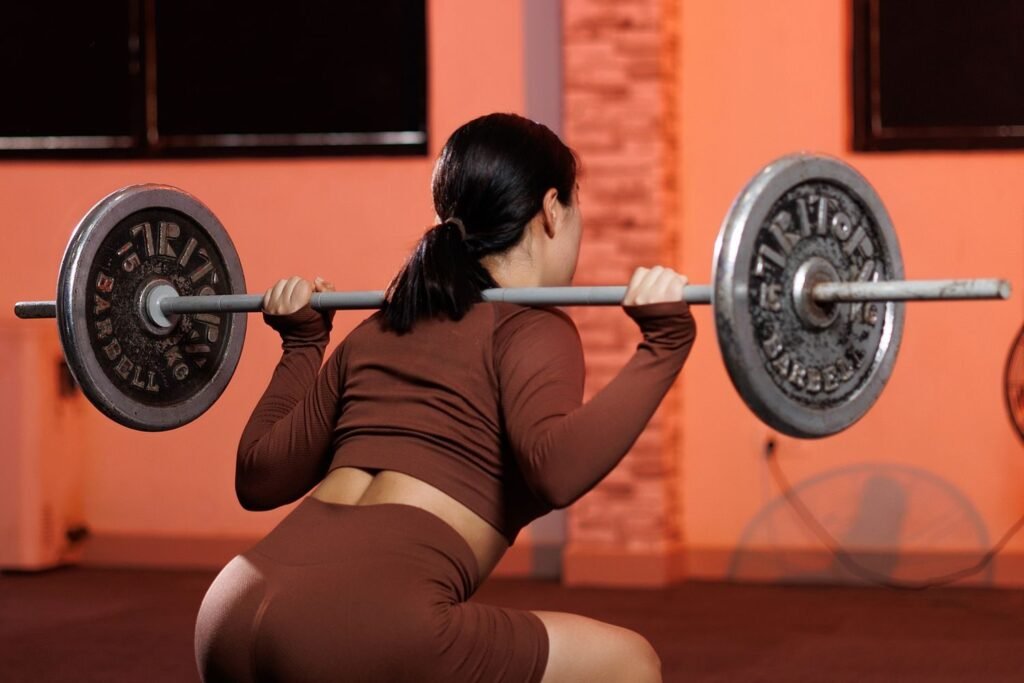
A gym workout is a structured training session built around four parts: a warm-up that raises your body temperature and preps your joints, one or two compound lifts that work multiple muscle groups at once, accessory exercises that target specific muscles the compound lifts don’t fully hit, and a cool-down that brings your heart rate back down. A well-built session usually runs 45 to 75 minutes and follows the same basic order every time, even if the exercises change day to day.
People often overcomplicate this. They watch ten different YouTube videos and end up with a session that has no real structure, just a random pile of exercises. We’re going to break down what an actual, well-organized gym workout looks like, piece by piece, so you can walk into any gym and build one yourself.
What Does a Typical Gym Workout Session Actually Look Like?
Every solid gym workout follows the same four-part skeleton, regardless of your goal or experience level.
- Warm-up (5 to 10 minutes): Light cardio plus dynamic movement to get blood into the muscles you’re about to train.
- Main lift (15 to 25 minutes): One or two compound movements like a squat, deadlift, bench press, or row done at your heaviest working weight for the day.
- Accessory work (20 to 30 minutes): Smaller, targeted exercises that support the main lift or fill in gaps, think lunges, rows, curls, or core work.
- Cool-down (5 to 10 minutes): Slower movement and stretching to bring your heart rate down and start recovery.
If you’re brand new to gyms and want a week-by-week starting point rather than a single session breakdown, our beginner gym workout guide is a better place to start. And if you want to see how individual sessions like this one fit into a full week, check out our gym workout plan article.
How Do You Warm Up Before a Gym Workout?
Skip the warm-up and you’re training with cold muscles and stiff joints, which is how people tweak a lower back or strain a shoulder on lift number two. A good warm-up isn’t complicated. Five minutes on a bike or rower to raise your heart rate, followed by dynamic stretches like leg swings, arm circles, and bodyweight squats. If you’re about to squat or deadlift heavy, add two or three light warm-up sets with just the bar before you load real weight on it.
Don’t confuse this with static stretching, where you hold a stretch for 30 seconds. Save that for after your workout. Static stretching before lifting can temporarily reduce strength output, which is the opposite of what you want walking into a heavy set.
What Should the Main Lifts in a Gym Workout Include?
Your main lift is the exercise you build the session around. It should be a compound movement, something that recruits multiple muscle groups and joints at the same time. Squats, deadlifts, bench presses, overhead presses, and rows are the classic choices because they let you move the most weight and give you the most training effect per minute spent in the gym.
This is the part of the session where your energy and focus should be highest, which is why it comes right after the warm-up and not at the end when you’re already tired. Most people do their main lift in the 3 to 6 rep range for strength or 8 to 12 for a mix of strength and muscle size, across 3 to 5 working sets.
How Do You Structure Accessory Work After the Main Lift?
Accessory exercises come after your main lift and use lighter weight for higher reps, usually 10 to 15 per set. Their job is to hit muscles the compound lift didn’t fully train, fix weak points, and add training volume without wrecking your recovery. If your main lift was a bench press, your accessories might include incline dumbbell presses, triceps pushdowns, and rear delt flyes. If your main lift was a squat, you’d follow it with lunges, leg curls, and calf raises.
We see a lot of people flip this order by accident, doing five accessory exercises before their main lift and showing up to the heavy compound movement already fatigued. That’s backward. Fatigue accumulates fast on isolation work, and it will quietly tank your squat or deadlift numbers if it comes first.
Sample Gym Workout Session
Here’s what a complete, balanced session looks like in practice. This is a general upper and lower body session, the kind you’d do on any given day at the gym, not a full weekly split.
| Segment | Exercise | Sets x Reps | Rest |
|---|---|---|---|
| Warm-up | Bike or brisk walk + dynamic stretches | 5-8 minutes | – |
| Main lift | Barbell squat | 4 x 6 | 2-3 minutes |
| Main lift | Flat bench press | 4 x 8 | 2 minutes |
| Accessory | Dumbbell walking lunges | 3 x 12 per leg | 60-90 seconds |
| Accessory | Seated cable row | 3 x 12 | 60-90 seconds |
| Accessory | Dumbbell shoulder press | 3 x 10 | 60 seconds |
| Core | Hanging knee raises | 3 x 15 | 45 seconds |
| Cool-down | Walk + static stretching | 5-10 minutes | – |
Swap the squat and bench for a deadlift and overhead press the next time you train, and you’ve already got session variety without touching the underlying structure. If you’d rather see this laid out visually with sets and rest periods marked at a glance, our gym workout chart is built exactly for that.
How Long Should a Gym Workout Last?
Most effective sessions land between 45 and 75 minutes, including warm-up and cool-down. Go much shorter and you’re probably rushing your rest periods, which hurts performance on your working sets. Go much longer and you’re likely resting too long between sets, chatting, or checking your phone, none of which builds muscle or strength.
Rest periods matter more than people think. Heavy compound lifts need 2 to 3 minutes of rest to let your nervous system recover. Lighter accessory work only needs 45 to 90 seconds. If every set feels like it takes forever, check your rest timer, not your program.
How Do You Cool Down After a Gym Workout?
Five to ten minutes of slower movement, walking or light cycling, followed by static stretches held for 20 to 30 seconds on the muscles you trained. This isn’t optional fluff. It helps bring your heart rate down gradually instead of stopping cold, and it’s a good time to check in on how any joints or muscles felt during the session. If something ached during your main lift, this is where you notice it and can adjust weight or form next time instead of pushing through it again.
Do You Need to Follow the Same Structure Every Session?
No, but the four parts (warm-up, main lift, accessories, cool-down) should stay constant even as the exercises rotate. If you train four to six days a week, you’ll want to plan which muscle groups get the main lift treatment on which days so you’re not squatting heavy two days in a row. That’s where a full weekly structure helps, and our 6-day gym workout schedule walks through exactly how to split it across the week.
FAQs
What is a gym workout?
A gym workout is a structured training session done at a gym using equipment like barbells, dumbbells, and machines. It typically includes a warm-up, one or two compound lifts, targeted accessory exercises, and a cool-down. The goal is building strength, muscle, or fitness through progressively challenging resistance training.
How do you do a gym workout the right way?
Warm up for 5 to 10 minutes, then perform your main compound lift with proper form at a challenging but controlled weight. Follow with 3 to 5 accessory exercises targeting supporting muscles, then cool down and stretch. Track your weights and reps so you can add load or reps over time.
What are the benefits of a gym workout?
Regular gym workouts build muscle and strength, improve bone density, boost metabolism, and support heart health. They also improve mobility, posture, and energy levels over time. Beyond the physical changes, consistent training builds discipline and often improves sleep quality and stress management as a side effect.
How many days a week should I do a gym workout?
Three to five days a week works well for most people, depending on your goals and recovery capacity. Beginners often do fine with three full-body sessions, while more experienced lifters split muscle groups across four to six days. Consistency across weeks matters more than hitting a specific number of days.
Do I need a trainer for my gym workout?
You don’t strictly need one, but a trainer speeds up progress by fixing form issues, adjusting weight and volume as you improve, and holding you accountable when motivation dips. If you’re unsure about exercise selection or keep hitting plateaus, working with a coach removes a lot of the guesswork.
If you’d rather not figure out your ideal session structure through trial and error, FitStrot’s 1-on-1 personal training pairs you with a dedicated coach who builds every session around your goals, current fitness level, and schedule, and adjusts it as you progress.