A good leg day workout at home combines squat variations, lunges, hip hinges, and calf work done with enough volume and intensity to challenge your muscles, using just your bodyweight or a pair of dumbbells if you have them. The key isn’t fancy equipment, it’s control, range of motion, and pushing close to failure on the last set or two. Fifteen to thirty minutes of focused work, three times a week, builds real strength and shape in your quads, hamstrings, and glutes without ever stepping into a gym.
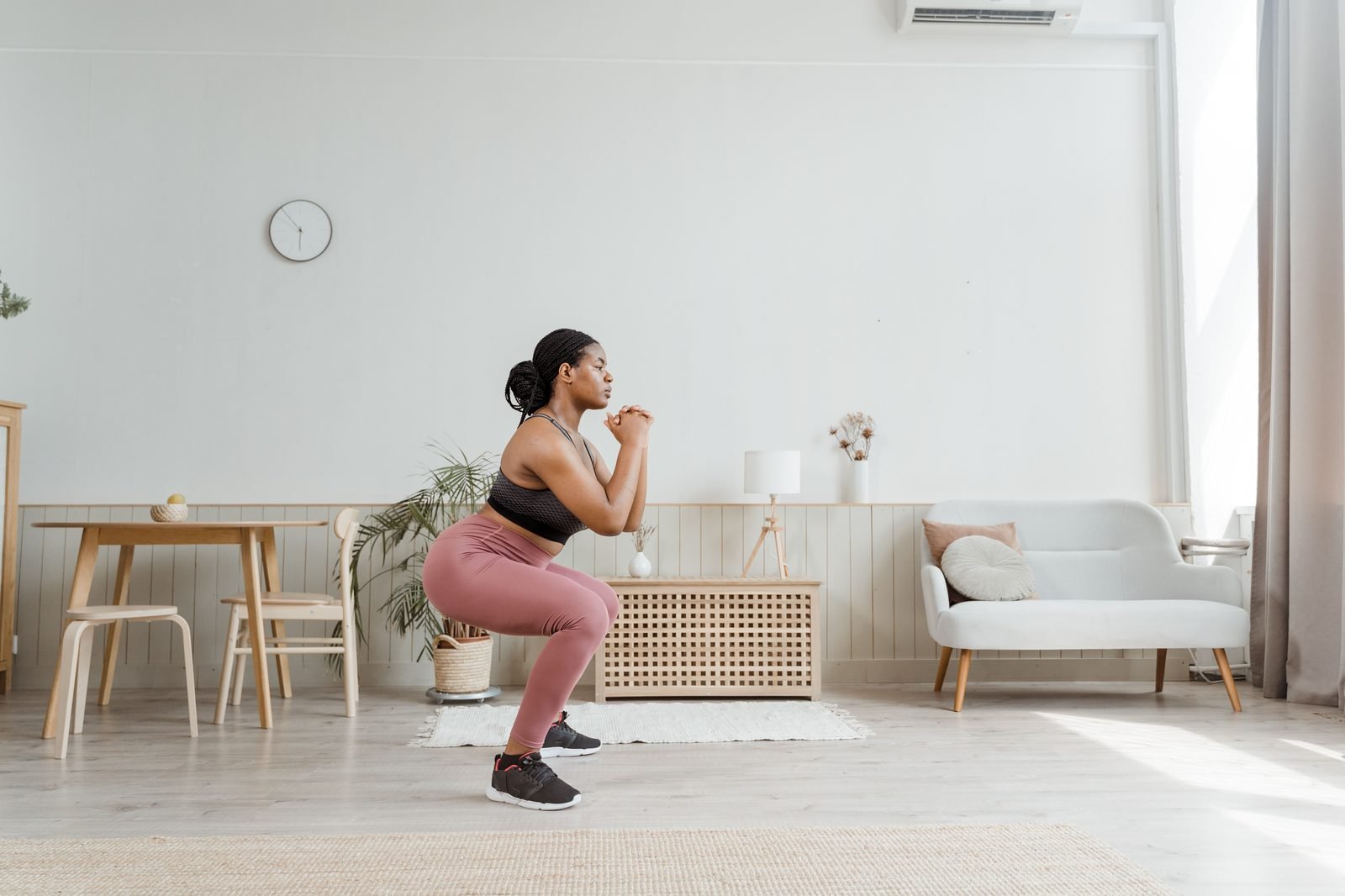
What Makes a Good Leg Day Workout at Home?
At FitStrot we coach hundreds of clients who train from their living rooms, hostel rooms, and hotel gyms with nothing but a yoga mat. What separates a good session from a wasted one isn’t the equipment list, it’s whether the muscle actually gets tired. A solid home leg day hits three movement patterns: a squat pattern (front leg workout territory, targeting quads), a hinge pattern (hamstrings and lower back), and a single-leg pattern (balance, glutes, and ankle stability). Miss one of these and you end up with an unbalanced lower body, strong in front, weak behind.
Tempo matters more at home than in the gym because you don’t have heavy weights to create resistance. Slowing the lowering phase of a squat or lunge to three or four seconds turns a bodyweight move into something that genuinely burns. That’s the trick most people never figure out on their own.
Do You Need Equipment for Leg Day at Home?
No, not to get started. Bodyweight squats, lunges, glute bridges, and calf raises can build a foundation for months before you plateau. A pair of adjustable dumbbells or a resistance band speeds up progress once bodyweight stops feeling hard, but they’re not a requirement on day one. If you already have access to a rack and barbell, leg workouts at the gym will always let you load heavier and progress faster in raw strength terms. Home training is about consistency and smart programming rather than chasing bigger numbers on a bar.
A step or sturdy chair, a wall, and a bit of floor space cover almost every variation you’ll need. Runners especially don’t need machines, a leg workout for runners at home should focus on single-leg strength and hip stability, which is exactly what bodyweight training does well.
What Does a Sample No-Equipment Leg Day Look Like?
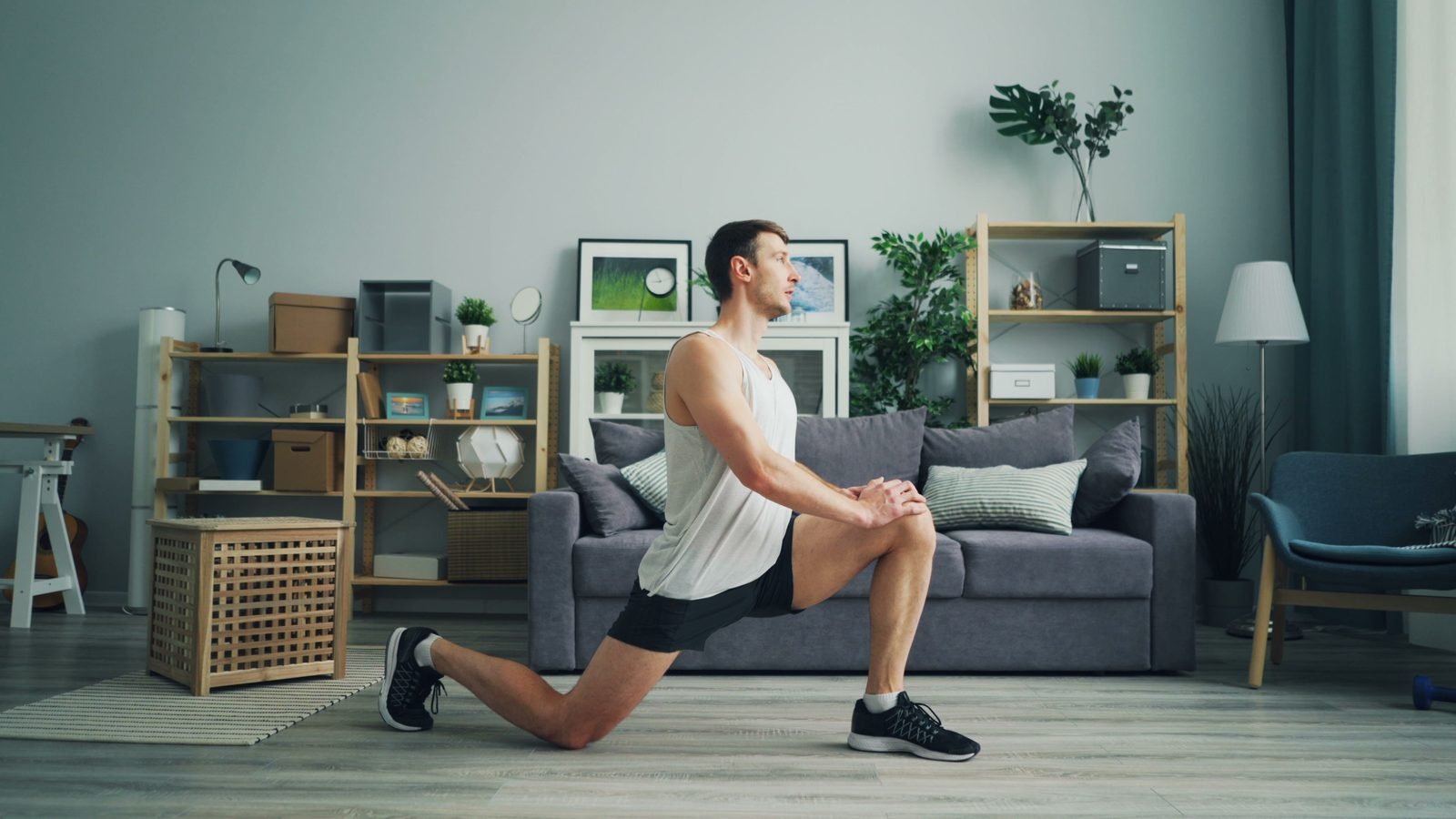
Here’s a session we actually give clients who have zero equipment and about 30 minutes. Rest periods are short because bodyweight work doesn’t need the same recovery as heavy lifting.
| Exercise | Sets | Reps | Rest |
|---|---|---|---|
| Bodyweight squat (3-second lower) | 4 | 15-20 | 45 sec |
| Reverse lunge (alternating legs) | 3 | 12 per leg | 45 sec |
| Glute bridge (hold 2 sec at top) | 3 | 20 | 30 sec |
| Single-leg Romanian deadlift (bodyweight) | 3 | 10 per leg | 45 sec |
| Wall sit | 3 | 30-45 sec hold | 30 sec |
| Calf raise (off a step, full stretch) | 3 | 20 | 30 sec |
This is also a solid leg and butt workout on its own since the bridges, lunges, and single-leg RDLs load the glutes directly. If squats and lunges feel easy after a few weeks, add a backpack loaded with books on your shoulders. It’s a cheap way to keep progressing without buying dumbbells.
Is Leg Day Different for Women and Men?
Not in terms of exercise selection, but often in terms of goal and emphasis. A leg day workout for women frequently leans toward glute and hamstring development alongside overall toning, while men often chase quad size and raw strength numbers. Neither approach is wrong, and honestly the exercises overlap by about 90%. What changes is rep range, added glute-focused accessory work like hip thrusts or banded lateral walks, and sometimes higher frequency because glutes recover fast and respond well to being trained often.
If you want to train heavier and have access to a gym, a leg workout for women in the gym gives you hip thrust machines, cable kickbacks, and leg presses that are hard to replicate at home. But a home leg toning workout using bands and bodyweight, done consistently, closes most of that gap over time. Consistency beats equipment almost every time we’ve seen it tested.
Why Are Your Legs Sore After Leg Day?
Leg pain after workout, technically delayed onset muscle soreness, happens because you’ve created tiny amounts of muscle fiber damage, especially from the lowering (eccentric) part of squats and lunges. Your body repairs that damage and comes back stronger, which is the whole point of training. It’s normal for soreness to peak around 24 to 48 hours after a new or harder session and fade within three or four days.
What’s not normal is sharp joint pain, pain that gets worse instead of better, swelling, or soreness that lingers past a week. That’s your body telling you something is off, and it’s worth getting checked rather than pushing through it. We’re coaches, not physios, so we won’t tell you to diagnose yourself, but we will say this: dull, achy muscle soreness is a sign of effort. Sharp or joint-specific pain is a sign to back off and get it looked at.
How Often Should You Train Legs at Home?
Two to three times a week works well for most people, with at least one full rest day between sessions so your muscles actually recover. If you’re following a leg split workout where you separate quad-dominant and hamstring-dominant days, you could train legs up to four times a week without overlap. This pairs naturally with a push pull legs workout structure, where legs get their own dedicated day in a repeating three-day cycle alongside upper body pushing and pulling work.
Beginners should start with two sessions a week. Your legs are large muscle groups and they take real recovery time, especially early on when soreness is at its worst.
What Mistakes Ruin a Home Leg Workout?
Three mistakes come up again and again in home leg sessions:
- Rushing the reps. Fast, bouncy squats and lunges take tension off the muscle and put it on your joints instead, which is a recipe for knee pain, not muscle growth. Slow down, especially on the way down.
- Skipping the hinge pattern entirely. Endless squats and lunges without any Romanian deadlifts or glute bridges leave your hamstrings underdeveloped, which shows up as muscle imbalance and, eventually, injury risk.
- Treating “workouts to lose leg fat” as something you can target directly. You can’t spot-reduce fat from your thighs no matter how many reps you do. Fat loss happens from an overall calorie deficit, built through diet and total activity, while leg training builds the muscle underneath so your legs look toned once the fat comes down. Anyone selling you a “thigh gap workout” that burns fat from just your legs is selling you something that doesn’t exist.
How Do You Progress Leg Day Without Weights?
You’ve got more room to grow with just bodyweight than most people assume. Slow the tempo down first, especially the lowering phase, before adding anything else. Then increase reps, then add pauses at the hardest point of the movement (like the bottom of a squat), then move to single-leg variations which are dramatically harder than their two-legged equivalents. A pistol squat progression alone can keep you challenged for months.
Once bodyweight genuinely stops being hard even at 25-30 reps, that’s your signal to add external load, whether that’s a backpack, resistance bands, or a pair of dumbbells. If you’d rather have someone build and adjust this progression for you week to week instead of guessing, our coaches at FitStrot do exactly that through 1-on-1 personal training, whether you’re training at home, at a gym, or a mix of both.
Frequently Asked Questions
What is a good leg day workout at home?
A good home leg day covers a squat, a hinge, and a single-leg movement, done with slow, controlled reps and short rest. Bodyweight squats, reverse lunges, glute bridges, and calf raises for 3-4 sets each build real strength and shape without any equipment at all.
How do you do leg day at home without weights?
Slow your tempo down, especially the lowering phase, and push your rep ranges higher, typically 15-25 reps per set. Add pauses at the hardest point of each movement and progress to single-leg variations like reverse lunges or single-leg RDLs once two-legged versions feel easy.
What are the benefits of a home leg day workout?
You save commute time, skip equipment costs, and can train consistently even on busy days. Bodyweight leg training still builds strength, improves balance, and tones muscle effectively, especially for beginners and intermediate lifters who haven’t maxed out what bodyweight resistance can offer yet.
Can leg day at home help you lose leg fat?
It helps build the muscle underneath, but fat loss itself comes from an overall calorie deficit, not from training one body part. Pair your leg workouts with consistent overall activity and reasonable eating habits, and your legs will lean out as your total body fat drops.
Is it normal for legs to hurt for days after a home workout?
Some soreness for one to three days after a new or harder session is completely normal and means your muscles are adapting. Sharp pain, swelling, or soreness that lasts well over a week isn’t typical muscle soreness and is worth having checked rather than training through.