If you’ve searched for an Indian diet for weight loss, you’ve probably already hit the same wall I see with almost every new client: most plans either ignore how Indian households actually cook, or they cut out entire food groups and expect you to survive on salad. Neither works long-term.
I’m Yash Pathak, founder and lead trainer at FitStrot. I’ve spent the last 10 years coaching people through weight loss using food they already have in their kitchen — dal, roti, sabzi, curd — just structured differently. This guide walks through exactly how to build an Indian diet for weight loss that fits a real routine, not a fantasy one.
Why Most “Indian Diets” for Weight Loss Fail
The problem usually isn’t willpower. It’s structure. A typical Indian plate is carbohydrate-heavy by default — rice or roti forms the base, and protein and vegetables are treated as sides rather than the foundation. For weight loss, that ratio needs to flip: protein and fibre first, carbohydrates portioned, not eliminated.
The second issue is timing. Many people skip breakfast, eat a late, heavy lunch, and then load most of their calories into dinner — the one meal where your body needs them least. Fixing the distribution of food across the day often does more than any single food swap.
The Core Structure of an Indian Weight Loss Diet
Here’s the framework I use with clients, adapted to whatever regional cuisine they grew up eating:
Morning (on waking): Warm water, sometimes with soaked methi seeds or a small amount of ajwain water if digestion is sluggish. Nothing dramatic — just a gentle start.
Breakfast: A protein-forward option — moong dal chilla, besan chilla, egg bhurji, or sprouts with vegetables. Skip the deep-fried options (poori, paratha with excess ghee) most mornings, not forever.
Mid-morning: A piece of fruit or a handful of nuts if there’s a gap of more than 3–4 hours before lunch.
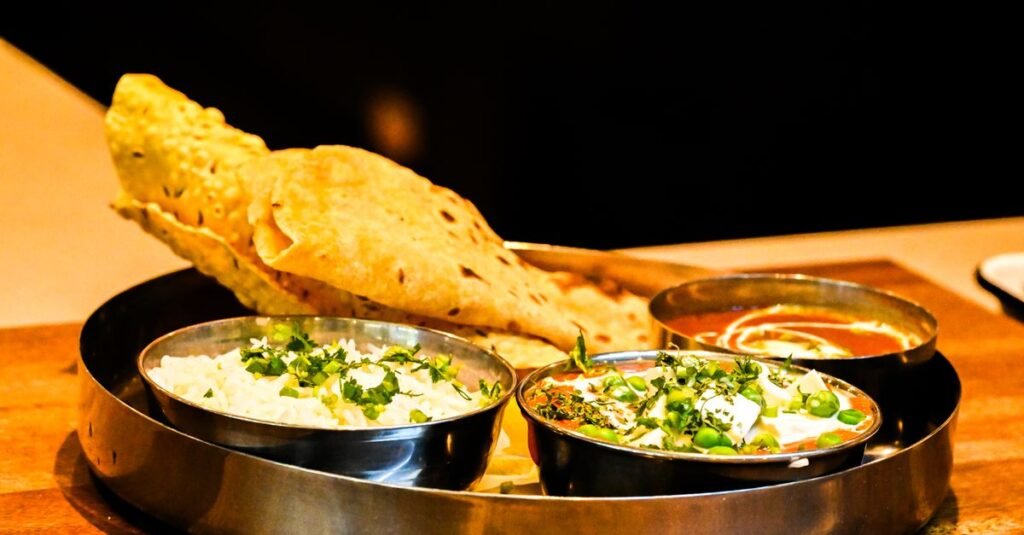
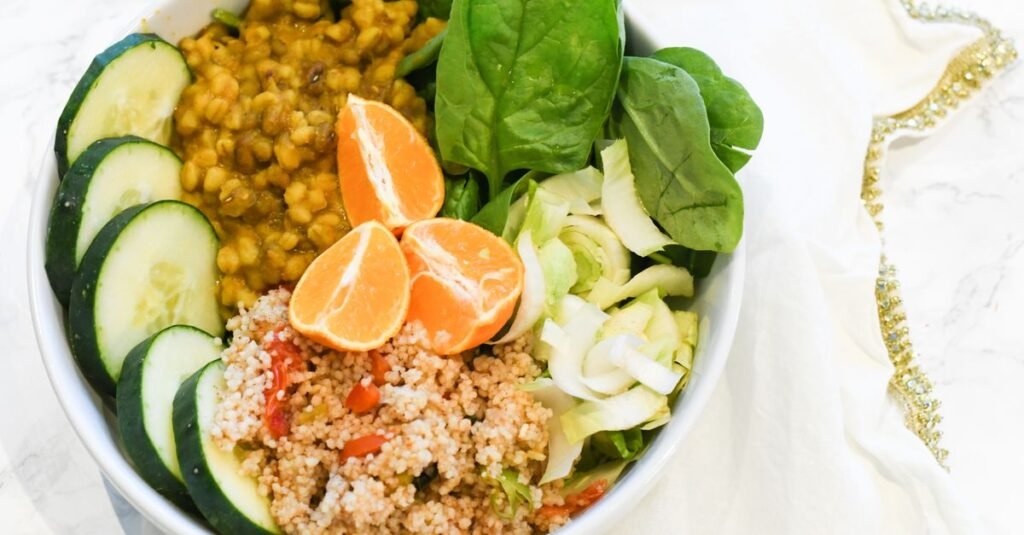
Lunch: One roti or a small portion of rice, a generous serving of sabzi, a bowl of dal or a protein source, and a side of curd or salad. The plate should be roughly half vegetables, a quarter protein, a quarter carbohydrate.
Evening snack: Roasted chana, a boiled egg, buttermilk, or a small bowl of sprouts — something that holds you until dinner without spiking hunger.
Dinner: Lighter than lunch, earlier than you think (ideally 2–3 hours before sleeping), and lower in carbohydrates — more sabzi and protein, less rice or roti.
Foods That Do the Heavy Lifting
Some staples pull more weight than others in an Indian weight-loss diet:
Dal and legumes (moong, masoor, chana) are inexpensive, high in protein and fibre, and keep you full far longer than an equivalent portion of rice. Curd supports digestion and is a low-effort protein add-on to almost any meal. Vegetables like lauki, tinda, bhindi, and leafy greens add volume and micronutrients without adding much caloric weight. Millets — ragi, jowar, bajra — are a strong swap for white rice or refined wheat when you want the same comfort-food feel with more fibre and a slower glycemic response.
What to Actually Cut Back On
Not eliminate — cut back on. Deep-fried snacks, sugary chai (more than 1–2 cups a day), refined flour (maida) in bread, biscuits, and bakery items, and excess ghee or oil in tempering. Portion, don’t ban. A diet that feels like punishment rarely survives past week three.
Why a Structured Plan Beats a Generic One
Every body responds differently to the same plate of food — someone managing thyroid issues, PCOS, or a sedentary desk job needs a different carbohydrate and calorie target than someone training five days a week. This is where most self-guided diets fall apart: they’re built for an average person who doesn’t exist.
A structured diet plan for weight loss accounts for your specific starting point, and if you want a regional variation, our Kerala diet for weight loss guide and fruit-based approach are worth comparing against this one to see what fits your routine best.
This is exactly the gap an online weight loss trainer closes — building a plan around your actual meals, your actual schedule, and adjusting it weekly based on what’s working.
How Long Before You See Results
Most clients notice a visible difference in energy and bloating within 2 weeks, and measurable weight change by week 3–4, when the diet is paired with basic activity. Rate of loss depends on starting point, consistency, and whether sleep and stress are also being managed — food alone is maybe 70% of the equation.
Regional Swaps That Make This Easier
Where you’re from changes what a practical Indian diet plan looks like. In Punjab and North India, swapping ghee-heavy tadka for a light tempering of cumin and mustard seed in a teaspoon of oil, and choosing bajra or jowar roti over refined wheat a few times a week, cuts calories without changing the meal’s character. In Tamil Nadu and Kerala, idli and dosa batter fermented longer (24+ hours) has a lower glycemic impact than fresh batter, and pairing it with sambar rich in dal rather than coconut chutney alone adds protein. In Bengal and the East, fish curry cooked in mustard oil with less added sugar in the gravy keeps a beloved dish intact while trimming calories.
The point isn’t to abandon your regional cooking — it’s to identify the two or three small adjustments within it that add up over weeks.
Navigating Festivals, Weddings, and Eating Out Without Falling Off Track
India’s calendar isn’t built for calorie counting. Between Diwali, Karva Chauth, wedding season, and the weekend dinner at a relative’s house, there’s rarely a stretch of more than two or three weeks without some kind of feast on the horizon. I tell my clients this early: if your diet plan can’t survive a wedding buffet or a Diwali mithai box, it isn’t a real plan, it’s a temporary restriction that’s waiting to break.
The mistake most people make is either skipping meals all day to “save calories” for the event, or giving up entirely and treating the whole day as a write-off. Both backfire. Arriving at a wedding starving means you eat faster and more than you intend to, usually straight from the fried-starter counter. Eat a normal, protein-forward meal a few hours before — dal, paneer or eggs, a small portion of rice — and you walk in with your hunger under control, not your willpower.
At the buffet itself, build your plate the way you would at home: protein and vegetables first, then a modest portion of rice or roti, and let one dessert be an actual choice rather than an afterthought. A single gulab jamun or a small piece of kaju katli, eaten slowly, doesn’t move the needle on a body that’s eating well the other six days of the week. What does move the needle is three days of “cheat eating” in a row because one function turned into an excuse. One indulgent meal is a rounding error. A pattern of them is a new diet.
Common Mistakes That Quietly Sabotage an Indian Weight-Loss Diet
The most common one I see is cutting rice and roti to zero. People decide carbs are the enemy, drop both from every meal, and within four or five days they’re ravenous by 6 pm and reaching for biscuits, namkeen, or whatever’s in the kitchen cabinet. A moderate portion of rice or one or two rotis at lunch keeps you fuller for longer than an empty plate ever will.
Chai is another blind spot. Three or four cups a day, each with a teaspoon or two of sugar, adds up to 150-250 calories that people don’t count because “it’s just chai.” Cutting sugar in tea, or dropping to two cups a day, is one of the easiest changes I make with new clients, and it rarely feels like a sacrifice after the first week.
Fruit juice gets treated as a health food when it behaves more like sugar-water. A glass of fresh orange or sugarcane juice can carry as much sugar as a soft drink, minus the fibre that would have slowed its absorption if you’d just eaten the fruit whole. The same goes for ghee — a spoon on dal is fine, three generous spoons across the day’s cooking is where a “healthy” home-cooked diet quietly stops being one. Measuring oil and ghee with an actual spoon for a week, instead of pouring by eye, is usually enough to reveal where the extra calories are hiding.
Building This Diet on a Tight Budget
A question I get almost every week from clients in tier-2 and tier-3 cities: “Yash, this all sounds good, but paneer, almonds, and quinoa are expensive. Can I actually do this on a middle-class budget?” The honest answer is yes, and often the budget version of this diet ends up healthier than the expensive one, because you lean on dal, seasonal vegetables, and eggs instead of imported superfoods that don’t actually move the needle any faster than what’s already sitting in your local kirana store.
Start with protein, since that’s where people assume they need to spend the most. A kilo of chana or moong dal costs a fraction of paneer and delivers comparable protein once cooked, with the added benefit of fibre that keeps you full longer between meals. Eggs remain the cheapest complete protein in the country, often under ten rupees each even in expensive markets, and two eggs at breakfast do more for your hunger than a bowl of cornflakes costing the same. If paneer feels like a luxury, buy it once a week for a specific meal instead of daily, and fill the rest of the week with dal, curd, and sprouted moong, which needs no cooking beyond an overnight soak.
Vegetables are where families overspend without realising it, buying whatever looks appealing at the shop rather than what’s actually in season. Seasonal vegetables in India are almost always the cheapest and the freshest at the same time, whether that’s lauki and tinda in summer or methi and palak in winter. Buying from your local sabzi mandi instead of a premium grocery app can cut your vegetable bill by 30 to 40 percent for the same quantity, and batch-cooking sabzi for two to three days saves both money and the temptation to order food on days you’re too tired to cook. Rice, roti atta, and dal, the backbone of this entire diet, were never expensive to begin with; they only look expensive when you compare them to fad diet marketing that tells you weight loss requires quinoa and almond butter.
If there’s one place I’d actually tell a budget-conscious client to spend a little more, it’s on cooking oil quality and on one or two convenience items that keep them from falling off track, like a stock of frozen mixed vegetables for the weeks when time is short rather than money. Everything else in this diet is inexpensive by design, because it’s built around what Indian households have cooked for generations, long before packaged “diet food” became a shelf category. If your grocery bill for weight loss keeps climbing, that’s usually a sign you’ve drifted toward branded protein bars, imported nuts, or diet-labelled snacks rather than the actual structure. Cut those first, and the budget almost always sorts itself out. In my experience, clients who cook most of their own meals from dal, seasonal sabzi, and eggs actually spend less on food after starting this plan than they did before, simply because they’re no longer ordering in three or four times a week out of convenience.
Frequently Asked Questions
How does an Indian diet for weight loss work?
It works by restructuring meal composition and timing — more protein and fibre, portioned carbohydrates, and shifting calorie load earlier in the day — using familiar Indian staples rather than replacing them with unfamiliar foods.
Is an Indian diet for weight loss safe?
Yes, when it includes adequate protein, healthy fats, and doesn’t eliminate entire food groups. Crash versions that cut carbohydrates to near-zero or skip meals are where safety concerns come in — that’s not what’s outlined here.
How long does an Indian diet for weight loss take to show results?
Most people see initial changes (energy, digestion, mild weight loss) within 2–3 weeks, with more noticeable results by week 6–8 when combined with regular movement.
Can beginners try an Indian diet for weight loss?
Yes — this is one of the easier diets for beginners specifically because it uses food you already know how to cook. The main adjustment is portioning and timing, not learning a new cuisine.
Ready to Build a Plan Around Your Actual Life?
Generic diet charts assume you’re starting from the same place as everyone else. You’re not. A FitStrot online weight loss trainer builds your Indian diet plan around your schedule, food preferences, medical history, and goals — then adjusts it every week based on real progress, not guesswork.