A beginner-friendly HIIT session at home is short, uses bodyweight moves you already know how to do, and swaps long grinding cardio for quick bursts of effort followed by real rest. Think 15 to 20 minutes total, exercises like squats, mountain climbers, and modified jumping jacks, with 30 to 40 seconds of work followed by 20 to 30 seconds of rest. No equipment, no gym membership, no fancy programming. We coach beginners into HIIT all the time at FitStrot, and the ones who stick with it start with sessions this simple, not the brutal 45-minute circuits they see influencers post online.
What Is HIIT and Why Does It Suit Beginners at Home?
HIIT stands for high-intensity interval training. You push hard for a short burst, then you rest, then you repeat. That’s the entire idea. The “high intensity” part scares a lot of new exercisers away, but intensity is relative to you, not to whoever is demonstrating the move on YouTube.
For a beginner, HIIT at home actually makes more sense than HIIT at a gym. You’re not self-conscious about your form in front of strangers, you’re not waiting for equipment, and you can scale every single move to your own fitness level without anyone noticing. A basic hiit session workout at home needs nothing more than floor space the size of a yoga mat and a way to track time. That’s it. If you’ve been putting off exercise because you don’t have a gym nearby or can’t afford one, this removes that excuse entirely.
What Are the Real Benefits of HIIT Workouts?
We won’t oversell this. HIIT is not magic and it won’t undo a bad diet. But the genuine hiit workout benefits are worth taking seriously for a beginner who’s short on time.
- Time efficiency. A 15 to 20 minute session can leave you as winded as a 45-minute jog, because you’re working near your max during the intervals instead of cruising at a steady pace.
- Cardiovascular conditioning. Alternating hard effort with recovery trains your heart to recover faster, which shows up in daily life as less breathlessness on stairs or during errands.
- No equipment needed. Bodyweight HIIT builds strength and conditioning together, which is useful when you’re just starting out and don’t own dumbbells yet.
- Afterburn effect. Your body keeps burning slightly more calories for a while after a hard interval session compared to steady, low-effort cardio. It’s a modest bump, not a dramatic one, so don’t expect it to replace a calorie deficit if fat loss is your goal.
What HIIT won’t do is build significant muscle mass or replace strength training if that’s your actual goal. Treat it as a conditioning tool, not a complete fitness program.
What Should a Beginner HIIT Session Look Like?
The single biggest reason beginners quit HIIT is that they copy an advanced work:rest ratio and burn out in week one. A trained athlete might do 40 seconds of work to 10 seconds of rest. That ratio will wreck a beginner’s motivation and form within five minutes.
Start here instead:
- Work:rest ratio. 30 seconds work, 30 seconds rest, or even 20 seconds work to 40 seconds rest if you’re completely new to structured exercise.
- Session length. 15 to 20 minutes total, including a warm-up. A 15 minute hiit workout is genuinely enough stimulus for someone in their first month of training.
- Exercise count. 4 to 6 moves, repeated across 2 to 3 rounds, rather than 10 different exercises you’ve never practiced.
- Intensity target. You should be breathing hard and unable to hold a full conversation during the work interval, but not gasping or seeing stars. If you can’t finish the interval with reasonably clean form, the ratio is wrong for you, not your fitness level being “bad.”
As you build a base, you can explore more structured HIIT workout routine plans that progress the work:rest ratio over several weeks instead of guessing week to week.
What Does a Sample 15-Minute Beginner HIIT Circuit Look Like?
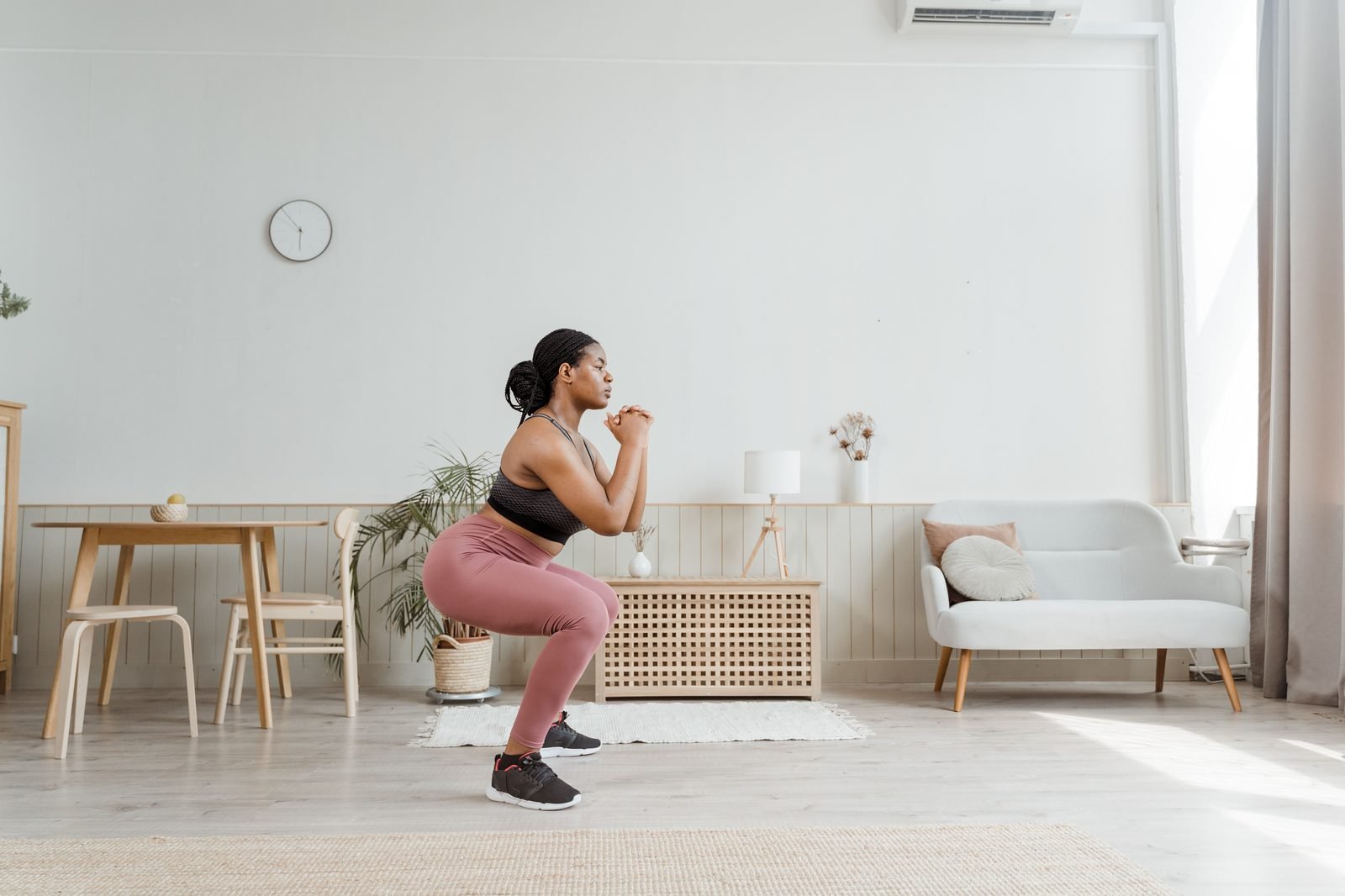
Here’s an actual circuit we give to new clients in their first two weeks. Do a 3-minute warm-up (marching in place, arm circles, bodyweight squats at half speed) before starting the clock on this.
| Exercise | Work Time | Rest Time |
|---|---|---|
| Bodyweight squats | 30 seconds | 30 seconds |
| Modified jumping jacks (step out instead of jump) | 30 seconds | 30 seconds |
| Knee-to-chest mountain climbers | 30 seconds | 30 seconds |
| Standing punches (boxing at moderate pace) | 30 seconds | 30 seconds |
| Glute bridges | 30 seconds | 30 seconds |
| Rest between rounds | – | 60 seconds |
Repeat the full circuit twice. That’s roughly 15 minutes of work once you add the warm-up, and it covers legs, core, and light cardio without needing a single piece of equipment. If two rounds feel too easy by week three, add a third round before you shorten the rest periods. Progress the volume first, the intensity second.
How Do You Modify HIIT If You’re Out of Shape or Have Joint Issues?
This is where most beginner HIIT advice online falls apart, because it assumes everyone starts from the same baseline. They don’t.
If you’re carrying extra weight, coming back from a long break, or dealing with knee, hip, or lower back sensitivity, modify the moves rather than skipping HIIT altogether:
- Swap jumps for steps. Jump squats become regular squats. Jumping jacks become step-out jacks. This alone removes most of the joint impact while keeping your heart rate up.
- Lower the range of motion. A half squat or a chair-assisted squat still raises your heart rate. You don’t need full depth to get the cardiovascular benefit.
- Swap floor work for standing work. If getting up and down off the floor is uncomfortable, replace mountain climbers with high knees or marching in place at a fast pace.
- Extend the rest, not the work. If 30 seconds of work leaves you gasping past recovery, drop to 20 seconds of work and keep 30 to 40 seconds of rest. There’s no rule that says you have to match anyone else’s ratio.
We see beginners push through pain because they think HIIT is supposed to feel brutal, and that’s exactly the mindset that gets people injured or burned out within two weeks. Modifying an exercise isn’t cheating. It’s what lets you actually complete the session and come back for the next one.
How Often Should Beginners Do HIIT?
Two to three sessions a week is the right starting frequency for almost everyone new to this style of training. HIIT is demanding on your nervous system and joints in a different way than a slow walk or light strength session, and your body needs recovery days between sessions to actually adapt.
Doing HIIT daily as a beginner is one of the fastest ways to stall progress. You’ll show up to session three or four already fatigued, your form will slip, and you’ll get less benefit from each interval while your injury risk climbs. Space your sessions out with at least one rest or light-activity day in between, and you’ll get better results from three focused sessions than from seven mediocre ones.
What Mistakes Do Beginners Make with HIIT?
A few patterns show up again and again with people new to HIIT workouts at home:
- Skipping the warm-up. Jumping straight into max effort with cold muscles is how you strain something in the first two minutes.
- Copying advanced ratios. Following a 20-second-work-to-10-second-rest program because that’s what showed up in a search result, then quitting after one session because it felt impossible.
- Sacrificing form for speed. Rushing through squats or push-ups just to “beat the clock” turns a conditioning tool into a way to hurt your knees or lower back.
- Doing HIIT every single day. As covered above, this leads to burnout faster than it leads to results.
- Ignoring nutrition and sleep entirely. HIIT sessions are demanding. If you’re underslept and underfed, your performance and recovery both suffer, and the workouts start to feel harder than they should.
Most effective HIIT workouts for beginners aren’t the hardest ones you can find online. They’re the ones you can actually complete with good form and come back to three times a week without dreading them.
Should You Combine HIIT with Other Training?
Yes, and you probably should. HIIT interval training workouts are excellent for conditioning, but they’re not a substitute for strength training if building muscle or long-term functional strength matters to you. A reasonable weekly split for a beginner is two HIIT sessions, one or two strength sessions, and a rest day or light walk mixed in. This keeps your joints and nervous system from being hammered by high intensity work every single day while still building real fitness across multiple dimensions.
If you’d rather not guess your way through this on your own, working with a coach who can watch your form and adjust your ratios week to week makes the whole process faster and safer. That’s exactly what we do through FitStrot’s 1-on-1 personal training, where your sessions get built around your actual starting point instead of a generic template.
Frequently Asked Questions
What are good HIIT workouts for beginners at home?
Good beginner HIIT workouts use bodyweight moves like squats, step-out jacks, and standing punches with a 30-second work to 30-second rest ratio, done for 15 to 20 minutes total. Keep the exercise count low, around 4 to 6 moves, and prioritize clean form over speed or intensity.
How do you do HIIT as a beginner?
Start with a short warm-up, then alternate 20 to 30 seconds of moderate-to-hard effort with 30 to 40 seconds of rest across 4 to 6 exercises for two rounds. Keep sessions to 15 to 20 minutes, limit HIIT to two or three days a week, and modify any move that causes joint pain.
What are the benefits of HIIT workouts?
HIIT improves cardiovascular conditioning, builds bodyweight strength, and delivers a solid workout in a short amount of time compared to steady-state cardio. It also creates a mild afterburn effect where you burn slightly more calories post-workout, though it won’t replace proper nutrition for fat loss goals.
Can I do HIIT every day as a beginner?
No, we don’t recommend it. Two to three sessions a week with rest or light activity days in between gives your joints and nervous system time to recover, which leads to better form, lower injury risk, and more consistent progress than daily high-intensity sessions.
Do I need any equipment for beginner HIIT at home?
No equipment is required. Bodyweight moves like squats, mountain climbers, and standing punches are enough to raise your heart rate and build conditioning. A yoga mat and a way to track intervals, like a phone timer, is really all you need to get started.