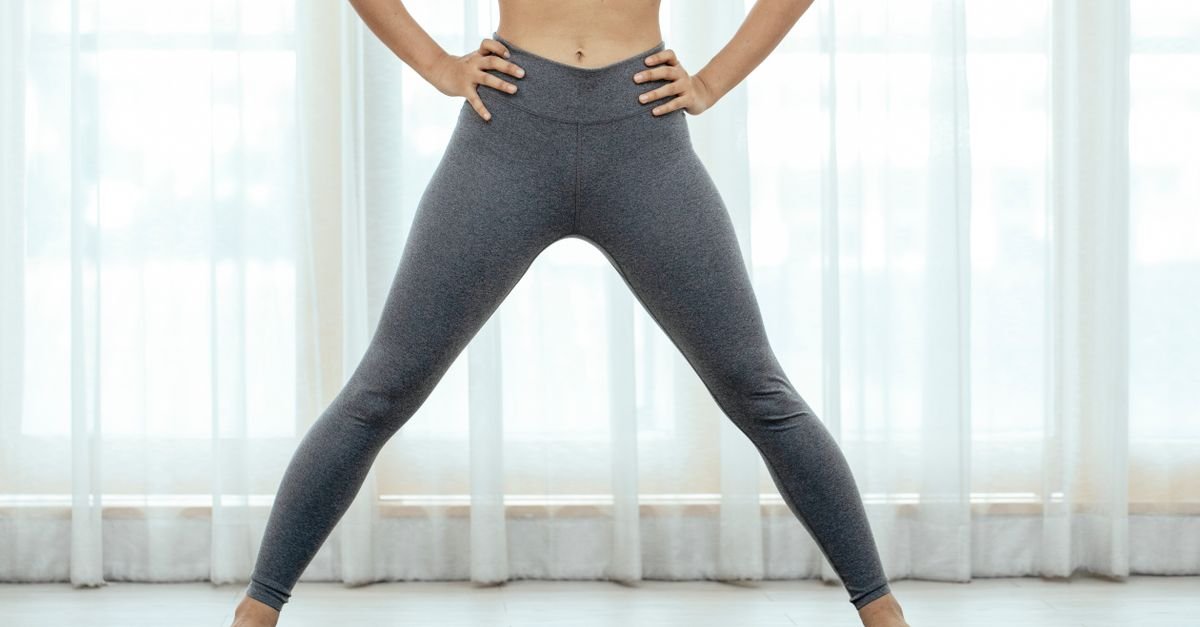
Hip-focused exercises tone and strengthen the muscles around the hips but cannot spot-reduce fat specifically from that area — fat loss happens throughout the body based on genetics and overall calorie deficit, not from wherever you’re exercising. What hip exercises genuinely do is build muscle definition and strength that becomes visible once overall body fat decreases through diet and total activity.
I’m Yash Pathak, founder and lead trainer at FitStrot. Hip-specific exercise questions come up constantly, and the honest answer — that spot reduction isn’t real — doesn’t mean these exercises are useless. They’re valuable for a different reason than most people expect.
Why Spot Reduction Doesn’t Work
When your body burns fat for energy, it draws from fat stores throughout the body based on genetics, hormones, and overall patterns — not preferentially from whichever muscle group you just exercised. This is well-established in exercise science: studies comparing localized exercise to overall fat loss consistently show no meaningful difference in fat reduction at the exercised site compared to other areas. Hip exercises build and tone the muscles underneath, which matters, but the fat covering those muscles reduces based on your total body calorie balance.
What Hip Exercises Actually Accomplish
Muscle tone and definition. Strengthening the glutes, hip abductors, and surrounding muscles creates a firmer, more defined appearance once body fat decreases enough to reveal that muscle.
Improved hip mobility and stability. Many people carry tightness or weakness around the hips from prolonged sitting; targeted exercises improve range of motion and reduce related lower back or knee strain.
Better overall movement quality. Strong hip muscles support better form in squats, lunges, and daily movement, which indirectly supports more effective training elsewhere.
Effective Hip Exercises
Glute bridges. Lie on your back, knees bent, feet flat, and lift your hips toward the ceiling, squeezing the glutes at the top. Builds strength through the glutes and hip area with minimal equipment.
Side-lying leg raises. Lying on your side, lift the top leg toward the ceiling in a controlled motion — targets the hip abductors specifically.
Clamshells. Lying on your side with knees bent, open the top knee like a clamshell while keeping feet together — a smaller-range but effective move for the hip stabilisers, often used in physiotherapy for this reason.
Squats and lunges. Compound movements that engage the hips alongside the legs and glutes, offering more overall muscle engagement (and calorie burn) than isolation exercises alone.
Hip thrusts. A more advanced variation of the glute bridge, often performed with added resistance (dumbbell, barbell) for greater strength-building effect.
Lateral band walks. Using a resistance band around the thighs, stepping sideways in a controlled manner — builds hip stability and strength effectively with minimal equipment.
Building These Into a Routine
2-3 sessions weekly of hip-focused work, combined with overall strength training and cardio, tends to work better than isolating hip exercises exclusively. A simple structure: 3-4 hip exercises, 10-15 reps each, 2-3 sets, performed 2-3 times weekly as part of a broader lower-body or full-body routine.
What Actually Reduces Fat Around the Hips
Since spot reduction isn’t possible, reducing fat in the hip area requires the same approach as reducing fat anywhere else: a consistent calorie deficit through diet, combined with overall activity (cardio and strength training), sustained over weeks and months. Hip exercises support this by building the muscle that becomes visible as overall fat decreases, but they’re not a substitute for the calorie deficit itself.
Combining Hip Work With a Complete Plan
Hip exercises work best as one component of a broader strength routine, alongside cardio and a calorie-appropriate diet. Our thigh weight loss and gym workout for weight loss guides cover related lower-body training and the overall structure needed for visible results.
Why a Structured Plan Beats Isolated Exercises
Focusing narrowly on hip exercises while ignoring diet and overall activity level typically produces disappointing results, since the underlying fat layer doesn’t respond to isolated targeting. An online weight loss trainer builds a complete program — the right balance of strength training, cardio, and diet — so hip exercises contribute to visible results rather than working in isolation.
Why Hip Exercises Need to Be Paired With Overall Fat Loss
Hip-focused exercises (glute bridges, lateral band walks, hip thrusts) build strength and shape in the glute and hip muscles, but as with any other body area, they can’t spot-reduce fat specifically from the hips — the fat layer there responds to your total body calorie balance, same as everywhere else. What these exercises genuinely deliver is improved muscle tone and a more lifted, defined appearance once overall body fat decreases enough to reveal that underlying muscle work, plus functional benefits like better hip stability and reduced lower back strain.
2-3 sessions weekly of hip and glute-focused strength work, combined with your overall cardio and diet plan, tends to produce visibly better results than isolating hip exercises without addressing total body fat.
Common Form Mistakes That Reduce the Benefit of Hip Exercises
Even when someone is doing the right exercises for their hips, poor form often means they’re getting a fraction of the benefit they think they are. The most frequent mistake I see in glute bridges and hip thrusts is people driving through their lower back instead of their glutes, arching excessively rather than squeezing the glutes at the top. This shifts load away from the hip muscles you’re trying to strengthen and onto a spine that wasn’t meant to be the primary mover, which over time can cause discomfort rather than results.
In side-lying leg raises and clamshells, the common error is using momentum, swinging the leg up fast and letting it drop, rather than a slow, controlled movement through the full range. The hip abductors only get properly challenged when the movement is slow enough that the muscle, not gravity, is doing the work on both the way up and the way down. I often tell clients to count two seconds up and three seconds down on these moves specifically because rushing them turns a useful strength exercise into little more than a repetitive habit with limited payoff.
The third mistake is skipping a proper warm-up of the glutes before hip-focused training, especially for people who sit most of the day. Hours of sitting can leave the glute muscles underactive, so jumping straight into loaded bridges without activating them first, using a resistance band walk or a few bodyweight bridges as a warm-up, often means other muscles like the hamstrings or quads compensate instead, and the hip muscles end up doing less work than the exercise was designed for.
Why Hip Fat Storage Differs Between Women — Genetics, Hormones and PCOS
Where your body chooses to store and release fat, including around the hips, is influenced heavily by genetics and hormones, particularly estrogen, which tends to direct fat storage toward the hips and thighs in many women. This is one reason two women following near-identical diet and exercise plans can lose fat at noticeably different rates from this specific area, and it’s not a sign that either of them is doing something wrong.
Hormonal conditions can add another layer to this picture. Conditions like PCOS, which affects a meaningful proportion of women in India, are often associated with insulin resistance and can make fat loss around the hips and abdomen slower and more resistant to standard diet and exercise approaches. If you suspect an underlying hormonal factor, especially alongside irregular periods, unusual hair growth, or persistently stubborn weight despite consistent effort, that’s worth discussing with a doctor or endocrinologist before assuming the issue is simply diet or exercise adherence.
None of this changes the fundamentals, a calorie deficit paired with strength training remains the most effective approach either way, but understanding that your hormonal profile plays a role can help set more realistic expectations and reduce the frustration of comparing your pace of change to someone else’s. A structured program that accounts for these individual factors, rather than assuming every client responds identically, tends to manage this frustration far better than a generic workout plan pulled from the internet.
Why Hip Exercises Matter More If You Sit at a Desk 9-10 Hours a Day
Most of my clients with desk jobs or long commutes are dealing with a hip problem before we even talk about fat loss — their glutes have effectively gone to sleep. Sit for eight, nine, ten hours a day, and the hip flexors at the front of your hip stay chronically shortened while the glutes at the back stay chronically switched off, a pattern trainers often call glute amnesia. It’s not a diagnosis you’ll find on a lab report, but you’ll recognize it if you’ve ever done a set of bridges or squats and felt your lower back or hamstrings working far more than your glutes — that’s the muscle that should be doing the job simply not firing properly anymore.
This shows up in ways beyond just how your hips look. Tight hip flexors pull the pelvis into an anterior tilt, which is a big part of why so many desk workers deal with a nagging lower back ache by 6pm, and weak glutes mean your hips end up looking flatter and less shaped even at a healthy weight, because the muscle underneath the fat isn’t contributing any shape. I’ve had clients who lost 6-7kg and were still unhappy with how their hips and lower body looked — not because the fat loss failed, but because the underlying glute weakness was never addressed alongside it.
The fix isn’t complicated, but it does need to happen daily, not just during your three weekly workouts. A 30-second hip flexor stretch — one knee down in a lunge position, gently pushing the hip forward — every couple of hours at your desk keeps the front of the hip from staying locked short. Before any lower-body workout, spend two minutes on simple glute activation: banded lateral walks or glute bridges with a two-second squeeze at the top, done specifically to “wake up” the muscle before you load it with squats or lunges. Skipping this step is exactly why some people train hips for months with underwhelming results — the exercise is right, but a dormant muscle isn’t absorbing the work the way it should.
There’s a fat-loss angle here too that’s easy to miss. A sedentary job doesn’t just limit formal exercise time, it collapses your non-exercise movement — what’s called NEAT — to almost nothing, and that’s often a bigger contributor to a stalled metabolism than people realize. Getting up every 45-60 minutes for a short walk, even just to the water cooler and back, does more for your daily calorie burn over a month than people expect, and it has the added benefit of interrupting the exact hip flexor tightness that’s undermining your hip exercises in the first place.
Frequently Asked Questions
Do hip exercises reduce fat specifically around the hips?
No — spot reduction isn’t how fat loss works. Hip exercises build and tone the muscles in that area, which becomes visible once overall body fat decreases through diet and total activity.
Are hip exercises safe to do daily?
Most bodyweight hip exercises are safe for frequent practice, but muscles still need recovery time to build strength effectively — 2-3 sessions weekly with rest days between tends to work better than daily training.
How long does it take to see results from hip exercises?
Muscle tone and strength improvements are often noticeable within 3-4 weeks of consistent practice, though visible fat reduction in the area depends on your overall calorie deficit and can take longer.
Can beginners do hip weight loss exercises?
Yes, most of these exercises (glute bridges, clamshells, side leg raises) are beginner-friendly and require no equipment, making them accessible starting points.
Ready for a Complete Plan, Not Just Isolated Exercises?
A FitStrot online weight loss trainer builds a full program — strength training, cardio, and diet — so exercises like these contribute to real, visible results.