The best healthy snacks on the go are the ones that survive a bag, a car seat, or a security tray without spoiling, crushing, or melting: roasted makhana, no-sugar-added trail mix, whole fruit like apples and bananas, roasted chana, and single-serve nut butter with whole grain crackers. What makes a snack “travel-ready” isn’t just its nutrition label — it’s whether it can sit at room temperature for 6-8 hours, survive being tossed in a bag, and still taste good when you’re hungry at hour three of a commute or a layover. This guide is built around that practical filter, with batch-prep tips so you’re not scrambling every morning.
What makes a snack actually “on-the-go” friendly?
A snack earns a spot in your bag or carry-on if it clears three tests: it doesn’t need refrigeration, it doesn’t turn to mush or crumbs in transit, and it delivers enough protein or fiber to actually curb hunger rather than spike and crash your energy. A lot of “healthy” snacks fail on portability alone — think yogurt cups, cut fruit, or hummus, all of which need a cooler bag and a time limit. The snacks below are chosen because they’re shelf-stable for hours (sometimes days) without ice, and they hold up structurally in a backpack, glovebox, or laptop bag.
If you’re also trying to manage weight while snacking on the move, it helps to pair this portability lens with the broader science of snack timing and portions — our guide on healthy snacks for weight loss covers that ground in more depth.
Which portable snacks travel best without a fridge?
Here’s a working list of snacks that hold up for a full day of travel or commuting, roughly ranked by how long they stay fresh outside a fridge.
- Roasted makhana (fox nuts): Light, crunchy, and shelf-stable for weeks in an airtight container. A 30g portion has around 3-4g of protein and under 100 calories when roasted with minimal oil, making it one of the lowest-mess, lowest-guilt snacks you can carry.
- Roasted chana (chickpeas): Dense in fiber and plant protein — about 6-7g protein per 30g serving — and it doesn’t crumble the way chips do. It also survives heat well, which matters if your bag sits in a hot car or a sunny train seat.
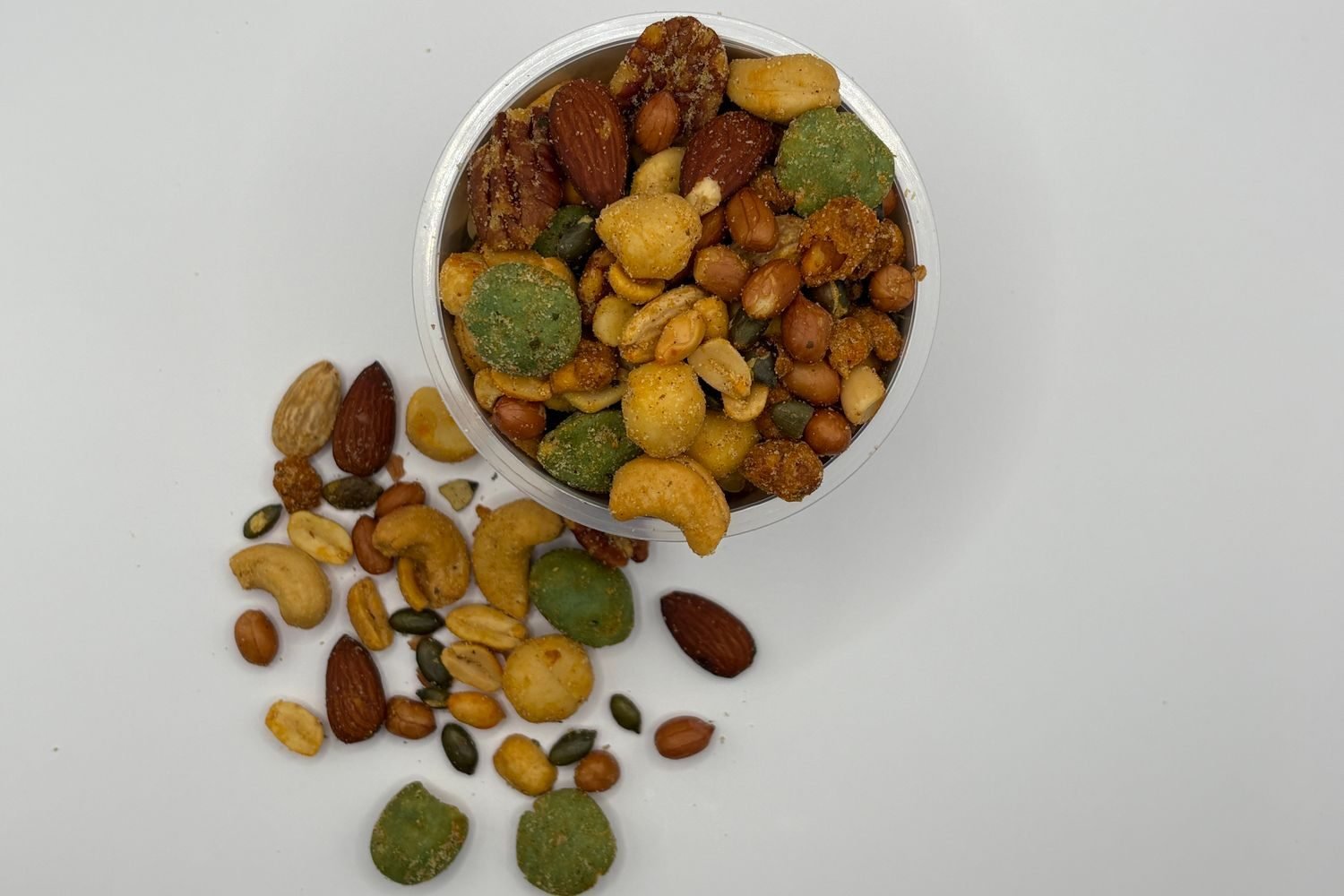
- Trail mix without added sugar: The catch with most store-bought trail mix is the candy-coated bits and honey-glazed nuts that quietly turn a “healthy” snack into a dessert. Build your own with raw or dry-roasted nuts, seeds, and unsweetened dried fruit so you control the sugar.
- Apples and bananas: Whole, unpeeled fruit is nature’s packaging. Apples can sit in a bag for days without bruising badly; bananas are best eaten within a day of packing since they bruise easily once tossed around.
- Whole grain crackers with a nut butter portion pack: Single-serve almond or peanut butter packets (15-20g each) paired with 4-5 whole grain crackers give you fiber, healthy fat, and protein without needing a fridge or a spoon.
- Protein bars: Useful in a pinch, but not all are created equal — more on evaluating these honestly below.
- Roasted soy nuts or edamame snacks: A less common but genuinely good option — crunchy, high-protein (around 12g per 30g), and shelf-stable for months unopened.
For a broader list of protein-forward options beyond just travel snacks, see our high-protein snacks list.
Are protein bars actually a good travel snack?
Sometimes — but read the label before you assume. Protein bars are genuinely convenient: no prep, no mess, long shelf life, and they fit in any pocket. The problem is that “protein bar” has become a marketing category as much as a nutrition one, and many popular bars pack 20-25g of sugar per serving, essentially functioning as a candy bar with a protein claim on the wrapper.
A few honest checkpoints before you toss a box of bars in your travel bag:
- Check added sugar, not just total sugar. A bar with 8g of sugar from dates and dried fruit behaves differently than one with 15g of added cane syrup and chocolate coating.
- Look at the protein-to-calorie ratio. A useful rough benchmark is at least 8-10g of protein per 150-200 calories. Bars that fall well below this are often closer to a granola bar than a protein snack.
- Watch the ingredient list length. Bars with 20+ ingredients, many of them gums and preservatives, are usually more processed than one with a short, recognizable list of nuts, seeds, and a binder like dates.
- Don’t rely on bars as your only snack. They’re best used as a backup for the one day you couldn’t prep anything, not a daily default.
Keep two or three bars in your bag as an emergency option, but treat fresh or home-portioned snacks as the primary plan.
How do you batch-prep snacks for the week?
The single biggest reason people fall back on vending machines and airport kiosks isn’t lack of willpower — it’s lack of prep. Setting aside 20-30 minutes once or twice a week to portion snacks solves most of this.
A simple batch-prep routine
- Pick one prep day. Sunday evening or whichever day you do your grocery run works well — pair it with your regular meal planning session so it becomes one habit instead of two.
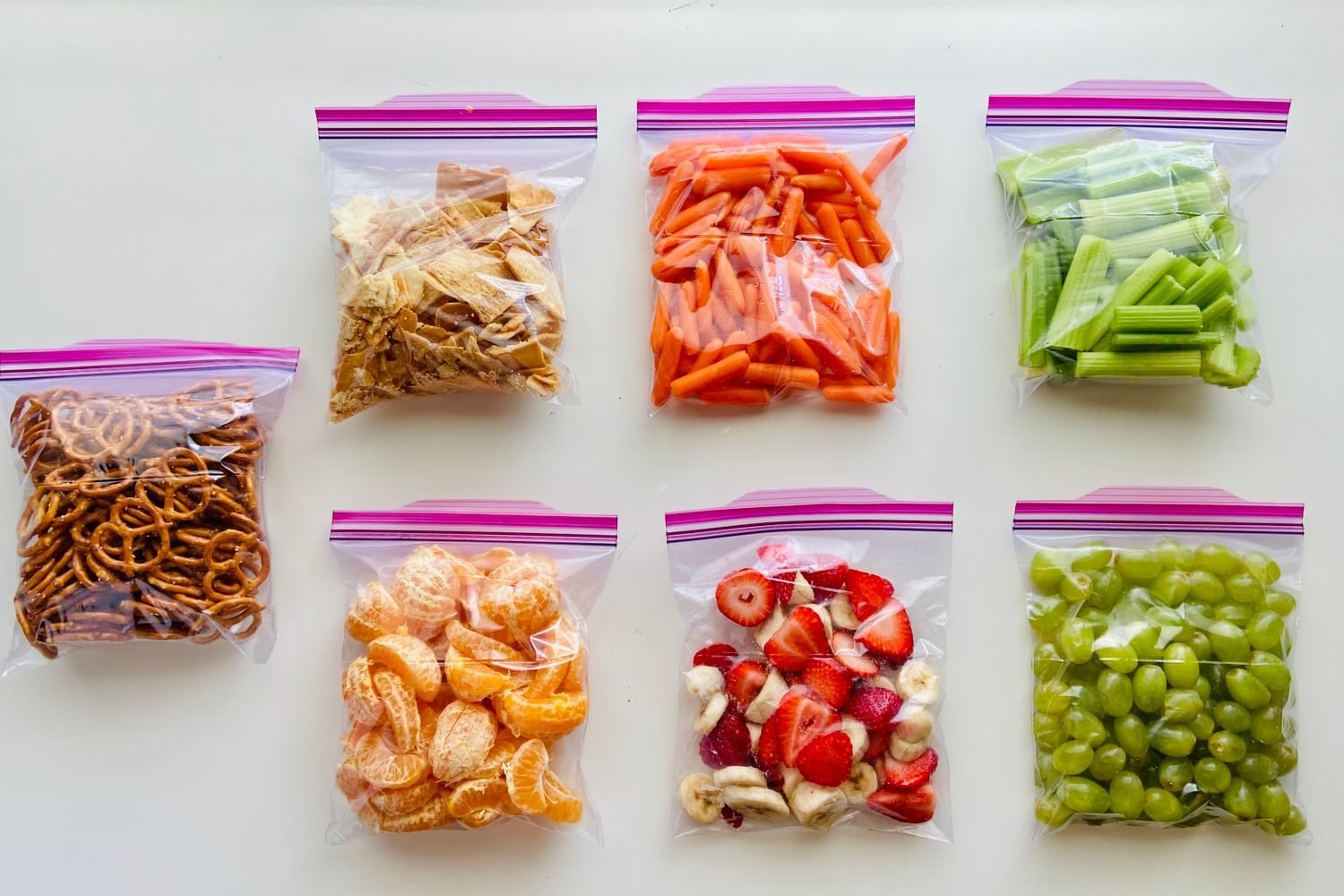
- Portion into small containers or bags. Divide roasted makhana, chana, or trail mix into 25-30g portions using small reusable containers or resealable pouches. This does double duty: it controls portions and makes grab-and-go actually grab-and-go.
- Stage nut butter and cracker packs together. Rubber-band or bag single-serve nut butter packets with a small stack of crackers so they’re a matched set, not two separate hunts through your pantry.
- Keep a “grab basket” by the door or in the pantry. A single basket or bin with 5-7 days of pre-portioned snacks means you can grab two or three on your way out without decision fatigue at 7am.
- Rotate fresh fruit in daily. Apples and bananas don’t need prepping ahead — just grab them the morning of, since they’re already self-contained.
This kind of batching is also where a lot of people find they overthink individual snack choices but underthink the system around them — something an approach to everyday nutrition and food choices can help simplify.
What should you pack for airport or flight travel specifically?
Air travel adds its own constraints: security rules, limited bag space, and often long stretches without real food options. A few travel-specific tips:
- Solids fly, liquids and gels don’t (in carry-on quantities). Roasted makhana, chana, nuts, whole fruit, and bars pass through security without issue. Nut butter in anything larger than a 100ml/3.4oz packet will get flagged — stick to the small single-serve pouches, which are usually under the limit.
- Pack more than you think you’ll need. Flight delays and layovers routinely turn a 3-hour trip into 6+ hours. A good rule of thumb is one snack per 2-3 hours of expected travel time, plus one spare.
- Choose snacks that won’t crush in a bag. Makhana and crackers are more fragile than chana or nuts — pack them in a hard-sided container or the center of your bag, not the outer pocket where they’ll get sat on.
- Avoid strong-smelling snacks in shared spaces. Save boiled eggs or strong cheese for home; on a plane or train, they’re more likely to annoy your row-mates than fuel you well.
- Hydrate alongside snacking. Cabin air is dry, and thirst is commonly mistaken for hunger — bring an empty bottle to fill after security so you’re not tempted to buy sugary drinks at the gate.
If your travel schedule regularly disrupts your eating windows, especially around evening flights, our piece on healthy evening snacks has more targeted ideas for that specific time of day.
How much should you actually eat from a travel snack stash?
Portion drift is the quiet problem with travel snacking — a “handful” of trail mix from a large bag can easily become 200+ calories without you noticing, especially when you’re distracted, bored, or anxious about a delay. This is exactly why pre-portioning matters more for travel than for at-home snacking: at home you can pause and check a container size; on the move, you’re eating out of whatever bag is in front of you.
A reasonable working target for most adults is 150-200 calories per snack, with 5-10g of protein or 3-5g of fiber to help it hold you over. That’s roughly a small handful (20-25 almonds or a 30g portion of roasted chana), one medium piece of fruit, or one nut butter packet with crackers — not a fistful eaten straight from a family-size bag on your knee.
A quick portion cheat sheet for common travel snacks
- Roasted makhana: 1 cup (about 30g)
- Roasted chana: 2-3 tablespoons (about 30g)
- Trail mix (no added sugar): 2 tablespoons (about 25g)
- Nut butter packet: 1 single-serve pouch (15-20g) with 4-5 whole grain crackers
- Whole fruit: 1 medium apple or banana
FAQs about healthy snacks on the go
How long can roasted makhana or chana stay fresh in a bag?
Both stay crunchy and safe to eat for up to 1-2 weeks at room temperature if stored in an airtight container or resealable bag, since they’re dry-roasted with very low moisture content. Keep them away from direct sunlight and heat, and they’ll outlast most road trips or work weeks without going stale.
Is dried fruit a good on-the-go snack, or is it just sugar?
Unsweetened dried fruit (no added sugar or syrup coating) is a reasonable travel snack in small portions — about 2-3 tablespoons — since it retains fiber and micronutrients from the fresh fruit. The concern is portion creep: dried fruit is calorie-dense, so pair it with nuts or seeds rather than eating it alone in large handfuls.
What’s a good snack option if I have nowhere to wash my hands?
Whole, unpeeled fruit like apples and bananas, individually wrapped bars, and pre-portioned pouches of makhana or chana are the most hygienic choices since you’re not reaching into a shared bag repeatedly. Carrying a small hand sanitizer alongside your snack stash covers the rest.
Can I bring homemade snacks through airport security?
Yes — solid homemade snacks like roasted chana, trail mix, or nut-butter-and-cracker packs typically pass through security without issue, since restrictions mainly target liquids and gels over 100ml/3.4oz. When in doubt, pack solids in a clear container so they’re easy to inspect quickly.
How do I stop myself from overeating trail mix on a long trip?
Pre-portion it into 25-30g bags before you leave rather than carrying one large bag — eating directly from a big bag is the single biggest driver of mindless overeating on trips. If you don’t have time to prep, use a small container or cup as a rough portion guide once you’re on the move.
Portable snacking doesn’t have to mean choosing between convenience and nutrition — a little batch-prep and a few smart swaps (roasted makhana over chips, whole fruit over juice, no-sugar trail mix over the candy-coated version) go a long way. If you want a snack and meal plan built around your actual schedule, commute, and travel habits, an online nutritionist consultation can help you put one together.