A snack helps weight loss when it combines at least 5-7 grams of protein with 3+ grams of fiber and stays under roughly 150-200 calories for a between-meal bite — that combination blunts hunger for hours rather than minutes. The bigger risk isn’t skipping snacks, it’s the “healthy halo” effect: foods that sound virtuous (granola, trail mix, dried fruit, nut butter) but are so calorie-dense that a “normal” portion can rival a fast-food side. Understanding the science of satiety and calorie density is what separates a snack that supports weight loss from one that quietly undoes it.
What actually makes a snack good for weight loss?
It comes down to two mechanisms: satiety (how full and satisfied a food makes you feel) and energy density (how many calories are packed into each gram of food). Protein and fiber are the two nutrients most consistently linked to satiety in nutrition research, and low-energy-dense foods let you eat a satisfying volume without a large calorie load. A snack built around both principles keeps you from raiding the pantry an hour later.
Protein slows gastric emptying and triggers hormones like peptide YY and GLP-1 that signal fullness to the brain. Fiber works mechanically — it adds bulk, slows digestion, and (for soluble fiber especially) forms a gel-like substance in the gut that delays how fast food moves through your system. Neither nutrient works as well alone, which is why a plain apple or a protein shake with no fiber tends to leave people hungry sooner than an apple with a tablespoon of natural peanut butter.
If you want the full nutritional case for fiber specifically, including how much you need daily and which foods deliver the most per calorie, see our fiber nutrition guide.
Why do protein and fiber matter more than “healthy” labels?
Because “healthy” is a marketing word, not a nutritional one, and it says nothing about how much of a food you can eat before it stops helping you. A single-ingredient food like almonds is genuinely healthy — rich in fiber, protein, and unsaturated fat — but a large handful eaten mindlessly can add 300-400 calories in a couple of minutes, since nuts are one of the most energy-dense whole foods that exist.
Research on snack food and satiety published in Advances in Nutrition notes that whole foods high in protein, fiber, and whole grains — think nuts, yogurt, prunes, popcorn — enhance satiety more reliably than processed low-fiber snacks, but portion still matters enormously within that category. This is the “healthy halo”: once a food is labeled healthy, people tend to eat more of it and underestimate the calories. The fix isn’t to fear nuts, granola, or dried fruit — it’s to pre-portion them. A 1.5 oz serving of mixed nuts is a very different snack, calorically, than eating from the bag while watching TV.
The classic healthy-halo traps
- Granola: often 200-300 calories per half-cup, and most people pour closer to a full cup.
- Trail mix: nuts, dried fruit, and chocolate — three energy-dense ingredients in one bag.
- Dried fruit: concentrated once water is removed; a quarter-cup of raisins has roughly the calories of two cups of grapes.
- Nut butters: nutrient-dense but easy to over-pour past the recommended 1-2 tablespoons.
- Smoothies and “protein” bars: some deliver 350-500 calories, more than many actual meals.
What is calorie density and why does it matter for snacking?
Calorie density (or energy density) measures calories per gram of food, and it’s one of the most consistent predictors of weight outcomes in controlled feeding research. Work by Dr. Barbara Rolls and colleagues at Penn State found that people tend to eat a fairly consistent weight of food each day, regardless of calorie content — so when that weight of food carries fewer calories, total intake drops without anyone consciously restricting portions.
One study illustrating this compared people eating two daily servings of a low-energy-dense soup against those eating two servings of a high-energy-dense dry snack; the soup group lost roughly 50% more weight over the study period (about 7.2 kg versus 4.8 kg), despite both groups eating to satisfaction rather than counting calories. Foods with high water and fiber content — vegetables, fruit, broth-based soups, yogurt — let you eat a filling volume for relatively few calories, while dry, fatty, or sugar-dense foods pack far more energy into the same bite. For snacking, use those water- and fiber-rich foods as your base, and treat calorie-dense additions like nuts or nut butter as flavor boosters in small, deliberate amounts.
How many calories should a weight-loss snack actually have?
There’s no single magic number, but a useful working range for most adults aiming to lose weight is 150-250 calories per snack, eaten once or twice between meals depending on total daily needs. This is a general anchor, not a hard rule — someone with higher energy needs from training may reasonably go higher, while someone eating smaller, more frequent meals may go lower.
What matters more than hitting an exact number is composition: a 200-calorie snack that’s mostly protein and fiber (Greek yogurt with berries) will keep you satisfied for 2-3 hours, while a 200-calorie snack that’s mostly refined carbohydrate (a few crackers) may leave you hungry again within 45 minutes to an hour, because it lacks the mechanisms that slow digestion and trigger fullness.
Research on adolescent snacking patterns found that normal-weight individuals averaged smaller snacks (around 262 calories per snack) and fewer snacks per day than peers with obesity (closer to 340 calories per snack, more frequently) — a pattern that, while observational, supports the idea that snack size and frequency both matter, not just content.
For a broader look at how snacks fit into your total daily calorie and macronutrient targets, our guide to nutrition for weight loss covers how to build a full-day eating pattern around these principles.
What are the best protein-fiber combinations for satiety?
These pairings consistently show up in satiety research and in practice because they hit both criteria — meaningful protein, meaningful fiber — without excess calorie density:
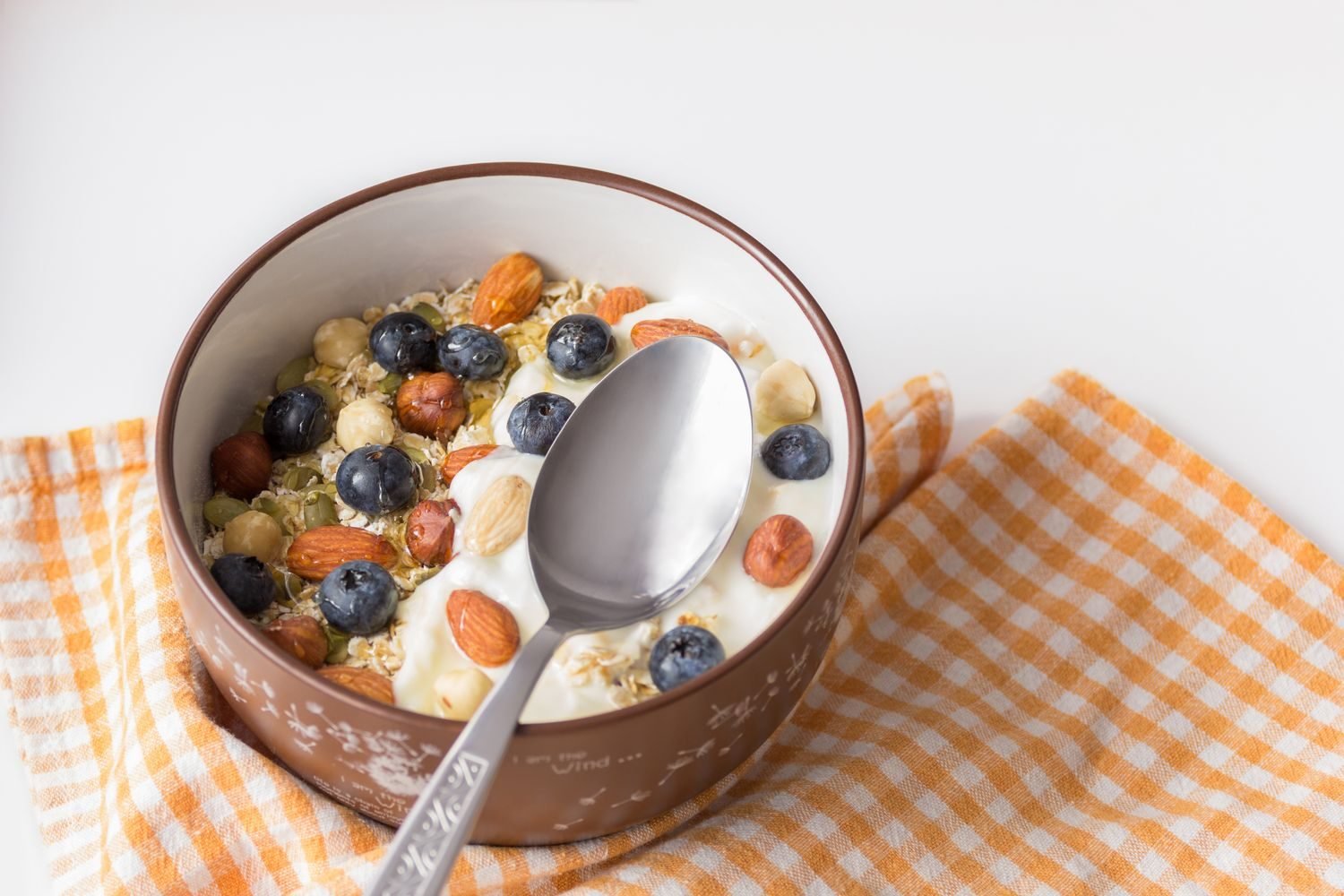
- Greek yogurt (plain) + berries: roughly 15-20g protein and 3-4g fiber for about 150-180 calories in a 3/4 cup serving with half a cup of berries.
- Apple slices + 1 tbsp natural peanut or almond butter: about 4-5g protein, 5g fiber, roughly 200 calories.
- Roasted chickpeas (1/3 cup): around 6g protein, 6g fiber, about 140 calories, with a crunch ultra-processed chips can’t match nutritionally.
- Cottage cheese + cucumber or cherry tomatoes: about 14g protein per half-cup, plus fiber and water volume, for around 120-150 calories.
- Edamame (1 cup, in pod): roughly 17g protein and 8g fiber for about 190 calories — one of the highest fiber-to-calorie ratios of any common snack.
- Hard-boiled egg + baby carrots: about 6g protein plus fiber and volume from the carrots, for roughly 100-120 calories.
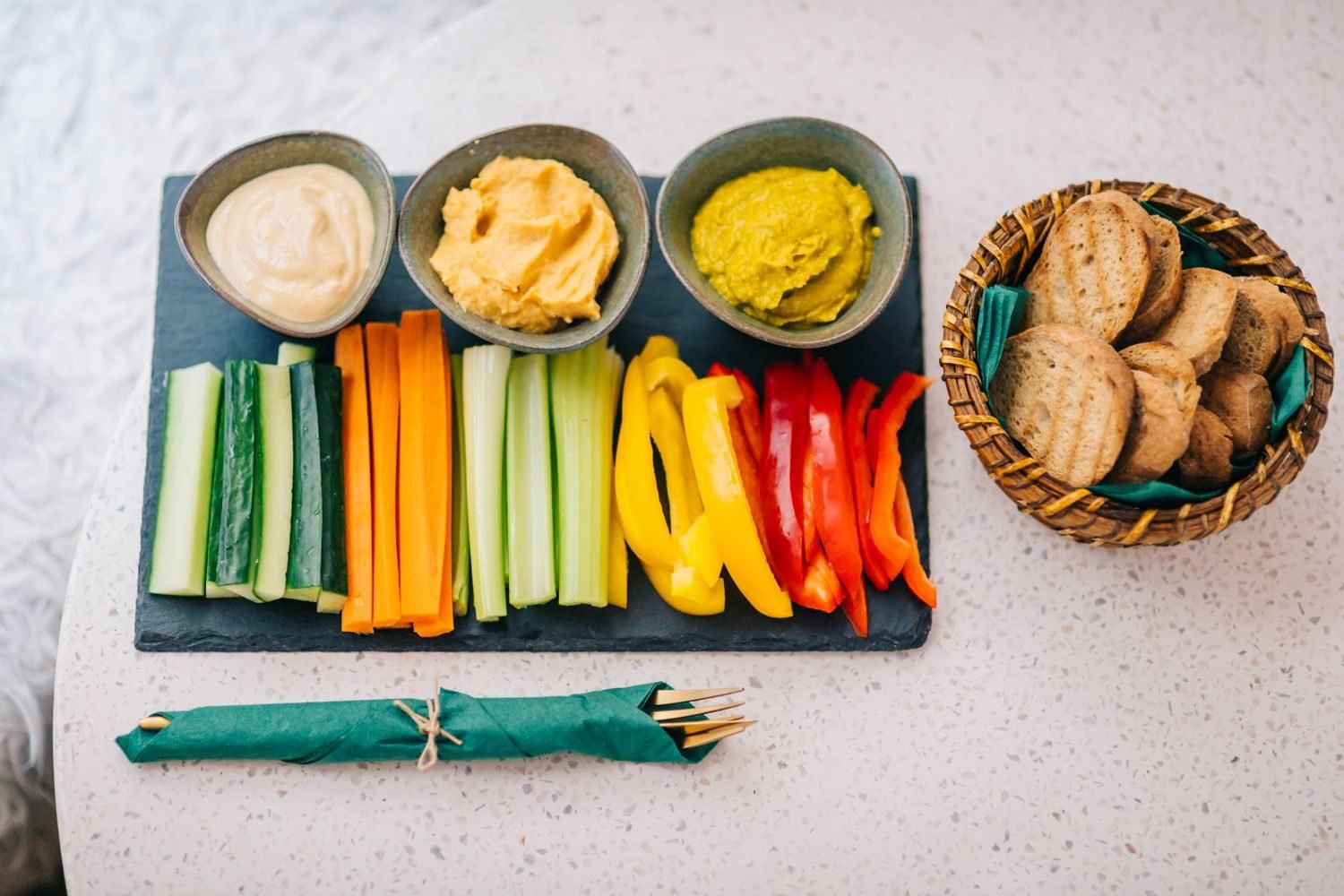
- Hummus (3 tbsp) + bell pepper strips: around 5g protein, 5g fiber, roughly 150 calories, with far more volume than the same calories in crackers.
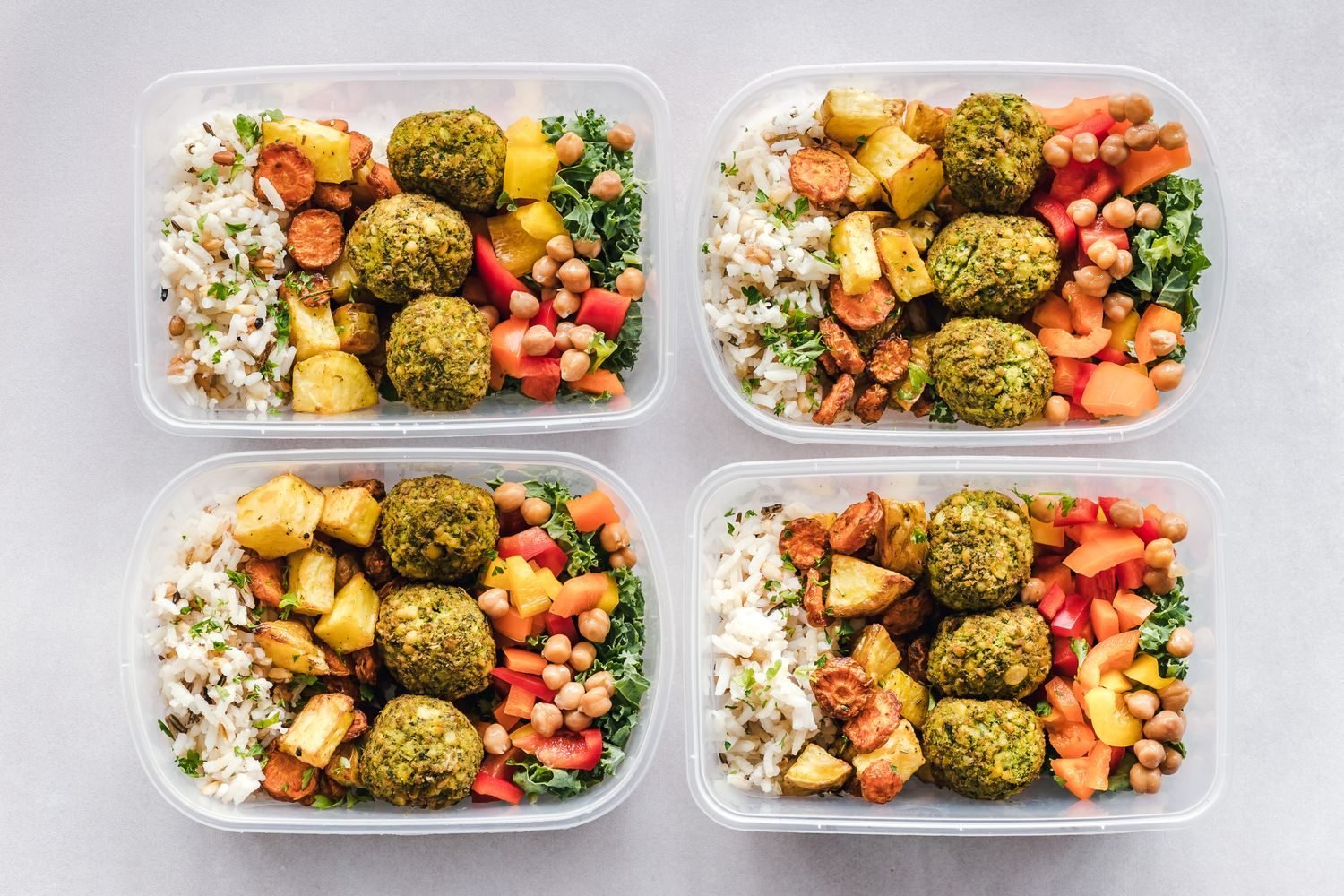
Each pairing has a protein or legume base plus a fiber-rich, water-rich produce component — it’s not one nutrient doing the work, it’s the two together. For a longer list organized specifically by protein content, see our high-protein snacks list.
A note on nuts specifically
Nuts deserve a special mention because they’re both genuinely excellent for satiety and genuinely easy to overeat. A 24-week randomized controlled trial found that people eating 1.5 oz of mixed tree nuts daily as part of a reduced-calorie diet lost as much weight as — and reported greater satiety than — those eating an equal-calorie portion of pretzels, both during active weight loss and the maintenance phase after. The takeaway isn’t to avoid nuts; it’s to measure them. A small handful (about 1.5 oz, roughly 23 almonds) is a genuinely different snack than eating straight from a large container.
How does snack timing fit into the picture?
Timing matters less than composition, but it’s not irrelevant. Snacking works best for weight loss when it prevents the kind of extreme hunger that leads to overeating at the next meal — not when it’s used to fill boredom regardless of actual hunger. A protein-and-fiber snack 2-3 hours before a delayed meal, or after a workout when your body genuinely needs replenishment, serves a clear purpose. Snacking on a fixed schedule regardless of hunger cues tends to just add calories without the satiety payoff.
For what to eat late in the day without disrupting sleep or digestion, see our guide to healthy evening snacks. If you’re mostly snacking away from home — at work, traveling, or between errands — our guide to healthy snacks on the go covers portable options that hold up outside a kitchen.
How do you avoid the healthy halo trap in real life?
A few practical habits close the gap between “healthy” and “actually helps with weight loss”:
- Pre-portion calorie-dense foods. Divide nuts, granola, or dried fruit into small containers the day you buy them, rather than eating from the original package.
- Check the serving size on the label, not just the calorie count. A “150 calorie” granola bar might list a serving as half the bar.
- Pair, don’t isolate. If eating something calorie-dense like nut butter or cheese, pair it with a high-volume, low-density food rather than eating it alone.
- Read ingredient order. If sugar, oil, or syrup appears in the first three ingredients of a “healthy” bar, treat it as a treat, not a staple.
- Eat slowly. Satiety signals from protein and fiber take 15-20 minutes to register; eating quickly can mean finishing before your body has caught up.
Frequently asked questions
Is it better to snack or just eat three larger meals when trying to lose weight?
Neither approach is inherently superior — what matters is total daily calories and how well your eating pattern controls hunger. Some people do better with two to three snacks that prevent overeating at meals; others find snacking adds unnecessary calories. Test what keeps you satisfied without excess intake.
How much protein should a weight-loss snack contain?
Aim for roughly 5-15 grams of protein per snack, depending on your total daily protein target and time until your next meal. Even 5-7 grams (a hard-boiled egg, a small serving of yogurt) measurably improves satiety compared to a protein-free snack of the same calories.
Can fruit alone count as a good weight-loss snack?
Whole fruit is genuinely useful thanks to its fiber and water content, but pairing it with a small protein source (nut butter, cottage cheese, a few nuts) extends satiety longer than fruit alone, which can digest quickly and leave you hungry again within an hour or so.
Are packaged “diet” or “low-fat” snacks actually better for weight loss?
Not necessarily. Many low-fat packaged snacks compensate for reduced fat with added sugar or refined starch, which offers little satiety benefit despite a lower calorie count. Checking protein and fiber grams matters more than a front-of-package “low-fat” claim.
How big a role does calorie density play compared to just counting calories?
Calorie density is a tool for eating satisfying portions without counting every calorie — research shows people naturally eat a fairly consistent weight of food daily, so choosing lower-density foods can reduce total intake without conscious restriction. It complements, rather than replaces, general calorie awareness.
The science is consistent: pair protein with fiber, respect portion sizes even on foods labeled healthy, and lean on naturally low-calorie-dense foods like vegetables, fruit, and yogurt as your snack base. Get those fundamentals right and the specific snack matters far less than the pattern you build around it. For a plan tailored to your goals, body, and schedule, an online nutritionist consultation can help turn these principles into a snacking routine that fits your life.