A healthy diet chart for weight loss combines three main meals and two snacks, structured around protein, fibre, and portioned carbohydrates, spread across a 12-14 hour eating window. The specific foods can flex to your taste; the structure underneath is what makes the chart work.
I’m Yash Pathak, founder and lead trainer at FitStrot. Ten years of building diet charts for clients has taught me one consistent lesson: charts fail not because the food choices are wrong, but because the structure is missing. Here’s a chart built around structure first.
What Makes a Diet Chart “Healthy” Versus Just Restrictive
A restrictive chart cuts calories aggressively and eliminates food groups. A healthy chart creates a moderate deficit — typically 300 to 500 calories below maintenance — while keeping protein, fibre, and micronutrients adequate. The difference shows up in week three: restrictive charts get abandoned; healthy ones get followed.
Three markers separate the two. First, does every meal include a protein source? Second, are carbohydrates portioned rather than banned? Third, is there room for flexibility on a busy day without the whole chart collapsing? If the answer to any of these is no, the chart needs revising before you start.
The Weekly Chart Structure
Breakfast (7:30-8:30 AM): A protein-forward start — moong dal chilla, vegetable poha with peanuts, besan chilla, or eggs with vegetables. Aim for 15-20g of protein here; it’s the meal most people under-serve.
Mid-morning (10:30-11 AM): A piece of fruit or a small handful of nuts, mainly for anyone with a 4+ hour gap before lunch.
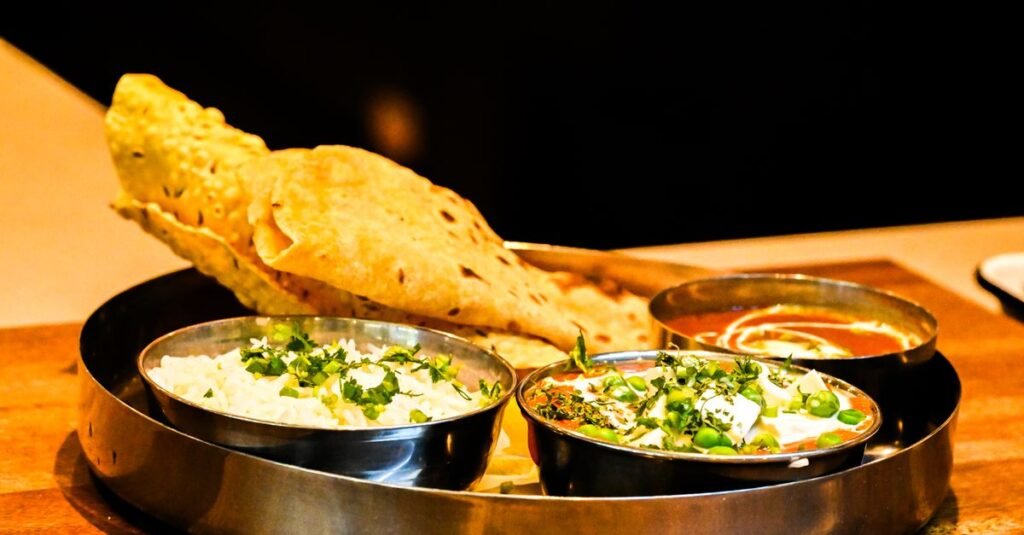
Lunch (1-2 PM): One roti or a small bowl of rice, a bowl of dal or a protein source, a large portion of sabzi, and salad or curd. This is the day’s largest meal.
Evening (5-5:30 PM): Roasted chana, buttermilk, a boiled egg, or sprouts — something with protein or fibre, not just carbohydrates, to avoid a pre-dinner energy crash.
Dinner (7:30-8:30 PM): Lighter than lunch — more vegetables and protein, less rice or roti — finished at least 2 hours before sleeping.
Sample Two-Day Rotation
Day A: Moong dal chilla → fruit → roti, rajma, sabzi, salad → roasted chana → grilled paneer with sautéed vegetables.
Day B: Vegetable egg bhurji → nuts → brown rice, dal, mixed vegetable sabzi → buttermilk → tofu stir-fry with vegetables.
Rotating two or three variations of each meal slot keeps the chart from feeling repetitive while preserving the underlying structure.
How Many Calories Should the Chart Target?
This is where most generic charts fall apart — they apply the same 1,200 or 1,500 calorie target to everyone. Your actual number depends on current weight, activity level, age, and goals. A sedentary person and someone training five days a week need meaningfully different intakes, even at the same body weight. Calculating this correctly (rather than guessing) is one of the biggest single improvements you can make to any diet chart.
Adjusting the Chart for Common Situations
If you’re vegetarian, lean more heavily on dal, paneer, and soy for protein — our vegetarian diet plan for weight loss covers this in depth. If you eat South Indian food regularly, our Kerala diet for weight loss guide adapts this same structure regionally. And if a medical condition is part of the picture, that changes the calorie and macro targets meaningfully — a generic chart won’t account for it, but a PCOD diet chart built for that specific need will.
Why Charts Stop Working After a Few Weeks
Weight loss isn’t linear, and a chart that worked in week one often needs adjusting by week four as your body adapts. This is the single biggest reason self-built charts stall — there’s no mechanism for revising them based on actual results. An online weight loss trainer solves exactly this: building the initial chart around your numbers, then adjusting it week to week as your weight, energy, and hunger patterns give feedback.
Reading a Diet Chart Correctly
A well-built diet chart isn’t just a list of foods — it should specify portion sizes (not just “dal” but “1 cup cooked dal”), timing relative to your schedule, and enough variety across the week that you’re not eating identical meals daily, which tends to hurt long-term adherence. A chart that looks nutritionally perfect on paper but ignores your actual food preferences and cooking habits usually gets abandoned within two weeks, regardless of how well-designed it is theoretically.
The most useful diet charts build in planned flexibility — a weekly “free” meal or two, substitution options within each meal slot, and enough repetition that grocery shopping and meal prep stay manageable, rather than requiring an entirely new shopping list every single day.
Meal Timing: Does When You Eat Matter as Much as What You Eat
Meal timing gets less attention than meal content in most diet charts, but it has a real, measurable effect on how consistent people actually stay. Long gaps between meals — a light breakfast at 8 am and no food until a 2 pm lunch — set up a hunger spike that makes portion control at lunch nearly impossible, no matter how disciplined someone intends to be.
A spacing of roughly four to five hours between meals, with a small protein-forward snack in between if the gap runs longer, tends to keep hunger manageable and blood sugar more stable through the day. This matters more for some people than others — someone prone to evening binge eating usually benefits from this structure far more than someone with a naturally steady appetite.
Late-night eating is the other timing factor worth flagging, less because of any special metabolic penalty to eating after 8 pm and more because late meals tend to be less deliberate — eaten in front of a screen, larger than intended, and closer to bedtime in a way that can affect sleep quality, which then affects the next day’s hunger and food choices. Finishing the last meal two to three hours before bed, where your schedule allows it, is a small structural change that often has an outsized effect on how the whole chart performs.
Mistakes People Make When Following a Diet Chart on Their Own
The most common mistake is downloading or copying a chart built for someone else’s calorie needs, activity level, and food preferences, and expecting it to perform the same way for a completely different body. A chart built for a 65 kg moderately active woman and followed by an 85 kg sedentary man, or vice versa, will produce frustrating, inconsistent results, not because the chart is wrong, but because it was never matched to the person using it.
A second mistake is following the chart exactly for the first week and then quietly substituting items without adjusting portions or accounting for the swap — replacing a roti with a slice of bread, for instance, without registering that the calorie and fibre content are meaningfully different. These small, well-intentioned substitutions accumulate over two or three weeks into a chart that looks the same on paper but delivers a different result in practice.
The third is abandoning the chart entirely after a single bad week instead of adjusting it. A diet chart is a starting hypothesis about what will work for you, not a fixed prescription — if hunger is unmanageable, or energy is crashing, or progress stalls for three-plus weeks, the correct response is to adjust the chart, not to conclude that diet charts don’t work or that you lack the discipline to follow one.
Making One Chart Work for a Whole Household
A question that comes up constantly, especially from women managing the kitchen for a joint family: “I can’t cook one meal for myself and a completely different one for my husband, kids, and in-laws every single day, so how do I actually follow this chart?” This is one of the most practical obstacles to any diet chart in an Indian household, and the honest answer is you shouldn’t need two separate kitchens running at once, the chart just needs to be built around shared base meals with individual adjustments layered on top.
The trick is separating what’s cooked from how it’s portioned and finished. If the family meal is dal, sabzi, roti, and rice, that base doesn’t need to change for your weight-loss goals versus everyone else’s maintenance needs, the dal and sabzi recipes stay exactly the same for the whole table. What changes is your plate: a smaller portion of rice or one less roti than you’d have served yourself before, a larger share of the vegetable and dal relative to the carb portion, and a side of curd added specifically to your plate. Nobody at the table needs to know or comment on this, it’s simply how you’re building your own plate from the same pot everyone else is eating from.
Where it gets trickier is with dishes cooked specifically rich for a festival, a guest, or because it’s a family favourite, like a heavier mutton curry loaded with oil, or puri-sabzi on a Sunday. Here, rather than refusing the dish entirely, which creates friction at the table and rarely lasts anyway, take a normal-sized portion but pair it more deliberately: less rice or fewer puris alongside it, a larger raw salad or cucumber-onion on the side to slow down how quickly you eat, and treating it consciously as the one indulgent meal rather than following it up with dessert as well simply because everyone else is having some. This lets you stay part of the family meal without either isolating yourself with a separate plate or abandoning the chart entirely for the day.
For children and other family members who don’t need to lose weight, the same base meals work fine for them too since dal, sabzi, roti, and rice in reasonable portions are appropriate for most people regardless of goals, they simply don’t need the portion adjustments you’re making for yourself, and growing children in particular shouldn’t have their portions restricted the way an adult on a weight-loss chart would. The mistake to avoid is either cooking two completely separate menus, which is exhausting and unsustainable within a few weeks, or giving up on the chart entirely because the family eats differently, when in reality one well-cooked base meal with individually adjusted portions and a slightly smaller katori for yourself covers almost every situation a typical Indian household kitchen faces.
Frequently Asked Questions
How does a healthy diet chart for weight loss work?
It creates a moderate calorie deficit through portioned meals with adequate protein and fibre at each sitting, spread across the day to keep hunger and energy stable rather than relying on restriction.
Is a healthy diet chart for weight loss safe?
Yes, when it includes a moderate deficit (300-500 calories) and doesn’t eliminate entire food groups. Charts that drop below 1,200 calories for women or 1,500 for men without medical supervision are not recommended.
How long does a healthy diet chart for weight loss take to show results?
Most people notice improved energy and digestion within 1-2 weeks, with visible weight change typically by week 3-4, assuming the chart is followed consistently alongside regular movement.
Can beginners follow a healthy diet chart for weight loss?
Yes — this structure is designed to be beginner-friendly, using familiar foods with clear meal timing rather than complex tracking or unfamiliar ingredients.
Ready for a Chart Calculated for Your Numbers?
A generic chart guesses at your calorie needs. A FitStrot online weight loss trainer calculates them specifically, builds your chart around food you’ll actually eat, and revises it weekly as you progress.