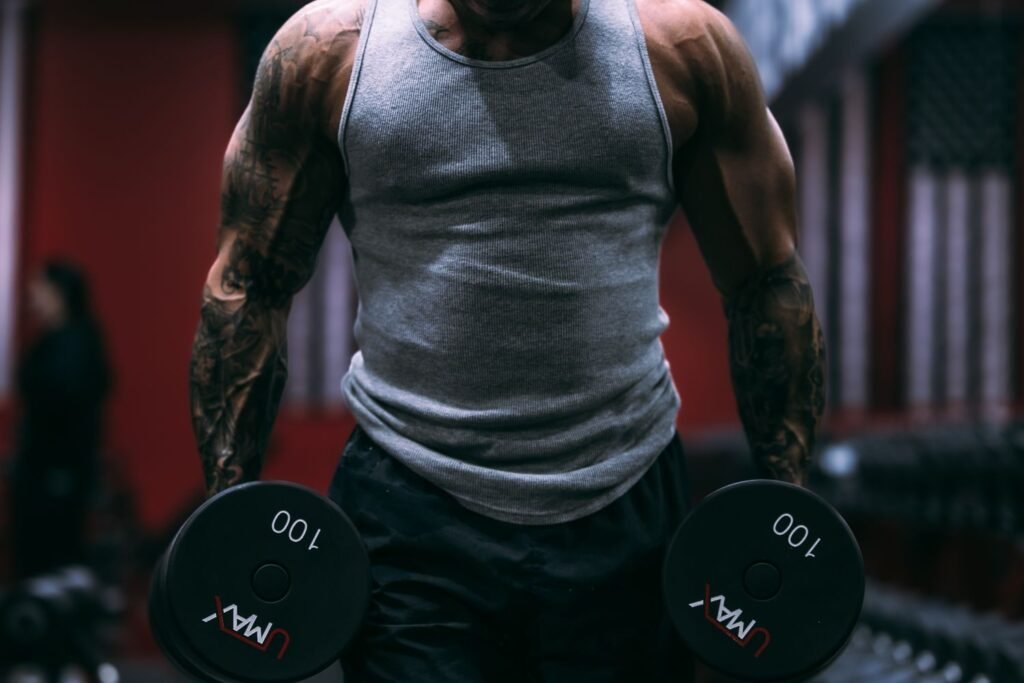
A good forearm training approach hits both muscle groups that make up the forearm, the flexors on the underside and the extensors on top, two to three times a week with a mix of direct isolation work and grip-dependent compound lifts. We build our clients’ forearm workouts around wrist curls, reverse curls, farmer’s carries, and dead hangs, then layer in grip trainers for the stubborn last 10% of strength. Skip direct forearm work and you’ll cap your deadlift, your pull-ups, and your grip endurance long before your back or biceps give out.
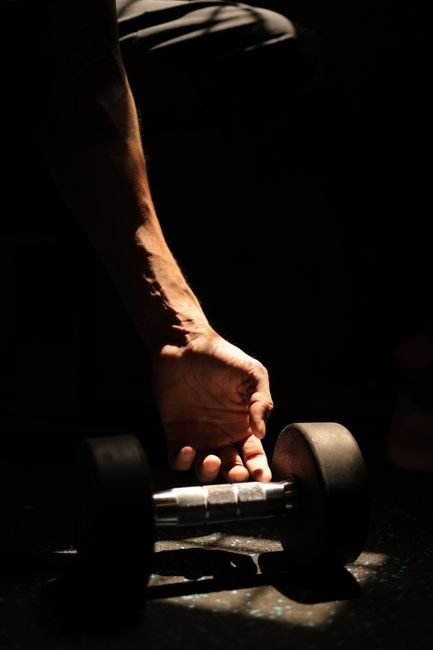
Why Does Forearm Training Get Neglected in Most Programs?
Most lifters skip forearms because the payoff isn’t visible in a mirror the way biceps or shoulders are. You curl, you press, you squat, and your grip just goes along for the ride until it doesn’t. We see this constantly with intermediate lifters who plateau on deadlifts and pull-ups not because their back or lats gave out, but because their grip failed first. That’s a training gap, not a genetic ceiling.
There’s also a myth that forearms grow automatically from other lifts. They grow a little, sure. Rows and curls give your forearms some stimulus as a byproduct. But byproduct stimulus isn’t the same as direct, progressive overload, and if you actually want thicker, stronger forearms, you need exercises built for them specifically.
What Muscles Make Up the Forearm?
Any real forearm muscles workout needs to train three distinct areas, not just “the forearm” as one blob of tissue.
- Wrist flexors run along the inside of your forearm and pull your palm toward your wrist. They’re the muscles doing most of the work when you grip something tightly.
- Wrist extensors sit on top of the forearm and pull the back of your hand toward your wrist. Weak extensors are the usual cause of elbow pain from typing, racket sports, or heavy curling.
- Brachioradialis runs along the outer forearm and shows up prominently when you do hammer curls or reverse curls with your palm facing down or neutral. It’s the muscle that gives the forearm its visible width.
Train flexors and neglect extensors and you set yourself up for imbalance and tendon irritation. Balanced forearm work covers all three.
What Are the Best Forearm Exercises?
These five moves cover the best forearm workouts we program for clients, whether they’re training in a fully equipped gym or working with a pair of dumbbells at home.
Wrist curls. Sit with your forearm resting on your thigh or a bench, palm up, holding a dumbbell or barbell. Curl the weight up using only your wrist. This is the single most direct flexor exercise you can do.
Reverse wrist curls. Same setup, palm facing down. This targets the extensors and is the one exercise almost everyone skips, which is exactly why you shouldn’t.
Farmer’s carries. Pick up a heavy pair of dumbbells or kettlebells and walk. Simple, brutal, and effective for grip endurance and overall forearm density. Nothing beats it for carryover to real-world strength.
Dead hangs. Hang from a pull-up bar with an overhand grip and just hold on. Thirty to sixty seconds under body weight tension builds grip strength fast and doubles as shoulder decompression.
Grip trainers. Spring-loaded hand grippers let you isolate crushing strength in a way barbell work can’t. They’re cheap, portable, and genuinely useful for a forearm grip workout you can do while watching TV.
If you’re already following a gym arm workout, these slot in easily at the end without needing extra equipment or a separate training day.
What Does a Sample Gym and Dumbbell Forearm Workout Look Like?
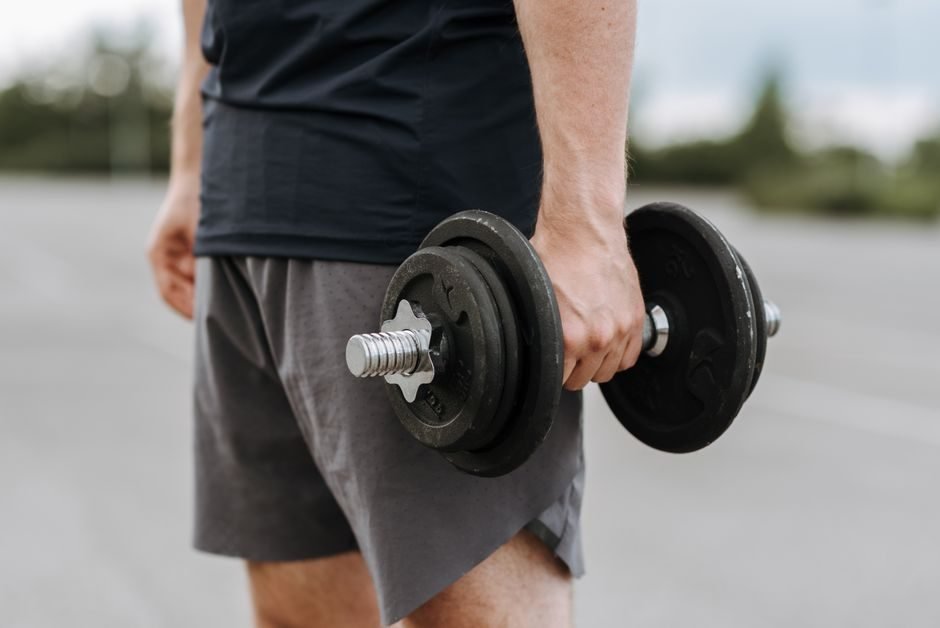
Here’s a forearm workout chart we actually hand to clients who train in a commercial gym and want a structured session, not a random handful of curls tacked on at the end. It works as both a standalone forearm day and a finisher after a biceps workout.
| Exercise | Sets | Reps | Rest |
|---|---|---|---|
| Barbell wrist curl | 3 | 15-20 | 45 sec |
| Dumbbell reverse wrist curl | 3 | 12-15 | 45 sec |
| Farmer’s carry (heavy dumbbells) | 3 | 30-40 meters | 60 sec |
| Dead hang from pull-up bar | 3 | Max hold | 60 sec |
| Hand gripper crushes | 3 | 10-12 per hand | 30 sec |
This is one of the more popular forearm workouts with dumbbells we prescribe because it needs nothing beyond a dumbbell rack and a pull-up bar. Run it twice a week and you’ll notice a difference in grip endurance within a few weeks.
How Do You Train Forearms at Home?
You don’t need a gym for a solid forearm workout at home. A pair of adjustable dumbbells covers wrist curls and reverse wrist curls. No dumbbells at all? Fill two backpacks or buckets with books or water bottles and use those instead, the loading principle doesn’t care what the weight looks like.
For dead hangs, a sturdy doorframe pull-up bar works fine. If you don’t have one, towel wrings (twisting a towel as hard as you can for 20-30 seconds per side) and static holds carrying two full grocery bags around your living room both hammer grip endurance without any equipment. Add in finger extensions using a rubber band looped around your fingers to balance out all that gripping work.
The honest limitation of home training is load progression. Household objects only get so heavy. Once bodyweight and household loads stop being challenging, you’ll need actual dumbbells or a grip trainer to keep progressing.
Why Does Forearm Training Improve Grip Strength for Other Lifts?
Your grip is the weak link in almost every pulling movement. Deadlifts, rows, pull-ups, even farmer’s carries themselves, all get bottlenecked by how long your hands can hold on before your back and legs ever reach their limit. Build stronger forearms and you extend that ceiling, which means more reps, heavier pulls, and better back and bicep development because you can actually train those muscles to failure instead of your grip giving out first.
This is also why a bicep and forearm workout pairs so naturally. Curls and forearm isolation work hit the same general area of the arm, share warm-up needs, and let you finish a session feeling like you trained the whole limb rather than half of it. If you’re building out an arm day, a preacher curl workout combined with two or three forearm exercises covers biceps, flexors, and extensors in one session.
How Often Should You Train Your Forearms?
Two to three sessions a week is the sweet spot for most people. Forearms recover faster than bigger muscle groups like quads or lats, so you can train them more frequently without running into the same fatigue issues. That said, if you’re already doing heavy deadlifts, rows, or pull-ups on other days, your forearms are getting indirect volume too, so factor that in rather than stacking direct work on top without any thought to total load.
A simple split: two dedicated forearm sessions a week, plus whatever indirect work comes from your pulling movements. That’s enough stimulus to build noticeable size and strength without turning your forearms into the most overtrained muscle in your program.
What Mistakes Kill Forearm Gains?
The biggest one is training only flexors and ignoring extensors. It creates muscular imbalance and is a common cause of elbow pain that gets blamed on “tennis elbow” when it’s really just undertrained extensors failing to keep up with an overtrained grip.
The second mistake is using too much weight and too little range of motion. Wrist curls only work if the wrist actually moves through its full range. Swinging a heavy dumbbell with a stiff wrist trains your forearm muscles as stabilizers, not as the primary movers, and that’s a completely different (and less effective) stimulus.
The third is treating forearm training as optional. It’s not glamorous, but skipping it caps your performance in nearly every other upper body lift you care about.
Ready to Build a Program Around This?
Writing your own forearm workout chart is one thing. Actually progressing it week over week, adjusting for soreness, plateaus, and your specific goals, is where most people get stuck. If you’d rather have a coach build and adjust this for you, check out FitStrot’s 1-on-1 personal training, where we design your full program, forearms included, around your actual schedule and equipment.
Frequently Asked Questions
What are the best forearm workouts?
The best forearm workouts combine wrist curls and reverse wrist curls for direct isolation with farmer’s carries and dead hangs for grip endurance. Doing all four across a week covers flexors, extensors, and grip strength together, which gives more balanced results than isolation work alone.
How do you train your forearms?
Train forearms two to three times a week with a mix of wrist curls, reverse wrist curls, and grip-based work like farmer’s carries or dead hangs. Use full range of motion, progress the weight gradually, and don’t neglect extensors just because flexors feel more natural to train.
What are the benefits of forearm workouts?
Stronger forearms improve your grip on deadlifts, rows, and pull-ups, letting those lifts get limited by your back and legs instead of your hands giving out first. They also build visible forearm size, support wrist stability, and reduce the risk of elbow pain from muscular imbalance.
How often should I train forearms?
Two to three dedicated sessions a week works well for most people since forearms recover faster than larger muscle groups. If you’re already deadlifting, rowing, or doing pull-ups regularly, account for that indirect volume so you don’t overtrain the area.
Can I build forearms at home without weights?
Yes. Towel wrings, grocery bag carries, doorframe dead hangs, and rubber band finger extensions all build real grip and forearm strength. The main limitation is load progression, so once bodyweight and household objects stop feeling challenging, you’ll want dumbbells or a grip trainer to keep advancing.