The daily nutrition requirement for female adults isn’t one fixed number — it shifts by age, activity level, and reproductive stage. A 25-year-old needs roughly 2,000-2,200 calories and 18 mg of iron a day; a 55-year-old needs closer to 1,600-1,800 calories but still needs to watch calcium and vitamin D closely as bone density starts to decline. A pregnant woman needs 27 mg of iron daily — 50% more than a non-pregnant woman of the same age. These numbers come from the U.S. National Institutes of Health Dietary Reference Intakes (DRI) and the Dietary Guidelines for Americans, and they’re the numbers this guide lays out in full, stage by stage, so you can check your own intake against an actual reference rather than a rounded-off internet average.
Think of this as the lookup page — the one you bookmark and return to when you want the exact RDA for calcium at 45 versus 55, or how much folate a nursing mother needs versus a woman who isn’t pregnant. If you want the “why” behind these numbers and how to actually hit them through food, our broader guide on women’s nutrition covers that ground. This page is just the numbers.
What is the daily nutrition requirement for a woman by age?
The table below pulls together the core reference values most women ask about — energy (calories), protein, iron, calcium, folate, and vitamin D — for four life stages: 19-30, 31-50, 51+, pregnancy, and lactation. Calorie figures assume a moderately active lifestyle (roughly the equivalent of walking 1.5-3 miles a day); sedentary women should aim toward the lower end of the range, and very active women toward the upper end or slightly above.
| Life stage | Calories (moderately active) | Protein | Iron | Calcium | Folate | Vitamin D |
|---|---|---|---|---|---|---|
| 19-30 years | 2,000-2,200 kcal | 46 g/day | 18 mg/day | 1,000 mg/day | 400 mcg DFE/day | 15 mcg (600 IU)/day |
| 31-50 years | 1,800-2,000 kcal | 46 g/day | 18 mg/day | 1,000 mg/day | 400 mcg DFE/day | 15 mcg (600 IU)/day |
| 51+ years | 1,600-1,800 kcal | 46 g/day | 8 mg/day | 1,200 mg/day | 400 mcg DFE/day | 15 mcg (600 IU)/day; 20 mcg (800 IU) after 70 |
| Pregnancy (19-50) | +340 kcal (2nd trimester), +452 kcal (3rd trimester) | 71 g/day | 27 mg/day | 1,000 mg/day | 600 mcg DFE/day | 15 mcg (600 IU)/day |
| Lactation (19-50) | +330-400 kcal above baseline | 71 g/day | 9 mg/day | 1,000 mg/day | 500 mcg DFE/day | 15 mcg (600 IU)/day |
Source: U.S. National Institutes of Health (NIH) Dietary Reference Intakes and the Dietary Guidelines for Americans, 2020-2025. These are population-level values designed to meet the needs of nearly all healthy individuals in each group — your personal requirement can still vary with body size, health conditions, and activity. If you’re referencing Indian dietary standards, the ICMR-National Institute of Nutrition (ICMR-NIN) 2020 guidelines follow a similar pattern calibrated to Indian body weights: around 2,130 kcal/day and 0.83 g/kg protein for a moderately active adult woman, with calcium rising to 1,200 mg/day past 60. For a tailored number, an online nutritionist consultation is the fastest way to get one.

How many calories does a woman need per day?
A moderately active woman aged 19-30 needs about 2,000-2,200 calories a day; that drops to roughly 1,800-2,000 for the 31-50 bracket, and down to 1,600-1,800 after 51. The decline isn’t arbitrary — resting metabolic rate falls gradually with age as lean muscle mass decreases, so the same activity level burns fewer calories at 55 than it did at 25.
Sedentary women (desk job, minimal structured exercise) should aim for the lower end of each range, sometimes slightly below it. Active women — those getting 60+ minutes of daily movement — can sit at the upper end or add 200-400 calories depending on training volume. These aren’t diet targets; they’re maintenance estimates for a healthy body weight. Cutting well below them for extended periods, especially under 1,200 calories, risks micronutrient shortfalls even if the scale moves in the desired direction.
How much protein should a woman eat daily?
The RDA for protein in adult women is 46 grams per day, based on 0.8 grams per kilogram of body weight — a minimum threshold set to prevent deficiency, not necessarily an optimal target for body composition or muscle maintenance. Many nutrition researchers and dietitians now suggest active women, and women over 50 working to preserve muscle mass, may benefit from 1.0-1.2 g/kg or higher, though that’s a performance target rather than the official RDA.
Pregnant and lactating women need considerably more — 71 grams per day — to support fetal growth, placental tissue, and milk production. Good sources include eggs, dals and legumes, paneer, Greek yogurt, fish, poultry, and tofu. Spreading protein across three to four meals rather than loading it into one is generally easier on digestion and appears to support muscle protein synthesis more evenly through the day.
The ICMR-NIN 2020 guidelines set a similar Indian RDA of 0.83 g/kg body weight per day — about 46 g for a 55 kg woman — with one caveat: a diet built heavily around cereals may need to lean closer to 1 g/kg, since combining grains with legumes and dairy improves the overall amino acid profile.
Why is iron so much higher for menstruating women?
This is the single biggest male-female gap in the entire nutrient table, and it’s worth understanding why. Menstruating women (19-50 years) need 18 mg of iron a day — more than double the 8 mg RDA for men in the same bracket, covered in our companion piece on the daily nutrition requirement for male adults. The reason is straightforward: monthly blood loss depletes iron stores, and diet has to replace it.
Once menstruation stops at menopause, the requirement drops sharply — to 8 mg/day for women 51 and older, matching the male RDA, because the primary driver of the higher requirement (cyclical blood loss) is gone. During pregnancy, iron needs spike again, to 27 mg/day, to support the roughly 50% increase in maternal blood volume and the iron the fetus stores for its first six months of life.
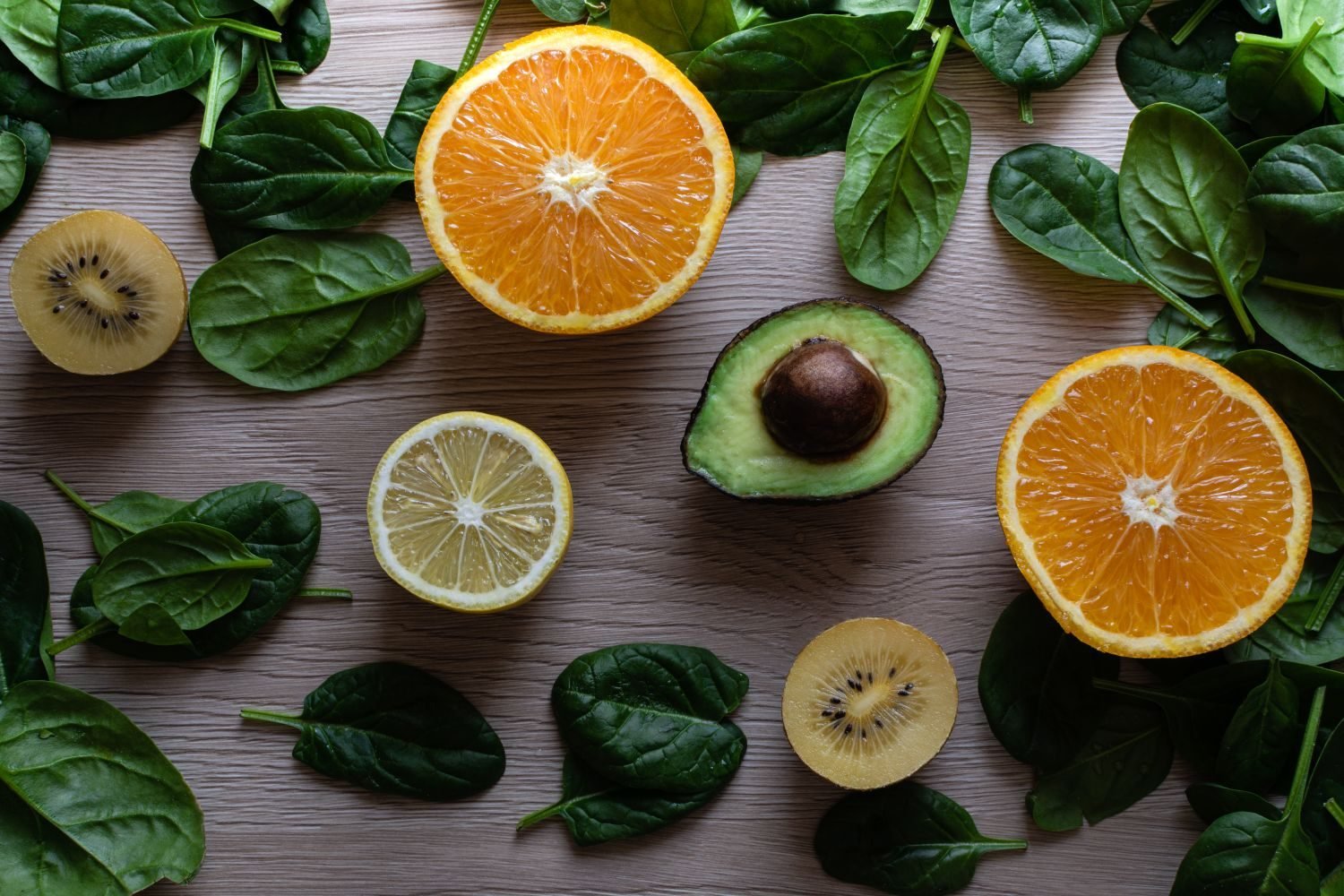
Iron deficiency remains one of the most common nutritional gaps among women of reproductive age, and low iron can show up as fatigue, pale skin, brittle nails, and poor concentration well before a formal anemia diagnosis. If you’re consistently tired despite adequate sleep, it’s worth reading our detailed breakdown on nutritional anemia and getting a ferritin panel checked rather than guessing. Pairing iron-rich foods (spinach, lentils, red meat, fortified cereals) with vitamin C (citrus, tomatoes, amla) improves absorption meaningfully, while tea and coffee taken with meals can blunt it.
How much calcium and vitamin D does a woman need at each age?
Calcium sits at 1,000 mg/day for women 19-50, then rises to 1,200 mg/day at 51+ — a deliberate increase timed to menopause, when declining estrogen accelerates bone loss and raises fracture risk. This is one of the few nutrients where the requirement goes up rather than down with age, and it’s a detail a lot of women miss because most “adult” supplement labels default to the lower 1,000 mg figure.
Vitamin D holds steady at 15 mcg (600 IU) per day through most of adulthood, stepping up to 20 mcg (800 IU) after age 70. Vitamin D isn’t just a bone nutrient in isolation — it governs how efficiently the body actually absorbs and uses the calcium you’re eating, so a shortfall in one can undercut the other even if your calcium intake looks fine on paper. Sunlight exposure, fatty fish, egg yolks, and fortified dairy or plant milks are the main dietary levers; many women, especially those with limited sun exposure or darker skin tone, fall short without supplementation. For the full picture on food sources, absorption factors, and how much is too much, see our dedicated guide on calcium nutrition.
What changes during pregnancy and breastfeeding?
Pregnancy and lactation are the two life stages where the standard adult table stops applying — nearly every nutrient requirement shifts, and some shift substantially:
- Calories: No extra calories are needed in the first trimester; the second trimester adds about 340 kcal/day, and the third adds about 452 kcal/day. Lactation adds roughly 330-400 kcal/day depending on how exclusively the mother is breastfeeding.
- Protein: Jumps from 46 g to 71 g/day in both pregnancy and lactation, to support fetal tissue growth and milk synthesis.
- Iron: Rises to 27 mg/day during pregnancy — the highest iron requirement of any life stage — then drops to 9 mg/day during lactation, lower even than the non-pregnant baseline, since breastfeeding often suppresses menstruation.
- Folate: Increases from 400 to 600 mcg DFE/day during pregnancy, critical for preventing neural tube defects in early fetal development, and stays elevated at 500 mcg DFE/day during lactation.
- Calcium and vitamin D: Interestingly, these stay at standard adult levels (1,000 mg and 15 mcg respectively) through pregnancy and lactation — the body compensates by absorbing calcium more efficiently rather than requiring more intake.
Folate deserves particular attention because the neural tube forms in the first 3-4 weeks of pregnancy, often before a woman knows she’s pregnant — which is why health authorities recommend women who could become pregnant maintain adequate folate intake even before conception. For the complete stage-by-stage nutritional breakdown across all three trimesters, our guide on nutrition during pregnancy goes deeper than this reference table can.

How do these numbers differ from what men need?
Calorie and protein needs run lower for women mainly due to differences in average body size and lean muscle mass, not because women need less nutrition per se. But the iron gap is the outlier worth remembering: 18 mg for menstruating women versus 8 mg for adult men is one of the largest sex-based differences in the entire RDA framework, and it disappears once a woman reaches menopause. Calcium is identical between the sexes at most ages, though women’s post-menopausal rise to 1,200 mg has no direct male equivalent that early (men’s calcium RDA climbs later, closer to 71). For the mirror-image table, see the daily nutrition requirement for male reference.
What other nutrients should women track beyond this table?
Calories, protein, iron, calcium, folate, and vitamin D cover the nutrients most likely to fall short or carry the biggest consequences for women specifically, but they’re not the whole picture. Vitamin B12 (2.4 mcg/day, rising to 2.6-2.8 mcg during pregnancy and lactation), magnesium (310-320 mg/day), iodine (150 mcg/day, 220 mcg in pregnancy), and omega-3 fatty acids all matter for energy, thyroid function, and cardiovascular health. Our broader roundup on vitamin nutrition walks through the full micronutrient landscape if you want to go beyond this reference table.
Frequently asked questions
Is 1,200 calories a day enough for an adult woman?
Not usually. The RDA range for most adult women is 1,600-2,200 calories depending on age and activity level. 1,200 calories sits well below the reference intake for nearly every age group and is typically used only under medical supervision for specific short-term weight-loss protocols, not as a general daily target.
Do women need more iron than men every year of adulthood?
No — only during the menstruating years, roughly 19-50. The RDA is 18 mg/day versus 8 mg/day for men in that window. After menopause, a woman’s iron requirement drops to 8 mg/day, matching the male RDA, since the main cause of the earlier higher need — monthly blood loss — no longer applies.
How much calcium does a woman need after age 50?
1,200 mg/day, up from 1,000 mg/day in the 19-50 bracket. The increase is timed to menopause, when falling estrogen speeds up bone density loss and raises fracture risk, making consistent calcium (paired with vitamin D) more important than at any earlier adult stage.
Does folate need to increase before getting pregnant, not just during?
Yes. Because the neural tube forms in the first few weeks of pregnancy, often before a positive test, health authorities recommend women who could conceive maintain intake close to the pregnancy target of 600 mcg DFE/day, commonly through a folic acid supplement, rather than waiting until pregnancy is confirmed.
Why does protein need rise so much during pregnancy and breastfeeding?
Protein requirements jump from 46 g to 71 g/day because the body is actively building new tissue — the placenta, fetal growth, and increased maternal blood volume during pregnancy, and milk synthesis during lactation. All of that tissue and fluid production draws directly on dietary protein and amino acid availability.
These reference numbers are a starting point, not a personalized prescription — body weight, existing health conditions, lab results, and activity level all shift what’s right for you. If you want your own numbers checked against your actual bloodwork and lifestyle, an online nutritionist consultation is the most direct way to get a plan built around your specific life stage rather than a population average.