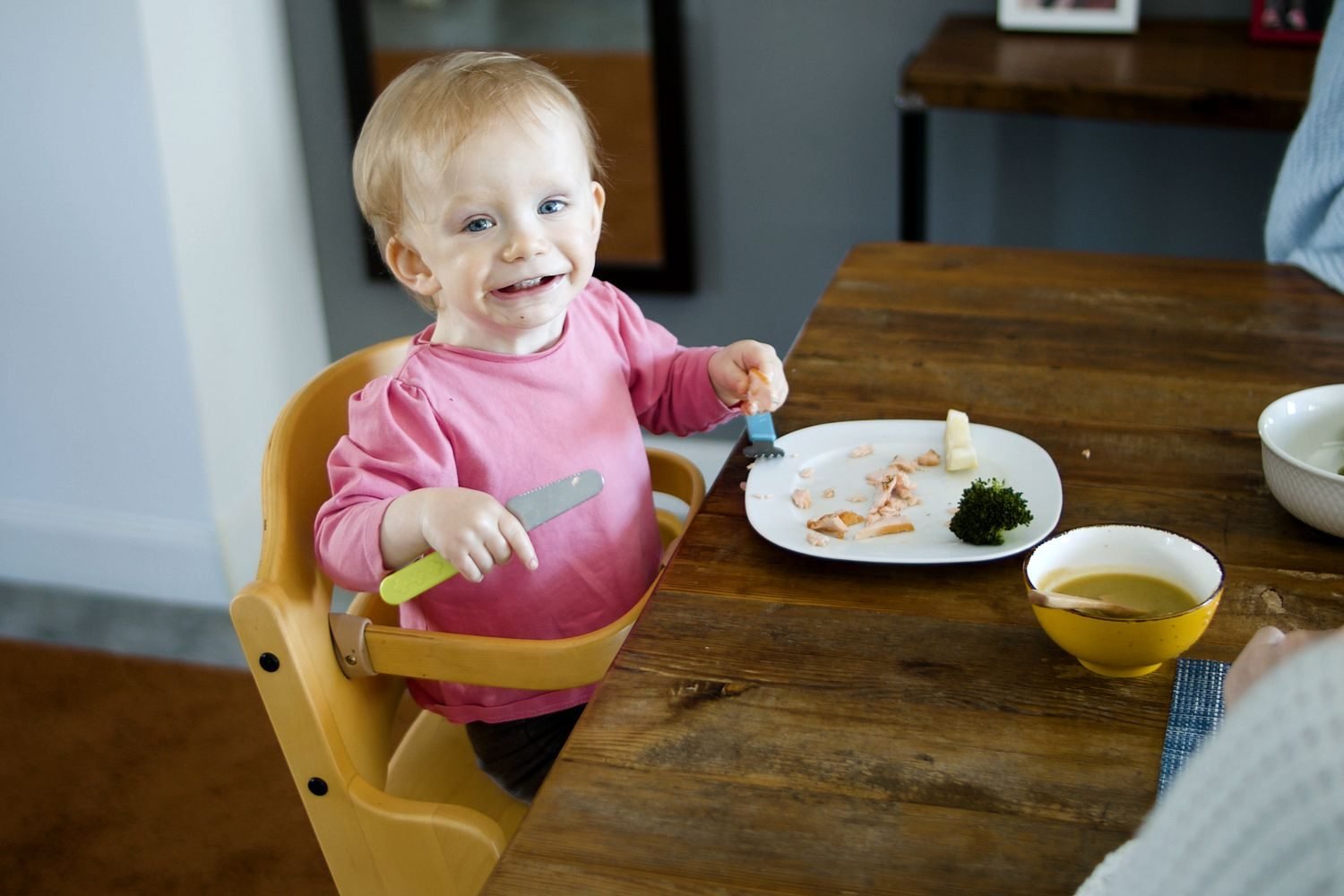
Toddler nutrition between ages 1 and 3 comes down to three things most parents get wrong at first: portions are far smaller than they expect, daily “picky” refusals are usually normal development rather than a problem to fix, and the calmest mealtimes happen when parents stop trying to control how much a toddler eats. A toddler’s stomach is roughly the size of their fist, so a full meal for a 2-year-old might be two tablespoons of rice, a few bites of chicken, and half a banana — not the adult-sized plate many parents assemble out of habit. Understanding this age-specific reality, rather than applying rules meant for babies or school-age kids, is what makes the 1-3 year window easier to navigate.
This stage is genuinely different from what came before and what comes after. Feeding an infant is about introducing new textures and hitting growth milestones (see our guide to infant nutrition for that stage). Feeding a toddler is something else entirely: a child who ate everything at 11 months suddenly refuses green vegetables at 18 months, insists on the same three foods for a week, then abandons those too. That’s not a phase you fix — it’s a phase you manage with the right structure.
How much food does a toddler actually need each day?
Less than most parents assume. According to HealthyChildren.org, published by the American Academy of Pediatrics, a toddler’s serving is generally about one-quarter the size of an adult’s, and total calorie needs for children 1-3 years old typically fall between 1,000 and 1,300 calories a day, depending on the child’s size and activity level.
A practical shortcut many pediatric dietitians use: offer about one tablespoon of each food per year of age. A 2-year-old might start with two tablespoons each of vegetables, protein, and grain — and can ask for seconds if still hungry. That’s not a punishment-sized portion; it’s developmentally appropriate. A toddler’s stomach holds roughly one cup of food at a time, so five to six small meals and snacks spread across the day generally work better than three large ones.
The AAP’s general food group guidance for this age includes about 2-3 servings each of fruit and vegetables, 6 servings of grains, 2 servings of protein, and 2-3 servings of dairy per day — including roughly two 8-ounce servings of milk to help maintain adequate vitamin D and iron. Whole milk is recommended over reduced-fat milk for children under 2, since the fat supports rapid brain development. For the fuller nutrient breakdown by age, our nutritional needs for children guide covers requirements across a wider age range.
What is the division of responsibility, and why does it stop mealtime battles?
The single most useful framework for this age comes from dietitian and family therapist Ellyn Satter, whose Division of Responsibility in Feeding has become a standard reference in pediatric nutrition. The idea is simple to state and surprisingly hard to practice: parents decide what food is offered, when, and where. The child decides how much to eat, and whether to eat it at all.
That split sounds small, but it changes everything about how mealtimes feel. Most power struggles happen because a parent has quietly taken over the child’s half of the job — coaxing “just one more bite,” negotiating dessert for vegetables, or trailing a toddler around the room with a spoon. Satter’s research suggests that when parents let go of the how-much-and-whether decisions, children actually regulate their intake better over time, not worse. A toddler who eats almost nothing at lunch and then eats a full dinner is exercising exactly the self-regulation this approach protects.
In practice, this looks like: serving a meal with at least one food the child usually accepts alongside foods you’re introducing; sitting down together at the table, screen-free, for a set amount of time and ending the meal even if little was eaten; skipping bribes or backup meals as leverage if a toddler declines what’s served; and trusting appetite fluctuations, since growth slows dramatically after infancy and appetite naturally becomes less predictable day to day.
Why won’t my toddler eat anything new?
This is developmental, not defiance. Around 18 to 24 months, many children go through a stage researchers call food neophobia — a wariness of new foods that shows up right as toddlers become mobile and independent. Evolutionarily, being cautious about unfamiliar food was protective. Behaviorally, it now shows up as a toddler refusing a vegetable they happily ate as an infant.
The research-backed fix is not more pressure — it’s repeated, low-stakes exposure. Research on children’s eating behavior finds that kids often need to see or taste a new food somewhere between 8 and 15 times before accepting it, and repeated exposure has been shown in controlled studies to increase children’s willingness to eat a new vegetable more effectively than disguising it in a favorite dish. One refusal is not useful data. Ten offerings across several weeks, with zero pressure to actually eat it, usually is.
What actually helps reduce food refusal
- Keep serving the food, without comment. A small portion next to familiar foods, meal after meal, beats a single dramatic “just try it” attempt.
- Let them touch, smell, and play with food before eating it. Sensory familiarity often precedes willingness to taste.
- Involve toddlers in simple food prep. Washing, stirring, or tearing lettuce builds curiosity, even in kids who won’t eat the finished dish yet.
- Model eating the food yourself, calmly. Toddlers watch what adults and siblings eat far more than they listen to what’s said about it.
- Avoid short-order cooking. A separate “safe” meal every time a food is refused removes the repeated exposure that eventually builds acceptance.

What should a typical day of toddler meals look like?
Structure matters more than variety at this age. Most pediatric guidance points toward a predictable rhythm of three small meals and two to three snacks, spaced about 2.5 to 3 hours apart, so toddlers arrive at each one genuinely hungry rather than grazing constantly. A sample day for a 2-year-old: scrambled egg with whole-wheat toast and soft fruit for breakfast; cheese cubes or yogurt as a mid-morning snack; beans or shredded chicken with a soft vegetable and rice or pasta for lunch; fruit or vegetable sticks with hummus in the afternoon; and dinner repeating the same food groups in toddler-sized portions, including one food the child already likes.
Note what’s missing: pressure to finish, dessert as a reward, or a “backup” meal if the first is refused. This is also the age where choking risk is still high, so whole grapes, whole nuts, popcorn, and large chunks of meat or raw vegetable should be cut small or avoided until a child is chewing reliably. For the earlier feeding stage, our infant nutritional requirements reference table covers RDA benchmarks by nutrient.
How do I know if picky eating is actually a problem?
Most picky eating in toddlers is developmentally normal and resolves, at least partially, by preschool age. It becomes worth a closer look when it starts affecting growth or overall health rather than just parental patience. Watch for:
- Falling off their growth curve at well-child visits rather than tracking a consistent percentile.
- Eating fewer than 10-15 total foods, especially if entire food groups or textures are avoided completely.
- Gagging, choking, or visible distress with most solid textures, not just occasional new foods.
- Extreme reactions — meltdowns, vomiting, or refusal to be in the same room as a new food.
- Signs of low energy, poor weight gain, or frequent illness that could point to a nutrient gap.
None of these are things to self-diagnose from a blog post. If any sound familiar, talk to your child’s pediatrician, who can track growth over time and rule out feeding or sensory issues that go beyond typical toddler pickiness.

Do toddlers need vitamins or supplements?
Most toddlers eating a reasonably varied diet, including whole milk or a fortified alternative, don’t need a daily multivitamin — but this is individual. Picky eaters who avoid entire food groups for extended periods, toddlers who drink little to no milk, and those on restricted diets (vegan, multiple food allergies) are more likely to fall short on iron, vitamin D, zinc, or vitamin B12. Rather than adding a supplement preemptively, ask your pediatrician, who can weigh in based on your child’s actual intake and order bloodwork if needed.
Frequently asked questions
Is it normal for my toddler to eat almost nothing some days?
Yes. Growth slows significantly after the first year, so appetite becomes unpredictable and can vary a lot day to day. As long as your child has energy, wet diapers or normal bathroom habits, and is tracking their growth curve at checkups, inconsistent daily intake is typically not a concern.
Should I hide vegetables in my toddler’s food to get them to eat healthy?
Occasionally blending vegetables into a sauce is fine, but relying on it long-term skips the repeated exposure toddlers need to actually accept those foods on their own. Research on food neophobia suggests direct, low-pressure exposure to the visible food works better for building lasting acceptance than disguising it.
How long should I keep offering a food my toddler refuses?
Keep offering it in small amounts alongside familiar foods, without comment or pressure. Many children need to encounter a new food 8 to 15 separate times before accepting it, so a handful of refusals is not a signal to give up — it’s roughly the expected midpoint.
Is juice okay for toddlers?
Whole fruit is a better choice than juice for most toddlers, since juice offers little fiber and can crowd out appetite for more nutrient-dense foods. If you do offer juice, pediatric guidance generally points toward limiting it and offering whole fruit as the default at meals and snacks.
My toddler only wants milk and refuses solid food — is that a problem?
It can be, especially if milk intake is very high, since it may be blunting appetite for solid foods that provide iron and other nutrients milk lacks. If this pattern continues past a few weeks or your toddler is drinking more than about 16-24 ounces of milk a day, it’s worth discussing with your pediatrician.
How is toddler feeding different from feeding a baby?
Infant feeding centers on introducing textures and hitting first-food milestones, largely led by the parent. Toddler feeding shifts responsibility: the child takes on real decision-making about how much and whether to eat, while parents focus on offering a consistent structure of healthy options. For the earlier stage, see our baby nutrition guide on growth monitoring.
Toddler eating rarely looks like a straight line — some weeks feel effortless, others like every meal is a negotiation. That’s normal, and the goal isn’t a toddler who eats everything offered; it’s one building a healthy, low-drama relationship with food over time. For guidance that fits your child’s specific growth pattern, appetite, or any concerns about nutrient gaps, an online nutritionist consultation can help you build a feeding plan around your family’s actual mealtimes — not a generic chart. And for feeding older kids as habits shift again, our child nutrition and nutrition for kids guides pick up where this one leaves off.