A good cool down after a workout takes 5 to 10 minutes and combines two minutes of light movement to bring your heart rate down, followed by static stretches held for 20 to 30 seconds on the muscles you just trained. It should never feel rushed. At FitStrot we build this into every 1-on-1 session because it settles your nervous system, keeps your joints mobile, and gives you a clear signal that the workout is actually over. Skip it and you’re leaving the session half finished.
Why does cooling down after a workout matter?
When you’re mid-workout, your heart rate is elevated, blood is pooling in your working muscles, and your nervous system is running in a sympathetic, “go” state. A cool down is the bridge back to normal. Walking or cycling slowly for a few minutes helps blood return to your heart and brain instead of pooling in your legs, which is part of why people occasionally feel lightheaded if they stop a hard set and just sit down immediately.
Beyond the physiology, a cool down gives you a moment to check in with your body. Did that knee feel off during squats? Is your shoulder tight after pressing? This is the window to notice it, not three days later when it’s become a bigger problem. We think of the cool down as the last 10% of the workout, not an optional add-on.
What does a proper cool down actually involve?
A proper cool down has two parts, and both matter.
The first is light aerobic movement for two to three minutes. Walk on the treadmill, pedal a bike with no resistance, or just pace around the room. The goal is to gradually lower your heart rate rather than dropping from a sprint straight to a standstill.
The second part is static stretching, where you hold a position without bouncing for 20 to 30 seconds per muscle group. This is different from the dynamic, movement-based stretching you’d do in a warm up before workout. Cold, static holds before training can actually reduce power output for the session ahead, but after training, when your muscles are warm and pliable, they’re exactly what you want. If you want a deeper breakdown of stretch types and timing, our guide on stretching after workout covers it in more detail.
What’s a good 5 to 10 minute cool-down stretch sequence?
Here’s a sequence we actually use with clients after strength sessions. Adjust it based on what body parts you trained that day, and add or drop stretches to fit your own tight spots.

| Stretch | Target Area | Hold Time |
|---|---|---|
| Standing quad stretch | Quadriceps, hip flexors | 30 sec each side |
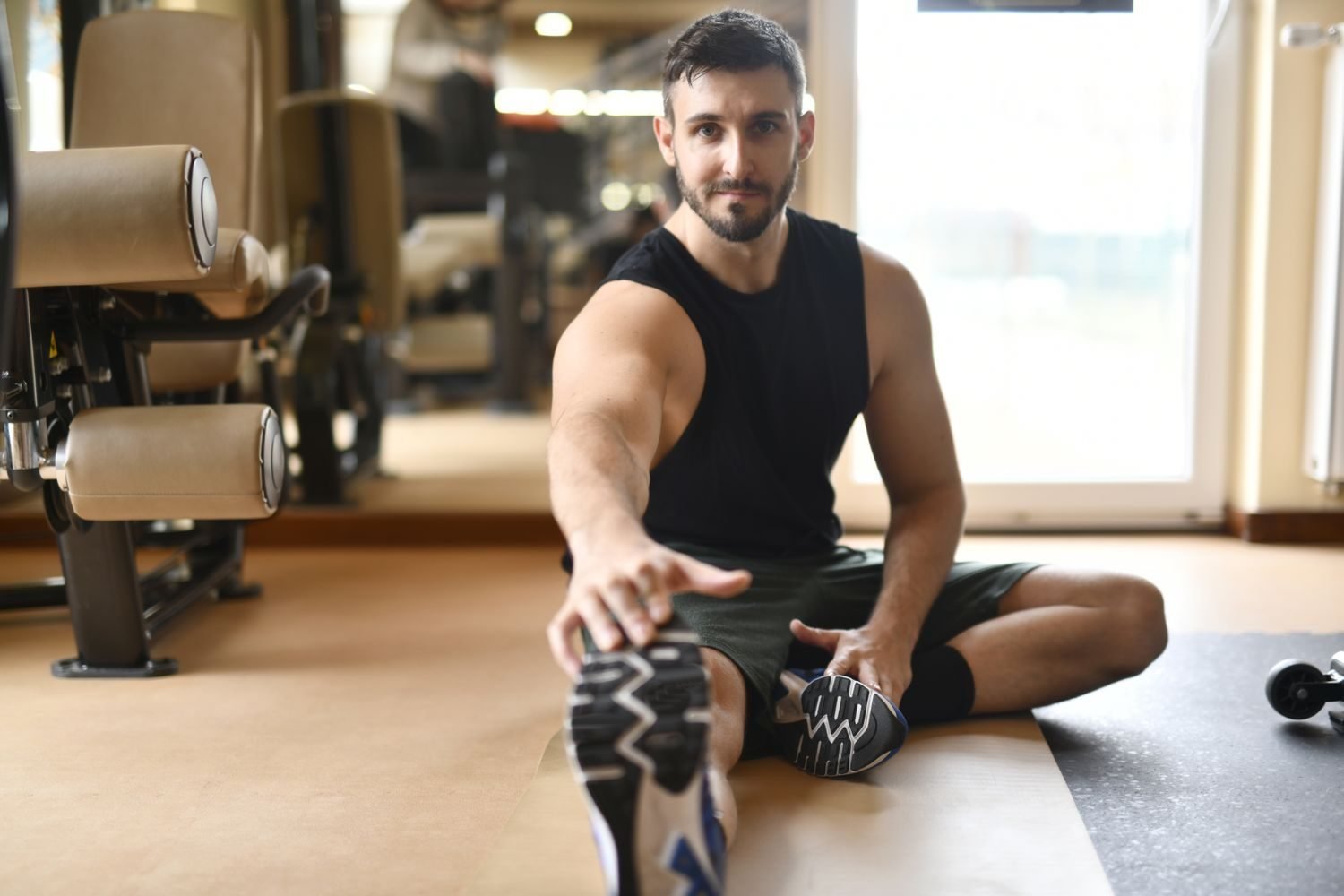
| Seated forward fold | Hamstrings, lower back | 30 sec |
| Figure-4 glute stretch | Glutes, hips | 30 sec each side |
| Doorway chest stretch | Chest, front shoulders | 20 sec each side |
| Cross-body shoulder stretch | Rear deltoids, upper back | 20 sec each side |
| Child’s pose | Lats, lower back, spine | 30 sec |
| Calf stretch against wall | Calves, ankles | 20 sec each side |
| Deep breathing (seated or lying) | Nervous system reset | 60 sec |
That whole sequence takes about eight minutes once you factor in transitions. If you’re short on time, prioritise whichever muscles you trained hardest that day and the deep breathing at the end. That last minute of slow breathing does more for how you feel walking out the door than people expect.
Does cooling down prevent DOMS?
This is the question we get asked most, so let’s be straightforward about it. DOMS stands for delayed onset muscle soreness, the stiff, achy feeling that shows up 24 to 48 hours after a hard or unfamiliar workout. It happens because of microscopic damage to muscle fibers, mostly from eccentric movements like lowering a weight slowly or running downhill.
A cool down will not prevent DOMS. No amount of stretching, foam rolling, or light cardio after training stops that muscle damage and repair process from happening, and anyone who promises otherwise is overselling it. What a cool down does do is help your muscles feel less stiff in the short term, keep your joints moving through a full range while they’re still warm, and generally make the transition out of training smoother. Think of it as improving how you feel that evening, not blocking soreness two days later.
If you’re already dealing with soreness from a previous session and wondering whether to train again, our piece on working out with sore muscles walks through how to judge that call.
What else should recovery after a workout include?
The cool down is just the first five minutes of recovery after a workout. What you do in the hours after matters more for how sore you’ll be and how ready you are for your next session.
- Protein and fluids. Aim to eat a meal with protein within a couple of hours of training, and rehydrate, especially if you sweated heavily.
- Sleep. This is where most of your actual muscle repair happens. Seven to nine hours isn’t a luxury, it’s part of the training program.
- Light movement the next day. A walk or an easy session gets blood flowing to sore muscles and often eases stiffness faster than sitting still.
- Spacing your sessions. If the same muscle group is still very sore, give it another day before hammering it again.
We see clients treat the cool down as their entire recovery plan and then wonder why they’re still wrecked two days later. It’s one piece, not the whole system.
How is a cool-down different from a warm-up?
They sit on opposite ends of the same workout, and mixing them up is a common mistake. A warm up before workout is about raising your body temperature and preparing your joints and nervous system for effort. It uses dynamic movement, things like leg swings, arm circles, and bodyweight squats, rather than long static holds.
A cool down does the reverse. It’s about lowering your heart rate and easing your muscles out of work mode using slow movement and static stretching. Doing static stretches before a heavy lift can dull your power output for that session, while dynamic movement after a hard set doesn’t give your muscles the same settling effect a held stretch does. Match the right type of movement to the right end of your workout.
What mistakes do people make with cool-downs?
A few show up constantly in the gym and on calls with new clients.
Skipping it entirely. The workout ends, the water bottle comes out, and everyone’s out the door. It’s the easiest part of training to cut when you’re pressed for time, and also the first one people drop.
Rushing through it. A 10-second tug on your hamstring isn’t a stretch, it’s a formality. You need at least 20 seconds under tension for a static stretch to actually do anything.
Stretching cold muscles instead. Some people skip their workout’s actual cool down and instead do their stretching first thing the next morning, cold, stiff, and disconnected from the session. Stretch while your muscles are still warm, right after training, for the best results.
Ignoring how you feel. A cool down is your chance to notice a nagging ache before it becomes an injury. Rushing past that check-in defeats half the point.
How does FitStrot build cool-downs into training?
Every session we run for clients ends the same way: a few minutes of easy movement, a short stretch sequence targeted to what was trained, and a quick check on how the body’s responding. It’s not an afterthought, it’s part of the program design. If you’d rather have a coach guide you through the whole thing, warm-up to cool-down, rather than piecing it together yourself, our 1-on-1 personal training program builds this structure into every workout from day one.
Frequently Asked Questions
What are good cool down stretches after a workout?
Good options include a standing quad stretch, seated forward fold for the hamstrings, figure-4 glute stretch, doorway chest stretch, cross-body shoulder stretch, child’s pose, and a calf stretch against a wall. Hold each for 20 to 30 seconds, focusing on whichever muscles you trained that day.
How do you cool down after a workout?
Start with two to three minutes of light movement, like walking or easy cycling, to bring your heart rate down gradually. Then spend five to seven minutes on static stretches, holding each for 20 to 30 seconds on the muscles you trained, finishing with a minute of slow breathing.
What is DOMS after a workout?
DOMS, or delayed onset muscle soreness, is the stiff, achy feeling that typically appears 24 to 48 hours after a hard or unfamiliar workout. It’s caused by microscopic damage to muscle fibers, mostly from eccentric movements, and usually resolves on its own within a few days.