If mornings feel like a sprint, the fastest route to a healthy breakfast is prep that happens the night before: overnight oats, a jar smoothie, or a batch of egg muffins pulled from the fridge. Each takes five minutes or less of active effort in the morning, because the real work happened while you were doing something else — watching TV, packing lunches, or already asleep. Below are ten realistic options, a straight answer on whether skipping breakfast is actually bad for you, and a simple way to stock a kitchen so “quick” is the default, not the exception.
What counts as a truly quick healthy breakfast?
A quick breakfast has two things going for it: little or no morning cook time, and ingredients you already have on hand. That usually means one of three formats. No-cook options like overnight oats, chia pudding, or yogurt parfaits are assembled ahead and just get pulled from the fridge. Grab-and-go options like fruit with nut butter, a hard-boiled egg, or a pre-made smoothie pack require zero prep at the moment you eat them. And batch-cooked options like egg muffins or breakfast burritos are made once on a weekend and reheated in under two minutes on weekday mornings.
The common thread is that the decision-making and the mess happen once, not five times a week. If you’re also trying to hit specific goals — more protein, less saturated fat — it’s worth pairing this speed-first approach with a more targeted list, like our guides to high-protein breakfast ideas or heart-healthy breakfast ideas. This article is about removing the time excuse first; those two are about optimizing what you eat once time isn’t the obstacle.
What are the best no-cook breakfasts you can prep the night before?
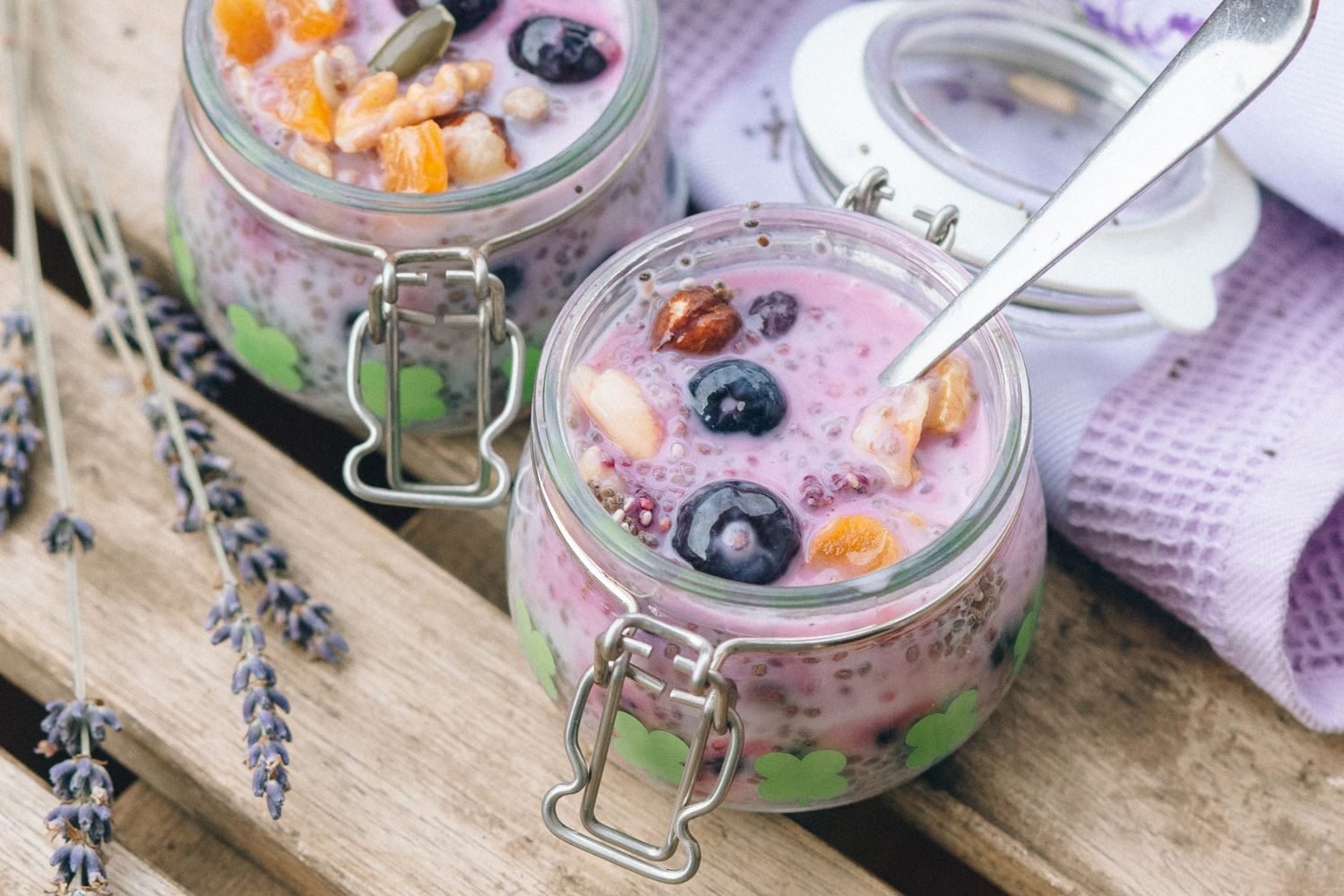
No-cook breakfasts win on mornings when even standing at a stove feels like too much. These require five minutes the night before and zero minutes in the morning beyond opening the fridge.
- Overnight oats: Combine ½ cup rolled oats, ½ cup milk or a milk alternative, ¼ cup yogurt, and a tablespoon of chia seeds in a jar. Refrigerate overnight; add fruit and a drizzle of nut butter in the morning or the night before. The oats soften and the chia seeds thicken the mixture into a pudding-like texture by morning.
- Chia pudding: Whisk 3 tablespoons chia seeds into 1 cup milk with a bit of vanilla or cinnamon. It gels within a few hours and keeps for up to five days, so one batch covers most of the week.
- Greek yogurt parfait cups: Layer yogurt, granola, and berries in small containers. Keep the granola in a separate compartment or add it right before eating so it doesn’t go soft overnight.
- Cottage cheese with fruit: Cottage cheese needs no prep at all — just top it with fruit, a spoon of honey, or everything-bagel seasoning for a savory version.
All four can be portioned into jars or containers on a Sunday for the entire work week, which turns “quick breakfast” from a daily decision into a batch task you do once.
What are good grab-and-go breakfasts with no prep at all?
Some mornings don’t even allow for opening a jar at the table — you need something you can eat on the walk to the car or the subway platform. These options require stocking, not cooking.
- Fruit and nut butter: A banana or apple with a single-serve nut butter packet or a spoonful in a small container. Portable, no utensils required if you plan ahead.
- Hard-boiled eggs, made ahead: Boil a half-dozen eggs on a Sunday; they keep about a week in the shell in the fridge. Grab two and go.
- String cheese and whole-grain crackers: A simple protein-and-carb combo that needs no refrigeration for a few hours, which makes it useful for commutes.
- Trail mix or a small handful of nuts with dried fruit: Portion into small bags in advance so you’re not tempted to eat straight from a large container.
- Pre-made smoothie packs: Freeze fruit, spinach, and a scoop of protein powder in individual bags. In the morning, dump one bag into a blender with liquid and blend for under a minute — most of the “prep” already happened when you filled the bags.
If you like the grab-and-go format for breakfast, the same logic applies well beyond the morning — see our healthy snacks on the go guide for portable options later in the day.
How do you make egg muffins for a week of breakfasts in one batch?
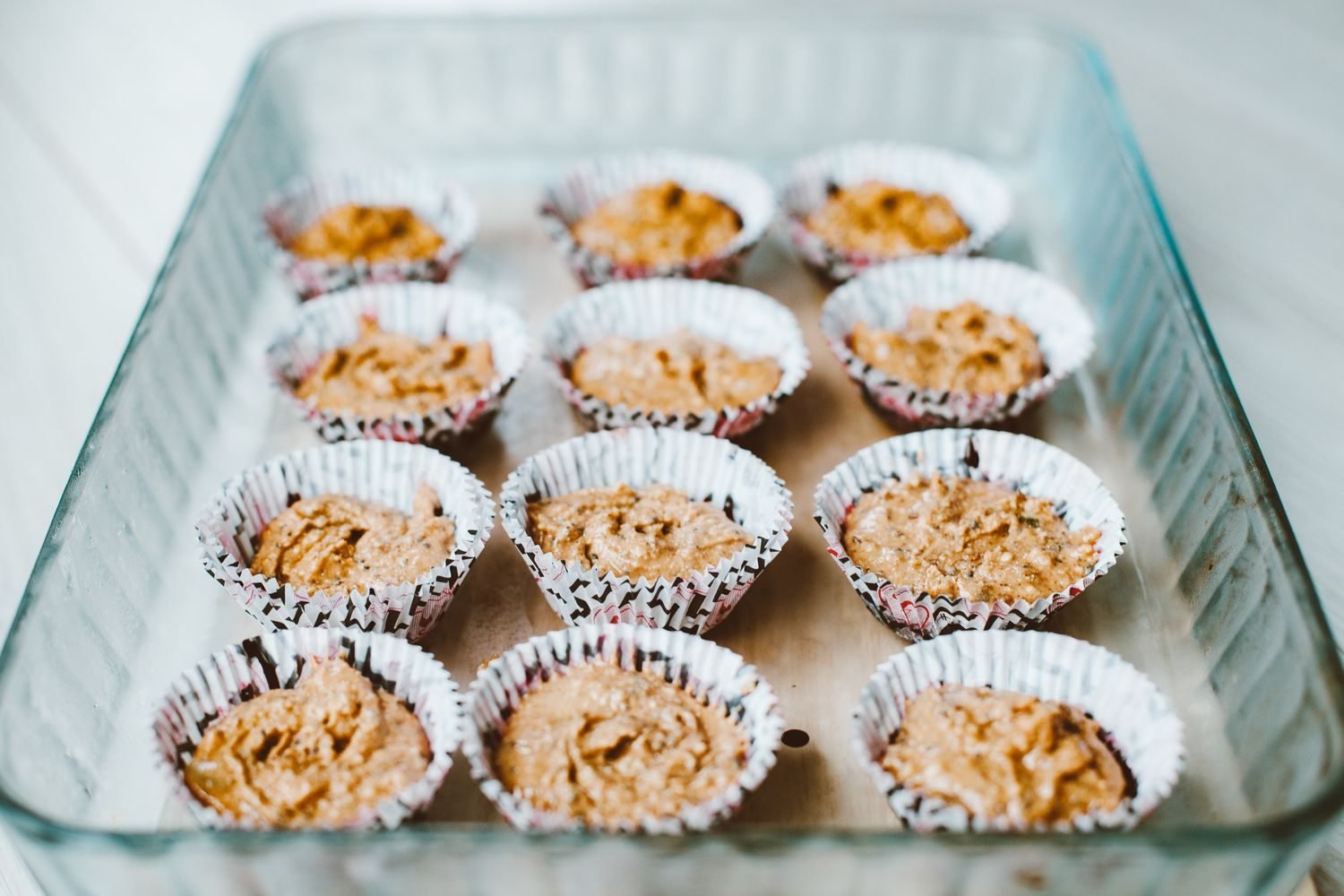
Egg muffins (sometimes called egg cups or crustless mini quiches) are one of the most efficient batch-cook breakfasts because a single 30-minute session produces six to twelve servings.
- Preheat the oven to 350°F (175°C) and grease a 12-cup muffin tin.
- Whisk 8-10 eggs with a splash of milk, salt, and pepper.
- Stir in diced vegetables (bell pepper, spinach, onion) and, if you like, a lean protein like diced turkey or a sprinkle of cheese.
- Pour the mixture into the muffin cups, filling each about three-quarters full.
- Bake for 18-20 minutes, until the centers are set.
- Cool, then store in the fridge for up to four days or the freezer for up to two months.
On a weekday morning, two egg muffins reheat in about 45 seconds in the microwave — faster than making a slice of toast. This is a batch-cooking approach worth folding into a broader meal planning routine, since the same Sunday session that produces egg muffins can also set up lunches for the week.
Is skipping breakfast actually bad for you?
Here’s the honest answer: it depends on the person, and the research is less one-sided than “breakfast is the most important meal of the day” suggests. A 2023 systematic review and meta-analysis of randomized controlled trials and prospective cohort studies, published in Nutrients, found that skipping breakfast was associated with a small but statistically significant decrease in body weight (mean difference of about -0.66 kg) — but also an increase in LDL cholesterol (mean difference of roughly +9.89 mg/dL). In other words, breakfast skipping isn’t a clear win or a clear loss; it moves different markers in different directions, and the researchers themselves noted that with a limited number of trials, more study is needed before drawing firm conclusions about cardiovascular risk.
What this means practically: if you’re not hungry in the morning and you eat well the rest of the day, forcing down a breakfast you don’t want isn’t a health requirement. Some people genuinely do fine on an eating pattern that starts later — this is the basis of a lot of time-restricted eating research. But if you tend to skip breakfast simply because there’s no time, and you notice it leads to a mid-morning energy crash, overeating at lunch, or reaching for something ultra-processed out of desperation, that’s a different problem — one that quick prep solves directly. The goal isn’t “always eat breakfast.” It’s “make breakfast possible on the days you want it, so hunger and time pressure aren’t making the decision for you.”
What should you keep stocked for fast breakfasts?
A well-stocked kitchen turns “I don’t have time” into “I have three options ready.” Keep these on hand:
- Fridge: Eggs, Greek yogurt, milk or a milk alternative, pre-cut fruit, and at least one batch-cooked item (egg muffins, overnight oats, or a breakfast burrito) at all times.
- Freezer: Frozen berries and spinach for smoothies, whole-grain waffles or pancakes that toast straight from frozen, and pre-portioned smoothie bags.
- Pantry: Rolled oats, chia seeds, nut butter, whole-grain crackers, and single-serve nut packets for days you’re walking out the door.
The pattern worth building is a rotating short list — three or four breakfasts you actually like and can make on autopilot — rather than reinventing breakfast daily. That’s a small piece of a larger nutrition habit: consistency usually beats perfection, and a breakfast you’ll actually eat five days a week beats an elaborate one you make once and abandon.

How can you build a rotation instead of deciding every morning?
Decision fatigue is a big reason quick-breakfast plans fall apart by Wednesday. The fix is to stop treating breakfast as a daily choice and instead pick three to four go-to options you rotate through the week — for example, overnight oats on Monday and Tuesday, egg muffins on Wednesday and Thursday, and a smoothie on Friday. Prep happens in one or two sessions (Sunday and maybe Wednesday evening) rather than every single day.
This also solves the “I’m bored of the same thing” problem without adding daily effort: you’re not eating the identical meal every day, just rotating a small set you’ve already decided you like. If you’re unsure which combination fits your goals, a personalized starting point can save weeks of trial and error.
Frequently Asked Questions
Can overnight oats be eaten cold, or do they need to be heated up?
Overnight oats are designed to be eaten cold — that’s part of what makes them quick. The oats soften overnight by absorbing liquid, similar to cooking, just without heat. If you prefer a warm breakfast, you can microwave them for 30-60 seconds, but it’s not necessary for food safety or texture.
How long do egg muffins last in the fridge?
Egg muffins keep for about four days in an airtight container in the fridge. For longer storage, freeze them for up to two months and reheat from frozen in the microwave, adding about 30 extra seconds to the reheating time.
Is a smoothie a nutritionally complete breakfast on its own?
It can be, if it includes protein (yogurt, milk, or protein powder), fiber (whole fruit, spinach, oats), and a fat source (nut butter or seeds), not just juice and fruit. A smoothie made only from fruit and juice spikes blood sugar quickly and won’t keep you full until lunch.
What if I genuinely have zero appetite in the morning?
That’s common and not automatically a problem — appetite naturally varies by person and by how late or heavy your dinner was. Research on breakfast skipping shows mixed effects rather than uniform harm, so there’s no rule that everyone must eat within an hour of waking. If you’re not hungry, a small, quick option (a few bites of yogurt, a hard-boiled egg) is a reasonable middle ground rather than forcing a full meal.
How much time does batch-prepping breakfast for a week actually take?
Most batch methods — egg muffins, overnight oats, smoothie bags — take 20-30 minutes of hands-on time once a week. That session replaces five separate mornings of decision-making and cooking, which is where the real time savings comes from.
If you’d like a breakfast rotation built around your specific schedule, goals, and food preferences, an online nutritionist consultation can help you turn these quick ideas into a plan you’ll actually stick with.