Getting omega-3 nutrition right comes down to one fact most people never learn: there are three different omega-3 fats, and your body treats them very differently. ALA, the plant form found in walnuts and flaxseed, is not the same as the EPA and DHA found in salmon and algae — and your body converts ALA to the other two so poorly that relying on flaxseed oil alone can leave you short. If you eat fish twice a week, you’re probably fine. If you don’t, the fix isn’t “eat more flax” — it’s understanding which omega-3 does what, and closing the gap with the right food or supplement.
What are the three types of omega-3s, and why does it matter which one you eat?
Omega-3 is an umbrella term for three distinct fatty acids, and most confusion around omega 3 nutrition comes from treating them as interchangeable when they’re not.
- ALA (alpha-linolenic acid) — the only omega-3 considered nutritionally essential, meaning your body cannot make it. Comes from plant sources: flaxseed, chia seeds, walnuts, canola and soybean oils.
- EPA (eicosapentaenoic acid) — found mainly in fatty fish and fish oil. Plays a role in managing inflammation and is the fatty acid most studied for cardiovascular support.
- DHA (docosahexaenoic acid) — also from fish and algae, and structurally the most important omega-3 for the brain, retina, and reproductive tissue. Concentrations are especially high in the eye and brain, which is why it matters during pregnancy and infant development.
The National Institutes of Health Office of Dietary Supplements (NIH ODS) is direct about the relationship between them: your body can convert some ALA into EPA and then into DHA, “but only in very small amounts.” That single sentence is the crux of why omega-3 nutrition is more nuanced than “eat some flaxseed and you’re covered.”

How efficiently does your body actually convert ALA into EPA and DHA?
Not very. This is the part that trips up well-meaning vegetarians and vegans who assume a tablespoon of ground flaxseed is a one-to-one substitute for a salmon fillet.
Research summarized by the DHA/EPA Omega-3 Institute puts typical ALA-to-EPA conversion at under 8%, and ALA-to-DHA conversion at under 4% in most adults. Combined ALA-to-EPA-plus-DHA conversion has been estimated at around 12% in some studies — a best-case figure. Efficiency depends on individual factors: sex (premenopausal women convert more efficiently, likely because estrogen upregulates the relevant enzymes), background omega-6 intake (ALA and linoleic acid compete for the same conversion enzymes), and genetics (variation in the FADS1/FADS2 genes).
The takeaway: ALA is a genuinely healthy fat worth eating, and it counts toward your official intake target (more below). But if your goal is specifically to raise EPA and DHA — for heart, brain, or eye health — plant ALA alone is unreliable. The NIH ODS fact sheet states plainly that “getting EPA and DHA from foods (and dietary supplements, if you take them) is the only practical way to increase levels of these omega-3 fatty acids in your body.” If you’re working through other nutritional gaps as a vegetarian or vegan, add omega-3 conversion to that checklist alongside iron, B12, and zinc.
How much omega-3 do you actually need per day?
Here’s a detail that surprises people: there is no official U.S. recommended intake for EPA or DHA specifically. The Institute of Medicine only set Adequate Intake (AI) levels for total omega-3s, expressed as ALA, since there wasn’t enough data for a firm EPA/DHA requirement. Per the NIH ODS fact sheet, the daily ALA targets are:
- Adult men: 1.6 grams per day
- Adult women: 1.1 grams per day
- Pregnant women: 1.4 grams per day
- Breastfeeding women: 1.3 grams per day
- Teen boys (14–18): 1.6 grams; teen girls (14–18): 1.1 grams
- Children 4–8 years: 0.9 grams; children 1–3 years: 0.7 grams
For heart health specifically, the American Heart Association recommends one to two servings of fatty fish per week for the general population, and about 1 gram per day of combined EPA plus DHA for people who already have heart disease — ideally from food, with supplements considered under medical guidance. Notably, the AHA does not recommend omega-3 supplements for people who aren’t at elevated cardiovascular risk, a useful check against over-supplementing. Omega-3s work alongside the rest of your diet, so it’s worth treating them as one piece of a broader nutrient picture rather than a fix on their own.
What are the best food sources of omega-3, and how do they compare?
Whole foods remain the most reliable way to hit your omega-3 targets, and the sources split cleanly along the ALA-versus-EPA/DHA line.
Fatty fish and seafood (EPA + DHA)
Cold-water fatty fish are the most concentrated natural source of pre-formed EPA and DHA — forms your body doesn’t have to struggle to convert. The NIH ODS fact sheet calls out salmon, mackerel, tuna, herring, and sardines as strong choices, and during pregnancy and breastfeeding recommends 8 to 12 ounces of seafood per week, prioritizing options higher in EPA/DHA and lower in mercury (salmon, herring, sardines, and trout fit that profile).
Plant sources (ALA)
- Flaxseed and flaxseed oil — one of the richest plant sources of ALA; ground flaxseed is more digestible than whole seeds.
- Chia seeds — comparable ALA density to flax, easy to add to oatmeal or smoothies.
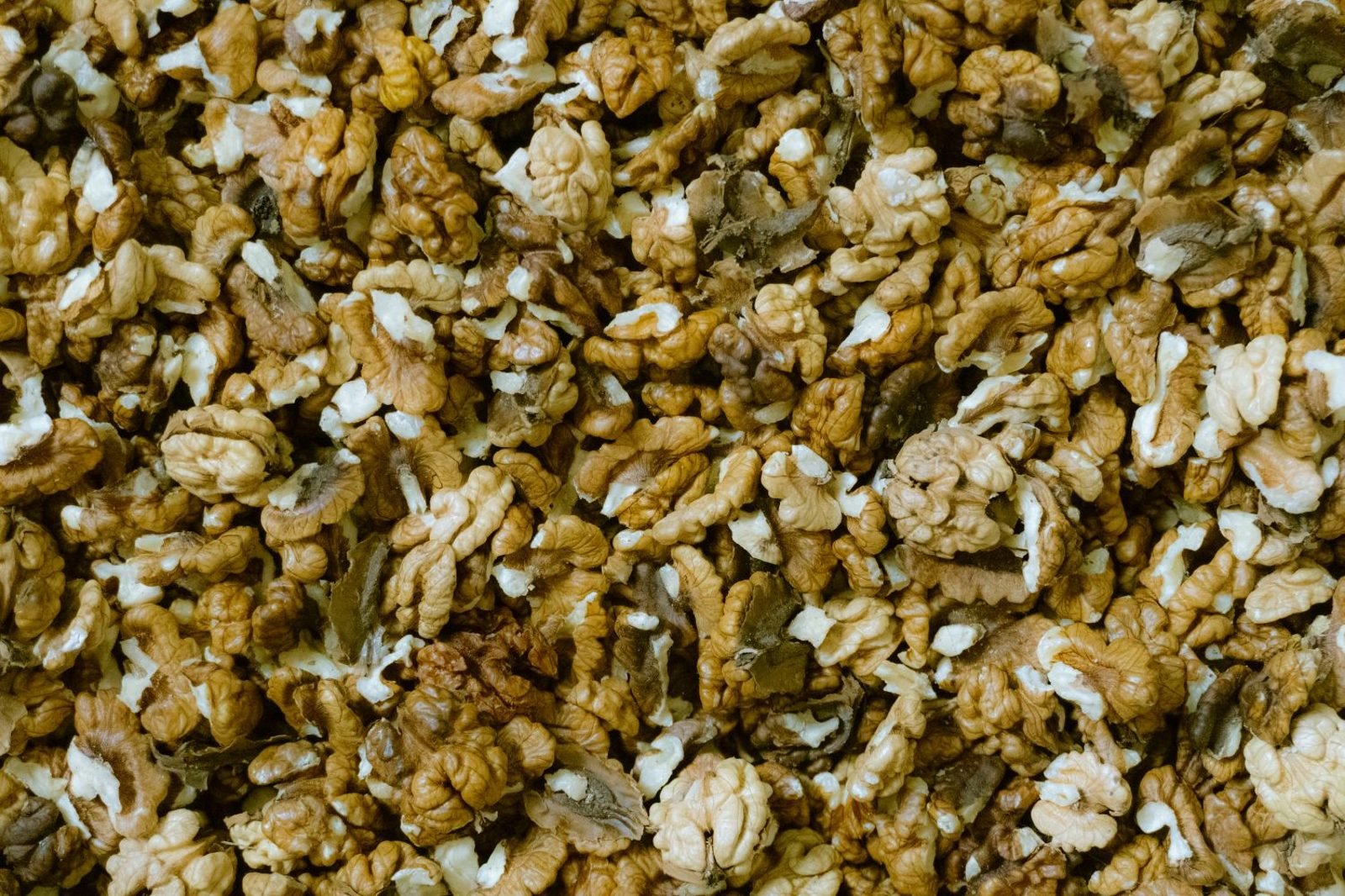
- Walnuts — the only tree nut with meaningful ALA content, useful as a daily snack.
- Canola and soybean oil — everyday cooking oils that contribute ALA in the background.
These plant sources are excellent for hitting your ALA target and come with fiber and other nutrients fish doesn’t offer — which ties into fiber nutrition as another reason to keep flax and chia in rotation. Just don’t count on them alone to raise EPA and DHA, given the conversion limits covered above.
Fortified foods
Certain brands of eggs, yogurt, milk, juices, soy beverages, and infant formula are fortified with omega-3s (often algal DHA). Check labels — fortification levels vary by brand and aren’t guaranteed just because a product says “omega-3” on the front.
What should vegetarians and vegans do to get enough EPA and DHA?
This is where algae-based supplements earn their reputation as the best solution for anyone who doesn’t eat fish. Algal oil isn’t a workaround — it’s the original source. EPA and DHA are synthesized by marine microalgae in the first place; fish accumulate these fats by eating algae, not by manufacturing them. An algae supplement simply skips the fish and gets EPA/DHA from the source.
Why algae-based supplements work
Algal oil supplements deliver pre-formed EPA and DHA, sidestepping the ALA conversion problem entirely. Products vary in dose — some deliver around 600–700 mg of combined EPA and DHA per serving — so check the label rather than assuming all algae supplements are equivalent.
A reasonable target for non-fish-eaters
A commonly cited practical guideline for vegetarians and vegans is roughly 200 to 300 mg of combined EPA and DHA, two to three times per week, with daily intake suggested for adults over 60. This isn’t a formal government recommendation — there’s no official EPA/DHA RDA — but it’s a reasonable target dietitians use to close the gap ALA conversion leaves behind. Pair it with attention to protein and nutrition basics, since plant-based eaters are often optimizing several nutrients at once.
Do you really need to worry about your omega-3 to omega-6 ratio and seed oils?
Less than social media suggests, though the underlying math is real. A century ago, the typical Western diet had an omega-6 to omega-3 ratio close to 4:1. Today, because of how much omega-6-rich vegetable and seed oil is used in processed food and cooking, that ratio has shifted to somewhere around 10:1 to 20:1 for most people. That shift is well documented — but what it means for your health is more nuanced than “seed oils are inflammatory.”
Harvard Health has pushed back on the idea that omega-6 fats are automatically pro-inflammatory. Linoleic acid (the dominant omega-6 in seed oils) can be converted into arachidonic acid, a building block for some inflammatory compounds — but arachidonic acid also converts into anti-inflammatory and clot-resolving molecules. Dozens of studies have tested whether higher omega-6 intake raises inflammatory markers, and results split roughly down the middle: about half show no effect, half show a reduction. Omega-6 fats also independently lower LDL cholesterol and improve insulin sensitivity, which isn’t the profile of a purely harmful fat.
The more useful, less alarmist framing: instead of trying to eliminate seed oils, focus on raising your omega-3 intake — more fatty fish, more flax and chia, an algae supplement if you’re not eating fish. Improving the ratio by adding omega-3s works just as well as, and is far more sustainable than, trying to strip omega-6 out of your diet entirely.

What happens if you don’t get enough omega-3?
True omega-3 deficiency is rare in the United States, according to the NIH ODS, and most people get adequate ALA from their normal diet. When deficiency does occur, it can show up as rough, scaly skin and a red, itchy rash — easy to miss or attribute to something else. The bigger practical risk isn’t outright deficiency; it’s running persistently low on EPA and DHA specifically, which matters most for cardiovascular, brain, and eye health over the long run. That’s a slower, quieter shortfall than a classic nutritional deficiency disease, but still worth correcting with food or a targeted supplement rather than ignoring.
Frequently Asked Questions
Can I get enough omega-3 from flaxseed alone if I don’t eat fish?
Flaxseed will comfortably cover your ALA target, but because only a small fraction of ALA converts to EPA and DHA, it won’t reliably raise those two fats on its own. Pair flaxseed with an algae-based EPA/DHA supplement or fortified foods if fish isn’t part of your diet.
Is fish oil or algae oil better for omega-3?
Both deliver pre-formed EPA and DHA effectively. Fish oil is generally cheaper; algae oil is the vegetarian/vegan option and is actually the original source, since fish get their omega-3s from eating algae in the first place.
How many times a week should I eat fish for omega-3?
The American Heart Association recommends one to two servings of fatty fish per week for general heart health, ideally salmon, mackerel, herring, sardines, or trout. People with existing heart disease may be advised to get closer to 1 gram per day of combined EPA and DHA.
Are seed oils actually bad for me because of omega-6?
Not inherently. Harvard Health notes the evidence on omega-6 and inflammation is mixed — roughly half of studies show no effect. A more useful strategy than avoiding seed oils is simply increasing your omega-3 intake to improve your overall ratio.
Do I need an omega-3 supplement if I already eat a balanced diet?
Not necessarily. The AHA specifically does not recommend omega-3 supplements for people without elevated cardiovascular risk. If you eat fatty fish weekly or use flax, chia, and walnuts regularly, food may be sufficient — a supplement is more relevant if you’re vegetarian, vegan, or rarely eat fish.
Does cooking destroy the omega-3s in fish or flaxseed oil?
High heat can degrade some omega-3 content over time, particularly in delicate oils like flaxseed oil, which is best used unheated (in dressings or smoothies). Fish retains most of its EPA and DHA through normal cooking methods like baking, grilling, or pan-searing.
Omega-3 nutrition isn’t complicated once you separate the three fatty acids and stop expecting flaxseed to do a fish’s job. For a personalized plan that accounts for your diet, whether you eat fish, and any other nutritional gaps you’re managing, an online nutritionist consultation can help you build a strategy that fits how you actually eat.